• woodrow wilson center
  • ecsp

New Security Beat

Subscribe:
  • rss
  • mail-to
  • Who We Are
  • Topics
    • Population
    • Environment
    • Security
    • Health
    • Development
  • Columns
    • China Environment Forum
    • Choke Point
    • Dot-Mom
    • Friday Podcasts
    • Navigating the Poles
    • Reading Radar
  • Multimedia
    • Water Stories (Podcast Series)
    • Backdraft (Podcast Series)
    • Tracking the Energy Titans (Interactive)
  • Films
    • Water, Conflict, and Peacebuilding (Animated Short)
    • Paving the Way (Ethiopia)
    • Broken Landscape (India)
    • Scaling the Mountain (Nepal)
    • Healthy People, Healthy Environment (Tanzania)
  • Publications
  • Events
  • Contact Us

NewSecurityBeat

The blog of the Wilson Center's Environmental Change and Security Program
Showing posts from category family planning.
  • A More Resilient World: The Role of Population and Family Planning in Sustainable Development

    ›
    From the Wilson Center  //  June 27, 2018  //  By Olivia Smith

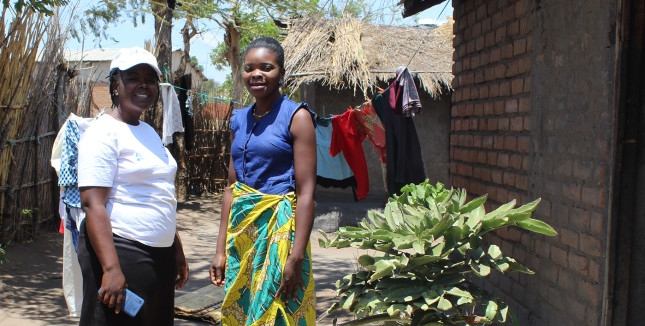
    Girls in jigjiga, jila alu kebele on their way to fetch water from the nearby water point which is recently started by unicef/ethiopia. they explain, their life is much improved in which they get cleaner water in their nearby. ©UNICEF Ethiopia/2016/Tesfaye

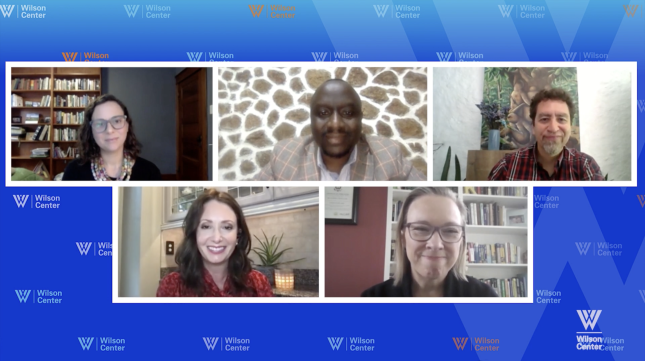
    “Community mobilization, local capacity-building, and innovation are the cornerstones of successful development. And that for us includes resilience,” said Franklin Moore, Africare’s Chief of Programs, at a Wilson Center event on family planning and sustainable development. As rapid population growth intersects with challenges like food insecurity and water scarcity, communities in developing countries need not only the capacity to absorb short-term shocks, they also need transformative capacity to address long-term challenges.

    MORE
  • How Family Planning Can Help Save Cheetahs

    ›
    Guest Contributor  //  June 20, 2018  //  By Wilson Center Staff
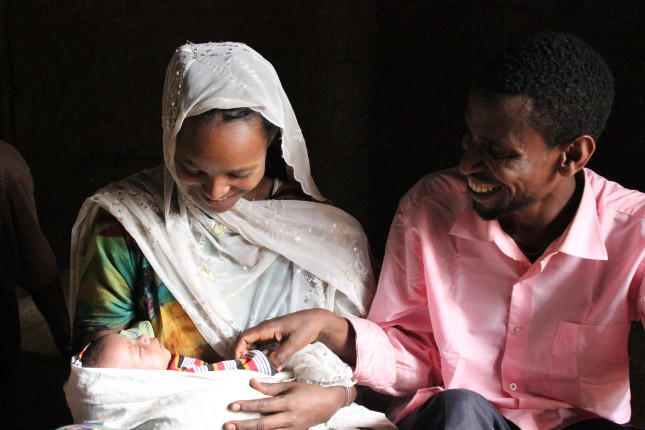
    Mother and Child

    This article by Sophie Edwards originally appeared on Devex.

    Conservationists and development practitioners may not have always seen eye to eye, but a new partnership between a cheetah conservation charity and a network of reproductive health NGOs is making the case for why these groups need to work more closely together.

    MORE
  • Faith in Family Planning: Healthy Timing and Spacing of Pregnancies

    ›
    Dot-Mom  //  From the Wilson Center  //  May 23, 2018  //  By Yuval Cohen
    13881120074_02097c2a61_o

    “When you enable a family to be able to time and space their children, you actually improve the overall health of that family,” said Dr. Alma Golden, the Deputy Assistant Administrator of USAID’s Bureau for Global Health, at a recent Wilson Center event on the role of faith-based organizations in family planning. Faith-based groups are an “irreplaceable asset,” said Dr. Golden, when it comes to fighting stigma and marginalization and promoting positive health behaviors.

    MORE
  • Women and War: Securing a More Peaceful Future

    ›
    From the Wilson Center  //  February 8, 2018  //  By Saiyara Khan
    Canadian-Soldiers

    “Conflicts are 35 percent more likely to be resolved and remain peaceful for 15 years if women are involved,” said Carla Koppell, vice president of the Center for Applied Conflict Transformation at the United States Institute of Peace, at a recent Wilson Center event on the role of women in war, security, and peace.

    MORE
  • The 30th Anniversary of the Safe Motherhood Initiative

    ›
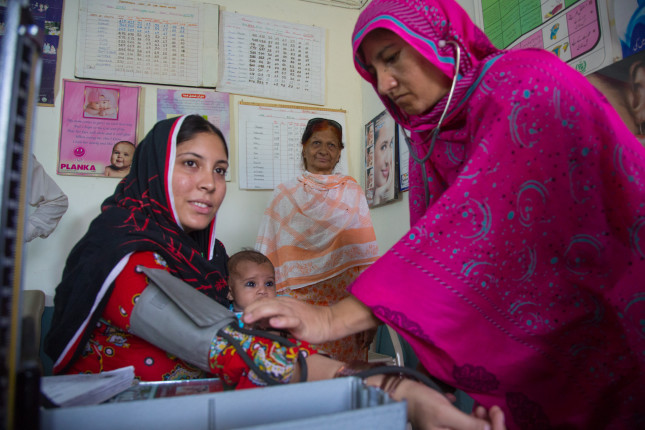
    Dot-Mom  //  From the Wilson Center  //  January 4, 2018  //  By Sarah Barnes
    Mothers-Vaccination

    Since 1987, the number of women dying during pregnancy and delivery has dropped by 43 percent, saving hundreds of thousands of women’s lives—and changing the lives of their families—around the world. “Our achievement in making maternal mortality an injustice that needs to be recognized by health ministers, by heads of state, by heads of agencies, has been, I think, the single greatest achievement of the Safe Motherhood Initiative” since it began 30 years ago, said Ann Starrs, President and CEO of Guttmacher Institute, at a Wilson Center event marking the anniversary of this important effort.

    MORE
  • Healthy Women, Healthy Families: Saving Money and Lives With Faith-Based Family Planning

    ›
    From the Wilson Center  //  December 14, 2017  //  By Anuj Krishnamurthy
    Tonny-Tumwesigye

    “All of the major religions of the world are really quite concerned with addressing the needs of the poor and also the disadvantaged,” said Victoria Graham, senior NGO technical advisor at the U.S. Agency for International Development, at the Wilson Center on July 18. “They’re always looking for interventions that address their needs, including health needs. And family planning is probably the most cost-effective way of doing this. Across the continuum – from looking at the economy to the family to saving lives – family planning is an excellent intervention.”

    MORE
  • It Takes a Village: Communities Are Key to a Resilient Health System

    ›
    Dot-Mom  //  From the Wilson Center  //  October 25, 2017  //  By Saiyara Khan
    Community-reconciliation-me

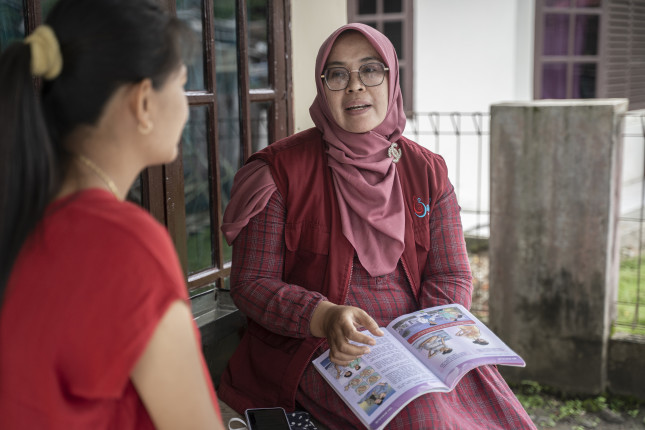
    “Resilience means the ability to cope and move ahead,” said Joan Dalton, the gender lead at THINK Liberia during the second session in a series of conversations on resilience and health at the Wilson Center. As conflicts, epidemics, and natural disasters increasingly leave global health systems vulnerable to devastation, it is important to build resilient health systems through interventions that support community resilience, agreed global health experts at the panel event co-hosted by CARE and the Maternal Health Initiative.

    MORE
  • Ensuring Today’s Youth Become Tomorrow’s Successful Adults

    ›
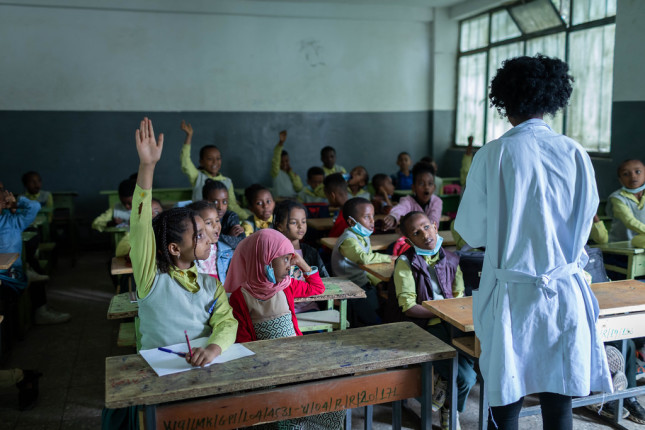
    Guest Contributor  //  September 26, 2017  //  By Peter Goldstein
    Ethiopian-Youth

    The future of global security will depend in large part on the fate of today’s 1.2 billion young people. Do youth between the ages of 15 and 24—a critical phase of life—possess  the necessary social, physical, intellectual, and financial building blocks to underpin productive, healthy adulthoods? Or do they lack this solid base, putting them at risk of personal and social instability?

    MORE
Newer Posts   Older Posts
View full site

Join the Conversation

  • RSS
  • subscribe
  • facebook
  • G+
  • twitter
  • iTunes
  • podomatic
  • youtube
Tweets by NewSecurityBeat

Trending Stories

  • unfccclogo1
  • Pop at COP: Population and Family Planning at the UN Climate Negotiations

Featured Media

Backdraft Podcast

play Backdraft
Podcasts

More »

What You're Saying

  • Volunteers,At,The,Lagos,Food,Bank,Initiative,Outreach,To,Ikotun, Pan-African Response to COVID-19: New Forms of Environmental Peacebuilding Emerge
    Rashida Salifu: Great piece 👍🏾 Africa as a continent has suffered this unfortunate pandemic.But it has also...
  • A desert road near Kuqa An Unholy Trinity: Xinjiang’s Unhealthy Relationship With Coal, Water, and the Quest for Development
    Ismail: It is more historically accurate to refer to Xinjiang as East Turkistan.
  • shutterstock_1779654803 Leverage COVID-19 Data Collection Networks for Environmental Peacebuilding
    Carsten Pran: Thanks for reading! It will be interesting to see how society adapts to droves of new information in...

What We’re Reading

  • Rising rates of food instability in Latin America threaten women and Venezuelan migrants
  • Treetop sensors help Indonesia eavesdrop on forests to cut logging
  • 'Seat at the table': Women's land rights seen as key to climate fight
  • A Surprise in Africa: Air Pollution Falls as Economies Rise
  • Himalayan glacier disaster highlights climate change risks
More »
  • woodrow
  • ecsp
  • RSS Feed
  • YouTube
  • Twitter
  • Facebook
  • Home
  • Who We Are
  • Publications
  • Events
  • Wilson Center
  • Contact Us
  • Print Friendly Page

© Copyright 2007-2021. Environmental Change and Security Program.

Woodrow Wilson International Center for Scholars. All rights reserved.

Developed by Vico Rock Media

Environmental Change and Security Program

Woodrow Wilson International Center for Scholars

Ronald Reagan Building and International Trade Center

  • One Woodrow Wilson Plaza
  • 1300 Pennsylvania Ave., NW
  • Washington, DC 20004-3027

T 202-691-4000