-
African Free Trade Could Increase Resilience to Climate Change and Conflict
›
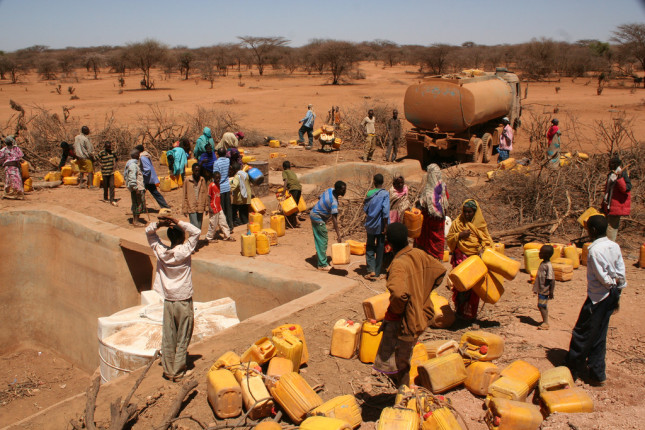
Developing countries are most vulnerable to the effects of climate change, such as drought, flooding, severe weather events, and threats to humanity’s basic needs like food, water, energy, and shelter. The African continent knows much about the impacts of climate change. But what can it do about it?
-
Warning: The Amazon May Soon Reach the Point of No Return on Forest Loss
›
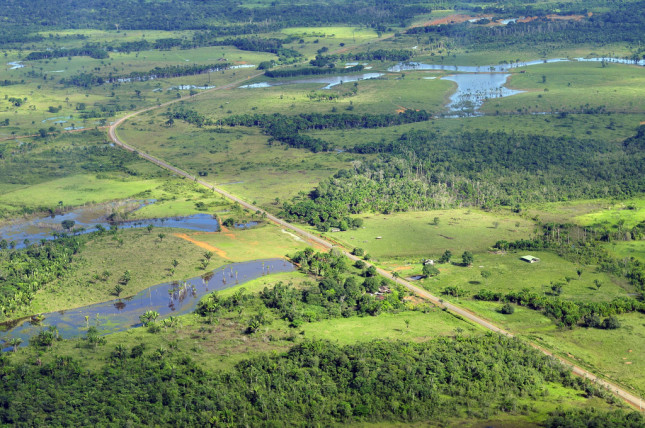
“What we do during this decade can be critical for the future of Amazonia,” said São Paulo Research Foundation member, Paulo Artaxo, at a recent Wilson Center event on efforts to support sustainability and development in the Amazon region. The recently accelerating environmental change in the Amazon region warrants greater collaboration between the civil and scientific communities on community and international scales, according to a panel of experts.
-
Rare Earths: Scarce Natural Resource Needed for National Security Drives Innovation
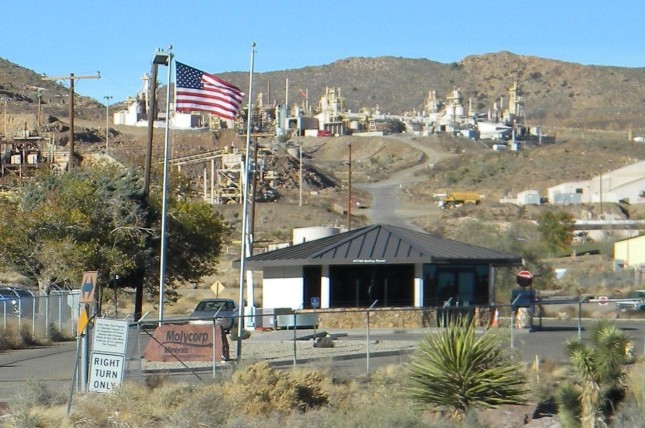
›Finding domestic alternatives for rare earths has become a matter of national security, according to a recently released Pentagon report. The United States’ defense, economy, and infrastructure depend on the electronics that rely on these mineral elements. Trade tensions between the United States and China over rare earths illustrate an important dynamic surrounding little-seen building blocks of our daily life.
-
Lessons from Post-Conflict States: Peacebuilding Must Factor in Environment and Climate Change
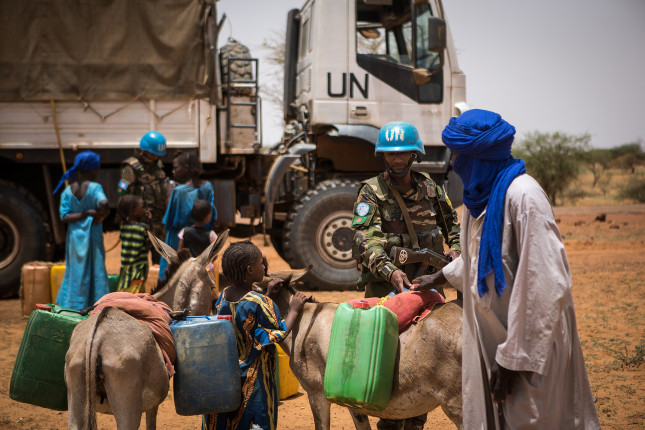
›The challenge of peacebuilding missions is not only to stop violence and prevent a rekindling of conflict, but also to help societies and governments reset their internal relations on a peaceful path towards sustaining peace.
-
The Double Burden of Climate Exposure and State Fragility
›The security implications of climate change emerged as an important area of concern in the mid 2000s in both policy circles and academia. Since then, there has been much research exploring causal pathways between climate phenomena and violent conflict, often with inconclusive or mixed results.
-
China vs. United States: Competition Over Rare Minerals Ratchets Up
›“Historically, resource conflicts have often centered on fuel minerals, like oil. Future resources conflicts may however focus more on competition for non-fuel minerals that enable [modern] technologies,” said Andrew Gulley, Mineral Economist at the United States Geological Survey. America’s 2018 National Defense Strategy says that great power competition is the country’s most important defense challenge. Its key competitor for resources is China. Gulley was among several experts gathered at New America on September 20 to discuss the new competitive space and prospects for conflict or cooperation.
-
Ambassador David Balton on Combating Illegal, Unauthorized, and Unregulated Fishing
›“The world’s ocean is not in good shape,” said Ambassador David Balton, testifying before the U.S. Senate Subcommittee on Oceans, Atmosphere, Fisheries, and Coast Guard, on September 18. Ambassador Balton is a Senior Fellow with the Wilson Center’s Polar Initiative. As former Deputy Assistant Secretary for Oceans and Fisheries in the Department of State, he coordinated U.S. foreign policy concerning oceans and fisheries, as well as issues relating to the Arctic and Antarctica. According to Balton, the ocean “faces three serious and interrelated challenges: unsustainable fisheries, marine pollution, and serious effects caused by climate change and related challenges such as ocean acidification.”
-
China Is Winning the Race for Water Security in Asia
›Great power competition in Asia is not only about control of critical waterways in the South China Sea, but also about who controls Asia’s fresh water. The future of Asia’s water—upon which about four billion people depend—lies in China’s hands. Through its presence in Tibet, China controls the headwaters of ten of the eleven major rivers of Asia. So far, China has taken a relatively cooperative approach to sharing water with its neighbors as part of the systematic consolidation of its “soft power” over downstream countries. But climate change and rapid growth are threatening to upset this delicate diplomatic balance. What happens when China’s own thirst outpaces its resources? And how will China’s choices affect U.S. interests in the strategic Asia-Pacific region?
Showing posts from category environment.