• woodrow wilson center
  • ecsp

New Security Beat

Subscribe:
  • rss
  • mail-to
  • Who We Are
  • Topics
    • Population
    • Environment
    • Security
    • Health
    • Development
  • Columns
    • China Environment Forum
    • Choke Point
    • Dot-Mom
    • Friday Podcasts
    • Navigating the Poles
    • Reading Radar
  • Multimedia
    • Water Stories (Podcast Series)
    • Backdraft (Podcast Series)
    • Tracking the Energy Titans (Interactive)
  • Films
    • Water, Conflict, and Peacebuilding (Animated Short)
    • Paving the Way (Ethiopia)
    • Broken Landscape (India)
    • Scaling the Mountain (Nepal)
    • Healthy People, Healthy Environment (Tanzania)
  • Publications
  • Events
  • Contact Us

NewSecurityBeat

The blog of the Wilson Center's Environmental Change and Security Program
Showing posts from category environment.
  • The Third Wave of Environmental Peacebuilding

    ›
    Guest Contributor  //  January 25, 2021  //  By Richard A. Matthew & Tobias Ide
    shutterstock_1698962077

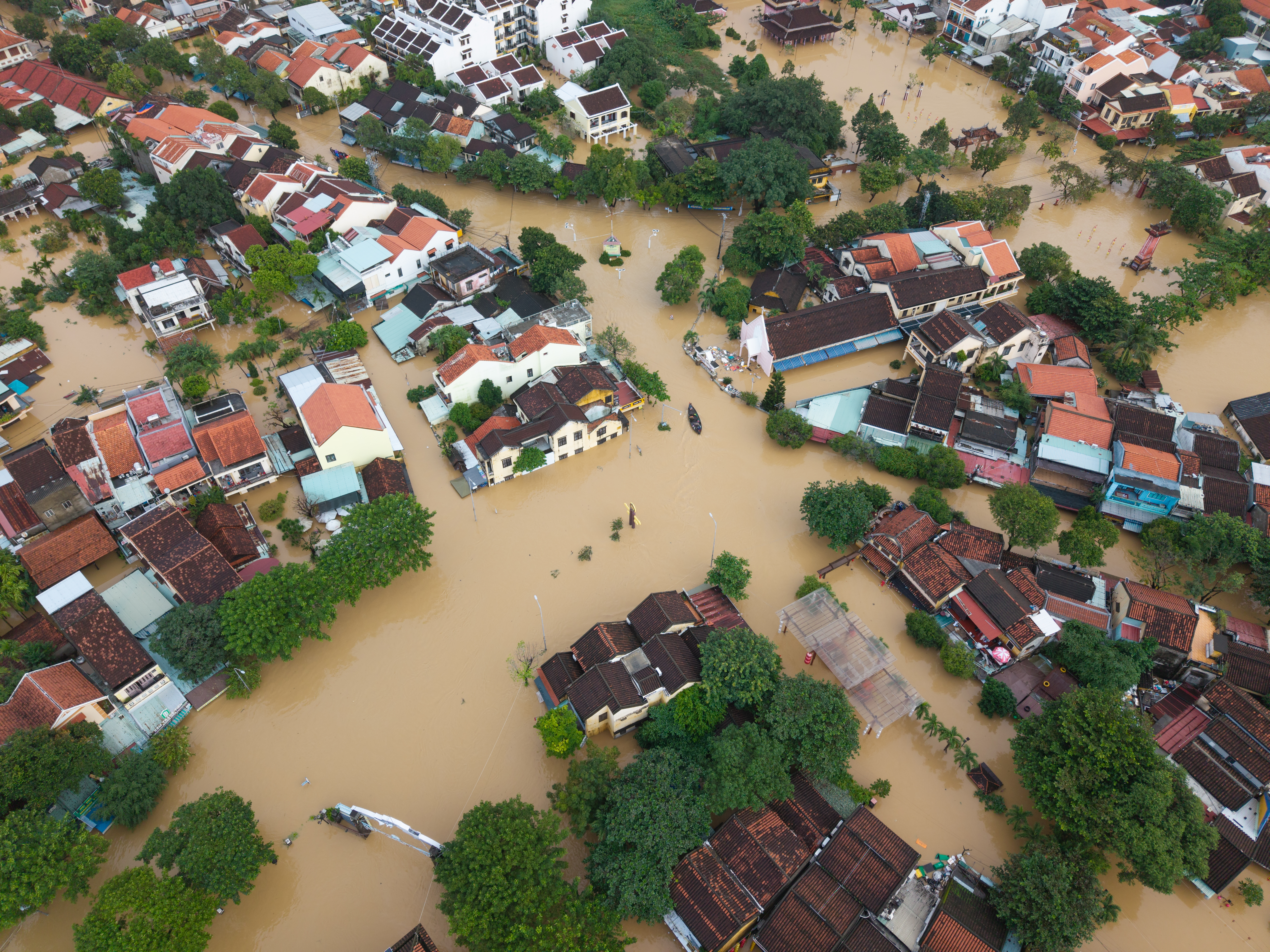
    For most of 2020, news, politics, policy, and research in the United States and abroad were dominated by the challenges posed by COVID-19, a rapidly unfolding global pandemic unprecedented in scale and cost. For much of the world, however, COVID-19 in fact competed with many other highly destructive events including a cascade of environmental disasters. Swarms of locusts pushed much of the Horn of Africa into or close to famine; 30 severe storms including Hurricanes Iota and Eta battered the Atlantic coasts; some 4 million acres of forest burned to the ground in California, doubling the previous high reached in 2018; typhoons ravaged the Philippines; floods overwhelmed parts of Indonesia; and many regions around the world experienced devastating heat waves. In addition to disaster patterns, the trends in violent state conflict were equally alarming, reaching their highest level since the end of World War II, according to a 2020 report on conflict trends from PRIO. In the most violent conflicts, in Syria and Yemen, the impacts of war have been amplified and complicated by the impacts of drought and years of environmental mismanagement.

    MORE
  • Climate Change Front and Center in U.S. and Brazil Relations in Biden-Bolsonaro Era

    ›
    Guest Contributor  //  January 19, 2021  //  By John J. Loomis
    48610743566_2d0fc7a2e5_k

    As the warm relationship between U.S. President Donald Trump and Brazil President Jair Bolsonaro comes to an end with the former’s electoral defeat in November 2020, the next two years (Bolsonaro is up for reelection in 2022) could prove to be strenuous for the bilateral relations of the two largest economies in the Western Hemisphere. President-elect Biden has signaled that combatting climate change will be a priority in his administration. Now, without the cover of a U.S. administration that denies climate change, Brazil could become further isolated in international environmental politics. All of this complicates the political realities for President Bolsonaro, whose political survival depends on maintaining his coalition of fanatical supporters, the agricultural sector, and former and current members of the military. Still, given U.S. concerns about Chinese influence in the region, the Biden-Bolsonaro relationship could prove to be low-key and practical.

    MORE
  • New U.S. Global Fragility Strategy Recognizes Environmental Issues as Key to Stability

    ›
    Reading Radar  //  January 14, 2021  //  By Lauren Herzer Risi
    Cover_us-strategy-to-prevent-conflict-and-promote-stability

    A new Global Fragility Strategy, released late last year by the U.S. Department of State, signals a growing awareness of the role that environmental issues play in fragility, conflict, and peace. According to the State Department’s Office of Foreign Assistance, in the last five years alone, “the U.S. government has spent $30 billion in 15 of the most fragile countries in the world.” These “large-scale U.S. stabilization efforts after 9/11 have cost billions of dollars but failed to produce intended results,” writes Devex’s Teresa Welsh. As a result, Congress passed into law in 2019 the Global Fragility Act, legislation that directed the Department of State to lead the development of a new 10-year Global Fragility Strategy that sets out a new U.S approach to conflict prevention and stabilization in fragile contexts.

    MORE
  • How We Misunderstand the Magnitude of Climate Risks – and Why That Contributes to Controversy

    ›
    Guest Contributor  //  January 12, 2021  //  By Peter Schwartzstein
    shutterstock_79914109

    For years, analysts have disputed the extent of climate change’s role in conflict. But the nature of climate risks can stifle those looking to define them.

    The Syrian civil war has raged for almost a decade now, and in the climate security community it can feel as if we’ve spent at least that long arguing about its causes. For every claim about the impact of extreme drought in the lead up to 2011, there’s been blowback, with some scholars arguing that the climate angle has been exaggerated at the expense of other causes of the conflict. And for every argument about rural-to-urban migration, there have been suggestions that its impact in precipitating protests has been overstated. Amid some overly forceful media assertion about the significance of climate change—and valid fears that invoking the environment might be seen as absolving guilty parties, despite efforts to highlight the regime’s ultimate culpability—climate security analysts have struggled to fully pinpoint climate’s precise contribution to the conflict. Cue uncertainty, controversy, and sometimes fierce academic polemics.

    MORE
  • Michael Standaert, Ensia

    How effective are China’s attempts to reduce the risk of wildlife spreading disease to humans?

    ›
    Covid-19  //  Guest Contributor  //  January 11, 2021  //  By Wilson Center Staff

    China | 2008 01 | Investigation at a Chinese fur farm.

    This article, by Michael Standaert, originally appeared on Ensia.

    Nearly a year ago, somewhere in China, a previously unknown virus made its way from a wild animal into a human host. There it found not only a hospitable home, but also an opportunity to spread trillions of copies of itself, eventually replicating to become the global Covid-19 pandemic.

    That outbreak, now having infected more than 46 million people around the world, has been the impetus for a series of actions taken by the Chinese government to — in theory — get a handle on zoonotic disease outbreaks now and in the future.

    MORE
  • Climate Change Will Make the Brazilian Military’s Role More Difficult, Finds New Report

    ›
    On the Beat  //  December 21, 2020  //  By Matthew Gallagher
    shutterstock_1761641690

    “It is in Brazil’s interest to climate-proof the nation,” said Wilson Center Senior Fellow Sherri Goodman during a recent International Military Council on Climate and Security (IMCCS) event. Referencing a new IMCCS  report, Climate and Security in Brazil, Goodman, who is also Secretary General for the IMCCS, said that Brazilian leaders ought to develop counter-deforestation and climate plans as critical elements of the national security agenda.

    MORE
  • How U.S. Arctic Policy and Posture Could Change Under President-elect Biden

    ›
    From the Wilson Center  //  Navigating the Poles  //  December 15, 2020  //  By Olivia Popp
    shutterstock_1153631344

    Truth, trust, and transparency are key aspects to sound and sustainable governance of the Arctic, said Ulf Sverdrup, Director of the Norwegian Institute of International Affairs. He was one of a panel of experts who spoke on Nov. 30 at “The Arctic in a Post-Election World,” the first event in a two-part series sponsored by the Wilson Center’s Polar Institute.

    MORE
  • New Constitution Could Help Chile Avert the Lithium Curse

    ›
    December 3, 2020  //  By Matthew Gallagher
    shutterstock_1556903237

    Chile is on the cusp of a new era. Just as its lithium—a common element of energy storage technology, which is itself a critical component of the clean energy transition—is experiencing a rise in global market demand, Chilean citizens have called for a new constitution.

    MORE
Newer Posts   Older Posts
View full site

Join the Conversation

  • RSS
  • subscribe
  • facebook
  • G+
  • twitter
  • iTunes
  • podomatic
  • youtube
Tweets by NewSecurityBeat

Trending Stories

  • unfccclogo1
  • Pop at COP: Population and Family Planning at the UN Climate Negotiations

Featured Media

Backdraft Podcast

play Backdraft
Podcasts

More »

What You're Saying

  • Volunteers,At,The,Lagos,Food,Bank,Initiative,Outreach,To,Ikotun, Pan-African Response to COVID-19: New Forms of Environmental Peacebuilding Emerge
    Rashida Salifu: Great piece 👍🏾 Africa as a continent has suffered this unfortunate pandemic.But it has also...
  • A desert road near Kuqa An Unholy Trinity: Xinjiang’s Unhealthy Relationship With Coal, Water, and the Quest for Development
    Ismail: It is more historically accurate to refer to Xinjiang as East Turkistan.
  • shutterstock_1779654803 Leverage COVID-19 Data Collection Networks for Environmental Peacebuilding
    Carsten Pran: Thanks for reading! It will be interesting to see how society adapts to droves of new information in...

What We’re Reading

  • Rising rates of food instability in Latin America threaten women and Venezuelan migrants
  • Treetop sensors help Indonesia eavesdrop on forests to cut logging
  • 'Seat at the table': Women's land rights seen as key to climate fight
  • A Surprise in Africa: Air Pollution Falls as Economies Rise
  • Himalayan glacier disaster highlights climate change risks
More »
  • woodrow
  • ecsp
  • RSS Feed
  • YouTube
  • Twitter
  • Facebook
  • Home
  • Who We Are
  • Publications
  • Events
  • Wilson Center
  • Contact Us
  • Print Friendly Page

© Copyright 2007-2021. Environmental Change and Security Program.

Woodrow Wilson International Center for Scholars. All rights reserved.

Developed by Vico Rock Media

Environmental Change and Security Program

Woodrow Wilson International Center for Scholars

Ronald Reagan Building and International Trade Center

  • One Woodrow Wilson Plaza
  • 1300 Pennsylvania Ave., NW
  • Washington, DC 20004-3027

T 202-691-4000