-
Special Issue of ‘Reproductive Health Matters’ Highlights Integrated Development, Resilience Efforts
› The May edition of Reproductive Health Matters is a special edition on sustainable development and reproductive health and rights. Our own Roger-Mark De Souza writes that in the quest to build resilience, development practitioners can learn from integrated population, health, and environment (PHE) programs.
 -
No REDD+ Program Is an Island: Integrating Gender Into Forest Conservation Efforts
›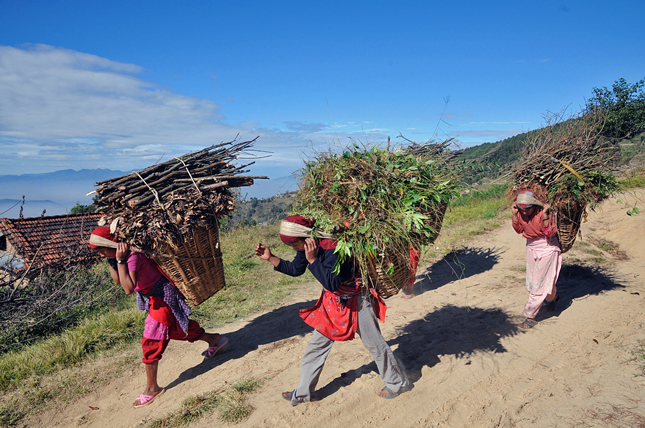 Since 2005, the Reducing Emissions from Deforestation and Forest Degradation program (REDD+) has functioned as a mechanism to financially incentivize the preservation of forestlands in order to reduce greenhouse gas emissions. But beyond its original use, some organizations have also started exploring ways it can help with other development initiatives, like women’s empowerment. [Video Below]
 -
The New World of Climate Suffering
›To date, there have been two proposed responses to climate change: mitigation, aimed at stopping the buildup of greenhouse gases, and adaptation, focused on accommodating ourselves to a warmer world. There is a third option, however, that is increasingly relevant: suffering.
-
Amy Luers: Broad Measures of Vulnerability Mask Opportunities to Build Climate Resilience
›
In this era of “big data,” policymakers too often focus on overly broad statistics, says Amy Luers of the Skoll Global Threats Fund in this week’s podcast.
-
How Do We Bounce Back Better? 2015 a Critical Year for Global Resilience, Climate Efforts
›According to NASA and a team of scientists from the University of California, significant portions of the West Antarctic ice sheet have begun an unstoppable slide towards oblivion, slowly melting in warmer-than-usual ocean currents that have been eating away at their bases. [Video Below]
-
What Can Governments Do About Falling Birth Rates?
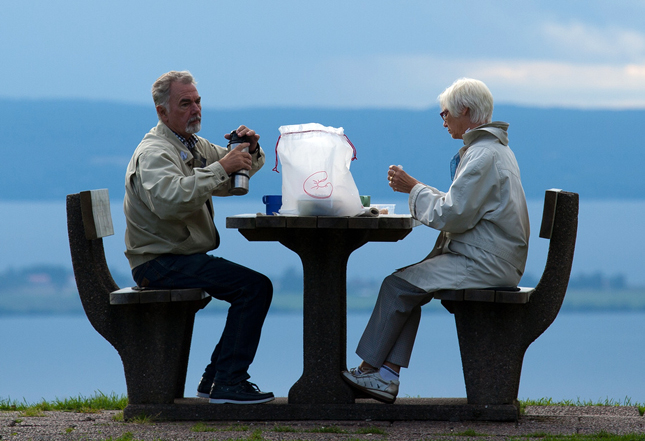
›“We have a fairly unique moment in the history of the world,” said Steven Philip Kramer, a professor at National Defense University, at the Wilson Center on April 17. “There’s never been a time when people have voluntarily produced fewer children than is necessary for sustaining the population.” [Video Below]
-
Steven Philip Kramer on ‘The Other Population Crisis’
›
Ever since Thomas Malthus’ 18th-century treatise linked overpopulation with conflict and poverty, population growth has been a subject of concern and controversy. But does population decline warrant similar attention? According to Steven Philip Kramer, the subject of this week’s podcast and author of The Other Population Crisis: What Governments Can Do About Falling Birth Rates, it does.
-
Surf and Turf: The Environmental Impacts of China’s Growing Appetite for Pork and Seafood
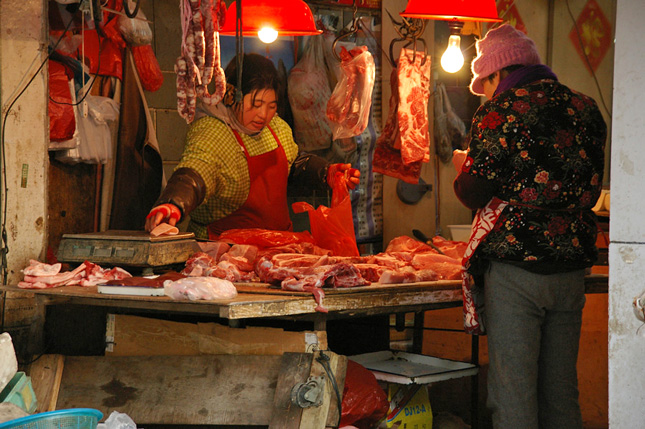
›Half the world’s pigs – 476 million – reside in China. Increasingly prosperous consumers are eating fewer grains and demanding a more protein-rich diet, ballooning the pork industry to 15 times its 1960s-era size. In the last 30 years, Chinese demand for meat has quadrupled and China is now the largest consumer of seafood in the world.
Showing posts from category economics.