• woodrow wilson center
  • ecsp

New Security Beat

Subscribe:
  • rss
  • mail-to
  • Who We Are
  • Topics
    • Population
    • Environment
    • Security
    • Health
    • Development
  • Columns
    • China Environment Forum
    • Choke Point
    • Dot-Mom
    • Friday Podcasts
    • Navigating the Poles
    • Reading Radar
  • Multimedia
    • Water Stories (Podcast Series)
    • Backdraft (Podcast Series)
    • Tracking the Energy Titans (Interactive)
  • Films
    • Water, Conflict, and Peacebuilding (Animated Short)
    • Paving the Way (Ethiopia)
    • Broken Landscape (India)
    • Scaling the Mountain (Nepal)
    • Healthy People, Healthy Environment (Tanzania)
  • Publications
  • Events
  • Contact Us

NewSecurityBeat

The blog of the Wilson Center's Environmental Change and Security Program
Showing posts from category economics.
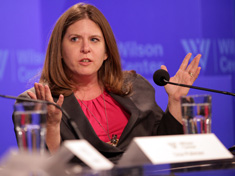
  • Lisa Palmer, Future Food 2050

    The Politics of Food Technology Innovation for Africa

    ›
    July 22, 2014  //  By Wilson Center Staff
    food-innovation-in-Africa

    The original version of this article, by Lisa Palmer, appeared on Future Food 2050.

    As a boy growing up on the shores of Lake Victoria in Kenya, Harvard international development professor Calestous Juma noticed a thing or two about innovations designed to bring more food into his community. He noticed, for instance, that the fishermen were always tinkering with new ways to trap fish while his father, a carpenter, would build the traps. He also noticed that his grandmother, a peanut grower, and other farmers who grew traditional crops such as sweet potatoes, struggled with ways to increase production beyond simply planting the best quality seeds and tubers.

    MORE
  • Antenatal Care as an Instrument of Change: Innovative Models for Low-Resource Settings

    ›
    Dot-Mom  //  From the Wilson Center  //  July 21, 2014  //  By Katrina Braxton & Schuyler Null
    jacaranda_health

    A roadside billboard in Malawi reads: “No woman should die while giving life.” But in many countries, death or grave injury during childbirth is an all too frequent occurrence. [Video Below]

    MORE
  • Quality vs. Quantity: Faith Muigai on Providing Antenatal Care in Nairobi

    ›
    Dot-Mom  //  Friday Podcasts  //  July 18, 2014  //  By Sarah Meyerhoff
    faith_small

    In the quest to improve maternal health care for the world’s poorest women, getting more mothers into clinics for regular check-ups during pregnancy is often trumpeted as a critical starting point. But delivering antenatal care to women in low-resource settings is as much about quality as it is about quantity, says Faith Muigai in this week’s podcast.

    MORE
  • Brian Kahn, Climate Central

    Weather Disasters Have Cost the Globe $2.4 Trillion

    ›
    July 17, 2014  //  By Wilson Center Staff
    destruction
    The original version of this article, by Brian Kahn, appeared on Climate Central.

    Weather- and climate-related disasters have caused $2.4 trillion in economic losses and nearly 2 million deaths globally since 1971 according to a new report. While the losses are staggering, the report also shows that we have learned from past disasters, lessons the world will need as development continues in hazardous areas and the climate continues to change.

    MORE
  • A Closer Look at USAID’s Climate Strategy: Climate-Smart Development a Work in Progress

    ›
    July 14, 2014  //  By Kathleen Mogelgaard
    Haiyan_destruction

    In March, the Intergovernmental Panel on Climate Change released its latest comprehensive synthesis of climate change research. The report concludes that “impacts from recent climate-related extremes, such as heat waves, droughts, floods, cyclones, and wildfires, reveal significant vulnerability and exposure of some ecosystems and many human systems to current climate variability.”

    MORE
  • Special Issue of ‘Reproductive Health Matters’ Highlights Integrated Development, Resilience Efforts

    ›
    Reading Radar  //  July 1, 2014  //  By Kate Diamond

    rhm43The May edition of Reproductive Health Matters is a special edition on sustainable development and reproductive health and rights. Our own Roger-Mark De Souza writes that in the quest to build resilience, development practitioners can learn from integrated population, health, and environment (PHE) programs.

    MORE
  • No REDD+ Program Is an Island: Integrating Gender Into Forest Conservation Efforts

    ›
    From the Wilson Center  //  June 25, 2014  //  By Donald Borenstein

    Nepalese women carry wood harvested sustainably from a forest.Since 2005, the Reducing Emissions from Deforestation and Forest Degradation program (REDD+) has functioned as a mechanism to financially incentivize the preservation of forestlands in order to reduce greenhouse gas emissions. But beyond its original use, some organizations have also started exploring ways it can help with other development initiatives, like women’s empowerment. [Video Below]

    MORE
  • The New World of Climate Suffering

    ›
    Beat on the Ground  //  Guest Contributor  //  June 24, 2014  //  By Paul Wapner
    Nepal_farmer2

    To date, there have been two proposed responses to climate change: mitigation, aimed at stopping the buildup of greenhouse gases, and adaptation, focused on accommodating ourselves to a warmer world. There is a third option, however, that is increasingly relevant: suffering.

    MORE
Newer Posts   Older Posts
View full site

Join the Conversation

  • RSS
  • subscribe
  • facebook
  • G+
  • twitter
  • iTunes
  • podomatic
  • youtube
Tweets by NewSecurityBeat

Trending Stories

  • unfccclogo1
  • Pop at COP: Population and Family Planning at the UN Climate Negotiations

Featured Media

Backdraft Podcast

play Backdraft
Podcasts

More »

What You're Saying

  • Volunteers,At,The,Lagos,Food,Bank,Initiative,Outreach,To,Ikotun, Pan-African Response to COVID-19: New Forms of Environmental Peacebuilding Emerge
    Rashida Salifu: Great piece 👍🏾 Africa as a continent has suffered this unfortunate pandemic.But it has also...
  • A desert road near Kuqa An Unholy Trinity: Xinjiang’s Unhealthy Relationship With Coal, Water, and the Quest for Development
    Ismail: It is more historically accurate to refer to Xinjiang as East Turkistan.
  • shutterstock_1779654803 Leverage COVID-19 Data Collection Networks for Environmental Peacebuilding
    Carsten Pran: Thanks for reading! It will be interesting to see how society adapts to droves of new information in...

What We’re Reading

  • Rising rates of food instability in Latin America threaten women and Venezuelan migrants
  • Treetop sensors help Indonesia eavesdrop on forests to cut logging
  • 'Seat at the table': Women's land rights seen as key to climate fight
  • A Surprise in Africa: Air Pollution Falls as Economies Rise
  • Himalayan glacier disaster highlights climate change risks
More »
  • woodrow
  • ecsp
  • RSS Feed
  • YouTube
  • Twitter
  • Facebook
  • Home
  • Who We Are
  • Publications
  • Events
  • Wilson Center
  • Contact Us
  • Print Friendly Page

© Copyright 2007-2021. Environmental Change and Security Program.

Woodrow Wilson International Center for Scholars. All rights reserved.

Developed by Vico Rock Media

Environmental Change and Security Program

Woodrow Wilson International Center for Scholars

Ronald Reagan Building and International Trade Center

  • One Woodrow Wilson Plaza
  • 1300 Pennsylvania Ave., NW
  • Washington, DC 20004-3027

T 202-691-4000