-
Building Coastal Resilience to Protect U.S. National Security
›June 28, 2018 // By Wilson Center Staff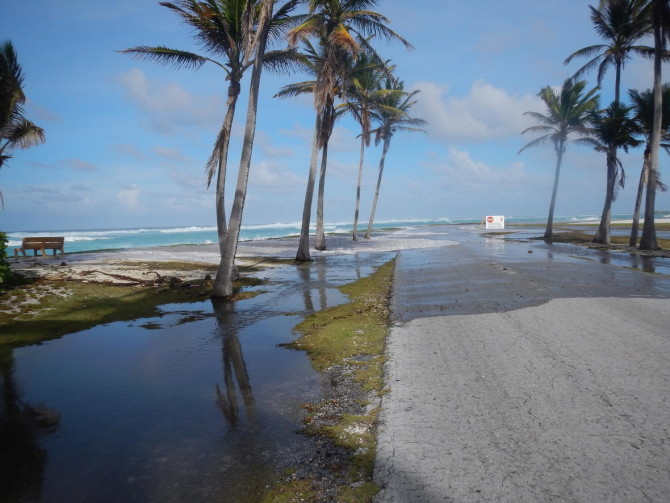
As the Atlantic hurricane season kicks off this month, some coastal communities in the United States and small-island nations in the Caribbean are still recovering from last year’s record-breaking damage. At the same time, the heavy rains pounding the East Coast this week are part of a long-term trend towards more severe heavy rainfall events that have led to deadly floods and threaten critical U.S. military bases. Even on sunny days, cities such as Norfolk and Manila contend with high tide or “nuisance” flooding—a phenomenon that has increased as much as nine-fold since the 1960s, according to NOAA.
-
A More Resilient World: The Role of Population and Family Planning in Sustainable Development
›
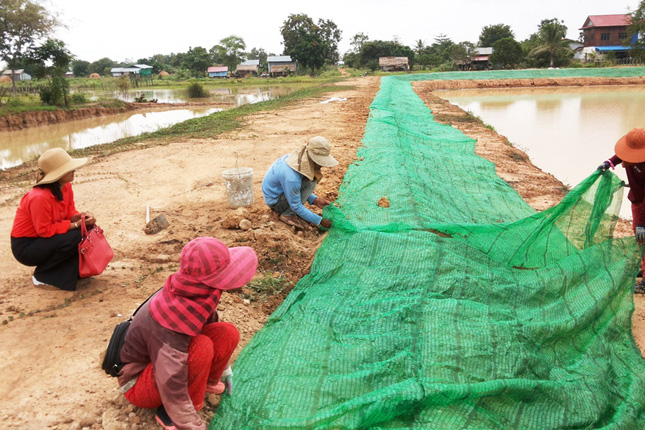
“Community mobilization, local capacity-building, and innovation are the cornerstones of successful development. And that for us includes resilience,” said Franklin Moore, Africare’s Chief of Programs, at a Wilson Center event on family planning and sustainable development. As rapid population growth intersects with challenges like food insecurity and water scarcity, communities in developing countries need not only the capacity to absorb short-term shocks, they also need transformative capacity to address long-term challenges.
-
Weakened by the Storm: Disasters and the Fighting Capacity of Armed Groups in the Philippines
›Many studies on natural disasters and conflict have assumed that disasters make it easier for rebel groups to recruit new members by fueling grievances against the government and lowering the opportunity costs of joining an insurgency, and that this recruitment will increase conflict. But disasters may actually have the opposite effect. My study of rebel groups in the Philippines, recently published in the Journal of Peace Research, suggests that by weakening the organizational structure and supply lines of rebel groups and their ability to enlist new fighters, disasters may instead reduce the intensity of the conflict, rather than increase it.
-
Sustainable Water, Resilient Communities: The Challenge of Erratic Water
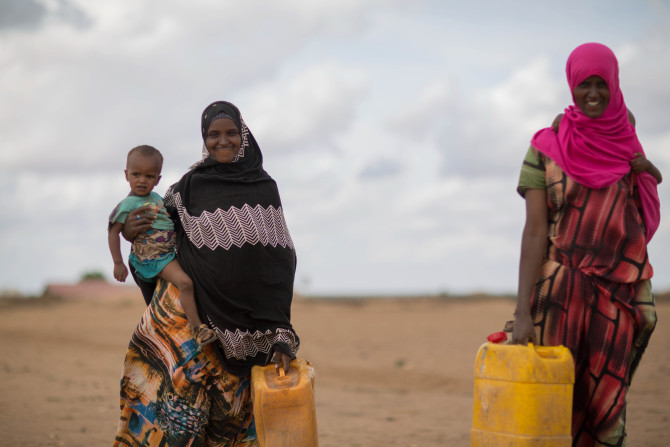
›From the Wilson Center // Water Security for a Resilient World // June 7, 2018 // By Rebecca LorenzenWater variability is increasing “due to climate change and to more frequent natural disasters,” said Jonathan Cook, Senior Climate Change Adaptation Specialist with the U.S. Agency for International Development, at the fourth and final event in a series on water security organized by the Wilson Center and the Sustainable Water Partnership. To solve the problem of increasingly erratic water, “business as usual is really not acceptable anymore,” said Will Sarni, founder of WetDATA.org, who called for new, innovative ideas: “Hope is not a strategy.”
-
“Food Power”: American Postwar Diplomacy and Food for Peace
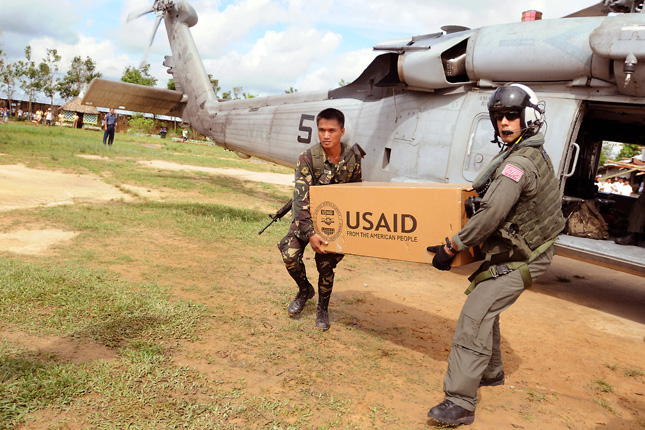
›Food has long been used by countries to wage both war and peace, and the post-war era of American food dominance is no exception. Bryan McDonald, a professor at Pennsylvania State University, traces the United States’ “Food For Peace” strategy in his recent book, Food Power: The Rise and Fall of the Postwar American Food System, arguing that “food was central to national security” during this period.
-
Inclusive Disaster Risk Reduction: Women and Climate Change Adaptation
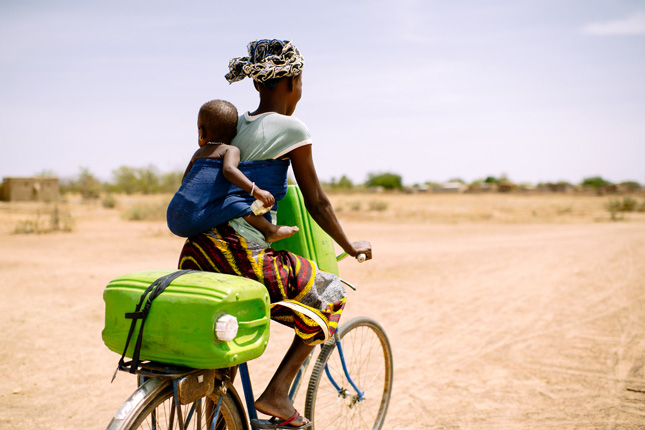
›According to a 2015 Georgetown University report on women and climate change, “the impacts of climate change – droughts, floods, extreme weather, increased incidence of disease, and growing food and water insecurity – disproportionately affect the world’s 1.3 billion poor, the majority of whom are women.”
-
First Responders of Last Resort: South Asian Militaries Should Strengthen Climate Security Preparedness and Cooperation
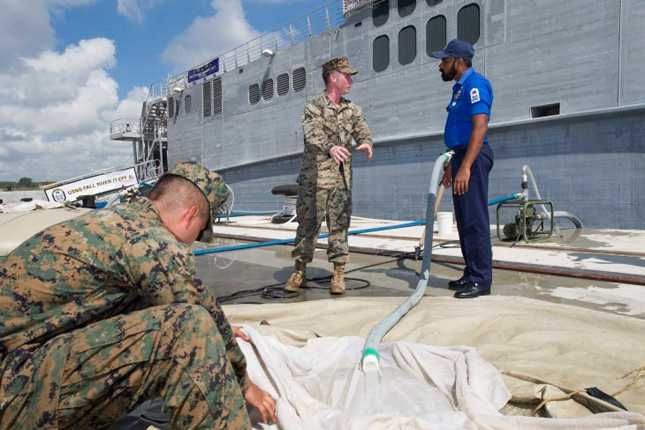
›Last month, a major multinational military exercise launched in South and Southeast Asia. The Pacific Partnership is the largest annual multilateral humanitarian assistance and disaster relief preparedness mission conducted in the Indo-Asia-Pacific and aims to enhance regional coordination in areas such as medical readiness and preparedness for manmade and natural disasters. At its center is the hospital ship USNS Mercy, with an international team of civilian and military specialists seeking to build response capacity in one of the most disaster-prone regions of the world.
-
Ten Years, Nine Floods: Local-Level Climate Adaptation in China
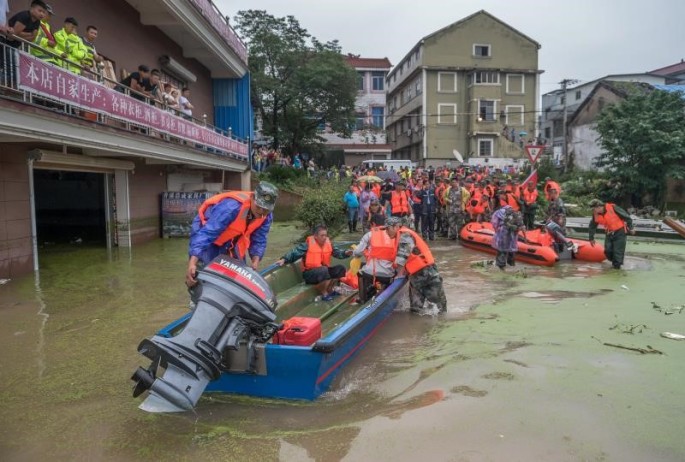
›The Lanjiang river in Eastern Zhejiang, China, reached its peak water level of 100 feet the night of June 25, 2017. Lanxi residents remember this day as “6.25,” marking the worst flood since 1955. Elsewhere in China that month, 7.3 million people were affected by floods, landslides, and heavy rains in northwestern Sichuan Province alone. Northern Guangxi suffered direct economic losses of 2.9 billion RMB (US$460 million). In the autonomous regions, 92,000 people were relocated. Flash floods caused the deaths of 10 people and forced 76,800 people to evacuate from Shanxi Province.
Showing posts from category disaster relief.