

-
From Rhetoric to Response: Addressing Climate Security with International Development
›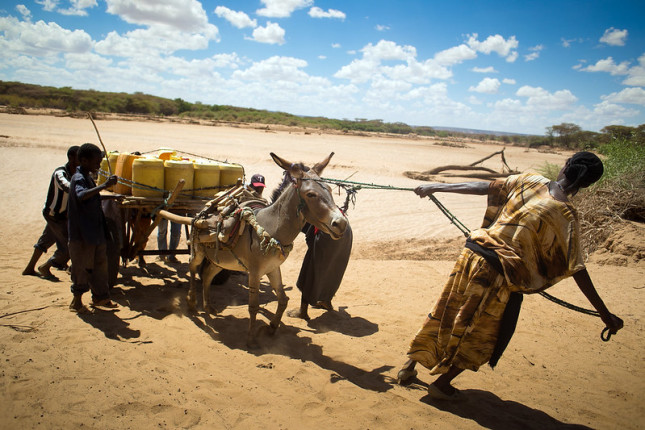
Over the past decade, our understanding of how climate change affects conflict and security has advanced considerably. Yet, how to best address the overlapping challenges of climate change, conflict, and human security remains an open question. In an article published in World Development, I address this topic by examining how climate security discourses inform development policy and, in turn, how the structures of development enable or constrain institutional capacity to address climate security. This research identifies not only the unique barriers the development sector must overcome, but also the ways in which the most common framings of climate change (i.e., as a threat multiplier) limit the scope for policy and programming.
-
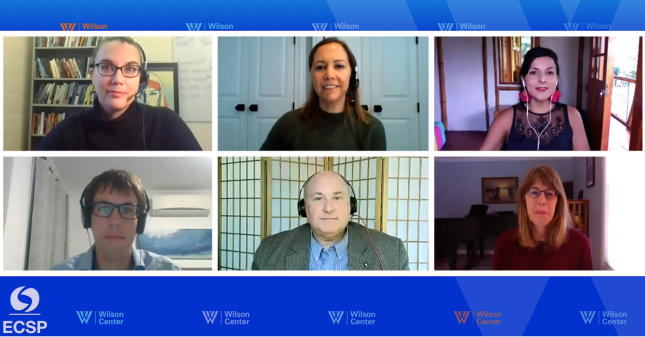
Geoengineering and Notions of Sovereignty: A Wilson Center NOW Interview with Beth Chalecki
›
As climate change impacts become starker, interest in geoengineering is growing. Geoengineering is “climate manipulation technologies that we can use to alter the climate to offset the worst parts of climate change,” says Beth Chalecki, Associate Professor of International Relations at the University of Nebraska Omaha, and Research Fellow at the Wilson Center, in a recent episode of Wilson NOW. “It sounds like a technological fix, but of course it’s not that simple,” says Chalecki.
-
The Climate Crisis and Southeast Asian Geopolitics
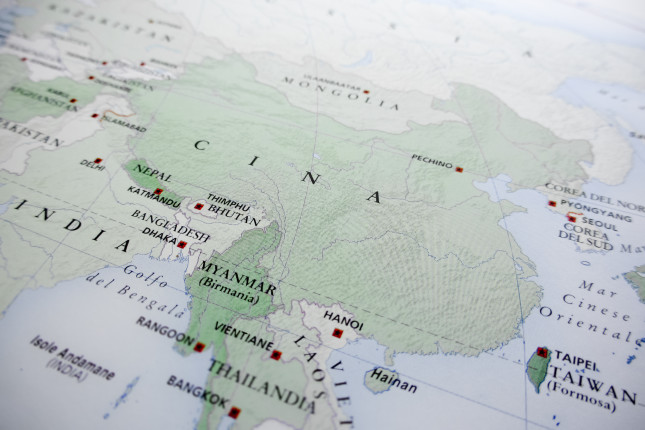
›Southeast Asia is at the center of the two major geopolitical challenges of the 21st century: climate change and the rise of China. As decision-makers across the region grow increasingly concerned about climate change and environmental degradation, as well as the implications of intensifying competition between China and the United States, Washington has an opportunity to strengthen its engagement with Southeast Asia and advance its broader geopolitical objectives.
-
Smart Power: Leveraging the Women, Peace, and Security Agenda
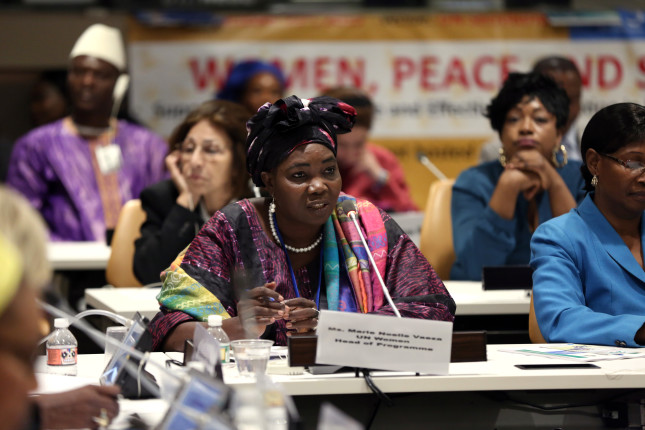
›“Without women and empowering women, there will be no peace,” said Dr. Valerie Hudson, Distinguished Professor and George H.W. Bush Chair at Texas A&M University. Hudson spoke at an event by the United States Institute of Peace (USIP) and the United States Department of Defense (DoD) in collaboration with the United States Civil Society Working Group on Women, Peace, and Security (U.S. CSWG). The event focused on how the United States can leverage the United Nation’s Women, Peace, and Security (WPS) agenda to advance gender equality and promote peace worldwide.
-
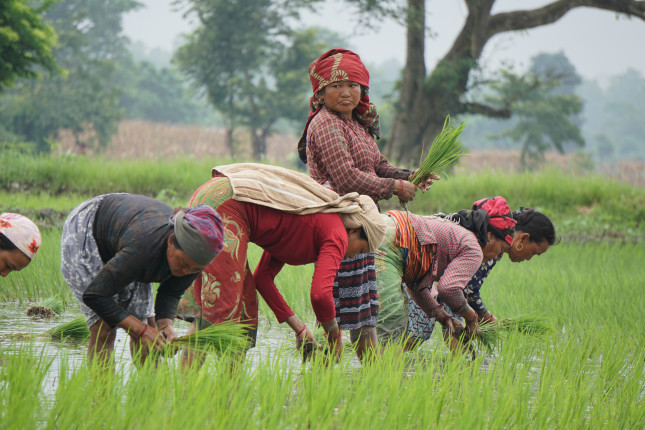
Embracing Risk: Lessons Learned from Integrating Climate Adaptation and Biodiversity Conservation in Nepal
›The Hariyo Ban Program is one of the best examples of a sustainable development initiative that I’ve ever seen, said Nik Sekhran, Chief Conservation Officer of the World Wildlife Fund-US during a recent Wilson Center event on lessons learned from a decade of building resilience through participatory and inclusive natural resource management, climate adaptation, and biodiversity conservation in Nepal.
-
Experts Spotlight Bottom-Up Approaches and the Impacts of Conflict on Infrastructure in the Next Wave of Environmental Peacebuilding
›“For 30 years, a community of researchers, practitioners, and policymakers have been working to untangle the complex relationships between environmental change and human and national security, and find entry points for policies and programs that build on these connections to create a more resilient and sustainable peace,” said Lauren Risi, Project Director of the Wilson Center’s Environmental Change & Security Program at a recent event that featured contributors to a new special issue of International Affairs on environmental peacebuilding.
-
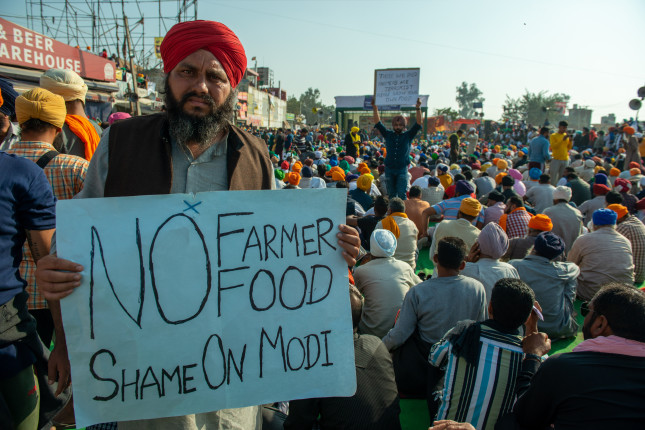
Zafar Imran, Le Monde diplomatique
Climate Change in the Indian Farmers’ Protest
›The ongoing farmers’ movement in India has taken the world’s largest democracy by storm. Hundreds of thousands from all over the country have laid siege to New Delhi for more than two months. As both the protestors and the government dig their heels in, the chances of confrontation and violence are increasing by the day.
-
Valerie M. Hudson on How Sex Shapes Governance and National Security Worldwide
›“The very first political order in any society is the sexual political order established between men and women,” says Valerie M. Hudson, a University Distinguished Professor at Texas A&M, in today’s Friday Podcast, recorded at a recent Wilson Center launch of the book, The First Political Order: How Sex Shapes Governance and National Security Worldwide. Co-authored by Hudson, Donna Lee Bowen, Professor Emerita at Brigham Young University, and P. Lynne Nielson, a statistics professor at Brigham Young University, the book investigates how the relationship between men and women shapes the wider political order. “We argue, along with many other scholars, that the character of that first order molds the society, its governance, and its behavior,” says Hudson.
Showing posts from category democracy and governance.
 “The very first political order in any society is the sexual political order established between men and women,” says Valerie M. Hudson, a University Distinguished Professor at Texas A&M, in today’s Friday Podcast, recorded at a recent Wilson Center launch of the book,

