-
Climate Change Front and Center in U.S. and Brazil Relations in Biden-Bolsonaro Era
›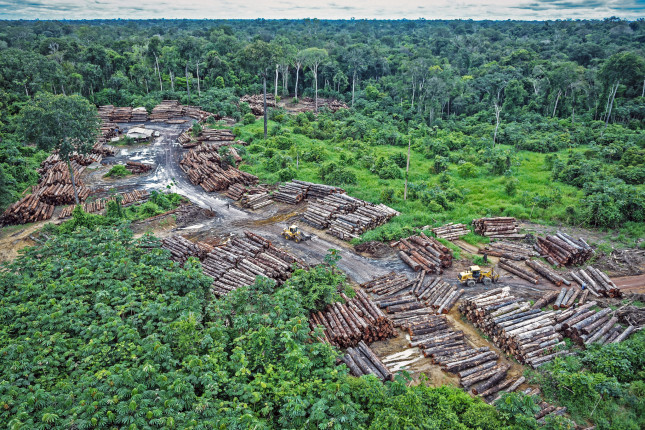
As the warm relationship between U.S. President Donald Trump and Brazil President Jair Bolsonaro comes to an end with the former’s electoral defeat in November 2020, the next two years (Bolsonaro is up for reelection in 2022) could prove to be strenuous for the bilateral relations of the two largest economies in the Western Hemisphere. President-elect Biden has signaled that combatting climate change will be a priority in his administration. Now, without the cover of a U.S. administration that denies climate change, Brazil could become further isolated in international environmental politics. All of this complicates the political realities for President Bolsonaro, whose political survival depends on maintaining his coalition of fanatical supporters, the agricultural sector, and former and current members of the military. Still, given U.S. concerns about Chinese influence in the region, the Biden-Bolsonaro relationship could prove to be low-key and practical.
-
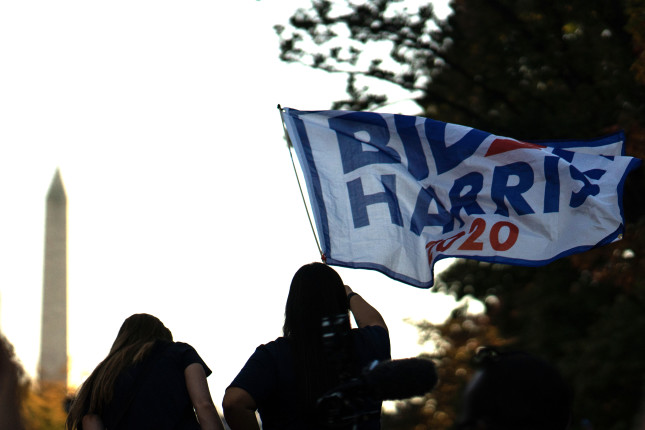
What Does a Biden-Harris White House Mean for Women and Girls? Everything.
›
The significance of the Biden-Harris administration for the world’s women and girls cannot be overstated. The current status of women and girls is grim. The COVID-19 pandemic and four years of dangerous policies designed to strip women and girls of their reproductive and economic autonomy and punish them—first for their biology, and second for their gender—have slowed and even reversed decades of progress toward gender equity. Systemic racism and policies meant to further exclude and disenfranchise minority communities have targeted women of color with tragic results.
-
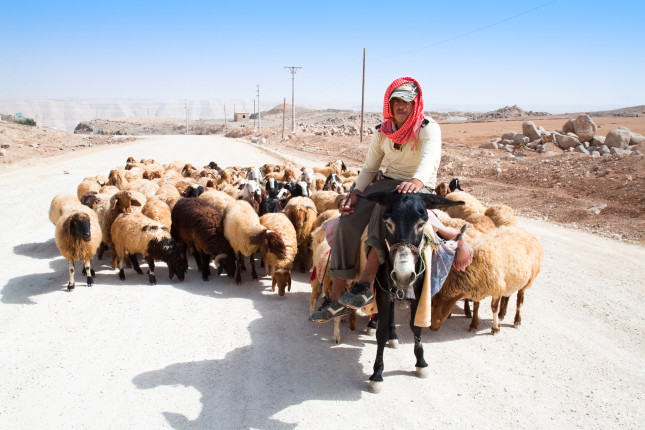
How We Misunderstand the Magnitude of Climate Risks – and Why That Contributes to Controversy
›For years, analysts have disputed the extent of climate change’s role in conflict. But the nature of climate risks can stifle those looking to define them.
The Syrian civil war has raged for almost a decade now, and in the climate security community it can feel as if we’ve spent at least that long arguing about its causes. For every claim about the impact of extreme drought in the lead up to 2011, there’s been blowback, with some scholars arguing that the climate angle has been exaggerated at the expense of other causes of the conflict. And for every argument about rural-to-urban migration, there have been suggestions that its impact in precipitating protests has been overstated. Amid some overly forceful media assertion about the significance of climate change—and valid fears that invoking the environment might be seen as absolving guilty parties, despite efforts to highlight the regime’s ultimate culpability—climate security analysts have struggled to fully pinpoint climate’s precise contribution to the conflict. Cue uncertainty, controversy, and sometimes fierce academic polemics.
-
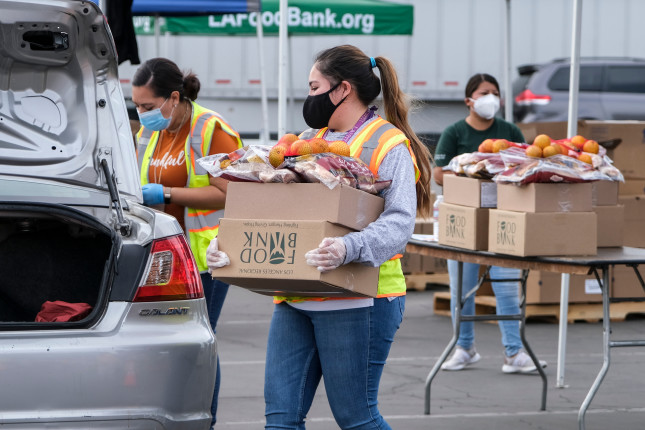
Who’s responsible for feeding hungry people?
›Historically, Americans have not been entitled to adequate, nutritious food when they are hungry, at least not at the expense of federal or state governments. Public food assistance programs are and have always been limited and supplemental and not designed to cover all nutritional needs. The effects of limited government engagement with hunger have disproportionately affected women and people of color and resulted in a patchwork system of assistance where charities and privately funded food banks attempt to fill gaps left by the government’s Supplemental Nutrition Assistance Program (SNAP) program.
-
“Multilateralism is Back!” Climate Change, Equity, and 21st Century Diplomacy
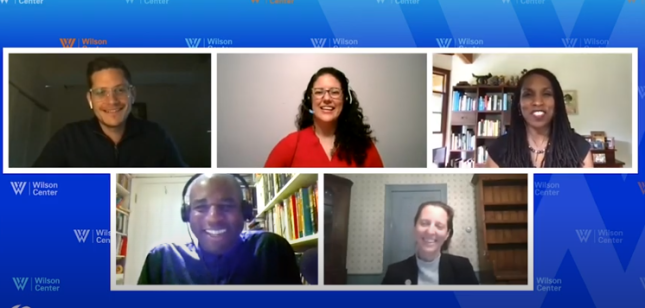
›“Climate change will upend the 21st century world order. From financial systems, migration patterns, and great power competition, to the potential unintended consequences of climate responses, and issues of inequity and the future of democracy, climate change will penetrate our systems, our relationships, and our lives in ways that we have yet to fully understand,” said Lauren Risi, Director of the Wilson Center’s Environmental Change and Security Program, at a recent event co-hosted by the Wilson Center and adelphi. The panel discussion focused on two topics addressed in the recently launched 21st Century Diplomacy project—how efforts to address climate change will engage new modes of multilateralism and how to incorporate the increasingly urgent calls for a more equitable and just world.
-
“Climate is the Multilateral Challenge of the Moment”: Highlights from a Conversation on Climate Change, Multilateralism, and Equity
›“After a period of populist nationalism…multilateralism is back, and climate is the multilateral challenge of the moment,” said David Lammy, a member of Parliament for Tottenham in the United Kingdom and Shadow Secretary of State for Justice, in a recent 21st Century Diplomacy event, co-hosted by the Wilson Center and adelphi. The election of Joe Biden and Kamala Harris is not a “reset,” but rather a catalytic moment for the international community precisely because of the pandemic and consequences for the global economy, he said. When you look at who has been left behind in countries like the United States and United Kingdom, and globally, who is at risk climate impacts, it is “black and brown people suffering all over the planet, and that is a call to arms,” said Lammy. -
How U.S. Arctic Policy and Posture Could Change Under President-elect Biden
›Truth, trust, and transparency are key aspects to sound and sustainable governance of the Arctic, said Ulf Sverdrup, Director of the Norwegian Institute of International Affairs. He was one of a panel of experts who spoke on Nov. 30 at “The Arctic in a Post-Election World,” the first event in a two-part series sponsored by the Wilson Center’s Polar Institute.
-
The First Political Order: How Sex Shapes Governance and National Security Worldwide (Book Launch)
›“What you do to your women you do to your nation state. And so, if you decide to curse your women, we argue that you will curse your nation state as well,” said Valerie Hudson, University Distinguished Professor and Holder of the George H.W. Bush Chair at the Bush School of Government and Public Service at Texas A&M University, at the launch of The First Political Order. Co-authored by Hudson, Donna Lee Bowen, Professor Emerita at Brigham Young University, and P. Lynne Nielson, Professor of statistics at Brigham Young University, The First Political Order is the culmination of 2 decades of research on the linkages between the status of women and the status of nation-state security.
Showing posts from category democracy and governance.
 “After a period of populist nationalism…multilateralism is back, and climate is the multilateral challenge of the moment,” said David Lammy, a member of Parliament for Tottenham in the United Kingdom and Shadow Secretary of State for Justice, in a recent