

-
What Can California Teach the Federal Government on Air Pollution? A Conversation With Richard Corey
› In August 2022, California’s Air Resources Board (CARB) announced a new regulation requiring all new vehicles sold in California to be zero emission by 2035, paving the way for an emission-free future. But what exactly is CARB—and why do its decisions carry such weight? To answer those questions and more, the Wilson Center’s Environmental Change and Security Program partnered with Climate Break (with support from the Henry M. Jackson Foundation) for a joint podcast featuring CARB’s former Executive Officer, Richard Corey. The conversation ranged from the agency’s history, to what Corey has learned about how to implement effective policy, and his view of lessons for the federal government as it moves more aggressively on climate action.
 -
Vaccine Diplomacy in the Wake of COVID-19
›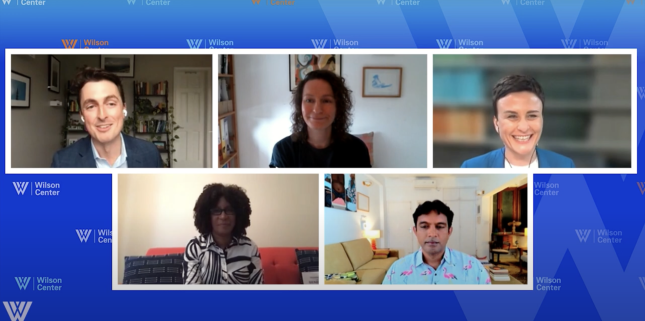
As the COVID-19 pandemic gripped the world in late 2019 and early 2020, the world’s great hope was in the rapid development and deployment of vaccines. Global public health organizations hoped to seize upon the crisis to advance international cooperative efforts to fight COVID-19, and the promise of advanced economies embracing “vaccine diplomacy” to get shots into arms around the planet was a key element in this strategy.
-
Water Diplomacy can Learn from Realist Ideas
›Guest Contributor // Water Security for a Resilient World // July 19, 2022 // By Sumit Vij, Jeroen Warner, Mark Zeitoun & Christian BréthautAs Russia’s war in Ukraine continues and nations are returning to behaviors best explained by realism, we are wrestling with these trends’ longer-term implications on water diplomacy. States are becoming inward-looking and prioritizing national sovereignty. Debates about water and climate are resurfacing, and we should better understand how hard power and inward-looking approaches can impact water diplomacy and cooperation. To inform policymakers about power sensitivities and power games played in diplomacy, water diplomats must rethink the future of water security and peace. They should reexamine leadership styles, cultural sensitivities, and knowledge exchange from the lens of realism.
-
Top 5 Posts for June 2022
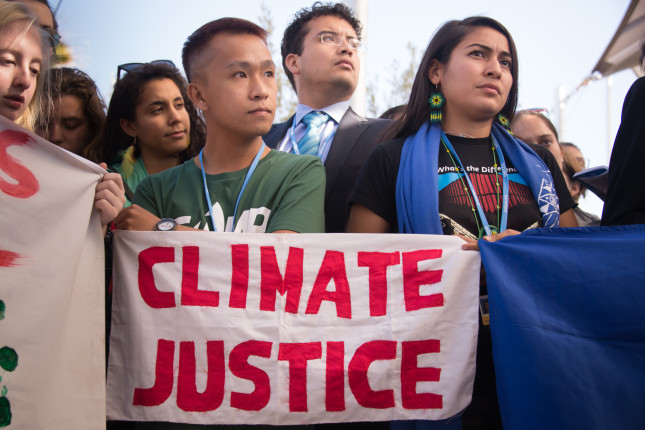
›From climate change to COVID-19 and the war in Ukraine, the world is a landscape of increasing instability. Book-ending the Top 5 posts of June are two articles that explore different aspects of these converging risks. In the top post for June, Steven Gale and Mat Burrows write that globally, younger generations are becoming increasingly disengaged and discontent with their democratic governments, civil society, and institutions. Youth disillusionment is not a result of ignorance to current affairs, but rather a lack of faith in democratic institutions to address today’s most pressing global issues. Tackling youth disillusionment, suggest Gale and Burrows, begins with examining youth engagement trends and placing it at the top of the agenda.
-
Disillusioned Youth: A Danger to Democracy
›Global risks abound these days, from climate change to the next pandemic, as well as acute supply chain disruptions, energy shortfalls, and cybersecurity threats. These challenges play out in a landscape of immense political instability fomented by the Russian Federation, the People’s Republic of China, Iran and others, as well as dangers looming in the potential state collapse of countries like Afghanistan, Yemen, and Sudan. Taken together, the risk tally of our moment is mounting quickly.
-
Can Conflict-Sensitive Gender Analysis Close the Door on Backdraft?
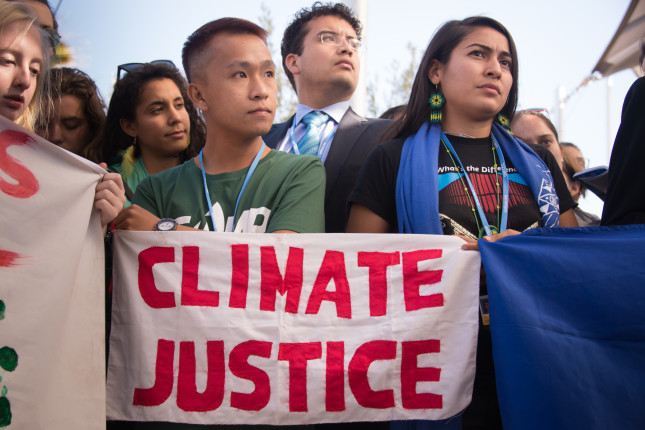
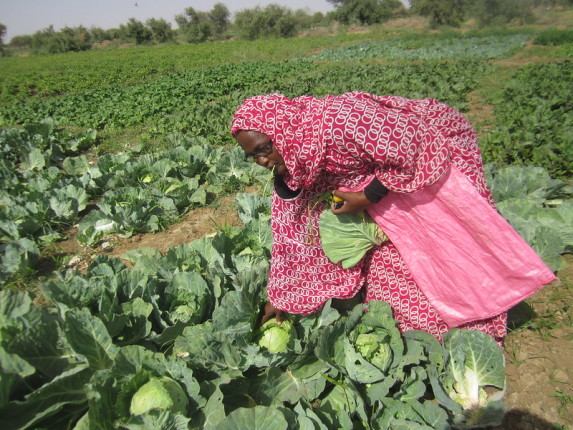
›Effective climate action demands urgent transformational change. It is also increasingly clear that responses to climate change—whether focused on curbing emissions or adapting to climate impacts—can profoundly influence and change how people live. It touches upon many aspects of their everyday life, including their livelihoods, where they live, and their roles in the community. These changes also can have substantial effects on the socio-ecological systems in which people live— bringing unintended tensions and drivers of conflict that are referred to broadly as backdraft.
-
United Nations Advances Strategic Foresight: Breakdown or Breakthrough Scenarios?
›Last September, Secretary-General António Guterres outlined the United Nation’s Our Common Agenda in a speech to the General Assembly. His remarks focused on the future of global cooperation for the next 25 years. It was imperative, he messaged, to recognize that our accelerated interconnectedness, and the formidable challenges we all face, can only be addressed through a reinvigorated multilateralism, with the United Nations at the core of collective member efforts. We must think big, act swiftly, and work effectively, he said, to reshape how we move forward today to achieve the goals of the UN declaration commemorating the 75th anniversary of the United Nations.
-
New Security Broadcast | Jeff Colgan on Oil Politics and International Order
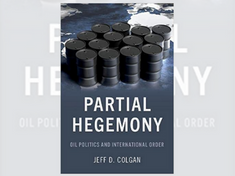
›Debates around whether and to what extent international order is changing can be misguided “so long as we are thinking about international order as a single, monolithic thing,” says Jeff Colgan, Associate Professor of Political Science and director of the Climate Solutions Lab at Brown University in this week’s episode of New Security Broadcast. Colgan spoke at a recent Wilson Center event featuring his new book, Partial Hegemony: Oil Politics and International Order. In the book, Colgan challenges the idea of a monolithic ‘global order’ and shows that international order instead comprises a set of interlinked “subsystems.” In a world where there is no single, all-encompassing hegemon to trigger universal global change, this framework of subsystems allows us to explore how particular geopolitical realms can alter without fundamentally changing the geopolitical landscape, he says.
Showing posts from category democracy and governance.
 Debates around whether and to what extent international order is changing can be misguided “so long as we are thinking about international order as a single, monolithic thing,” says Jeff Colgan, Associate Professor of Political Science and director of the Climate Solutions Lab at Brown University in this week’s episode of New Security Broadcast. Colgan spoke at a recent Wilson Center

