• woodrow wilson center
  • ecsp

New Security Beat

Subscribe:
  • rss
  • mail-to
  • Who We Are
  • Topics
    • Population
    • Environment
    • Security
    • Health
    • Development
  • Columns
    • China Environment Forum
    • Choke Point
    • Dot-Mom
    • Friday Podcasts
    • Navigating the Poles
    • Reading Radar
  • Multimedia
    • Water Stories (Podcast Series)
    • Backdraft (Podcast Series)
    • Tracking the Energy Titans (Interactive)
  • Films
    • Water, Conflict, and Peacebuilding (Animated Short)
    • Paving the Way (Ethiopia)
    • Broken Landscape (India)
    • Scaling the Mountain (Nepal)
    • Healthy People, Healthy Environment (Tanzania)
  • Publications
  • Events
  • Contact Us

NewSecurityBeat

The blog of the Wilson Center's Environmental Change and Security Program
Showing posts from category democracy and governance.

  • How Building Political Will in Asia Could Improve Environmental Governance

    ›
    On the Beat  //  March 13, 2019  //  By Kyla Peterson
    29385261247_8fbd58ce83_k

    A high degree of political will is one of several pre-conditions needed for good environmental management, said Kim DeRidder, Regional Director for Environmental Programs at the Asia Foundation. He spoke at a round-table on Advancing Environmental Governance Across Asia hosted by the Asia Foundation. While he emphasized the need to promote political will within Asia, he questioned whether the bold pledges that some Asian countries made in the Paris Agreement, such as the Philippines’ pledge to reduce emissions by 70 percent by 2030 and Indonesia by 26 percent, were realistic given the significant disconnect between what a country claims it is going to do and what it can actually do.

    MORE
  • From Resolution to Solution: UNEA’s Unique Opportunity to Tackle Environmental Dimensions of Armed Conflicts

    ›
    Guest Contributor  //  March 8, 2019  //  By Wim Zwijnenburg
    UN Environment Assembly

    When the Fourth Session of the UN Environment Assembly (UNEA-4) takes place in Nairobi starting March 11, governments, international organizations, and civil society organizations will discuss issues on the theme of innovative solutions for environmental challenges and sustainable consumption and production with over 30 draft resolutions submitted for discussion. With few international forums where the environmental dimensions of conflict can be properly discussed, we were optimistic about the past resolutions tackling this topic.

    MORE
  • Democracy Under Assault: Guatemala Attempts to Silence Eco-populists

    ›
    Guest Contributor  //  March 4, 2019  //  By Carrie Seay-Fleming
    Protests in Guatemala

    While the U.S. has been fixated on President Trump’s contentious border wall project, another more ominous threat facing Guatemalans is building internally. In a swift reversal, many politicians and scholars who have previously argued for directing increased U.S. aid to communities in Central America’s Northern Triangle—Guatemala, El Salvador, and Honduras—as a humanitarian alternative to the border wall, are now calling on Congress to suspend some forms of aid to Guatemala, which they now see as the more humane option.

    MORE
  • The Tetherball Effect: How Efforts to Stop Migration Backfire

    ›
    Guest Contributor  //  January 7, 2019  //  By Loren B. Landau & Iriann Freemantle
    2976016514_cb625e6438_o

    Fears of Central American caravans and Saharan smugglers keep European and U.S. leaders up at night. Desperate to manage migration, they turn to short-term fixes, which include blocking borders and supporting authoritarian leaders to contain people—their own citizens and others—before they get close to Europe or the United States. This bit of political theater appeals to some, but has limited effects in overall numbers. The long game consists of addressing root causes so people no longer feel compelled to move at all. But this too will do little to prevent migration north. If anything, it will encourage more people to move.

    MORE
  • Power Play: Can Micro-Hydropower Electrify Remote Afghanistan and Promote Peace?

    ›
    Guest Contributor  //  December 4, 2018  //  By Elizabeth B. Hessami
    Panjshir

    After close to 40 years of armed conflict, Afghanistan may be poised to begin a period of economic recovery. Electrifying remote areas and establishing pervasive political control is critical to its success. India is currently planning and funding several major hydropower projects along the Kabul River and its tributaries. Micro-hydropower is bringing electricity to remote areas such as the Banda Miralamji Village in eastern Nangarhar Province. However, in some areas far from the capital, the central government in Kabul and opposition groups are struggling for control and influence. While electrification of a village often eases poverty, health concerns, and improves communication, it does not always benefit the government in Kabul.

    MORE
  • Stormy Weather: Human Security Should Include Freedom from Hazard Impacts

    ›
    Guest Contributor  //  November 7, 2018  //  By Dhanasree Jayaram
    Mumbai Rain Storm

    The original version of this article by Dhanasree Jayaram was published by Climate Diplomacy.

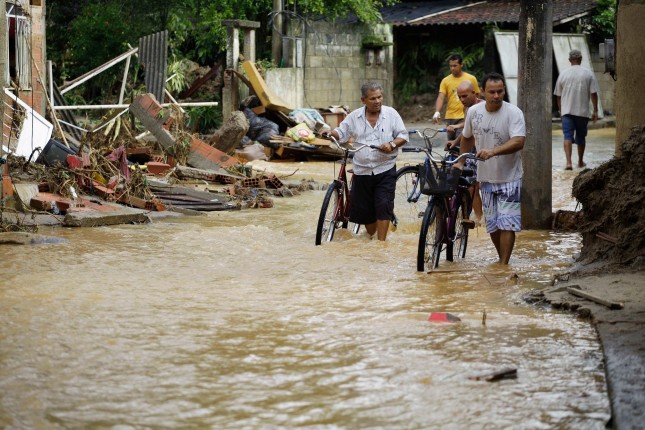
    It is imperative that countries adopt a human security approach to achieve “freedom from hazard impacts”—nationally through a scientific disaster risk reduction strategy and internationally through climate diplomacy.

    MORE
  • Resilient Cities Need to Support the Informal Economy: Millions of Overlooked Working Poor

    ›
    Guest Contributor  //  October 31, 2018  //  By Caroline Wanjiku Kihato & Mike Rogan
    Bangkok Street Vendors

    For this World Cities Day, the UN’s theme calls for “building sustainable and resilient cities.” Cities across the Global South are assessing their physical preparedness against future shocks. Can cities that leave out—or often push out—poor workers claim resiliency? These moves are, in fact, weakening any preparedness. The foundations of truly sustainable and resilient cities lie in their residents’ abilities and agency.

    MORE
  • The Dark Side of the Sun: Avoiding Conflict Over Solar Energy’s Land and Water Demands

    ›
    October 2, 2018  //  By Olivia Smith

    The 73-megawatt Lopburi solar power plant in central Thailand is the largest solar photovoltaic project in the world.  It will be central to Thailand's efforts to generate  energy from renewable sources.

    Solar farms—just like regular farms—cover large swaths of land, requiring between 3.5 to 16.5 acres per MW of generating capacity. The largest solar plant in the world, the 648 MW Kamuthi facility in Tamil Nadu, India, covers ten square kilometers. But it will be dwarfed by the 3,450 MW facility under construction on China’s Tibetan Plateau, which will span 298 square kilometers when completed. Building these large plants requires fundamentally changing how the land they sit on is used, which—without careful planning—could have negative impacts on the environment and local communities that could potentially lead to conflict. The backlash could not only derail solar projects, but could also fuel resistance to future renewable energy development.

    MORE
Newer Posts   Older Posts
View full site

Join the Conversation

  • RSS
  • subscribe
  • facebook
  • G+
  • twitter
  • iTunes
  • podomatic
  • youtube
Tweets by NewSecurityBeat

Trending Stories

  • unfccclogo1
  • Pop at COP: Population and Family Planning at the UN Climate Negotiations

Featured Media

Backdraft Podcast

play Backdraft
Podcasts

More »

What You're Saying

  • Volunteers,At,The,Lagos,Food,Bank,Initiative,Outreach,To,Ikotun, Pan-African Response to COVID-19: New Forms of Environmental Peacebuilding Emerge
    Rashida Salifu: Great piece 👍🏾 Africa as a continent has suffered this unfortunate pandemic.But it has also...
  • A desert road near Kuqa An Unholy Trinity: Xinjiang’s Unhealthy Relationship With Coal, Water, and the Quest for Development
    Ismail: It is more historically accurate to refer to Xinjiang as East Turkistan.
  • shutterstock_1779654803 Leverage COVID-19 Data Collection Networks for Environmental Peacebuilding
    Carsten Pran: Thanks for reading! It will be interesting to see how society adapts to droves of new information in...

What We’re Reading

  • Rising rates of food instability in Latin America threaten women and Venezuelan migrants
  • Treetop sensors help Indonesia eavesdrop on forests to cut logging
  • 'Seat at the table': Women's land rights seen as key to climate fight
  • A Surprise in Africa: Air Pollution Falls as Economies Rise
  • Himalayan glacier disaster highlights climate change risks
More »
  • woodrow
  • ecsp
  • RSS Feed
  • YouTube
  • Twitter
  • Facebook
  • Home
  • Who We Are
  • Publications
  • Events
  • Wilson Center
  • Contact Us
  • Print Friendly Page

© Copyright 2007-2021. Environmental Change and Security Program.

Woodrow Wilson International Center for Scholars. All rights reserved.

Developed by Vico Rock Media

Environmental Change and Security Program

Woodrow Wilson International Center for Scholars

Ronald Reagan Building and International Trade Center

  • One Woodrow Wilson Plaza
  • 1300 Pennsylvania Ave., NW
  • Washington, DC 20004-3027

T 202-691-4000