-
Watch: Eric Kaufmann on How Demography Is Enhancing Religious Fundamentalism
›May 24, 2011 // By Schuyler Null“There’s a belief, often amongst political scientists and social scientists, that demography is somehow passive and that it doesn’t really matter,” said Eric Kaufmann, author of Shall the Religious Inherit the Earth: Demography and Politics in the 21st Century and professor at Birkbeck College, University of London in this interview with ECSP. “Part of the message of this book is that demography can lead to social and political change.”
“In this case what I’m looking at is the way that demography can change the religious landscape,” Kaufmann said. “It can actually enhance the power of religion, especially religious fundamentalism in societies throughout the world.”
“Purely secular people, who have no religious affiliation, they are leading the move towards very low levels of fertility, even down to the level of one child per woman,” Kaufmann said. On the other hand, fundamentalists are reacting to this trend and deliberately deciding not to make the demographic transition, he said. “In doing so, the gap between secular and religious widens” and is actually more pronounced in places where the two groups collide.
“You can see this in the Muslim world,” said Kaufmann. “If you look at urban areas such as the Nile Delta and Cairo, in those urban cities, women are who are most in favor of Shariah have twice the family size of women who are most opposed to Shariah, whereas in the Egyptian countryside, the difference is much less because they haven’t been exposed to the same modernizing pressures.”
These dynamics affect the Western world as well, especially when you factor in migration, said Kaufmann: “The fact that almost all the world’s population growth is occurring in the developing world, which is largely religious, means that a lot of people are moving from religious parts of the world to secular parts of the world,” he said. “That effects, for example, countries like the United States or in Western Europe, which are receiving immigrants, and it means in the case of Western Europe – which is a very secular environment – that immigrants bring not only ethnic change but on the back of that, religious change; they make their societies more religious.” -
Tunisia Predicted: Demography and the Probability of Liberal Democracy in the Greater Middle East
›
In 2008, demographer Richard Cincotta predicted that between 2010 and 2020 the states along the northern rim of Africa – Morocco, Algeria, Tunisia, Libya, and Egypt – would each reach a demographically measurable point where the presence of at least one liberal democracy (and perhaps two), among the five, would not only be possible, but probable. Recent months have brought possible first steps to validate that prediction. [Video Below]
-
Book Launch: ‘The Future Faces of War: Population and National Security,’ by Jennifer Dabbs Sciubba
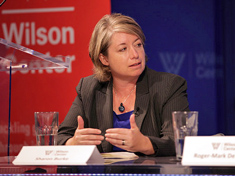
›“Demographic trends by themselves are neither inherently good nor bad. It’s really a state’s ability to address these issues that can determine the outcome,” said Jennifer Dabbs Sciubba, the Mellon Environmental Fellow with the Department of International Studies at Rhodes College. At a book launch event at the Wilson Center on March 14 for The Future Faces of War: Population and National Security, Sciubba, along with Deputy Under Secretary Kathleen Hicks of the Department of Defense, discussed the national security implications of demography and its important role in understanding and managing conflicts around the world. [Video Below]
Demography as an Indicator, Multiplier, and Resource
Demography can be thought of in three ways, explained Sciubba: as “an indicator of challenge and opportunity; a multiplier of conflict and progress; and a resource for power and prosperity.”
A country’s age structure can pose a challenge, said Sciubba, because countries with a large percentage of their population under the age of 30 “are about two and a half times more likely to experience civil conflict than states with more mature age structures.” Tunisia’s recent revolution, she said, could be understood as a “story about demography.”
The 26-year-old fruit vendor Mohammed Bouazizi, who set himself on fire on December 17 after being hassled by police, was part of one of the largest age cohorts in Tunisia, those aged 25-29. There are some 64 million young men across the Middle East-North Africa region between the ages of 15 and 30, according to UN estimates. “If his death was the spark” for the unrest in the region, Sciubba said, “it’s the underlying demographic trends that were the fodder.”
Yet, Sciubba sees opportunity within this challenge. Citing the work of Richard Cincotta, she said that “states have half a chance – literally 50 percent – of becoming a democracy once their proportion of youth declines to less than 40 percent.” Tunisia has the best chance in the region of becoming a free democracy based on its demography, followed by Libya, where youth aged 15-29 are 43 percent of the adult population.
At the other end of the age structure, some of the world’s most powerful countries, such as Japan, Germany, Italy, France, Russia, and China, are rapidly aging. This aging will “somewhat decrease the ability of these states to project political, economic, and military power” due to a shortage of labor and a smaller pool of funding, said Sciubba.
Countries with transitional age structures, such as India, Brazil, and South Africa, face different security challenges. With a majority of their populations between 15 and 60 years old, there are more people contributing to the economy than are taking away, which could bolster these countries economically and politically (the “demographic dividend”). Global institutions will have to reform and include these countries, she advised, “or else become irrelevant.”
But the defining trend of the 21st century, said Sciubba, is urbanization. While great sources of economic growth, cities are also quite vulnerable to natural disasters and terrorism because of their concentrations of people, wealth, infrastructure, and bureaucracy.
In looking to the future, Sciubba called for continued support for family planning initiatives. “At least 90 percent of future world population growth will take place in less developed countries,” which are least equipped to handle the demands of that growth, she said. In addition, Sciubba recommended that the United States seek out partnerships with countries that have transitional age structures, particularly India, which could be a stabilizing force in a tumultuous region. She also called on the United States to partner with states in the Western Hemisphere and remain open to migration.
Defense and Demography
“Understanding population is critical to our success in being able to prevent conflict, and also managing conflict and crises once we’re involved,” said Hicks, describing the Department of Defense’s (DOD) interest in demography. However, the DOD does not “treat demographics as destiny,” she said, but instead as “one of several key trends, the complex interplay of which may spark or exacerbate future conflicts.”
Recent world events, such as those in the Middle East and North Africa, “have demonstrated how critical our understanding of population is for security practitioners,” said Hicks. Similarly, the recent earthquake and tsunami in Japan dramatically illustrate the vulnerability of large urban areas. Echoing Sciubba’s comments on population aging, she cited “incredible divestments in defense” in Europe, which, she said, “puts us, as a key partner in NATO, at a thinking stage.”
Under Secretary of Defense for Policy Michèle Flournoy is “deeply interested” in demographic issues, said Hicks. She identified other demographic areas of great interest for her office: the youth bulge in Pakistan, urbanization in Afghanistan, the role of highly educated women in Saudi Arabia, the Chinese diaspora in the Americas, Russia’s shrinking population, and various trends in China, including aging, gender imbalance, urbanization, and migration.
Image credit: “Iraq,” courtesy of flickr user The U.S. Army.
Sources: ECSP Report 12, Financial Times, The New York Times, Population Reference Bureau, UN Population Division. -
The Youth of North Africa
Surging on a Knife’s Edge
›March 23, 2011 // By Christina DaggettThe Middle East/North Africa region is experiencing a “youth surge,” said Jack Goldstone, director of the George Mason University’s Center for Global Policy, at a recent GMU event. “In the last two decades the number of people in their late teens and twenties has increased… It’s doubled in Egypt; it’s grown by half in Tunisia; and nearly doubled in Libya,” he told Warren Olney on KCRW’s To the Point.
Such youth surges are problematic because, Goldstone wrote in ECSP Report 13, “population distortions – in which populations grow too young, or too fast, or too urbanized – make it difficult for prevailing economic and administrative institutions to maintain stable socialization and labor-force absorption.”
In the case of Egypt, the youth surge put enormous pressure on a government system that could no longer guarantee jobs to every college graduate, said Goldstone. When government guarantees dried up, graduates found that their poor-quality degrees were of little use, especially in a system that prioritized connections and bribery. The result was an unemployment rate of 25 percent among Egyptian youth and a mounting sense of frustration with the economic system and the government.
This frustration found a symbol when Mohammed Bouazizi, a 26-year-old Tunisian, set himself – and an entire region – on fire after his third run-in with the police cut off his only source of income. Youth across North Africa and the Middle East, Goldstone said, could identify with Bouazizi’s desperation and frustration after years of dealing with a closed economic system and a corrupt government.
While overall economic growth has been strong in the region – a fact which had misled many observers (including himself, Goldstone admits) into thinking the region was more stable – these economic gains were apparently being captured by the ruling elite to a far greater degree than previously thought, said Goldstone. For example, it is estimated that ousted Egyptian president Hosni Mubarak and his family are worth between $40 and $70 billion.
Meanwhile, a burgeoning surge of young people were struggling to get by. Goldstone pointed to a Gallup poll conducted in 2010 in which only 12 percent of Egyptians and 14 percent of Tunisians would classify themselves as “thriving” – down from 25 and 24 percent, respectively, in 2007 and 2008.
While the Ben Ali and Mubarak regimes have fallen, these revolutions do not ensure the youth in these countries will have a prosperous future. They need not only access to capital, said Goldstone, but also access to information and social networks so that they can identify market opportunities and stay connected.
Immigration to more developed countries could also be an important avenue for economic growth and education. In a Foreign Affairs article, “The New Population Bomb,” Goldstone writes, “Given the dangers of young, underemployed, and unstable populations in developing countries, immigration to developed countries can provide economic opportunities for the ambitious and serve as a safety valve for all.”
The future of Middle Eastern youth, and that of the region at large, depends on the quality of their education and their ability to be productive, said Goldstone. They stand on “a knife edge,” he said, and the transition to democracy will not be smooth or easy.
Image Credit: “Protest Face Paint,” courtesy of flickr user Ahmad Hammoud.
Sources: The Economist, ECSP Report 13, Foreign Affairs, Gallup, International Monetary Fund, KCRW, Voice of America. -
Carla Koppell and Haleh Esfandiari
Make Sure Women Can Lead in the Middle East
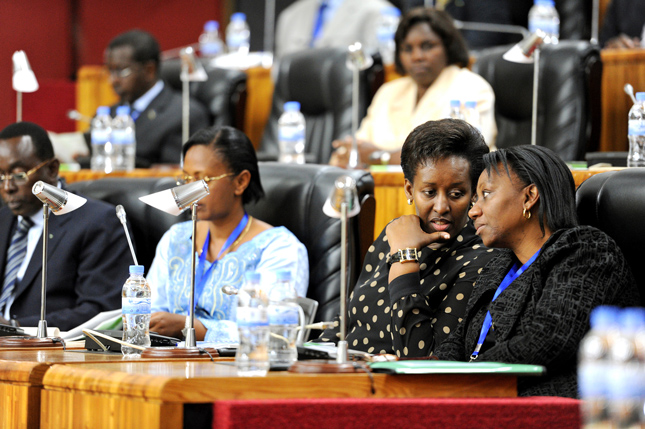
›In Libya, Egypt, Bahrain, Yemen, Tunisia, and elsewhere, women have stood with men pushing for change. In Libya, Iman and Salwa Bagaighif are helping lead, shape, and support protesters. And in Egypt, the Egyptian Organization for Human Rights, one of the oldest and most well-known non-governmental organizations in Egypt, estimated that at least 20 percent of the protesters were women.
For example, the 26-year-old co-founder of Egypt’s April 6 Youth Movement, Asmaa Mahfouz, mobilized thousands of youth in support of the protest through her impassioned YouTube video. In Yemen, a 32-year-old mother of three, Tawakkul Karman, helped organize protests against the current government.
History of Frustration
Yet women’s leadership is not a new phenomenon. In Iran, women have for many years successfully pushed for greater freedom in personal status law and greater employment and educational opportunities. Many Iranian women have been imprisoned simply for endorsing the Million Signature Campaign, which seeks equal rights and the repeal of laws that discriminate against women.
Women have been using social media and leveraged communications technology to pursue greater social and political openness since before the arrival of Iranian President Mahmoud Ahmadinejad. Notwithstanding a rich history of non-violent activism and extraordinary leadership, women have rarely been involved in political decision-making in the Middle East and North Africa region.
At an even more basic level, women do not feel confident that their rights will be preserved under the systems emerging from recent political transformations.
In Iraq, there have been female judges since the 1950s and thus many of women’s rights have been protected since 1978 by a personal status law. Yet in 2003, the new Iraqi Governing Council sought to strip women of these rights. Only in the face of domestic petitions, letter writing, and face-to-face advocacy were women successful in ensuring their rights were preserved. Iraqi women continue to face efforts to reduce their freedoms and each time they have defeated the assault.
Already Egyptian women are risking similar marginalization. There are no women on the committee revising the constitution. In an almost uncanny parallel to the struggle of Iraqi women after former President Saddam Hussein, Egyptians have drafted a petition, endorsed by over 60 local organizations, decrying women’s absence from transitional political bodies.
Bias embedded in the new draft constitution suggests that these concerns may be real.
“Prerequisite for an Arab Renaissance”
The international community and the new generation of progressive, democracy-minded leaders in the Middle East need to see women as critical partners for change. The evidence is indisputable. The 2005 UN Arab Human Development Report cautions that under-employment and under-investment in women severely drains overall well-being and concludes that “the rise of women is in fact a prerequisite for an Arab renaissance, inseparably and causally linked to the fate of the Arab world.”
The world has an unprecedented opportunity to transform nations held down for decades by oppressive regimes. We must make sure that this opportunity is open to all citizens, including women.
Women’s role must be honored in the struggle and protected against the fundamentalist push. Most importantly, their involvement will be key to enabling pluralistic, economically thriving societies to emerge in a region where progress has been stalled for generations.
The window is small but the time is now and the opportunity is enormous. As we celebrate the 100th anniversary of International Women’s Day, let’s remember how critical advancing the status of women will be to success.
Carla Koppell is director of The Institute for Inclusive Security. Haleh Esfandiari is director of the Wilson Center’s Middle East Program. This article was originally written for the Common Ground News Service.
Sources: UN Development Programme, Women Living Under Muslim Laws.
Photo Credit: Adapted from “Just Passing Through,” courtesy of flickr user Alexbip. -
Watch: Richard Cincotta on Political Demography and Unrest in the Middle East
›March 9, 2011 // By Schuyler Null“Countries that have a high proportion of young people are typically more prone to political violence,” said demographer-in-residence at the Stimson Center, Richard Cincotta, in this interview with ECSP. “That is, not necessarily international war [but] internal conflict, which may take different forms,” including civil and ethnic strife, domestic terrorism, and violent political demonstrations.
The role of unemployed and angry youths in the recent unrest that has swept the Middle East has received a great deal of coverage, but though the region in general is very young, some countries are more so than others.
Tunisia (median age of 29) is actually well into its demographic transition, where fertility declines towards replacement level. “Fertility – the number of children women have in their lifetime – is now lower than it is in the United States,” said Cincotta. As a result, Tunisia’s prospects for achieving a stable, liberal democracy – based on the historical relationship between age structure and political freedoms (see Cincotta’s full post on Tunisia and the two follow-ups for a more complete treatment of that relationship) – are about even.
In contrast, Egypt’s age structure remains young (median age of 24) and Yemen’s (median age of 17) is extremely young. “Those difference are very stark,” said Cincotta, and they play out in the risk of political violence: Tunisia is less likely to experience continuing political violence; Egypt, more so; and Yemen, even more likely.
The relationships between age structure and political violence and the emergence of democratic institutions can be useful in other conflict-prone regions as well. “Afghanistan, Pakistan, Iraq, the Palestinian Authority, most of the central band of sub-Saharan Africa – from Nigeria to the Congo, to Kenya and Ethiopia – we know that these countries are volatile, we’re not always sure why,” said Cincotta. But “age structure gives you a clue, because it tells you something about a lot of barriers that are important to development.”
Sources: UN Population Division. -
Of Revolutions, Regime Change, and State Collapse in the Arab World
›The original version of this article, by David Ottaway and Marina Ottaway, was published by the Wilson Center’s Middle East Program.
With breath-taking speed, massive popular protests across the Arab world have swept away two Arab strongmen and shaken half a dozen monarchies and republics to their core. But the Arab world has yet to witness any fundamental change in ruling elites and even less in the nature of governance.
Libya now seems poised to be the first country to see a true change in governance, thanks to Muammar Qaddafi’s megalomania and his amorphous jamahiriya (state of the masses). But such change may not have a happy ending. The damage Qaddafi has inflicted on his country is likely to extend well past his demise because he leaves behind a weak state without functioning institutions.
The uprisings sweeping across the Middle East have similar causes and share certain conditions: authoritarian and ossified regimes, economic hardship, growing contrast between great wealth and dire poverty, all worsened by the extraordinarily large number of young people who demand a better future. But the consequences will not be the same everywhere.
Tunisia and Egypt: A System Still in Place
Pro-democracy protesters in Tunisia and Egypt have been quick to use the word “revolution” to describe their astounding achievement in forcing Presidents Zine el Abidine Ben Ali and Hosni Mubarak from power after decades of rule. Tunisia’s “Jasmine Revolution” and Egypt’s “January 25 Revolution” have certainly injected the long-silenced voice of the people into the autocratic politics of the region. But they have not brought to the fore a new ruling class, system of governance, or the profound social and economic changes associated with the classical meaning of revolution. And it remains to be seen whether they will succeed in doing so.
Continue reading at the Wilson Center’s Middle East Program.
Photo Credit: Adapted from “Libya-protests_025,” courtesy of flickr user Crethi Plethi. -
Yemen’s Revolt Won’t Be Like Egypt or Tunisia
›February 15, 2011 // By Schuyler NullInspired by the success of the recent Tunisian and Egyptian revolts, another key state in the Middle East is under pressure from youth-led unrest: Yemen. Again the United States must decide whether to support a corrupt autocrat (albeit one that has been helpful in the war on terror) or face the uncertainty of life without. The Saleh regime in Yemen has been in power for three decades, but major protests led by multiple opposition groups have forced recent concessions, including agreement that neither President Ali Abdullah Saleh nor his son will run for re-election in 2013.
Showing posts from category democracy and governance.