Showing posts from category democracy and governance.
-
More on Tunisia’s Age Structure, its Measurement, and the Knowledge Derived
›February 4, 2011 // By Richard CincottaThis post is a response to the questions and comments that my fellow demographers Elizabeth Leahy Madsen, Jack Goldstone, and Jennifer Dabbs Sciubba put to my recent assessment of Tunisia’s chances for democracy. I’ve divided my response to address the principal questions. (Note: Throughout, “young adults” refers to 15-24 year olds, and “working age population” refers to those between 15-64 years old.)
1. Tunisia’s age structure is still quite young – aren’t the effects associated with youth bulge still at work?
Tunisia’s age structure (median age, 29 years) is in the early stages of transiting between the instability that typically prevails in countries with youthful age structures (median age <25), and the stability that is typical of mature structures (median age between 35 to 45). I classify Tunisia’s age structure as intermediate (between 25 to 35). The Jasmine Revolution has featured a mix of both types of sociopolitical behavior: some violence and property damage, perpetuated by both the state and demonstrators; evidence of a mature, professionally-led institution (the Tunisian army); and demonstrations that are peaceful and in which women and older people participate.
By any legitimate youth bulge measure, Tunisia’s age-structure is similar to that of South Korea, Taiwan, and Thailand’s during the mid-1990s. In 2010, Tunisia’s proportion of young adults in the working age population was almost precisely the same as South Korea’s in 1993. South Korea’s median age in 1993 was 28.5, compared to Tunisia’s 29 today.
Consistent with these numerical similarities, Tunisia’s political behavior is not much different than the sociopolitical events observed in South Korea, Taiwan, or Thailand in the early 1990s when these countries experienced an age structure of similar maturity. As these countries matured, political violence and destructive protests occurred less frequently but dissidence lingered in more peaceful, isolated incidents. For example, South Korea experienced several deadly anti-U.S. demonstrations in 1988-89 and only a few minor incidents in the early 1990s. By 1993, the public was demonstrating against extremism, and public protest had turned peaceful and symbolic.
Even today, public protest in Thailand (median age, 33 years) is commonplace. Thai political rights are constrained, and accordingly the country has been dropped in Freedom House’s annual assessment of political freedoms from “free” to “partly free.” However, unlike the student and worker riots that occurred sporadically throughout the 1970s and 80s, Thai demonstrations are typically non-confrontational political rallies attended by T-shirt-clad grandparents and families who bus into town for the event.
2. Why use the population’s median age rather than the youth bulge measures that political demographers (including me) have previously employed with considerable success?
I’m experimenting, and so far, I’ve found that median age replicates prior published results concerning civil conflict and stable liberal democracy. Median age’s ability to span the entire length of the demographic life-cycle of the state is its primary advantage. Youth bulge indicators do not; neither do indicators focused on working-age adults, nor those measuring seniors. In addition, median age integrates many factors that change in parallel with the age-structural transition, including income, education, women’s participation in society, secularization, and technological progress. Still, median age doesn’t track the youth bulge measures perfectly, so why use it?
Currently, foreign affairs policymakers see few linkages between a country’s (1) risk of civil and political violence; (2) its propensity to accumulate savings and human capital; (3) its chances of attaining stable liberal democracy; (4) the challenges that arise to adequately funding pensions and senior healthcare; and (5) rapid ethnic change in low fertility societies. Political demographers understand that these effects on the state are indeed related and that the rising and ebbing probabilities associated with these effects occur sequentially. Understanding this sequence is key to understanding the world’s international relations future. Median age allows political demographers to view that sequence.
As Jennifer Sciubba points out, the disadvantage of median age is its apparent lack of resonance with theories that have historically informed political demography, including theories of cohort crowding, dependent support, and life-cycle savings. I don’t believe that political and economic demographers should (or will) abandon these indicators, which help them observe the inner workings of age-structural phenomena. Nonetheless, I find it useful to make analysts aware of the advantageous and disadvantageous pressures that age structure exerts across the entire demographic life cycle of the state.
3. Can the deposed regime’s multi-faceted problems be captured by the age-structural transition?
No, age-structure cannot account for leadership – clumsy or deft, corrupt or honest. The method is limited to predictions that draw on sociopolitical behaviors that are associated with age structures, or by knowledge gained from deviations from these predictions. Nonetheless, I question the value of many of the after-the-fact observations of the Ben Ali Regime. Tunisia’s fallen regime was indeed oppressive, corrupt, and nepotistic – but so are most authoritarian regimes in Asia and Africa. Lack of job creation and preferential access to employment are valid grievances across much of the developing world, but the lack of informal sector statistics renders country comparisons difficult.
Some analysts have hypothesized that global warming has been a contributor (also applied to Egypt), others point to economic globalization and pressures on Tunisia’s middle class. Whether these assertions are wrong or right, it is difficult for me to see how such post hoc observations add to analysts’ knowledge of regime change or democratization or help them explain why other countries with similar problems have not undergone similar sociopolitical dynamics. In contrast, hypotheses based on quantitative relationships between age structural indicators and sociopolitical behaviors generate testable and repeatable predictions that can be checked and held accountable after an event.
What I find most surprising about the age-structural approach to predicting liberal democracy is how often states ascend to liberal democracy as they approach, or pass, the 0.50 probability mark. If either “triggers” of regime change or key institutions were very important, this observation would be unlikely.
A Concluding Note on Political Demography
If political demographers are serious about advancing policymakers’ ability to understand the present and future of global politics and security, political demography will have to become a scientific discipline – a field of study in which assertions are consistently tied to data and tested whenever possible. In many cases, though not all, we’re lucky – demographers provide us with timely estimates and projections at the national level. Nonetheless, for our field to succeed, political demographers must take full advantage of these data, encourage sub-national data to be collected and published, and make a clean break from the tradition of conjecture that currently pervades international relations.
Richard Cincotta is a consulting political demographer for the Wilson Center’s Environmental Change and Security Project and demographer-in-residence at the Stimson Center.
Sources: CIA World Factbook, Freedom House, Jadaliyya.
Image Credit: Adapted from “Viva the Tunisian Revolution,” courtesy of flickr user freestylee (Michael Thompson). -
Book Preview: ‘The Future Faces of War: Population and National Security’
›February 3, 2011 // By Christina DaggettThe word “population” doesn’t come up too often in national security debates, yet, a shift may be coming, as global population reaches the seven billion mark this year, youth-led unrest rocks the Middle East, and questions of aging enter the lexicon of policymakers from Japan and South Korea to Europe and the United States. What does a population of nine billion (the UN medium-variant projection for 2050) mean for global security? How will shrinking populations in Europe affect Western military alliances and operations? Is demography destiny?
The latter question has plagued demographers, policymakers, and academics for centuries, resulting in heated debate and dire warnings. Jennifer Dabbs Sciubba continues this debate in her new book, The Future Faces of War: Population and National Security, but with a decidedly more measured and optimistic tone (full disclosure: Sciubba was one of my professors). The book is targeted at policymakers but is accessible to anyone with an interest in the field of demography and national security. She will launch her book at an event hosted by the Wilson Center on March 14.
Turning Challenge Into Opportunity
The main themes of The Future Faces of War are challenge and opportunity. Yes, national security will be tested by a series of evolving demographic trends in the decades ahead, but with proper insight and preparation, states can turn these challenges into opportunities for growth and betterment. Sciubba writes, “How a state deals with its demographic situation – or any other situation for that matter – is more important than the trends themselves” (p.125).
Part of turning these population challenges into opportunity is understanding long-term trends – a daunting task given the range and number of trends to consider. Drawing on her own experiences in the defense community, Sciubba writes how policymakers were “receptive” to the idea of population influencing national security, but that the “overwhelming number of ways demography seemed to matter” made them hesitant to act (p.3). With the publication of this book, which clearly and concisely outlines the basics of each population trend with demonstrative examples, hopefully that hesitation will be turned into action.
Youth and Conflict
The first population trend Sciubba highlights is perhaps the one of most immediate concern to national security policymakers given recent world events. In the chapter “Youth and Youthful Age Structures,” Sciubba discusses the security implications of those countries (in particular those in Africa, the Middle East, and Central Asia) with a majority of their population under the age of 29. She writes, “Most important for national security, countries with youthful age structures are generally the least developed and least democratic in the world, and tend to have the highest risk of civil conflict” (p. 18). In fact, between 1970 and 1999 countries with very young and youthful age structures were two to four times more likely to experience civil conflict than countries with more mature age structures.
The risks of very young and youthful populations are well documented (Sciubba cites the examples of Somali piracy, religious extremism, and child soldiers in Africa), but what has not been as widely discussed are the opportunities. Youthful states have a large pool of potential recruits for their armies, plenty of workers to drive economic development, and even an opportunity to grow democratically through social protest. Sciubba writes, “Youth can also be a force for positive political change as they demand representation and inclusion in the political process… social protest is not always a bad thing, even if it does threaten a country’s stability, because it may lead to more representative governance or other benefits” (p. 23). (For more on youth and the transition to democracy, see “Half a Chance: Youth Bulges and Transition to Democracy,” by Richard Cincotta, and his recent blog post about the Jasmine Revolution in Tunisia).
Graying of the Great Powers
At the other end of the demographic transition is population aging. Sciubba points out that the countries with the highest proportions of people aged 60 and older are also “some of the world’s most powerful and economically or politically strategic states” (p. 42). Europe, Japan, and the United States are all getting older (though the United States to a slightly lesser extent), and Sciubba states that the “graying” of these countries has the potential to greatly limit military preparedness, size, and funding. She points out that the number of recruits available will be much smaller and more money will have to be spent on pensions and health care for the growing number of elderly persons.
To counteract these challenges, Sciubba recommends that aging states seek out alliances with each other and countries with younger populations. She writes, “As part of strong alliances, states have strength in numbers, even if they are individually weakened by aging” (p. 47). Another alternative would be to improve military technology and efficiency to compensate for the drop in personnel.
Migration and Security: A “Unique” Relationship
Migration, the third pillar of demographic change after fertility and mortality, has what Sciubba calls a “unique relationship to national security” (p.83). Migration “is the only population driver that can change the composition of a state or a community within months, weeks, or even days” (p. 83). Mass migrations (such as those caused by a natural disaster or violent conflict) are the best examples of this trend. Some of the security challenges Sciubba highlights about migration are refugee militarization, competition for resources, and identity struggles among the native and migrant populations.
However, Sciubba also argues that both migrants and receiving countries can benefit. Origin states release pressure on their crowded labor markets and earn income from remittances, while receiving countries increase their labor market and mitigate population decline (a key component of U.S. growth).
Much of this has been studied before, but two new developments in migration trends that Sciubba calls to our attention are what she calls the “feminization of migration” (the increasing number of women who are likely to move for economic reasons) and migration as a result of climate change. Both are intriguing new areas of inquiry that deserve further study, but only get a passing mention in the book.
Making Her Case
The basic trends outlined above are only a small sampling of the wealth of information to be found in The Future Faces of War. Other noteworthy topics include a discussion on transitional age structures, urbanization, gender imbalances, HIV/AIDS, differential growth among ethnic groups, and many more. The topics are varied and wide-ranging and yet, Sciubba manages to connect them and makes her case convincingly for their inclusion in the broader national security dialogue. Sciubba has briefly written about many of these topics before, but this is the first time she (or anyone else, for that matter) has brought them together in one comprehensive book with such a focus on national security.
Christina Daggett is an intern with ECSP and a former student of Jennifer Dabbs Sciubba’s at Rhodes College.
Sources: Population Action International.
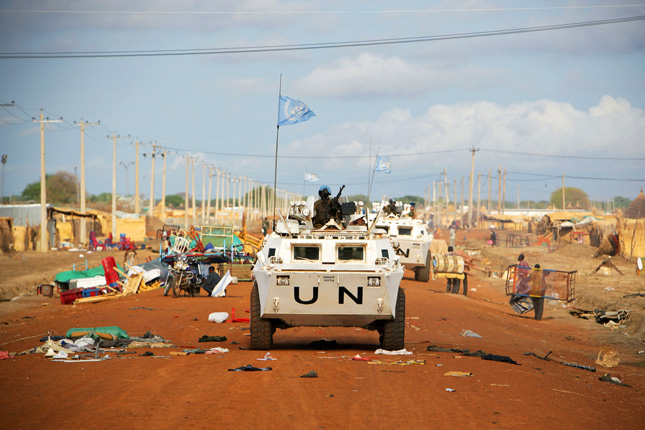
Photo Credits: “Children at IDP Camp Playful During UNAMID Patrol,” courtesy of flickr user United Nations Photo. Book cover image provided by, and used with the permission of, Jennifer Dabbs Sciubba and ABC-CLIO. -
Mapping Muslim Population Growth
›Recent unrest in Tunisia, Egypt, Yemen, and elsewhere across the Middle East has led to a resurgence of interest in the region’s demography, just in time, it turns out, for the Pew Forum on Religion and Public Life’s 2011 refresh of its report on Muslim population growth, which this year includes a new interactive feature, “The Global Muslim Population.”
According to the report, current security hot-spots such as Afghanistan, Iraq, Yemen, Syria, Somalia, and Nigeria will continue to grow considerably faster than the mean.
On the flip side, the report also found that the median age in the Middle East-North Africa region is rising – a generally agreed upon good indicator for the prospects of more liberal, democratic regimes – and though global Muslim population will continue to grow faster than the world’s non-Muslim population, this growth will be slower than in decades past.
The accompanying interactive feature allows users to select a region (the Americas, Europe, Middle East/North Africa, Sub-Saharan Africa, or Asia-Pacific), a specific country, and a decade (1990-2030) in their search. In the example above, Egypt will add 25 million Muslims to its population over the next two decades, representing a 30 percent increase. Comparatively, from 1990 to 2010, Egypt’s Muslim population increased by 48.5 percent.
The user is able to see the estimated Muslim population of the country, the percent of the total population that is Muslim, and the country’s percent share of the world’s total Muslim population (as seen in the example above of Egypt in 2010 and 2030). In addition, these variables can be sorted in tables.
It’s important to note though, write the authors of the report, that projections are not predictions:This report makes demographic projections. Projections are not the same as predictions. Rather, they are estimates built on current population data and assumptions about demographic trends; they are what will happen if the current data are accurate and the trends play out as expected. But many things – immigration laws, economic conditions, natural disasters, armed conflicts, scientific discoveries, social movements and political upheavals, to name just a few – can shift demographic trends in unforeseen ways, which is why this report adheres to a modest time frame, looking just 20 years down the road.
Image Credit: Pew Research Center’s Forum on Religion and Public Life.
Sources: Pew Forum on Religion and Public Life. -
The Age of Revolution? Demography Experts Comment on Tunisia’s Shot at Democracy
›January 28, 2011 // By Schuyler NullAs unrest continues across several Middle Eastern countries, analysts are scrambling to explain the “arc of revolution.” Richard Cincotta’s recent post on the “Jasmine Revolution” predicts a relatively high chance of Tunisia attaining liberal democracy, based on demographic factors and long-term trends, and it’s drawn some well-thought out and provocative feedback from fellow demographers Elizabeth Leahy Madsen, Jack Goldstone, and Jennifer Sciubba.
Elizabeth Leahy Madsen is a senior research associate at Population Action International and author of The Shape of Things to Come: Why Age Structure Matters to a Safer, More Equitable World:I have two questions. First, have you shifted to a new definition of age structures (intermediate, etc.) based on median population age? In the past, you and other demographic security researchers have measured age structure as the relative proportion of different age groups within the population, either the total population, total adult population, or working-age population. Why did you select median population age for this analysis? A quick review of the figures available on the UN Population Division’s website shows that the relative size of the 15-24 age group within Tunisia’s total population has been vacillating within the range of 19-21 percent since 1975. In 2005, that “youth bulge” was 21 percent, the highest since 1980, but there has been a rapid decline to 19 percent by 2010.
Jack A. Goldstone is the director of the Global Policy Center at George Mason University and author of a number of books on social movements, revolutions, and international politics:
As you say, no matter how age structure is measured, Tunisia is much further through the demographic transition than other countries in the Arab world. I would like to see this highlighted more in media coverage of the revolution, particularly in accounts of similar attempts to provoke uprisings that have taken place in Algeria, Egypt, and Yemen in recent weeks. From a demographic perspective, those attempts are less likely to achieve success (except possibly in Algeria, based on your map).
My second question is for further elaboration on the steps that lead from a dissipating youth bulge to a greater likelihood of attaining democracy (leaving aside the also-difficult question of sustainability). If I understand your description of the mechanisms at work, in an authoritarian regime with a youth bulge, the government is able to keep its hold on power because the presence of a youth bulge either creates volatility or the threat of volatility in the eyes of the commercial elites whose support is critical to the regime. Does this support exist even in situations where volatility is rare, in which case the large youthful population is manipulated or whitewashed by the regime as a threat to stability? Then, as the age structure matures and becomes less youthful, the regime can no longer invoke youth (directly or indirectly) as a danger, and therefore support for the regime from the elites erodes?
You don’t specifically mention economic conditions in Tunisia, apart from Ben Ali’s resource hoarding, but issues such as unemployment rates have been frequently highlighted in media accounts of the revolution. In addition to the unpredictable triggers such as the self-immolation in Tunisia’s case, do deeper-seated structural problems such as high unemployment and/or rampant corruption have to be extant to provoke revolution in an authoritarian context? Or is the dissolution of a youthful age structure combined with an unpredictable trigger sufficient?Richard’s insights into Tunisia’s prospects for democracy are terrific and I agree with him. However, in regard to the causes of the rebellion, I have to disagree with him in one respect – Tunisia in 2010 is very much a youth bulge country, at least as far as political theory would see it. As Henrik Urdal has shown, youth bulge should not be measured as the size of the youth cohort (15-24) against the entire population, but as the fraction of youth in the adult population (those aged 15 and older). The 0-14 group is politically not relevant, and should not be counted in assessing the impact of youth cohorts on the total population’s political mobilization potential.
Jennifer Sciubba is a Mellon Environmental Fellow at Rhodes College and the author of The Future Faces of War: Population and National Security:
For Tunisia, median age may in fact be misleading (as I didn’t realize until I looked at the age pyramids that Richard has posted). Because birth rates fell very rapidly after 1995, median age in 2010 is intermediate, but if you look only at the population aged 15 and up, you still see very large cohorts of youth compared to total adults.
Because Tunisia’s birth rate only started falling sharply after 1995, the large cohorts born in 1986-1995 – now age 15-24 – still make up a very large portion (33 percent) of all adults. While the next cohorts are much smaller, meaning this youth bulge will soon fade, it is still very much present, as Richard’s graphs show.
There is no automatic link between a certain age structure and political rebellion, but the combination of a large youth bulge and economic frustration among youth is a potent force for political instability. That combination is certainly one feature of Tunisia in 2010, although the extreme corruption of the Ben Ali regime and his family was a galling and critical factor in the widespread rejection of his regime.
That points to another bit of misleading data. Many (including me) assumed that because Tunisia’s recent economic growth was strong, at five percent per year, economic grievances could not be so widespread. But that is wrong, because we did not appreciate how much of that growth has been grabbed by Ben Ali’s family (which according to one account had ownership interests in half the businesses in the country) and cronies. Substantial growth from which many have been excluded – especially youth – is in fact a reason for widespread grievances, and that was another key factor behind the mass protests.Like Jack and Liz note, using median age helps us understand Tunisia’s progress along the demographic transition, but it doesn’t really help us understand the protests in Tunisia or in other countries across the “arc of revolution.” Median age obscures the individual experiences of young adults who are putting their lives at risk to speak out in protest or setting themselves on fire in desperation. As Jack points out, from a theoretical point of view, Tunisia is very much experiencing cohort crowding – whether we call it “youth bulge” or “early worker bulge” the outcome is the same. To say that Tunisia is not a youth bulge country misses the point.
Cincotta has promised a reply to the comments is forthcoming, which we can forgive him, frankly, given the length and complexity of these great responses.
Part of the reason we political demographers buy into the link between youth bulge and conflict is the idea of cohort crowding. As Richard Easterlin points out, a cohort’s economic and social prospects tend to have an inverse relationship to the cohort’s size relative to those around it, other things being constant. In Tunisia’s case, those between ages 25-35 are part of a larger cohort than those preceding ones so they are crowded out of the labor market and will tend to have lower relative income compared to preceding generations, which are smaller.
As I note in my book, one study of Tunisians looking for work reported that young adults felt crowded out of benefits in the family, school, and labor markets. In particular, according to a study by M. Bedoui and G. Ridha:“…family and marital problems were common. They became poorer, lost confidence, and became fatalistic and submissive. Over the long run the majority saw unemployment as a source of disequilibrium, humiliation, and even oppression.” (in Hilary Silver, “Social Exclusion: Comparative Analysis of Europe and Middle East Youth,” Middle East Youth Initiative Working Paper p. 30.)
That quotation seems eerily prescient in Tunisia’s case. Mohamed Bouazizi certainly seemed to succumb to fatalism, and the protests started as economic but quickly moved to political. Political, social, and economic marginalization are connected. While there is some diversity in age structure across the Middle East, the populations of those aged 15-24 in Egypt, Lebanon, Tunisia, Jordan, Algeria and Iran, which experienced youth protests in 2009, are all between 27 and 34 percent of all adults ages 15-59, with Lebanon and Tunisia at the lower end of the spectrum and Egypt and Jordan at the higher. As we can see from the population pyramid of each of these states, there is a clear population bulge at these ages.
We also have to think about the cohort effect. The cohort effect describes shared historical experiences of particular age groups. Across the “arc of revolution,” young adults are plugged into Facebook, Twitter, and other internet forums to share experiences of marginalization and revolution. This likely informs their choice of whether or not to speak out.
Sources: Huffington Post, Middle East Youth Initiative, The New York Times, Telegraph.
Photo Credit: “055,” courtesy of flickr user Nasser Nouri. -
Tunisia’s Shot at Democracy: What Demographics and Recent History Tell Us
›January 25, 2011 // By Richard Cincotta
While events in Tunisia, beginning mid-December and leading ultimately to President Ben Ali’s departure within a month, have rocked the Arab world, they leave an open question: Will Tunisia’s “Jasmine Revolution” ultimately lead to the Arab world’s first liberal democracy? [Video Below]
-
Paradise Beneath Her Feet: How Women Are Transforming the Middle East
›Isobel Coleman, senior fellow for U.S. foreign policy at the Council on Foreign Relations, said she believes demographic changes are intensifying the notion that women’s empowerment is key to the growth and prosperity of the economies of Arab and Muslim-majority countries.
Coleman, author of the book Paradise Beneath Her Feet: How Women Are Transforming the Middle East, spoke at the Wilson Center in October, with Haleh Esfandiari moderating.
In addition to the Middle East’s demographics, Coleman also discussed how women in these traditional societies face challenges expanding their roles because women’s rights are often seen in a negative light. Coleman noted that things are changing, however, because women in the Muslim world are turning towards an Islamic discourse, which allows them to expand their rights within society’s religious framework. With this tactical shift and gradual gains in education, Coleman explained how women are slowly yet steadily transforming their societies.
Coleman began her talk by focusing on the demographic changes in the region, noting that 50 percent of the Arab world’s population is under the age of 22. Furthermore, education was once the exclusive preserve of men in many Arab and Muslim states (in some cases, only decades ago). Today, however, women often constitute the majority of those enrolled in these countries’ educational institutions: Females outnumber males in Jordan’s secondary schools and constitute 70 percent of all university students in Iran. While the levels of educational attainment and achievement among women are increasing, normative and legal restrictions on their socioeconomic mobility remain. Coleman indicated that this contradictory scenario has led to greater opposition to impediments to women’s equality.
Coleman went on to address the tactics being used by the latest generation of reform-minded women in the Muslim world. She said today’s reformist women are more cognizant of the religious conservatism in their societies and are taking on religion in a way earlier feminists did not. By making feminist arguments from an Islamic perspective they avoid being “slandered” by conservatives and traditionalists as pro-Western or anti-Islamic. Coleman noted that some women adopt such a stance out of deep religious conviction, while others do it in the name of expediency. She indicated this new strategy of compromise has given more women influence in social affairs and led to significant engagement with governments.
With the advent of new social media and technology, women have become more visible and able to express their opinions about previously taboo gender-related issues. Female journalists and bloggers are more stridently supporting feminist discourses. Coleman mentioned Sweet Talk, the Arabic language equivalent of the American television show, The View, on which the female co-hosts have addressed topics such as polygamy, rape, incest, and the Saudi prohibition on women driving.
According to Coleman, these factors of change – demographic transitions, the role of media, and an awareness of growing extremism in society – are contributing to women making strides in the region and a “wearing away” of gender inequality in the Muslim world. Given the gains women have made so far, Coleman said she is “cautiously optimistic” for the future.
Luke Hagberg is an intern with the Middle East Program at the Wilson Center; Haleh Esfandiari is the director of the Middle East Program.
Photo Credit: Yemeni women in computer class, courtesy of flickr user World Bank Photo Collection, and David Hawxhurt/Wilson Center. -
Demographic Security Comes to the Hill
›December 16, 2010 // By Hannah Marqusee“We are now in an unprecedented era of demographic divergence,” said Population Action International’s Elizabeth Leahy Madsen at a September briefing held by Congressman John Tierney’s Subcommittee on National Security and Foreign Affairs and Congressman Russ Carnahan’s Subcommittee on International Organizations, Human Rights and Oversight.
Eighty percent of the world’s conflicts occur in places where 60 percent or more of the population is under 30, and 90 percent of countries with young populations have weak governments, said Chairman Tierney in his opening remarks. He said that while such demographic trends “appear to be issues for the future…it is important that we start this dialogue today, so that we can make steps to address [them].” ECSP Director Geoff Dabelko and the Stimson Center’s Richard Cincotta joined Madsen on the panel titled, “The Effects of Demographic Change on Global Security,” at the Capitol Visitor Center.
Youth Bulges and National Security
The countries of greatest security threat to the United States are also those with the youngest age structures and rapidly increasing populations, said Madsen. By next year, the world’s population will have reached seven billion, with 95 percent of that growth occurring in the developing world.
Large youthful populations can be a source of national strength because they provide innovation and manpower, said Dabelko, but without significant investment they may also contribute to state instability. When there are often few opportunities to obtain a job or an education for young people, there are low “opportunity costs” to joining a rebel group, said Madsen.
State instability can be affected by youth bulges, shifting religious or ethnic compositions, or food and water insecurity, but age-structural transitions are the strongest indicator of state performance, said Cincotta. Despite conventional wisdom, there is actually little evidence to link state failure with premature adult mortality due to AIDS or a high male-to-female ratio, he added.
It is not only developing countries with high fertility rates that face demographic difficulties, Cincotta noted. Countries such as Japan and Germany will soon have reached a “post-mature” age structure in which their aging populations and comparatively small workforces will tax state institutions and threaten economic stability.
Population Policies: Using “Soft Tools” to Improve National Security
Recently, leaders in the U.S. government have been paying increased attention to the linkages between demography and security through the “three Ds:” diplomacy, development, and defense. In 2008, the National Intelligence Council’s Global Trends 2025 included demographic assessments to analyze security trends, and this year, the National Security Strategy featured demographic trends along with the environment and other non-traditional areas.
Dabelko said that while this growing recognition signals progress, the “hard tools” of the traditional security community must be bolstered with “soft tools” commonly used by the international aid community, such as female empowerment, education, health services and youth employment.
Madsen argued that empowering the 215 million women with an unmet need for family planning worldwide through increased funding for voluntary family planning programs is a cost-effective way to shape population trends and ultimately reduce security threats.
“Demography is not destiny,” said Madsen. “Family planning has been an unsung signature of U.S. foreign assistance for decades.”
Similarly, Cincotta said that policies should help states transition out of youth bulges, and help countries with aging populations reform social institutions to protect older people.
Dabelko added that while progress has been made in acknowledging the linked nature of population trends and national security, there is significant room for improvement. Pointing to the successes of integrated population, health, and environment (PHE) programs, which provide environmental conservation and family planning services simultaneously, he called for similar programs to address population dynamics and conflict prevention. Long-term solutions call for coordinated resources and integrated strategies, he said.
Read the speakers’ full remarks: Chairman John F. Tierney, Richard Cincotta, Geoff Dabelko, and Elizabeth Leahy Madson (slides).
Sources: Guttmacher Institute, Population Action International, National Intelligence Council.
Image Credits: “World Age Structure 2005” and “Risk of Civil Conflict by Age Structure Type, 1970-2007,” courtesy of Population Action International. -
Empowering Women in the Muslim World
›December 2, 2010 // By Wilson Center StaffOriginally featured in the Wilson Center’s Centerpoint, November 2010.
For decades, women in the Middle East have actively struggled for equal status before the laws of their respective countries. They have strived to attain equal participation in politics and society, and progressive justice throughout the region. While they have made progress in some parts of the region, many challenges remain. The Wilson Center’s Middle East Program recently held three meetings to discuss challenges as well as progress to empowering women across the Muslim world.
A Modern Narrative
The American Islamic Congress (AIC) recently published a report, “A Modern Narrative for Muslim Women in the Middle East: Forging a New Future,” that highlights past and present triumphs and difficulties – economic, legal, political, religious, and social –for women’s rights throughout the region. On September 30, the Middle East Program co-sponsored a meeting with the AIC to review the status of women in Saudi Arabia and Jordan, based on findings in the AIC’s report.
Fawziah Al-Hani, manager of the Gherass Center for Social Education in Saudi Arabia, expressed frustration about the progress women have made in her native Saudi Arabia. She said women there are perceived as second-class citizens by the country’s legal, economic, political, religious, and social institutions. Women’s issues are rarely discussed in Saudi political and social spheres, and women are not represented in government or the business sector. She said if women are allowed to be active outside the home, they are mostly restricted to educational and health activities.
While she is frustrated about these restrictive Saudi policies toward women, Al-Hani said she maintains hope, as changes take place within the society and government through new initiatives and movements.
Rana Husseini, a human rights activist, author, and journalist, detailed the changes to the status of women in Jordan over the past 20 years. Husseini, whose human rights activities over the past two decades in Jordan have focused on honor crimes and other women’s issues, said Jordan has made substantial progress on women’s rights as a result of intense media and civil society activism. While there is room for improvement, she said women are now participating in government and significant reforms have been made to the judicial system.
Though the effectiveness of quotas for women in government may be debated, Husseini noted that quotas facilitate women’s participation in elections and government service. In fact, she said, there are some 50 women judges in Jordan. She noted that honor killings, except in extreme cases, are becoming rarer, and harsher sentences are being imposed for honor crimes.
With constant pressure on the government and society, reforms will continue, said Husseini, who is optimistic about the future for women rights in Jordan and in the Middle East as a whole.
Demographic Realities
Why do many Middle Eastern women not enjoy the same economic opportunities as women of other regions? Can they be empowered to participate at a greater level? Nadereh Chamlou, a senior adviser at the World Bank, attributed the gender inequality to restrictive social norms. She said the region’s women must be empowered to participate in a more significant way if their countries are to effectively exploit, instead of squander, the current economic “window of opportunity.”
At a September 13 discussion, Chamlou said the good demographic news is that there are high numbers of working-age people and thus the potential for rapid economic growth. However, Middle Eastern countries have the highest dependency rates in the world, a fact that Chamlou attributed to the low economic participation of Middle Eastern women relative to female citizens’ participation in other parts of the world. This reality means the Middle East’s demographic composition will not be exploited to its full potential.
Increasing economic opportunities for women will require changing social norms, said Chamlou. She cited a study conducted by the World Bank in three Middle Eastern capitals – Amman, Jordan; Cairo, Egypt; and Sana’a, Yemen – that revealed the biggest reason for the poor representation of women in the workforce is the negative male attitude regarding women working outside the home. Notably, social norms and such negative male attitudes proved to restrict women’s participation far more than the need to attend to child-rearing duties. Despite the successful efforts of most Middle Eastern states to improve education opportunities, conservative social norms still pose a barrier to female empowerment.
Some simple changes could have a substantial impact. Chamlou recommended focusing on educated, middle-class women, undertaking more efforts to bring married women into the workforce, and emphasizing changing attitudes – particularly among conservative younger men – toward women working outside the home.
Lessons from Tunisia
In Tunisia, the progress of women’s empowerment can serve as a model for the region, noted women’s rights advocate Nabiha Gueddana, president and director-general of the National Agency for Family and Population in Tunisia.
Speaking at a September 8 meeting, Gueddana said the Arab world can learn much from her native Tunisia regarding the positive effects of empowering women. Gueddana, also a candidate for undersecretary-general of UN Women at the United Nations, described how Tunisian women have been empowered politically, economically, and socially, and how this empowerment has benefited Tunisian society.
Tunisia has undergone substantial changes since achieving independence from France in 1956. Tunisian women had second-class status in the years prior, a time Gueddana described as one that relegated them to a life of constant child-rearing, illiteracy, and economic dependence.
Yet Tunisia has become a beacon for other Muslim societies: the country’s labor code allows full female participation in the economy and education is open equally to boys and girls. Family planning programs and important strides in health have considerably lowered the birth rate and lengthened the life expectancy of the average woman. Gueddana also noted that Tunisia’s economic growth is now five times greater than the growth rate of its population.
Measures to empower women in Tunisia have benefited not only women but Tunisian society as a whole, with significant shifts in men’s attitudes regarding women’s rights and roles in society. Gueddana indicated that her efforts extend beyond Tunisia, as she strives to help empower women throughout the world. She said such efforts will persist so long as women anywhere find themselves disadvantaged, dependent, and living as second-class citizens.
Women’s empowerment in society rests increasingly not in the political but in the economic and business domains (Editor’s note: one could add that women’s empowerment has the potential to considerably impact the environmental domain as well). While women have made considerable progress in the political arena, economic power is still male-dominated throughout the region.
Gueddana said the discussion of women’s rights should take place within the broader context of human rights. Violence against women, particularly sexual violence, is a widespread phenomenon across all societies and, unfortunately, often considered taboo for discussion. She said all citizens benefit when all have equal rights and can use them to expand their opportunities and achievements to enhance their societies.
Dana Steinberg is the editor of the Wilson Center’s Centerpoint.
Photo courtesy of Centerpoint.