Showing posts from category democracy and governance.
-
Youth, Aging, and Governance: A Political Demography Workshop at the Monterey Institute of International Studies
›April 5, 2012 // By Schuyler Null“Demography is sexy – it’s about nothing but sex and death (and migration),” said Rhodes College Professor Jennifer Sciubba at the Monterey Institute of International Studies during a workshop on March 30.
Jack Goldstone of James Madison University, Richard Cincotta of the Stimson Center, and ECSP’s Geoff Dabelko joined Sciubba in a workshop for students and faculty on key developments in political demography. Sciubba and Cincotta were contributors to Goldstone’s recently released edited volume, Demography: How Population Changes Are Reshaping International Security and National Politics.
“Demography is changing the entire economic and strategic divisions of the world,” Goldstone told the room. “We’ve had a 15 year increase in life expectancy just in the last half century,” and today, “90 percent of children under 10 are growing up in developing countries.”
Many countries, said Goldstone, are caught in a difficult race between growth and governance, with governments struggling to provide services and opportunity to their growing populations. This challenge is especially acute in cities, which for the first time in human history are home to the majority of all people.
At the same time, aging is a phenomenon that will affect many developed countries. In the United Sates, the baby boomers are becoming “the grayest generation,” Goldstone said, and similar imbalances between the number of working age people and their dependent elders will soon affect Western Europe, Japan, Korea, Russia, and others.
Re-Examining the Aging Narrative
Some have predicted this “graying of the great powers” will have disastrous consequences for many of the G8, as state pension costs blunt economic growth and innovation, military adventurousness, and global influence, but Jennifer Sciubba presented a case for why fears may be overblown.
When discussing the aging phenomenon in developing countries, many analysts focus too closely on the fiscal environment, argued Sciubba. This creates tunnel vision that ignores the potential coping mechanisms that states have at their disposal. Alliances, for example, are under-accounted for, she said, and closer European Union and even NATO integration could help ameliorate the individual issues faced by aging countries like Germany, France, and Italy.
She also pointed to evidence that the developing world’s declining fertility may be have been “artificially depressed” by large proportions of women that delayed pregnancy starting in the 1990s. But now the average age of childbearing has stopped rising. The UN total fertility rate projections for industrialized states for the period 2005 to 2010 was revised upward from 1.35 children per woman in 2006 to 1.64 in 2008 and 1.71 in 2010.
This brings into focus a key leverage point for many developed countries that is not often discussed in traditional conversations about aging: making the workplace friendlier for women. Offering money to couples to have children does not work, said Sciubba – women do not make a simple monetary cost-benefit analysis when they decide to have children. Much more likely is a calculation about the cost to their professional career. Therefore, instituting more liberal leave policies and making it harder for employers to fire both men and women for taking maternity or paternity leave is more likely to have a real impact on fertility rates.
The growing efficiency – and retirement age – of today’s workers can blunt the effect of older workforces on developed economies, said Sciubba. And the stability, strong institutions, and legal protections for innovation are all advantages that will continue to attract the best and the brightest from developing countries.
The competing phenomena of aging in the developed world and continued growth in the developing – which some have dubbed the “demographic divide” – will likely make immigration a very important, possibly friction-inducing issue in the coming decades. Goldstone pointed to the challenges Europe is having today coping with immigrants from North Africa and the Middle East as a possible harbinger of things to come.
Applying Demographic Theory: The Age Structural Maturity Model
While many regions will continue to experience population growth for the next two decades, including sub-Saharan Africa, the Middle East, and parts of East and South Asia and Latin America, the overall global trend is towards older populations. This is good news for democracy, according to Richard Cincotta.
Cincotta, who consults with the National Intelligence Council on demographic issues, explained his “age structural maturity” model, which finds a historical correlation between the median age of countries and their Freedom House scores (an annual global assessments of political rights and civil liberties). Older populations tend to have more liberal regimes, while the opposite is true in younger populations. Combining this model with demographic projections, one can predict when it will become likely for democracy to emerge as a country ages. Before the Arab Spring – to some disbelief at the time – Cincotta used the model to predict that Tunisia would reach a 50/50 chance of achieving liberal democracy in 2011 (see more on this in his posts about Tunisia and the Arab Spring).
For those youthful countries that do achieve some level of liberal democracy, the model predicts they have a high likelihood of falling back towards authoritarianism (Mali is a tragic recent example).
This model, said Cincotta, can be a useful tool for analysts to challenge and add to their assessments. For example, it paints a bleak picture for democracy in Afghanistan (median age 16.6 years old), Iraq (18.5), or Yemen (17.7) and a comparatively rosier one for Tunisia (29.8), Libya (26.1), and Egypt (25.0). Some other observations may useful as well: no monarch has survived without some limits of power being introduced after countries reach a median age of 35, and military rulers too never pass that mark.
The age structural maturity model is, however, not perfect, Cincotta said. The most common outliers are autocracies (Freedom House score of “not free”) and partial democracies (“partly free”) with one-party regimes (China, North Korea), regimes led by charismatic “founder figures” (Cuba, Singapore), or those that where the regime is either supported or intimidated by a nearby autocratic state (Belarus).
Like all analyses, the model has its limitations, said Cincotta, but if used as a tool to generate “alternative hypotheses,” it can help predict dramatic political changes, like the Arab Spring. The research also suggests that the “third wave” of democratization is not over and will in fact continue to expand as countries with younger populations mature.
In conclusion, the panelists recommended the students find ways to include political demography in their work moving forward. “Consider it an alternative tool that may be useful,” said Geoff Dabelko. Policymakers today are overburdened with information and conventional analyses can sometimes become stuck in familiar lines of thought – demography can supplement these or shake them up by providing alternative narratives.
Sources: UN Population Division.
Photo Credit: Schuyler Null/Wilson Center; chart courtesy of Richard Cincotta. -
The Middle East Program
Reflections on Women in the Arab Spring
›The Arab Spring has fascinating and powerful demographic and gender undercurrents. Last year, demographer Richard Cincotta counseled observers to pay close attention to the demonstrations: if they featured young women – as opposed to being dominated by young men and boys – it’s a sign that democracy may be on its way. To mark the occasion of International Women’s Day last week, the Wilson Center’s Middle East Program gathered observations from a cross-section of regional voices on how women have fared thus far.
Excerpted below is the entry from Moushira Khattab, former Egyptian ambassador to South Africa and the Czech and Slovak Republics, and former minister of family and population:As the global community celebrates International Women’s Day, we must hail the heroic and pivotal role Egyptian women played to make the January 25th Revolution an inspiration for the world. They joined men and took to Tahrir Square calling for freedom, dignity, and social justice. They rallied around the cause of pushing the train of political change. One year later, Egyptian women find that the train of change has not only left them behind, but has in fact turned against them. It is ironic that the revolution that empowered a country, and made every Egyptian realize the power of their voice, stopped short of women’s rights. Sadly, the only march that was kicked out of Tahrir Square was that of women celebrating 2011 International Women’s Day. Women were beaten, subjected to virginity tests, and stripped of their clothes in the very same Tahrir Square.
Download the full set of reflections from the Wilson Center’s Middle East Program.
Dormant conservative value systems are being manipulated by a religious discourse that denies women their rights. Calls for purging the sins of the old regime necessitate a reminder of the positive outcomes of laws that, although enacted under that old regime, have liberated and enhanced women’s status, including prohibiting female genital mutilation and child marriage. We also need a reminder that such gains are only a step towards these rights, and are the outcome of collective hard work along generations. Against the background of parliamentary elections, defenders of women’s rights have backed down, while young revolutionaries don’t have women’s rights on their agendas. The most telling indicator is the shameful and meager representation of women in Egypt’s post-revolution parliament. Among a handful of elected female MPs, one declared that her top priority is to repeal the law granting women the right to seek divorce.
With religious parties controlling it, the question becomes: Will this parliament be willing and able to produce a constitution that guarantees equal rights to all Egyptians regardless of gender or religion? Dare we dream that Egyptians in 2012 could have a constitution equal to that put in place by South Africans in 1996? -
Kavita Ramdas: Why Educating Girls Is Not Enough
›
“I’m a big proponent of girl’s education. I believe that it’s a very important and a very valuable human rights obligation that all countries should be meeting,” said Kavita Ramdas, executive director for programs on social entrepreneurship at Stanford University, at the Wilson Center. However, “in the past seven to eight years we have found ourselves in a situation where there’s kind of an enchantment with girl’s education, as though it were the new microenterprise magic bullet to solve everything from poverty, to malnourishment, to inequality.”
“The outcomes that we ascribe to girl’s education…are not anything that I would argue with,” she said, yet, this enchantment “has happened simultaneously with a significant drop in both funding and support for strategies that give girls and women access to reproductive health and choices, particularly family planning.”
This is a problem, said Ramdas, because we cannot rely on education alone to do all the heavy lifting required to empower women.
“I think it’s important for us to recognize that there are societies where girls and women have achieved significantly high levels of education in which gender inequality remains,” she said, “for example, places like Japan and Saudi Arabia, where you have high per capita income, high levels of education, and yet…where women and girls are still marginalized and on the edges in terms of decision making.”
“I don’t think we have to wait for one to be able to do the other,” she said. “As we support programs for girls’ education, we also need to demand that those programs be buttressed by strong programs in adolescent health, strong programs in sex education, strong programs that actually provide girls and women with access to family planning and contraception.” -
Do High Food Prices Cause Social Unrest?
›In March 2011, a senior Brookings Institution official wrote that “the crux of the food price challenge is about price volatility, rather than high prices per se” and that “[i]t is the rapid and unpredictable changes in food prices that wreak havoc on markets, politics, and social stability.”
-
Book Preview: In ‘War and Conflict in Africa’, GWU Scholar Skeptical That Natural Resources Play a Leading Role
›November 30, 2011 // By Elizabeth Leahy MadsenWhile there is widespread agreement that the incidence of conflict in Africa is high, scholars and development agencies alike debate its driving forces and how to move toward solutions. Paul Williams, associate professor in the Elliott School of International Affairs at George Washington University and collaborator with the Wilson Center’s Africa Program, recently published a book that aims to both quantify African conflicts and devise a framework of their causes. In War and Conflict in Africa, Williams evaluates which factors explain the frequency of conflict in Africa during the post-Cold War era and how the international community has tried to build peace and prevent future conflict.
Although there have been promising trends toward establishing peace and democracy in some African countries, the continent still accounts for about one-third of all armed conflicts annually – more than Europe, the Middle East, and the Americas combined. International responses to these events range from focused humanitarian and conflict resolution efforts, to new regional organizations and global strategic and defense partnerships.
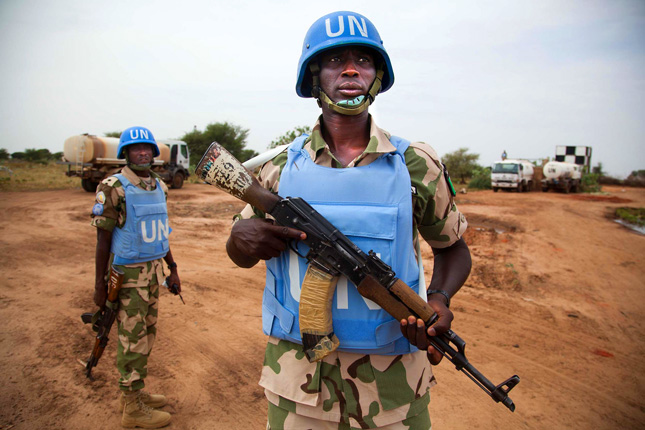
Seven of the 16 current UN peacekeeping missions operate in Africa, more than any other continent. The UK government has elected to spend nearly one-third of its development assistance in conflict-affected areas, and more than half of its “focus” countries are in Africa. In 2008, the Department of Defense created the U.S. Africa Command (AFRICOM), whose commander, General Carter Ham, in a speech to Congress earlier this year, described “an insidious cycle of instability, conflict, environmental degradation, and disease that erodes confidence in national institutions and governing capacity,” as motivation for American military attention. “This in turn often creates the conditions for the emergence of a wide range of transnational security threats,” he said.
Evaluating the Ingredients of Conflict
Williams rejects earlier theses that attribute conflict across the continent to a single factor, such as the boundary legacies of colonialism, greed, or ethnicity. Instead, he characterizes African conflicts as “recipes” composed of case-specific mixes of factors, many of which are underlying and only some of which are sufficient triggers for conflict. “Collier is wrong,” Williams explained in an email interview. “Governance structures are always an important part of the buildup to war.”
Five “ingredients” of conflict are examined in-depth: neo-patrimonial governance structures; natural and human resources; sovereignty and self-determination; ethnicity; and religion. Among these, the book presents a fairly skeptical view of resources, ethnicity, and religion as immediate drivers of conflict. This assessment that environmental and identity issues are not sufficient to generate conflict on their own aligns with the book’s overarching argument: The decisions of political actors can instigate conflict or motivate peace from virtually any context, manipulating factors such as ethnicity and religion for their own advantage.
Effects of Natural Resources Are “Open-Ended”
A widely publicized thread of peace and conflict studies posits that resources, either when scarce or abundant, have an important role in triggering wars. A 2009 UN Environment Programme report found that 40 percent of all internal conflicts since 1950 “have a link to natural resources.” Recent peer-reviewed research has suggested that certain environmental changes increase the likelihood of civil conflicts or are directly responsible for it. Yet the question remains a source of much debate. For his part, Williams asserts that natural resources alone are insufficient to cause conflict.
War and Conflict in Africa presents several reasons that researchers and policymakers should avoid linking resources directly to conflict without considering the influence of intervening factors. Chief among them is that the value of any resource is socially constructed – no stone or river carries worth until humans decide so. Therefore, Williams argues that “it is political systems, not resources per se, that are the crucial factor in elevating the risk of armed conflict.”
The book suggests that two extant theories successfully demonstrate the connection between resources and conflict. The first body of research finds that conflict is more likely in regions that face a combination of resource abundance and a high degree of social deprivation. The second theory suggests that the link between resources and conflict lies in bad governance, whether exploitative or unstable. Both theories have explanatory power for Williams’s central line of thinking: Resources can be either a blessing or a curse, depending on leadership.
“Inserted into a context where corrupt autocrats have the advantage, resources will strengthen their hand and generate grievances,” he writes (p. 93). “Inserted into a stable democratic system, they will enhance the opportunities for leaders to promote national prosperity.”
Population and the Environment
Williams does accede that particular resource factors – land and demography, for example – may play a more significant role than others in conflict, but calls for more research. In a brief discussion of population age structure, the book suggests that there is no single relationship between demography and conflict but multiple ways that the two can relate. Williams mentions the theory that “large pools of disaffected youth” with few opportunities can raise the risk of volatility. However, he then notes other research showing that the most marginalized members of certain African societies are less likely to participate in political protests and more likely to tolerate authoritarian rule than those who are better off.
“The most marginalized from society are the truly destitute without patrons and suffering from severe poverty. They may well be inclined to join an insurgency movement once it begins to snowball but they will not usually play a key role in establishing the rebel group in the first place,” Williams said. However, “any time there are large pools of poor and unemployed youth there is the potential for leaders to manipulate them.”
On environmental resources, the book argues that land should be a central feature of quantitative research on the relationship between resources and conflict. Most African economies continue to rely on agriculture, and Williams observes that land has been “at the heart” of many conflicts in the region through a variety of governance-related mechanisms relating to its management and control. He places less emphasis on water scarcity as a potential factor in conflict, noting that the 145 water-related treaties signed around the world in the past decade auger well for cooperation rather than competition.
Williams is also dubious of emerging arguments that climate change could directly increase the incidence of conflict, either through changing weather patterns or climate-induced migration.
“Because armed conflicts are, by definition, the result of groups choosing to fight one another, any process, including climate change, can never be a sufficient condition for armed conflict to occur,” he argued. “Armed conflicts result from the conscious decisions of actors which might be informed by the weather but are never simply caused by it.”
No Simple Formula
Williams is not the only observer to find the narrative that resource shortage (or abundance) precipitates conflict too simplistic. His message to policymakers is a common refrain from academics and analysts seeking to counteract policymakers’ quest for simple formulas: We need more data.
“When deciding how to spend our money, we need to spend more of it on developing systems which deliver accurate knowledge about what is happening on the ground, often in very localized settings,” Williams said. War and Conflict in Africa contributes to a more complex understanding of the political actors and systems that catalyze or prevent conflict and offers a cautionary tale to those who seek only proven, easy predictions.
Elizabeth Leahy Madsen is a consultant on political demography for the Wilson Center’s Environmental Change and Security Program and senior technical advisor at Futures Group. She was previously a senior research associate at Population Action International. Full disclosure: She was a graduate student of Paul Williams’ in 2007.
Sources: DFID, Englebert and Ron (2004), Ham (2011), Hsiang et al (2011), Kahl (1998), Leysens (2006),Østby et al (2009), Radelet (2010), Themnér and Wallensteen (2011), UNEP (2009), UN Peacekeeping, Williams (2011)
Image Credit: Conflicts in Africa 2000-09, reprinted with permission courtesy of P.D. Williams, War and Conflict in Africa (Williams, 2011), p.3. -
Jennifer Dabbs Sciubba, The Philadelphia Inquirer
Family Planning Can Help in Afghanistan
›September 6, 2011 // By Wilson Center StaffThe original version of this op-ed, by Jennifer Dabbs Sciubba, appeared in The Philadelphia Inquirer.
Most experts agree that the mark of long-term success in Afghanistan will be stable governance that allows the economy, democracy, and the people to flourish. Many factors will determine that, but a major one that seems to be left out of most high-level conversations is population.
Afghanistan is a country of 31 million people, but that number will double by 2035, according to the most recent UN projections, and could reach 126 million by midcentury. That’s 95 million more Afghans to govern, clothe, feed, and employ.
Without attention to population, countries like Afghanistan and Pakistan stand a good chance of staying mired in poverty, conflict, and corrupt, repressive government. That is why sustained investment in family planning by the United States and other countries would do more to stabilize the political climate there than any other foreign policy initiative. Though efforts by the Afghan government to provide contraceptives have met some resistance by conservative Muslim groups, the success of family planning in other Muslim states demonstrates that it can be effective.
Continue reading on The Philadelphia Inquirer.
Sources: UN Population Division.
Photo Credit: “100430-F-2616H-050,” courtesy of flickr user Kenny Holston 21 (Kenny Holston). -
Watch ‘Dialogue’ TV on the Future of Women and the Arab Spring
›This week on Dialogue, host John Milewski discusses the role that women played in the Arab Spring and how these roles might evolve in the coming months and years with the enormous political changes sweeping the region. He is joined by Moushira Khattab, Lilia Labidi, and Haleh Esfandiari. [Video Below]
Moushira Khattab is a human rights activist who formerly served as Minister of Family and Population for Egypt. She also served as Assistant Minister of Foreign Affairs, Vice Chair of the UN Committee on the Rights of the Child, and was Egypt’s ambassador to South Africa during the Mandela era. Lilia Labidi is an anthropologist and professor at the University of Tunis who currently serves as Minister of Women’s Affairs in the Republic of Tunisia. Previously she was a visiting professor at the American University in Cairo and a fellow at the Wilson Center. Haleh Esfandiari is author of the book, My Prison My Home: One Women’s Story of Captivity in Iran. Haleh serves as the director of the Wilson Center’s Middle East Program.
Dialogue is an award-winning co-production of the Woodrow Wilson International Center for Scholars and MHz Networks that explores the world of ideas through conversations with renowned public figures, scholars, journalists, and authors. The show is also available throughout the United States on MHz Networks, via broadcast and cable affiliates, as well as via DirecTV and WorldTV (G19) satellite.
Find out where to watch Dialogue where you live via MHz Networks. You can send questions or comments on the program to dialogue@wilsoncenter.org. -
The Future of Women in the MENA Region: A Tunisian and Egyptian Perspective
›Lilia Labidi, minister of women’s affairs for the Republic of Tunisia and former Wilson Center fellow, joined Moushira Khattab, former minister of family and population for Egypt, on June 2 at the Wilson Center to discuss the role and expectations of women in the Egyptian and Tunisian revolutions, as well as issues to consider as these two countries move forward. Haleh Esfandiari, director of the Middle East Program at the Wilson Center, moderated the event.
Labidi focused on the participation of women in the protests in Tunisia and their aftermath. She emphasized that these developments give hope, as they attest to the mixed nature of the demonstrations in which women were not sidelined but marched amongst men. (Editor’s note: The gender balance of the protests was a feature demographer Richard Cincotta also observed in his post about Tunisia’s age structure.) She pointed to the way that Tunisian women have entered the public space and played vital roles in spreading images and information about the protests around the world. Labidi said that although the future of women in Tunisia remains uncertain, it is unlikely that they will cease to be active and retreat to the private sphere. She commented on the new parity resolution calling for an equal number of male and female candidates for each party in Tunisia’s July elections and the opportunities afforded by an increase in political pluralism and media outlets.
Labidi also elaborated on her efforts as Tunisia’s minister of women’s affairs, discussing the ministry’s results and future goals. She stressed the importance of aiding women living in poverty, changing the cultural role of women, and boosting confidence in the government’s ability to address women’s needs. In particular, Labidi spoke of the work to expand the ministry’s regional offices to become more accessible to rural and non-elite sectors of Tunisian society. She hoped that recent events will encourage recognition of women as regional political actors and that the United States will expand intellectual and political ties with Tunisia.
Khattab pointed out the numerous similarities between the role of women in Tunisia and in Egypt, saying that women’s participation in public demonstrations and disseminating information to the media “has set the stage for a paradigm shift in the rights of citizens.” She noted that there are many advances yet to be made for women, youth, and other groups but that the protests have begun a change towards “a democratic, rights-based Egypt.”
Although she sees women’s involvement as a part of continuing progress in women’s rights, Khattab made note of the various obstacles to freedom that women in Egypt still face. She expressed concern that the politics of revenge against the previous regime might sideline women in politics, who already have less representation in the government than they did under Mubarak and have been excluded from the committee drawing up a new Egyptian constitution. She noted the need to change social perceptions that “women already enjoy all their rights.” She also discussed how the new media freedom gives fundamentalist groups a platform to propagate narrow interpretations of faith that call for the repeal of some of the existing women’s rights laws. She posed the question of what interpretations of the faith would allow for a greater harmonization with domestic laws based on the ideals of human rights.
Laura Rostad is an intern with the Middle East Program at the Woodrow Wilson Center.
Photo Credit: David Hawxhurst/Wilson Center.