-
Women and War: Securing a More Peaceful Future
›
“Conflicts are 35 percent more likely to be resolved and remain peaceful for 15 years if women are involved,” said Carla Koppell, vice president of the Center for Applied Conflict Transformation at the United States Institute of Peace, at a recent Wilson Center event on the role of women in war, security, and peace.
-
Climate Engineering: Innovative Solution or Ethical Dilemma?
›
“Climate engineering can be a way to build a better world,” said Katharine Mach, a senior research scientist at Stanford University during a recent virtual workshop on the promises and pitfalls of climate engineering held by the Institute on Science for Global Policy, in partnership with the Forum for Climate Geoengineering Assessment at American University, and the School of Sustainability at Arizona State University.
-
All in a Generation: Stopping Conflict, Building Peace, and Saving the Environment
›September 21, 2017 // By Anuj KrishnamurthyToday, world leaders gathered in New York for the United Nations General Assembly will celebrate the International Day of Peace, observed annually since 1981. This year’s Peace Day is centered on the theme of togetherness, and the importance of securing safety and dignity for all people – including youth. By all accounts, young people are critical to the success of peacebuilding efforts, and the dignitaries at the United Nations would do well to consider how empowered youth can make meaningful contributions to the fields of governance and development. Already, young people around the world are being called upon to protect natural resources, facilitate transboundary dialogue, and resist injustice. And as new threats to human security – including climate change and environmental degradation – emerge, harnessing the full potential of youth will prove essential to initiating a new chapter of sustainable peace.
-
Religion and Climate Diplomacy in Small Island Developing States
›Island states contribute only .03 percent to global emissions, but “nineteen major Caribbean cities are in the bullseye of the climate threat” and Pacific island states such as Kiribati and Tuvalu face an existential threat from sea level rise, said Selwin Hart, Barbados’ ambassador to the Organization of American States and the United States. At the same time, Small Island Developing States (SIDS) in the Pacific and the Caribbean are leading efforts to combat climate change, said experts at the Wilson Center on July 10.
-
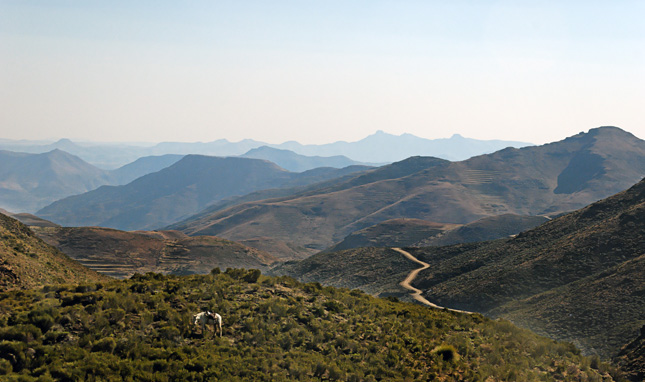
In Lesotho, Population Pressures Have Created a Perfect Storm of Human Insecurity
›Since declaring its independence in 1966, Lesotho has faced severe challenges to virtually every dimension of human security, writes Eugene Linden in a recent New York Times opinion article. In recent years, drought – coupled with widespread soil erosion and rapid population growth – has pushed a large portion of Lesotho’s two million people to the verge of starvation, which Linden calls “just one example of how fragile the future seems for Africa, large parts of which face the prospect of new famine and, in consequence, further catastrophic displacement within and among their growing populations.”
-
Citizen Science Is Making it Harder for China’s Biggest Polluters to Hide
›In 2016, the Environmental Protection Agency charged its federal advisory committee with exploring how citizen science and crowdsourcing should be integrated into the agency’s mission. The resulting report eloquently describes how if the environment is to be protected then it’s the duty of all – the government, institutions, and citizens – to work together to achieve this.
-
8 Rules of Political Demography That Help Forecast Tomorrow’s World
›In a world rapidly churning out unpredictable political shocks, intelligence analysts occasionally need to clear their heads of the daily barrage of newsworthy events and instead work with simple theories that discern the direction and speed of trends and help predict their outcomes. Political demography, the study of population age structures and their relationships to political trends and events, has helped some analysts predict geopolitical changes in a world that, from time to time, appears utterly chaotic. -
Tamil Nadu Leads India’s Historic Turn to the Sun and Wind
›MADURAI, India – Before he agreed to serve as minister of state and take command of his country’s mammoth energy production and distribution sector, Piyush Goyal developed one of India’s most spirited political careers. “A man of ideas and competence,” according to First Post, a prominent news organization, Goyal is an accountant and lawyer who rose to the peak of Indian economic and political culture as an investment banker, member of parliament, and treasurer of the ruling Bharatiya Janata Party.
Showing posts from category democracy and governance.