

-
ECSP Weekly Watch | July 3 – 7
›
A window into what we are reading at the Wilson Center’s Environmental Change and Security Program
In Conflict-Affected Somalia, Climate Change Adds to Migration Pressures
In the Somalian coastal town of Hobyo, thousands of residents—some of whom settled there to flee the country’s civil war—are starting to leave. Why? Their homes are being engulfed by sand.
-
Intersecting Challenges Require Multisectoral Solutions: A Conversation with Charles Kabiswa
›
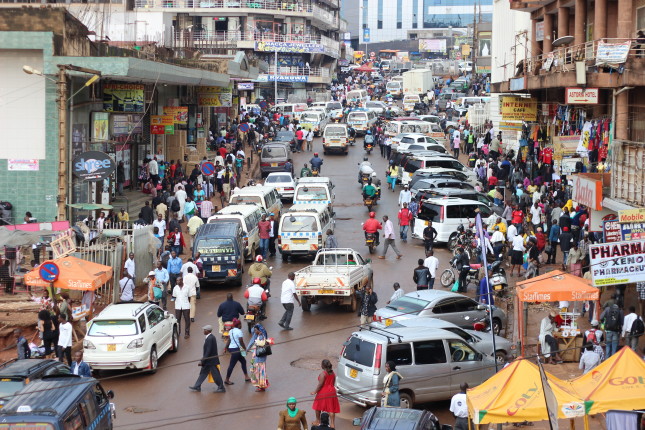
The impacts of a changing climate touch every region of the globe, but they are acutely felt by people in Uganda, where floods, droughts, and shifting rainfall patterns disrupt agricultural productivity, livelihoods, and the health and well-being of millions of people. According to the ND-GAIN index, Uganda is the 13th most vulnerable nation in the world, and action there is urgently needed to better prepare for and adapt to climate change’s impacts.
-
Environmentalism for Sovereignty’s Sake
›Egypt’s Gebel Elba National Park is, by all accounts, a spectacular place. But it better be to justify the fuss it takes to visit. First you have to apply for a permit. If that’s approved (and almost none have been in recent years), you need to travel with an approved tour operator. Even then, you must be accompanied by police at all times.
-
Klamath Dam Removal: A Key Step in Freshwater Restoration and Protection Goals
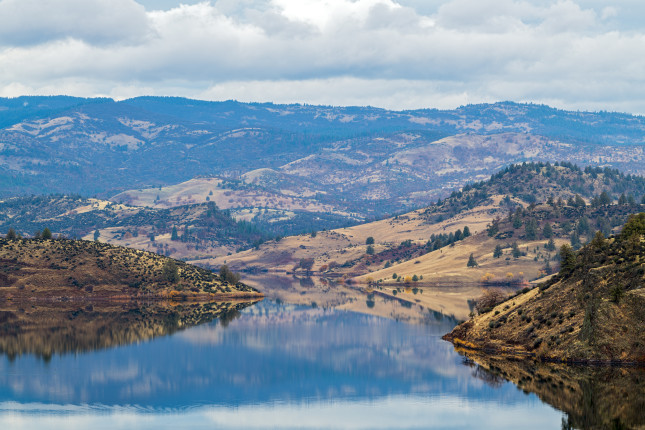
›The Klamath River Dam removal, slated for early 2024, is a significant milestone in the journey towards bringing back healthy rivers in the United States. This action will restore nearly 300 miles of river habitat in the Klamath and its tributaries across Southern Oregon and Northern California, allowing salmon, a critical source of economic and nutritional value for the local communities, to return. As the world’s largest dam removal and river restoration project in history, this project will have lasting impacts on the health of this river and represents an opportunity for building momentum to continue global river protection and restoration.
-
Blue Jeans Contaminating Blue Oceans: The Expanding Microfiber Footprint of Our Clothes
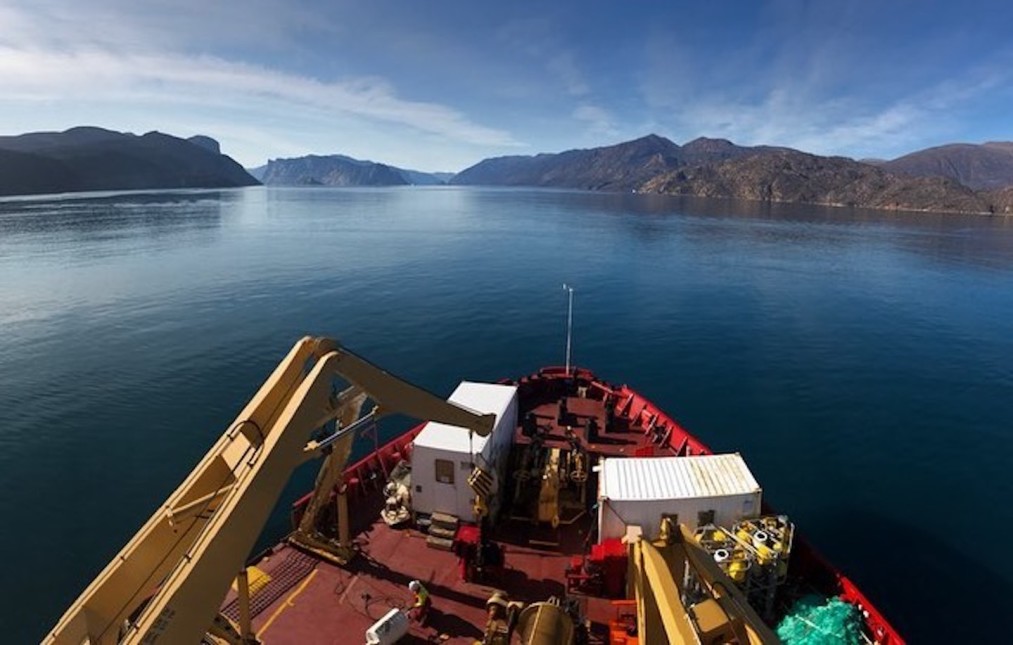
›The Arctic is believed to be a pristine environment, far removed from littered city streets and toxic industrial emissions. I study human pollution and I found it hard to believe that my fellow researchers and I would find so much litter out here. It was even harder to believe that what we uncovered closely resembled the contents of my own closet, over 3,000 kilometers (2,000 miles) away in Toronto. -
Hitting the Brakes on Plastics in China’s Food Delivery Industry: Q&A with Zheng Xue and Sherry Lu of Plastic Free China
›China Environment Forum // Q&A // November 4, 2021 // By Solange Reppas, Mingwei Zhu, Tongxin Zhu & McKenna PotterIn every Chinese city, there is an army of motorcycles and mopeds weaving through the traffic jams, and sometimes even venturing on sidewalks, to deliver millions of food and e-commerce orders each day. Meituan, one of China’s most popular food delivery apps, delivers 30 million orders a day, serving up 100 million plastic containers. According to Greenpeace, e-commerce and express delivery in China generated 9.4 million tons of packaging waste in 2018 and will likely triple to 41.3 million tons by 2025. -
Fully Protecting the World’s Land, Water, and People Through 30 by 30
›To prevent mass extinctions and bolster resilience to climate change, scientists warn that we must protect at least 30 percent of our oceans, lands, rivers, lakes, and wetlands. To safeguard global biodiversity, the “30 by 30” initiative aims to protect 30 percent of land and oceans by 2030. However, commitments on paper are not enough. World leaders must act strategically in implementation to ensure the most crucial ecosystems are protected. Implementation policies for 30 by 30 must also avoid unintentional harm such as exacerbating conflict over resources, excluding Indigenous and local groups from land management, and neglecting environmental protections for the remaining 70 percent of land and oceans.
-
Happy World Gorilla Day! A Conversation with Dr. Gladys Kalema-Zikusoka on COVID-19’s Impact on Gorilla Conservation and Public Health in Uganda
›“When we started out, people thought it was weird. ‘Why are you integrating people and animals and why are you integrating human health and animal health?’” says Kalema-Zikusoka, founder of Conservation Through Public Health (CTPH), in this week’s New Security Broadcast. Indeed, health infrastructure and conservation have long been organized around distinct silos. “Donors were focusing on single sector funding, and government departments were aligned along single sectors,” says Kalema-Zikusoka.
Showing posts from category conservation.


 “When we started out, people thought it was weird. ‘Why are you integrating people and animals and why are you integrating human health and animal health?’” says Kalema-Zikusoka, founder of

