-
With Knowledge Comes Responsibility: A Conversation with Sylvia Earle on the Ocean
› “Having a planet that is suitable for us has taken a very long time, like four and a half billion years,” said Sylvia Earle, Explorer in Residence at the National Geographic Society, in a podcast interview with Ambassador David Balton before a recent Wilson Center event on marine protected areas. “It’s taken us about four and a half decades to significantly unravel, deplete, [and] modify those precious systems that really have little margin of error.”
 -
Lost in Translation: How Building “Strong” Institutions can Diminish Human Security in the Global South
›
In the Global South, natural resource conflict has largely been considered a consequence of poor governance and weak political institutions. The international community’s solution? Build “green” governance capacity as a way to mitigate violent conflict and improve environmental outcomes. For the international development community, this has meant introducing laws, policies, and practices based on international standards of best practice, and training local regulators to adhere to those standards.
-
High Seas Biodiversity Treaty Would Prioritize Conservation
›Roughly 20 organizations wield some management authority in the high seas, but none of them have conservation as their core mandate, said Liz Karan, Senior Manager of the Protecting Ocean Life on the High Sea Campaign at the Pew Charitable Trusts. She spoke at a recent Wilson Center event hosted by the Polar Institute and Environmental Change and Security Program. The discussion revolved around aspects of a proposed global treaty on conservation and sustainable use of biodiversity in areas beyond the jurisdiction of any country. “The high seas treaty comes in as an opportunity to put conservation at the focus of the discussion of how we manage the high seas,” said Karan.
-
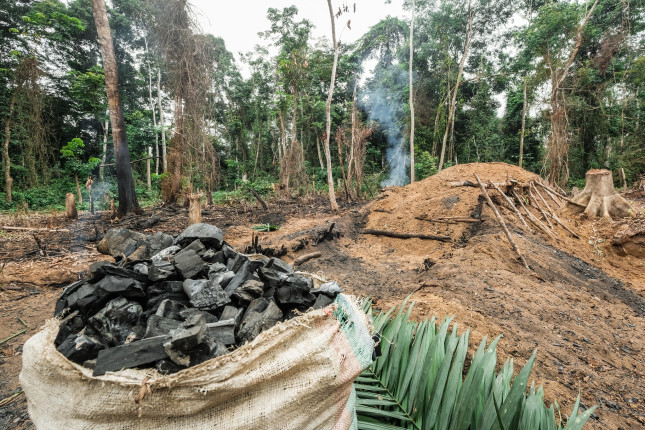
Fostering Citizen Enforcement and Rule of Law Could Cut Down Illegal Logging
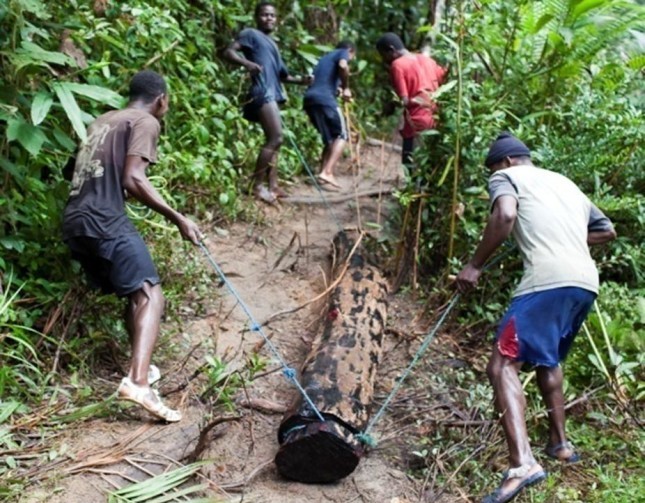
›“The trade in illegal timber products—those harvested and exported in contravention of the law of the producer country—is entangled in corruption, conflict, insecure land rights, and poor governance,” said Sandra Nichols Thiam, Senior Attorney of the Environmental Law Institute. She moderated a panel titled “Citizen Enforcement in the Forestry Sector” hosted by the Environmental Law Institute that explored illegal logging within the forest sector. Illegal harvesting of timber accounts for roughly 50 percent to 90 percent of forest activities in major producing countries within the Amazon Basin, Central Africa and Southeast Asia, said Thiam. This illegal timber trade is estimated to be worth from $30 billion to 100 billion dollars annually. Dismantling this extensive illegal enterprise would help promote biodiversity conservation, climate mitigation, human rights and sustainable development.
-
Stopping Wildlife Trafficking Could Help Strengthen U.S. National Security
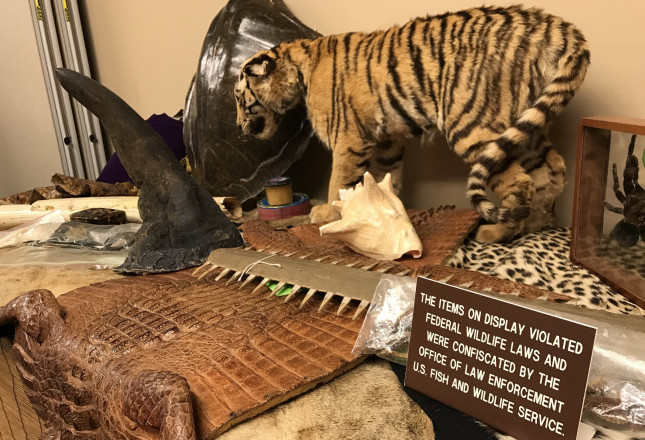
›“The current administration needs to continue to work with nations, nonprofits, and the private sector to halt wildlife poaching, transit, and consumption,” said Chairman of the House Foreign Affairs Committee, Rep. Eliot Engel (D-NY) during his opening remarks at the recent Natural Security Capitol Hill Briefing. He and national security and conservation experts gathered for a panel discussion on how to combat wildlife trafficking and the effects of climate change on national security.
-
From Resolution to Solution: UNEA’s Unique Opportunity to Tackle Environmental Dimensions of Armed Conflicts
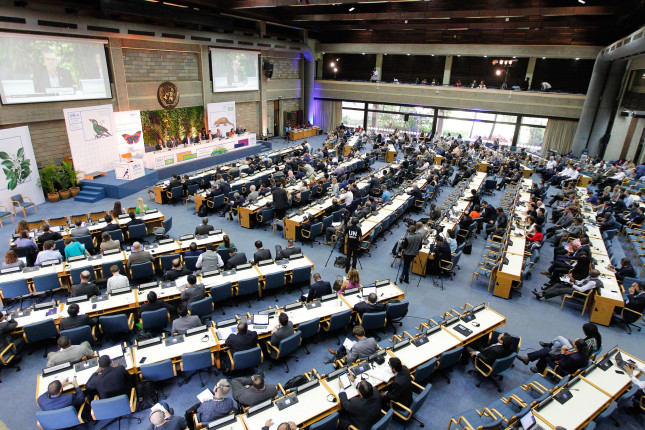
›When the Fourth Session of the UN Environment Assembly (UNEA-4) takes place in Nairobi starting March 11, governments, international organizations, and civil society organizations will discuss issues on the theme of innovative solutions for environmental challenges and sustainable consumption and production with over 30 draft resolutions submitted for discussion. With few international forums where the environmental dimensions of conflict can be properly discussed, we were optimistic about the past resolutions tackling this topic.
-
Missing Peace: Why Transboundary Conservation Areas Are Not Resolving Conflicts
›Transboundary Conservation Areas, such as Parks for Peace, have been heralded for their potential to simultaneously contribute to biodiversity conservation and peace, but evidence to this effect has been elusive. In fact, more indications suggest that transboundary conservation areas, including Parks for Peace, rely on pre-existing international peace between countries for formalization and on-going non-violent relations for continuity. Although they are primarily designed for ecological peace (based largely on arguments of ecological connectivity), they are not immune to environmental harms. Perhaps even more challenging is how “fortress conservation” and “green securitization” compromise social peace.
-
Fishing without Permission: The Uncertainties and Future of Illegal Commercial Fishing
›In September, Ambassador David Balton, a Senior Fellow at the Wilson Center’s Polar Initiative, testified before the Subcommittee on Oceans, Atmosphere, Fisheries, and Coast Guard, testifying against illegal, unreported, and unregulated fishing (IUU fishing). “We don’t even know just how much illegal fishing is going on,” said Ambassador David Balton, a Senior Fellow at the Wilson Center’s Polar Institute, in a recent Wilson Center NOW interview. IUU fishing is a major threat to the global fisheries industry as well as the oceans. “Even when nations get together and establish rules for fisheries or stocks across jurisdictional lines, it’s difficult to enforce the rules against everyone, and there is unfortunately a high percentage of illegal fishing that takes place.”
Showing posts from category conservation.
 “Having a planet that is suitable for us has taken a very long time, like four and a half billion years,” said Sylvia Earle, Explorer in Residence at the National Geographic Society, in a podcast interview with Ambassador David Balton before a recent Wilson Center