• woodrow wilson center
  • ecsp

New Security Beat

Subscribe:
  • rss
  • mail-to
  • Who We Are
  • Topics
    • Population
    • Environment
    • Security
    • Health
    • Development
  • Columns
    • China Environment Forum
    • Choke Point
    • Dot-Mom
    • Friday Podcasts
    • Navigating the Poles
    • Reading Radar
  • Multimedia
    • Water Stories (Podcast Series)
    • Backdraft (Podcast Series)
    • Tracking the Energy Titans (Interactive)
  • Films
    • Water, Conflict, and Peacebuilding (Animated Short)
    • Paving the Way (Ethiopia)
    • Broken Landscape (India)
    • Scaling the Mountain (Nepal)
    • Healthy People, Healthy Environment (Tanzania)
  • Publications
  • Events
  • Contact Us

NewSecurityBeat

The blog of the Wilson Center's Environmental Change and Security Program
Showing posts from category conflict.
  • Climate Change and National Security in an Age of Austerity: The 2014 Quadrennial Defense Review

    ›
    March 7, 2014  //  By Kate Diamond
    Philippines_QDR

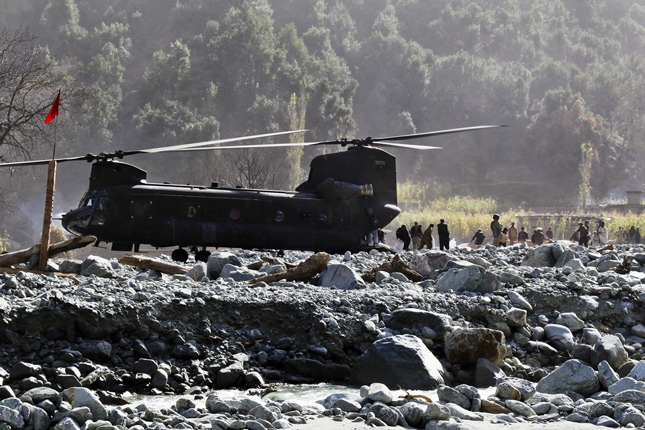
    Earlier this week, the Department of Defense released its first Quadrennial Defense Review since fiscal cliffs, shutdowns, and spending cuts hit the federal government. Not surprisingly, “austerity” shows up in almost every chapter of the report. What shows up even more? Climate change. For the second QDR in a row, the Pentagon has called out climate change as a “significant challenge for the United States and the world at large.”

    MORE
  • Alison Brysk: Urbanization, Economic Change Hidden Drivers of Gender-Based Violence

    ›
    Friday Podcasts  //  February 28, 2014  //  By Paris Achenbach
    alison-brysk-small

    Gender-based violence in developing countries is more than just a product of culture, war, extreme poverty, or historical patriarchy; it’s also a result of rapid economic change and urbanization, according to Alison Brysk, a fellow at the Wilson Center and the Mellichamp professor of global governance at the University of California, Santa Barbara.

    MORE
  • For Environmental Peacebuilding and Development Work, Collaboration Pays Dividends

    ›
    From the Wilson Center  //  February 27, 2014  //  By Jeremiah Asaka & Alaina Morman
    blue-helmets-NRM

    Many recurring problems in natural resource management are the result of missing a key point: ecosystems and human systems are inextricably linked and dynamic, changing constantly. We are part of a socio-ecological system, not external to it, as many previously thought. In the “age of man” – the Anthropocene, as some scientists call the current era – cross-sectoral collaboration is needed to make substantial headway in tackling complex challenges, such as natural resource-related conflict and climate change.

    MORE
  • Geoff Dabelko, Ensia

    The Periphery Isn’t Peripheral: Barriers to Cross-Sectoral Collaboration in Development

    ›
    February 14, 2014  //  By Wilson Center Staff
    himalayan-ridge

    The original version of this article, by Geoff Dabelko, appeared on Ensia.

    What do melting Himalayan glaciers have to do with food security in Cambodia? Not much, thought an aid practitioner trying to boost food security along the lower reaches of the Mekong River – until she heard a colleague working on the Tibetan Plateau describe the downstream implications of climate change in the Himalayas. Everything she was working on, she suddenly realized, could be literally washed away.

    MORE
  • Does Women’s Empowerment Encourage Good Global Citizenship?

    ›
    Guest Contributor  //  January 30, 2014  //  By Alison Brysk
    Brazil_protest

    These days, when the going gets tough, women “increase the peace.” From U.S. Secretary of State Hillary Clinton to Liberia’s President Ellen Johnson Sirleaf, the international community has learned that women’s leadership can contribute a different voice to fostering peace, alleviating poverty, and fighting for the rights of the oppressed.

    MORE
  • Ready for Change: Notre Dame Launches the Global Adaptation Index

    ›
    From the Wilson Center  //  January 27, 2014  //  By Laura Henson
    ND-GAIN-screen

    In 2008 and 2010, the price of many basic food stuffs soared, sparking a series of riots and food crises around the world. People in the poorest countries – those living with the smallest margins – were most affected, while the economies of developed nations were able to absorb the price changes. According to Notre Dame’s Global Adaptation Index, how climate change will impact different countries depends not only on their vulnerability to physical changes, but also their ability to absorb these impacts. [Video Below]

    MORE
  • Opportunity Amidst Conflict: Margie Buchanan-Smith on Long-Distance Trade and Peace-Building in Darfur

    ›
    Friday Podcasts  //  January 17, 2014  //  By Laura Henson
    margie_small

    Trade is “the lifeblood of Darfur’s economy,” says Margie Buchanan-Smith in this week’s podcast.

    Buchanan-Smith, a visiting fellow at Tuft University’s Feinstein International Center and the lead author of a recent study on livestock trade in Sudan, presented at the Wilson Center in November about the Feinstein Center’s collaboration with the UN Environment Program studying pastoralism in Sudan during the last decade of conflict.

    MORE
  • Natural Gas and Albacore: What Tuna Says About the Future of Mozambique

    ›
    January 13, 2014  //  By Laura Henson
    mozambique_tuna

    A 20-year peace accord between Mozambique’s two major political parties was brought to an abrupt end last fall. A series of violent skirmishes between FRELIMO and RENAMO resulted in at least 10 deaths, dozens injured, and fears that the country might relapse into the kind of political violence seen during its civil war, which left more than a million dead. RENAMO claims its frustrations stem from a fraudulent electoral system and social inequality, but some observers have suggested their motivations may be less benevolent: making sure they get their piece of the country’s newfound natural gas wealth.

    MORE
Newer Posts   Older Posts
View full site

Join the Conversation

  • RSS
  • subscribe
  • facebook
  • G+
  • twitter
  • iTunes
  • podomatic
  • youtube
Tweets by NewSecurityBeat

Trending Stories

  • unfccclogo1
  • Pop at COP: Population and Family Planning at the UN Climate Negotiations

Featured Media

Backdraft Podcast

play Backdraft
Podcasts

More »

What You're Saying

  • Volunteers,At,The,Lagos,Food,Bank,Initiative,Outreach,To,Ikotun, Pan-African Response to COVID-19: New Forms of Environmental Peacebuilding Emerge
    Rashida Salifu: Great piece 👍🏾 Africa as a continent has suffered this unfortunate pandemic.But it has also...
  • A desert road near Kuqa An Unholy Trinity: Xinjiang’s Unhealthy Relationship With Coal, Water, and the Quest for Development
    Ismail: It is more historically accurate to refer to Xinjiang as East Turkistan.
  • shutterstock_1779654803 Leverage COVID-19 Data Collection Networks for Environmental Peacebuilding
    Carsten Pran: Thanks for reading! It will be interesting to see how society adapts to droves of new information in...

What We’re Reading

  • Rising rates of food instability in Latin America threaten women and Venezuelan migrants
  • Treetop sensors help Indonesia eavesdrop on forests to cut logging
  • 'Seat at the table': Women's land rights seen as key to climate fight
  • A Surprise in Africa: Air Pollution Falls as Economies Rise
  • Himalayan glacier disaster highlights climate change risks
More »
  • woodrow
  • ecsp
  • RSS Feed
  • YouTube
  • Twitter
  • Facebook
  • Home
  • Who We Are
  • Publications
  • Events
  • Wilson Center
  • Contact Us
  • Print Friendly Page

© Copyright 2007-2021. Environmental Change and Security Program.

Woodrow Wilson International Center for Scholars. All rights reserved.

Developed by Vico Rock Media

Environmental Change and Security Program

Woodrow Wilson International Center for Scholars

Ronald Reagan Building and International Trade Center

  • One Woodrow Wilson Plaza
  • 1300 Pennsylvania Ave., NW
  • Washington, DC 20004-3027

T 202-691-4000