• woodrow wilson center
  • ecsp

New Security Beat

Subscribe:
  • rss
  • mail-to
  • Who We Are
  • Topics
    • Population
    • Environment
    • Security
    • Health
    • Development
  • Columns
    • China Environment Forum
    • Choke Point
    • Dot-Mom
    • Friday Podcasts
    • Navigating the Poles
    • Reading Radar
  • Multimedia
    • Water Stories (Podcast Series)
    • Backdraft (Podcast Series)
    • Tracking the Energy Titans (Interactive)
  • Films
    • Water, Conflict, and Peacebuilding (Animated Short)
    • Paving the Way (Ethiopia)
    • Broken Landscape (India)
    • Scaling the Mountain (Nepal)
    • Healthy People, Healthy Environment (Tanzania)
  • Publications
  • Events
  • Contact Us

NewSecurityBeat

The blog of the Wilson Center's Environmental Change and Security Program
Showing posts from category community-based.
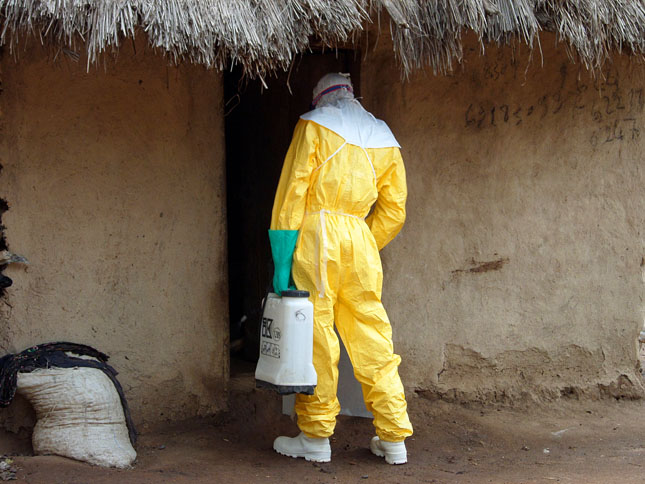
  • Solidarity and Stigma: The Challenge of Improving Maternal Health for Women Living With HIV

    ›
    Dot-Mom  //  From the Wilson Center  //  April 25, 2014  //  By Donald Borenstein
    maternal-health-HIV

    Despite the fact that with proper interventions, the likelihood of mother-to-child transmission of HIV is less than five percent, expectant mothers with HIV or AIDS often face intense stigma and marginalization from health care providers around the world. As a result, in some areas, the mortality rate for mothers with HIV is seven to eight times greater than the rate for non-infected women, said Dr. Isabella Danel of the U.S. Centers for Disease Control. [Video Below]

    MORE
  • Forests on Film: New Stories From Nepal and the Congo Basin

    ›
    From the Wilson Center  //  April 14, 2014  //  By Donald Borenstein

    Given growing awareness about environmental change and how it affects human life, it is perhaps not surprising there is also a growing audience for environmental filmmaking. At the 2014 Environmental Film Festival in the Nation’s Capital on March 25, the Wilson Center premiered ECSP’s latest documentary, Scaling the Mountain: Protecting Forests for Families in Nepal. Together with Heart of Iron, a recent film on mining in the Congo Basin, the event took viewers into some of the world’s most remote forests to see how their inhabitants are adapting to rapid changes in the natural resources on which they depend.

    MORE
  • New Film Explains Blue Ventures’ Integrated Approach to Development and Conservation in Madagascar

    ›
    Eye On  //  April 1, 2014  //  By Kate Diamond

    Blue Ventures has become a leader in the population, health, and environment (PHE) community through its work with the remote, semi-nomadic Vezo people living along Madagascar’s southwestern coast. In a new short documentary, The Freedom to Choose: Empowering Communities to Live With the Sea, Blue Ventures describes how their approach has helped the Vezo respond to the combined challenges of resource scarcity, poor reproductive health, and unsustainable livelihoods.

    MORE
  • Kathleen Mogelgaard: Four Steps to Better Link Climate Adaptation and Reproductive Health Strategies

    ›
    Friday Podcasts  //  March 28, 2014  //  By Paris Achenbach
    mogelgaard_small

    Climate change vulnerability is closely tied to population dynamics, says Kathleen Mogelgaard in this week’s podcast. “We know that population size, composition and spatial distribution around the world is constantly changing, and that these changes do have implications for climate change exposure, sensitivity, and adaptive capacity – the three elements of vulnerability.”

    MORE
  • In Nepal, Integrating Forest and Family Health Is Improving Lives

    ›
    March 24, 2014  //  By Sean Peoples
    ScalingtheMountain1

    For years, the Chepang people have lived off the land in Nepal’s forested central foothills. Communities cleared trees to start small subsistence farms, harvested the surrounding area for firewood, and eventually moved on after the wood, soil, and water were depleted.

    MORE
  • Gidon Bromberg: Jordan River Shows Water Can Be a Path to Peace, Generate Will for Change

    ›
    Friday Podcasts  //  March 21, 2014  //  By Paris Achenbach
    Gidon_bromberg

    At last month’s launch of the USAID Water and Conflict Toolkit at the Wilson Center, Gidon Bromberg explained that the toolkit is about much more than just conflict. “It’s put very much in forefront the possibilities of peacebuilding,” he says in this week’s podcast. “Water is an opportunity in areas where there aren’t many opportunities.”

    MORE
  • Chris Berdnik, Pulitzer Center on Crisis Reporting

    Density Breeds Scarcity on Cambodia’s Lake Tonle Sap

    ›
    March 10, 2014  //  By Wilson Center Staff
    tonle_sap

    The original version of this article, by Chris Berdnik, appeared on the Pulitzer Center on Crisis Reporting.

    I meet Keo Mao, 42, in the floating fishing village of Akol on Cambodia’s Lake Tonle Sap. The houses here move seasonally with the lake, which expands by a factor of five during the monsoon rains and recedes again in the dry months. Fish supply about 80 percent of the animal protein eaten by Cambodians, and about 60 percent of the inland catch comes from the Tonle Sap.

    MORE
  • After Chance Meeting, New Population, Health, and Environment Program Is Born in Madagascar

    ›
    Guest Contributor  //  February 25, 2014  //  By Vik Mohan
    Marojejy-View-from-Camp-3_I

    Against the stunning backdrop of Marojejy National Park, I recently crossed paths with a conservationist from a very different background, working on the opposite side of Madagascar. But, it turns out, the communities we work with face many of the same challenges, and our meeting spawned a new population, health, and environment (PHE) program.

    MORE
Newer Posts   Older Posts
View full site

Join the Conversation

  • RSS
  • subscribe
  • facebook
  • G+
  • twitter
  • iTunes
  • podomatic
  • youtube
Tweets by NewSecurityBeat

Trending Stories

  • unfccclogo1
  • Pop at COP: Population and Family Planning at the UN Climate Negotiations

Featured Media

Backdraft Podcast

play Backdraft
Podcasts

More »

What You're Saying

  • Volunteers,At,The,Lagos,Food,Bank,Initiative,Outreach,To,Ikotun, Pan-African Response to COVID-19: New Forms of Environmental Peacebuilding Emerge
    Rashida Salifu: Great piece 👍🏾 Africa as a continent has suffered this unfortunate pandemic.But it has also...
  • A desert road near Kuqa An Unholy Trinity: Xinjiang’s Unhealthy Relationship With Coal, Water, and the Quest for Development
    Ismail: It is more historically accurate to refer to Xinjiang as East Turkistan.
  • shutterstock_1779654803 Leverage COVID-19 Data Collection Networks for Environmental Peacebuilding
    Carsten Pran: Thanks for reading! It will be interesting to see how society adapts to droves of new information in...

What We’re Reading

  • Rising rates of food instability in Latin America threaten women and Venezuelan migrants
  • Treetop sensors help Indonesia eavesdrop on forests to cut logging
  • 'Seat at the table': Women's land rights seen as key to climate fight
  • A Surprise in Africa: Air Pollution Falls as Economies Rise
  • Himalayan glacier disaster highlights climate change risks
More »
  • woodrow
  • ecsp
  • RSS Feed
  • YouTube
  • Twitter
  • Facebook
  • Home
  • Who We Are
  • Publications
  • Events
  • Wilson Center
  • Contact Us
  • Print Friendly Page

© Copyright 2007-2021. Environmental Change and Security Program.

Woodrow Wilson International Center for Scholars. All rights reserved.

Developed by Vico Rock Media

Environmental Change and Security Program

Woodrow Wilson International Center for Scholars

Ronald Reagan Building and International Trade Center

  • One Woodrow Wilson Plaza
  • 1300 Pennsylvania Ave., NW
  • Washington, DC 20004-3027

T 202-691-4000