• woodrow wilson center
  • ecsp

New Security Beat

Subscribe:
  • rss
  • mail-to
  • Who We Are
  • Topics
    • Population
    • Environment
    • Security
    • Health
    • Development
  • Columns
    • China Environment Forum
    • Choke Point
    • Dot-Mom
    • Friday Podcasts
    • Navigating the Poles
    • Reading Radar
  • Multimedia
    • Water Stories (Podcast Series)
    • Backdraft (Podcast Series)
    • Tracking the Energy Titans (Interactive)
  • Films
    • Water, Conflict, and Peacebuilding (Animated Short)
    • Paving the Way (Ethiopia)
    • Broken Landscape (India)
    • Scaling the Mountain (Nepal)
    • Healthy People, Healthy Environment (Tanzania)
  • Publications
  • Events
  • Contact Us

NewSecurityBeat

The blog of the Wilson Center's Environmental Change and Security Program
Showing posts from category community-based.

  • The SDGs Are All About Integration – Good Thing PHE Programs Have Been Doing That for Years

    ›
    Guest Contributor  //  August 5, 2015  //  By A.Tianna Scozzaro, Cara Honzak & Cheryl Margoluis
    scalingthemountain2

    Last week, the United Nations concluded one of the last negotiations on the road to adopting the Sustainable Development Goals in September. We’ve entered the home stretch of a process that has taken more than two years, bringing governments, civil society organizations, and communities together to define the development goals and targets that UN member states will be expected to aim for over the next 15 years.

    MORE
  • Who Benefits From REDD+? Lessons From India, Tanzania, and Mexico

    ›
    Guest Contributor  //  August 4, 2015  //  By Prakash Kashwan
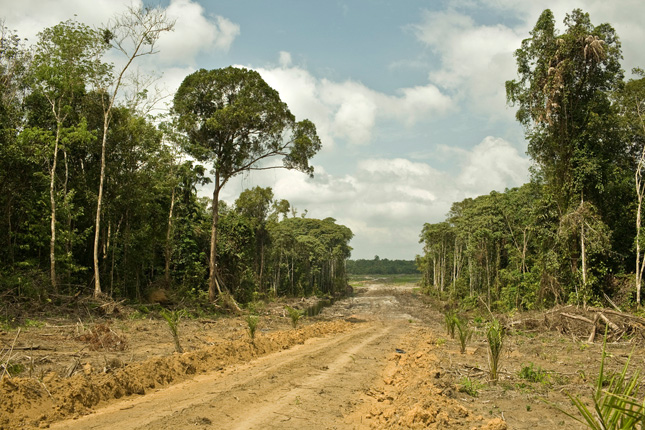
    kalimantan

    REDD+, a global framework designed to reward governments for preserving forests, has pledged nearly $10 billion to developing countries. But minorities, indigenous people, the poor, and other marginalized groups that live in forest areas often end up paying more than their fair share of the costs of environmental cleanup and conservation while getting less in return. What can be done to change this?

    MORE
  • In Search of Higher Returns: Can Extractive Industries Help Build Peace?

    ›
    August 3, 2015  //  By Carley Chavara

    If you’re a government pondering the development of newly discovered natural resources, how do you avoid the so-called “resource curse” – the tendency of high value extractive resources, like oil, gas, or minerals, to, instead of prosperity, bring corruption, entrenched poverty, and even violence?

    MORE
  • “People Need Nature to Thrive”: Recovering From Conflict Through Conservation in Timor-Leste

    ›
    Guest Contributor  //  July 21, 2015  //  By Rui Pinto
    timor-leste

    The original version of this article appeared on Conservation International’s Human Nature blog.

    In my tiny, half-an-island country of Timor-Leste, cemeteries smell of jasmine and come to life on All Saints’ Day. Families have picnics and kids roam wild over the tombstones. Here, stepping on somebody else’s family tombstones is not seen as an offense but as the norm; after all, since there isn’t enough land to hold so many graves, not stepping on one is impossible unless you have mastered levitation.

    MORE
  • The Hillary Doctrine: Sex and American Foreign Policy (Book Launch)

    ›
    From the Wilson Center  //  July 14, 2015  //  By Linnea Bennett
    Afghanistan-women-engagemen

    When Valerie Hudson evaluates the strength of a nation, whether food security, wealth, peacefulness, or quality of governance, she finds one important thread that underlies it all. “One of the most important factors in the determination of these things is in fact the situation, and security, and status of women,” said Hudson at the Wilson Center on June 24. [Video Below]

    MORE
  • 50 Years of Family Planning at USAID: Successes, Political Challenges, and Future Directions

    ›
    From the Wilson Center  //  July 10, 2015  //  By Josh Feng
    Indonesia

    Since President Lyndon B. Johnson created the USAID population program in 1965, it has evolved in tandem with the global discourse on population and demography. “The agency’s family planning program is as relevant today as it ever was, and is necessary,” said Jennifer Adams, deputy assistant administrator of the U.S. Agency of International Development’s Bureau for Global Health. The bureau houses the Office of Population and Reproductive Health, which implements U.S. development and relief efforts to expand access to modern contraceptives, fight HIV/AIDS, reduce unsafe abortions, and protect the health of women and children. [Video Below]

    MORE
  • Soil Security and Incorporating Forestry Into Food Security Strategies

    ›
    Reading Radar  //  July 2, 2015  //  By Josh Feng

    RR_SoilPicEarth’s thin upper-crust of soil is kept in balance by a complex carbon and nutrient cycle that is increasingly threatened by human exploitation and climate change, according to a review in Science. The chemicals trapped in topsoil and subsoil are crucial to plant growth, but are being depleted at rates much higher than they are being replenished, writes Ronald Amundson et al. For instance in the central United States, estimated soil erosion rates exceed production rates by 10 times.

    MORE
  • Parson Rambinizandry and Marie Williamson, Blue Ventures

    Conservation Organization Helps Women Bring Health Care to Rural Madagascar

    ›
    Beat on the Ground  //  Dot-Mom  //  June 30, 2015  //  By Wilson Center Staff
    Havany

    The original version of this article, by Parson Rambinizandry and Marie Williamson, appeared on Blue Ventures’ Beyond Conservation blog.

    Two months ago we sat down with some of our community health workers to brainstorm ideas for International Women’s Day. What would engage women, what could bring about positive change in their community? Something different to the normal celebrations, perhaps a petition for a midwife? This seemed like a great idea on paper, but would it create false hope in a village where the public health center has been closed for years?

    MORE
Newer Posts   Older Posts
View full site

Join the Conversation

  • RSS
  • subscribe
  • facebook
  • G+
  • twitter
  • iTunes
  • podomatic
  • youtube
Tweets by NewSecurityBeat

Trending Stories

  • unfccclogo1
  • Pop at COP: Population and Family Planning at the UN Climate Negotiations

Featured Media

Backdraft Podcast

play Backdraft
Podcasts

More »

What You're Saying

  • Volunteers,At,The,Lagos,Food,Bank,Initiative,Outreach,To,Ikotun, Pan-African Response to COVID-19: New Forms of Environmental Peacebuilding Emerge
    Rashida Salifu: Great piece 👍🏾 Africa as a continent has suffered this unfortunate pandemic.But it has also...
  • A desert road near Kuqa An Unholy Trinity: Xinjiang’s Unhealthy Relationship With Coal, Water, and the Quest for Development
    Ismail: It is more historically accurate to refer to Xinjiang as East Turkistan.
  • shutterstock_1779654803 Leverage COVID-19 Data Collection Networks for Environmental Peacebuilding
    Carsten Pran: Thanks for reading! It will be interesting to see how society adapts to droves of new information in...

What We’re Reading

  • Rising rates of food instability in Latin America threaten women and Venezuelan migrants
  • Treetop sensors help Indonesia eavesdrop on forests to cut logging
  • 'Seat at the table': Women's land rights seen as key to climate fight
  • A Surprise in Africa: Air Pollution Falls as Economies Rise
  • Himalayan glacier disaster highlights climate change risks
More »
  • woodrow
  • ecsp
  • RSS Feed
  • YouTube
  • Twitter
  • Facebook
  • Home
  • Who We Are
  • Publications
  • Events
  • Wilson Center
  • Contact Us
  • Print Friendly Page

© Copyright 2007-2021. Environmental Change and Security Program.

Woodrow Wilson International Center for Scholars. All rights reserved.

Developed by Vico Rock Media

Environmental Change and Security Program

Woodrow Wilson International Center for Scholars

Ronald Reagan Building and International Trade Center

  • One Woodrow Wilson Plaza
  • 1300 Pennsylvania Ave., NW
  • Washington, DC 20004-3027

T 202-691-4000