-
REPORT LAUNCH | Population Trends and the Future of US Competitiveness
›From the Wilson Center // February 5, 2024 // By Jennifer Dabbs Sciubba, Lauren Herzer Risi & Sarah B. Barnes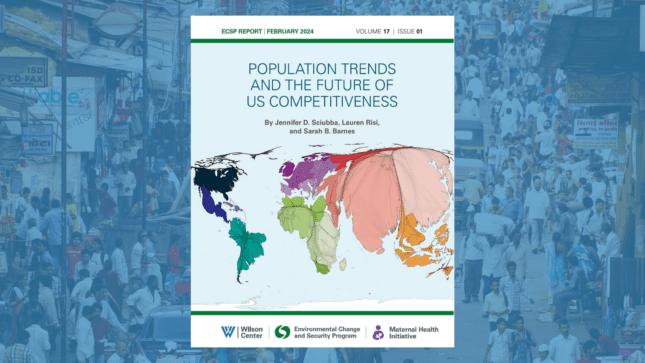
This article is adapted from “Population Trends and the Future of US Competitiveness”
Demographic issues intersect with a number of policy priorities on the congressional agenda, including the economy, immigration, health care and foreign policy, but how population trends influence policy outcomes is often overlooked or misunderstood. In a new report, we explore how population dynamics have changed dramatically over the last few decades, and what these changes mean for the economic and security interests of the United States.
-
ECSP Weekly Watch | January 29 – February 2
›
A window into what we are reading at the Wilson Center’s Environmental Change and Security Program
Climate Change Worsens Human Trafficking of Impoverished Sierra Leoneans (Al Jazeera)
Poverty leaves many vulnerable to human trafficking in Sierra Leone. Youth unemployment is almost 60% there, and most of the population lives on less than $3 per day. Victims are offered employment, largely in the service industry. Yet when they arrive in their country of employment, their passports may be seized and they are forced into unpaid labor, often coupled with sexual abuse especially for young women.
-
Climate Action on the Farm: Catalyzing a No-till Revolution in the US and China
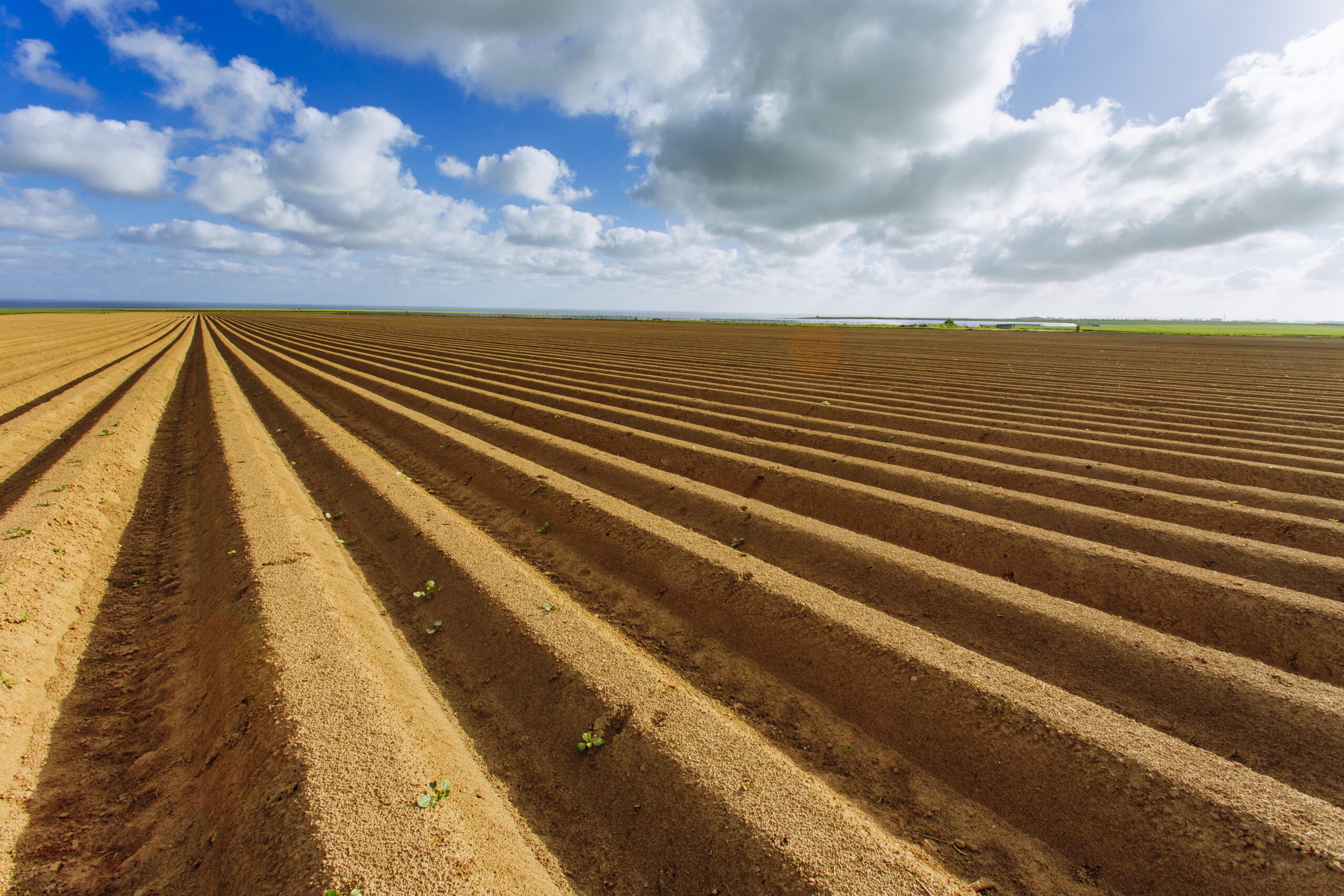
›China Environment Forum // Cool Agriculture // Guest Contributor // February 1, 2024 // By Abigail OrdillasFor centuries, farmers around the globe have tilled the soil to prepare for planting. Traditional tilling, however, exposes the bare earth to wind and water, causing erosion and the loss of soil organic carbon, as well as lowering soil quality and crop yields. In the US Corn Belt tilling has degraded approximately 35% of the land– about the size of Montana. In China, erosion from traditional tilling has degraded over 50% of agricultural soils. In the two countries soil erosion and loss of soil fertility is creating annual economic losses of $1.9 billion and $3.7 billion, respectively. Nevertheless, farmers are often hesitant to switch to no-till practices.
-
ECSP Weekly Watch | January 22 – 26
›A window into what we are reading at the Wilson Center’s Environmental Change and Security Program
World Groundwater Levels Face Accelerated Decline
Courtesy of Reuters, Reported by David Stanway and Edited by Tomasz Janowsk
Nature recently released a report revealing that global groundwater levels have undergone a widespread and accelerated decline over the past 40 years. Researchers concluded that this has likely occurred as a result of the impact of two factors: unsustainable irrigation practices in dry climates and drought driven by climate change.
-
China’s EV Power Grid-lock: A Coin Toss for Decarbonization?
›Usually, Ms. Li charges her BYD electric car at a TELD station during her half-hour lunch break. However, today was different – it took an extra ten minutes to complete the charging, providing her time to enjoy a cup of coffee. This slight delay was due to her participation in a Shanghai demand response pilot designed to encourage consumers to adjust electricity usage according to electricity grid conditions. Like a coin toss, this pilot could be a big win for protecting the grid and accelerating low-carbon transport in China, but many infrastructure obstacles could derail this decarbonization.
-
Water, Corruption, and Security in Iran
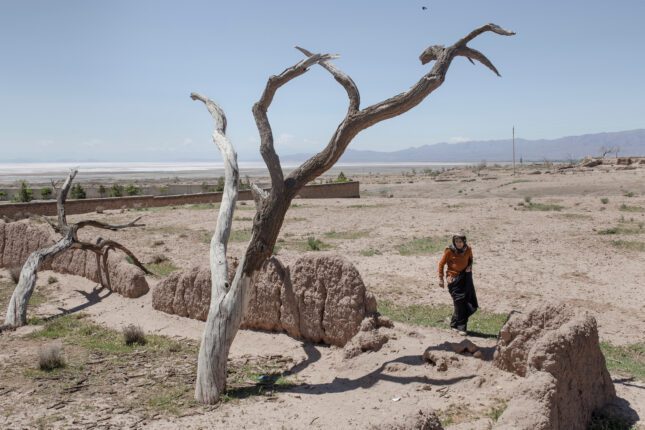
›This past summer was the hottest on record, bringing devastating impacts to many global communities. Iran was one of many nations that faced both debilitating heat and the subsequent water stress.
While Iran’s problems received significant media attention this year, water scarcity in the country is not a new problem. For decades, corruption and poor planning have plagued Iranian water policy, with impacts falling upon its increasingly disadvantaged provinces and, ultimately, on its ethnic minorities. Poor water policy also has contributed to an increasing number of cross-border disputes.
-
Environment and Security | Q&A with Editor in Chief, Ashok Swain
›From Afghanistan, Nepal, and Libya to the Arctic, the new issue of Environment and Security takes a fresh look at emerging issues at the intersection of environment and security. Ashok Swain, Editor in Chief of Environment and Security, spotlights some of the new research and insights in this Q&A with ECSP staff.
Q: The new issue of Environment and Security features an article on Arctic governance, including a close examination of the International Code for Ships Operating in Polar Waters (Polar Code). How do the authors assess this regulatory instrument as it enters its 10th year since adoption?
-
ECSP Weekly Watch | January 15 — 19
›A window into what we are reading at the Wilson Center’s Environmental Change and Security Program
The Worsening Environmental Impact of the War in Gaza
The Gaza Strip has long been uniquely vulnerable to the climate crisis, with rapid temperature increase and decreasing rainfall plaguing this whole region. Even prior to the current conflict, NGOs in the region and the UN have warned that climate change would be devastating, particularly for food and water security in the Gaza Strip and West Bank.
Showing posts from category climate change.