-
Money Can Grow on Trees: Forestry Rights Reform for Decarbonization in China
›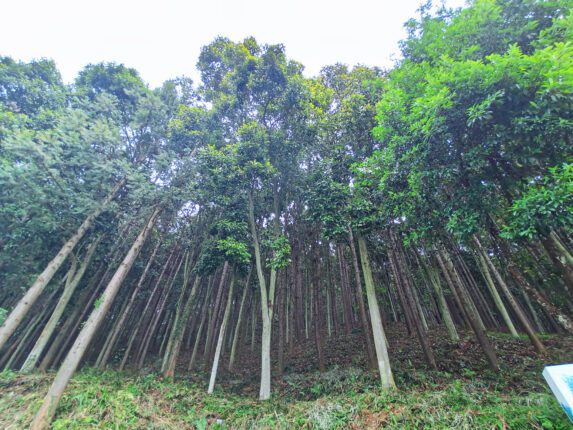
High in the remote mountains of western Fujian Province, Changkou—part of Sanming Prefectural City—became the first village to launch a new forestry carbon ticket system in May 2021. Changkou farmers have long received little benefit in managing forests because of fragmented forest land, high investment risks, and limited ownership rights. To solve those problems, the Sanming Forestry Bureau issued tickets to forestry farmers, granting them the right to receive stocks on their plots of forests by cooperating with farms in a certain period. Meanwhile, the carbon tickets grant farmers the right to earn carbon emission credits for their land and trees.
-
ECSP Weekly Watch: February 19 – 23
› A window into what we are reading at the Wilson Center’s Environmental Change and Security Program
Progress—and Room for Improvement—in UNEP’s Annual Report (United Nations Environment Programme)
How effective is the United Nations Environment Programme (UNEP)’s work on the fight against climate change? Its Annual Report analyzed the work it has done over the past year to do so. The UNEP supports key areas in which progress has been made, including waste reduction through the Global Framework on Chemicals and global instrument on plastic pollution, biodiversity protection efforts through various frameworks, and loss and damage mobilization through COP28.
-
Relief, Recovery, and Peace: A Follow-up Interview with DAS Iris Ferguson
›In today’s episode of New Security Broadcast, ECSP Program Director Lauren Risi follows up with Iris Ferguson, the US Department of Defense’s (DoD) Deputy Assistant Secretary of Defense for Arctic and Global Resilience, on their previous conversation previewing the DoD delegation to COP28.Deputy Assistant Secretary Ferguson discusses her takeaways from COP28 and the importance of listening to stakeholders outside the Pentagon. She also outlines some of DoD’s key energy and climate security priorities in 2024.
-
ECSP Weekly Watch: February 12 – 16
›A window into what we are reading at the Wilson Center’s Environmental Change and Security Program
Food, Climate, and Conflict Nexus a Priority at the UN Security Council (Food and Agriculture Organization)
The United Nations Security Council’s High-Level Open Debate takes place in Guyana this week, and the signature event of that nation’s presidency is “The Impact of Climate Change and Food Insecurity on the Maintenance of International Peace and Security.” Several briefers have emphasized the interconnectedness between climate change and conflict, including Secretary-General António Guterres and UNFCCC Chair Simon Stiell.
-
The Complicated Relationship Between Climate, Conflict, and Gender in Mozambique
›Guest Contributor // February 12, 2024 // By Gracsious Maviza, Mandlenkosi Maphosa, Giulia Caroli, Thea Synnestvedt & Joram TarusariraIndividuals face immense challenges in displacement contexts, particularly where climate, conflict, and displacement intersect. In Mozambique, climate impacts have combined with conflict to displace nearly a million people. Entire livelihoods, identities, and stability are vanishing. Women, men, girls, and boys are not just losing homes; they are losing their place in traditional societal roles, too. This chaos—and responses by the international community—are reshaping Mozambique’s gender dynamics. -
ECSP Weekly Watch | February 5 – 9
›A window into what we are reading at the Wilson Center’s Environmental Change and Security Program
El Niño and Global Warming’s Shared Impact on Chile and California (New York Times)
Devastating wildfires have killed over 120 people in Chile, where a decade-long drought has created extreme fire weather conditions. While the country has experienced wildfires for years, a recent study found that unusually warm ocean temperatures created by El Niño have combined with climate-fueled droughts and heat waves to contribute to the wildfires now raging.
-
Food Waste: A Low-Hanging Fruit for Methane Reductions
›China Environment Forum // Cool Agriculture // February 8, 2024 // By Jennifer Nguyen, Jennifer Turner & Karen ManclThis blog is modified from the Wilson Center-OSU “Cultivating US and Chinese Climate Leadership on Food and Agriculture Roadmap” publication.
“Waste is something that most of us just don’t see,” stressed Pete Pearson, Senior Director, Food Loss and Waste, WWF, at a recent Wilson Center event. Though people are “conditioned” to be blind to food waste, continued Pearson, this not-so-invisible problem wastes a third of food grown around the world. When this wasted food decomposes, it emits methane, accounting for 8 to 10% of global greenhouse gas (GHG) emissions.
-
Weakened Infrastructure and Climate Change: The Threat to Water Security in Nineveh
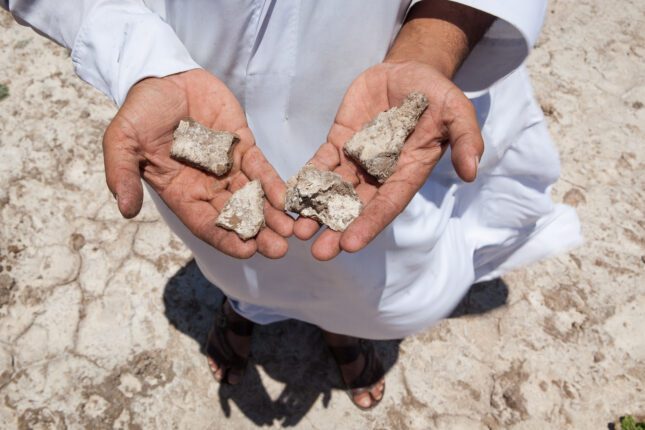
›Iraq is incredibly vulnerable to the impacts of climate change. Temperatures are increasing, rainfall is decreasing, and the country experiences prolonged periods of drought. These conditions, as well as the destruction of wells and irrigation systems in the Islamic State’s (IS) targeted 2014-2017 campaign to destroy agricultural livelihoods, have created a growing water problem in Iraq’s Nineveh Plains. Indeed, water levels there have dropped low enough to subject crops to drought stress, endangering drinking water systems and affecting the ability to grow crops and raise livestock.
Showing posts from category climate change.
 In today’s episode of New Security Broadcast, ECSP Program Director Lauren Risi follows up with Iris Ferguson, the US Department of Defense’s (DoD) Deputy Assistant Secretary of Defense for Arctic and Global Resilience, on their previous conversation previewing the DoD delegation to COP28.
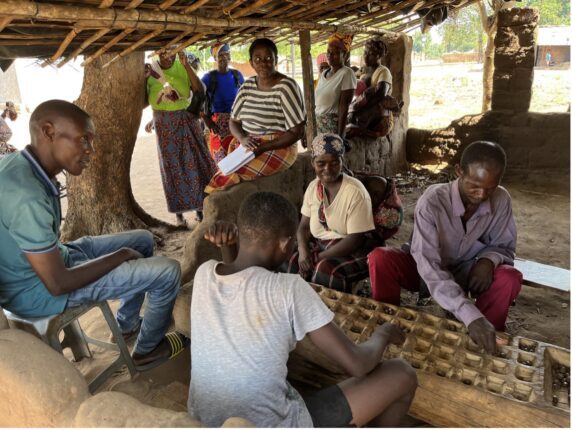 Individuals face immense challenges in displacement contexts, particularly where climate, conflict, and displacement intersect. In Mozambique, climate impacts have combined with conflict to displace nearly