• woodrow wilson center
  • ecsp

New Security Beat

Subscribe:
  • rss
  • mail-to
  • Who We Are
  • Topics
    • Population
    • Environment
    • Security
    • Health
    • Development
  • Columns
    • China Environment Forum
    • Choke Point
    • Dot-Mom
    • Friday Podcasts
    • Navigating the Poles
    • Reading Radar
  • Multimedia
    • Water Stories (Podcast Series)
    • Backdraft (Podcast Series)
    • Tracking the Energy Titans (Interactive)
  • Films
    • Water, Conflict, and Peacebuilding (Animated Short)
    • Paving the Way (Ethiopia)
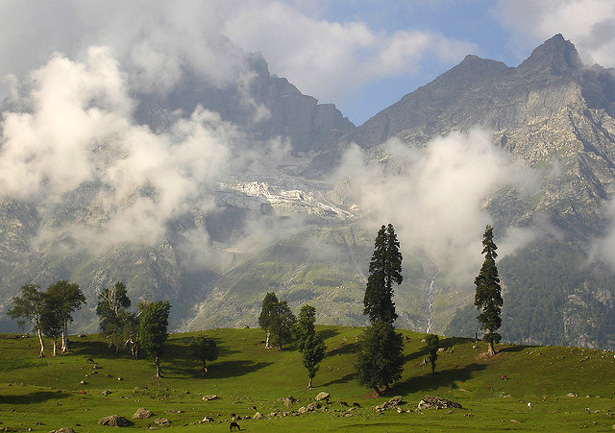
    • Broken Landscape (India)
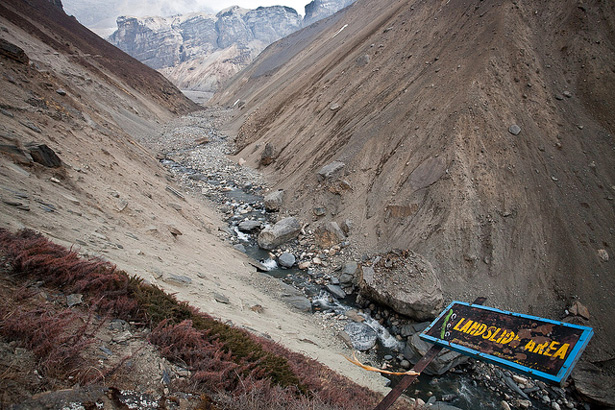
    • Scaling the Mountain (Nepal)
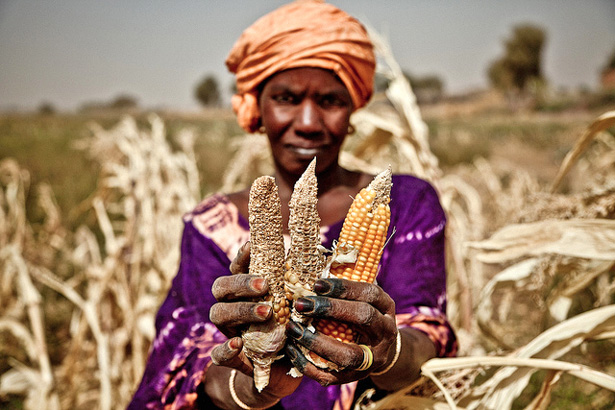
    • Healthy People, Healthy Environment (Tanzania)
  • Publications
  • Events
  • Contact Us

NewSecurityBeat

The blog of the Wilson Center's Environmental Change and Security Program
Showing posts from category climate change.
  • The Diane Rehm Show Tackles Water Challenges With ECSP Director Geoff Dabelko

    ›
    March 3, 2010  //  By Michelle Neukirchen
    How is water shaping geopolitics in the 21st century? Is it an underlying factor for state failure and social conflict, or can it drive peace and cooperation? How will climate change reshape global water resources?

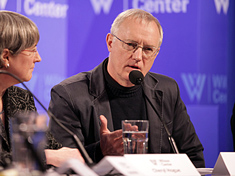
    Recently, on WAMU’s “The Diane Rehm Show,” ECSP Director Geoff Dabelko, author Steven Solomon, and the World Bank’s Julia Bucknall came together to discuss the history, politics, economics, and future of water.

    “Climate change exacerbates the water crisis in very severe ways because it manifests itself through water —through floods, droughts, and melting glaciers,” said Solomon.

    The World Bank’s Julia Bucknell highlighted climate change projections that indicate average precipitation increases are likely, mostly in the global North. “It is the poorer countries that show up red on the maps with a reduction in precipitation,” she said.

    By compounding failing states’ limited capacity to secure existing water supplies for agriculture, sanitation, and human consumption, decreasing precipitation will result in further intensification of global public health and food security crises.

    “We need to improve the existing productivity of the water we’ve got,” said Solomon. “We need to use it more efficiently and fairly in a way that protects the ecosystems.”

    Countries such as Australia, Israel, and China are leading the way: even under arid conditions, they use innovative methods to remain productive. In Australia, a new regime allows water rights to be traded, even over cellphones, while China established a credit-based system for individual farmers by using remote sensing technology based on NASA data.

    Governments are under pressure to address climate change directly, while managing vexing local and regional challenges. “Our political institutions and our political leaders must not deal with the short term and pretend things will go back to a state of normalcy, but [should] progressively and proactively shape and reshape the institutions,” said Dabelko.

    Countries with traditionally contentious relationships have cooperated to solve common water problems. The Financial Times recently reported on an agreement between China and India to jointly assess trends in Himalayan glacier and snow melt.

    “There are prospects for tensions,” said Dabelko of the Himalayas, “but quite frankly, water is difficult to [obtain] through war. It’s hard to pick it up and take it home.”

    To listen to the full audio recording, click here.

    Photo: Just Add Water, Courtesy of Flickr Member MΛЯK
    Photo: Melting Glacier at Jokuldalur, Iceland 2, Courtesy of Flickr Member, ChrisGoldNY
    MORE
  • Climate Change and Conflict

    ›
    Reading Radar  //  February 23, 2010  //  By Dan Asin
    Climate Change and Security in Africa: A Study for the Nordic-African Foreign Ministers Meeting, a collaboration between the International Institute for Sustainable Development and the Institute for Security Studies, examines the spectrum of literature devoted to the security implications of climate change in Africa. In particular, the study focuses on the economic sectors and regions most susceptible to climate change’s threat multiplier effects. It concludes that “climate change presents very real development challenges which, under certain circumstances, may contribute to the emergence and longevity of conflict.”

    The International Institute for Sustainable Development’s Rising Temperatures, Rising Tensions: Climate Change and the Risk of Violent Conflict in the Middle East determines that “climate change—by redrawing the maps of water availability, food security, disease prevalence, population distribution and coastal boundaries—may hold serious implications for [the Middle East’s] regional security.” The report identifies the Middle East’s history of conflict as a significant challenge to the region’s ability to cope with climate change’s threats of water scarcity, food insecurity, and volatile migration. Rising Temperatures, Rising Tensions also discusses strategies to advance both adaptation and peacemaking in the region.

    Using the coinciding outbreaks of regional drought and inter-communal violence in Kenya in 2009 as an illustration, Climate Change and Conflict: Lessons from Community Conservancies in Northern Kenya Conservation Development examines climate change’s potential to act as a threat multiplier in Northern Kenya. The study, jointly produced by the Saferworld, concludes “that the threat of increased conflict in northern Kenya as a result of climate change is real” and “that resource scarcity is already contributing to heightened insecurity and conflict in these areas.” The study also provides recommendations for responding to climate change, managing natural resources, and preventing conflict and ensuring security.
    MORE
  • Patriotism: Red, White, and Blue…and Green?

    ›
    Eye On  //  February 21, 2010  //  By Dan Asin
    “National security often means cyber security, it means energy security, it means homeland security, and more and more…it means environmental security,” says retired U.S. Army Captain James Morin in the Pew Project on National Security, Energy and Climate’s recently released video short, “Climate Patriots.”

    “Climate Patriots” calls attention to the nexus between energy, climate change, and national security. The video identifies climate change as a two-fold threat likely to increase the frequency and intensity of humanitarian disasters and political instability. The latter, military analysts believe, will fuel further conflict, fundamentalism, and terrorism.

    “Climate Patriots” also touches on military efforts to combat climate change (e.g., reducing energy consumption and shifting to renewable fuel supplies) as well as Center for Naval Analyses (CNA) research on national security, energy, and climate.

    “If we don’t take action now,” retired U.S. Navy Vice Admiral Dennis McGinn says, “the options for dealing with the effects of climate change and the effects of energy security become much, much more expensive. In fact, some of the options completely go away over the next 10-20 years if we don’t start taking some prudent actions now.”
    MORE
  • Gates: More Money for Global Health Is Good for the Environment

    ›
    January 28, 2010  //  By Gib Clarke
    Bill Gates gave the PHE community a much-needed upgrade in his foundation’s 2nd Annual Letter, released this week. Unfortunately it still has a few bugs.

    “In the long run, not spending on health is a bad deal for the environment because improvements in health, including voluntary family planning, lead people to have smaller families, which in turn reduces the strain on the environment,” concludes Gates.

    This statement could dramatically raise awareness of and funding for population-environment programs. Any time Bill Gates talks, the world listens, as evidenced by the barrage of coverage from Reuters, AFP, and top IT newswires. For the public, it offers a rare glimpse into development strategy, so Gates’ thoughts (and financial commitments) could be seen as representative of the foundation community’s approach to global health problems.

    Although it may seem obvious that fewer people place less strain on the environment, this connection has been largely absent from the environmental agenda, including the efforts to combat climate change. Some environmental leaders and organizations have dismissed population as an unimportant distraction from the real business at hand. Others have noted that population growth’s impact on climate change is far greater in the rich world than in poor countries, whose per capita emissions are a fraction of developed countries’.

    Gates’ comment may cause those in the first camp to re-evaluate the importance of family planning, and it is likely to energize the converted. But it will have less impact on those focused on consumption. But if it encourages the environmental community to put population and family planning issues back on the table, it will have gone a long way.

    However, Gates could have gone further, by explaining that family planning is a relatively inexpensive way to mitigate climate change, compared to complex and emerging technological solutions. He also could have pointed out that climate change is expected to increase the prevalence of vector-borne diseases such as malaria, or that sick or malnourished individuals may be forced to mismanage natural resources.

    Because Gates didn’t make these explicit connections, many in the media missed his point. The wire headlines pit health against environment, when Gates was in fact pointing out how interdependent they are. This distortion is symptomatic of the media’s tendency to highlight the horserace. But maybe they would pay closer attention if the Gates Foundation put its money where its mouth is—and funded programs that integrate family planning and the environment.

    Perhaps several years from now, we will look back and say that this letter marks the start of the Gates Foundation’s integrated approach to development. But we may need to wait for Letter 3.0 for a complete install.

    Photo: Courtesy Flickr User World Economic Forum
    MORE
  • Oli Brown on Climate Security and Environmental Peacebuilding

    ›
    January 28, 2010  //  By Sajid Anwar
    “Climate change seems to be eclipsing all other environment and security issues, but those issues haven’t gone away,” says Oli Brown, program manager at the International Institute for Sustainable Development (IISD). “There are still problems with illegal timber, still problems with mining, there are still problems with diamonds, there are still problems over land, water, and so on. Climate change encompasses a lot of those issues and makes some of them more difficult and more pressing.”

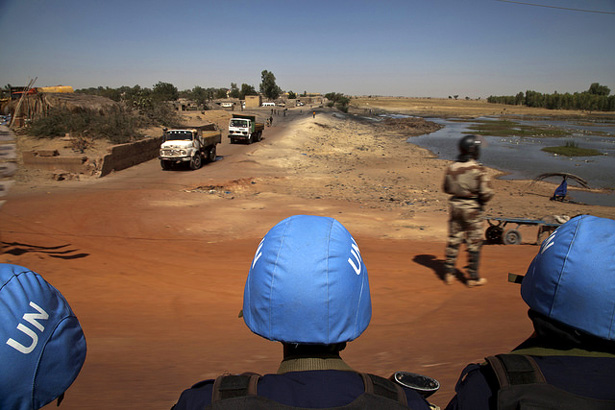
    IISD is working with the United Nations Environment Programme on ensuring that these issues are addressed in UN peacekeeping missions. “What we do with UNEP is to coordinate a group of experts that help to advise the UN family on ways that it should do conflict prevention, post conflict reconstruction, peacekeeping, peace negotiations and peacebuilding more effectively,” says Brown.
    MORE
  • Water: The Next Climate Negotiation Tool?

    ›
    January 21, 2010  //  By Kayly Ober
    When the dust settled at the COP15 in Copenhagen, participating parties failed to reach a formal climate change agreement and old divisions between developed and developing countries intensified. Despite such setbacks, there may be a natural building block in formal climate change negotiations between the north and south in the future: water.

    Luis Alberto Moreno, president of the Inter-American Development Bank, argues in a recent LA Times op-ed that economic interdependence and, more concretely, basic survival hinge on water in both developed and developing countries alike, most especially in Latin America.

    With 31 percent of the world’s freshwater resources, Latin America enjoys a competitive advantage in agriculture and energy. But recently, drought has taken its toll. Repercussions were most acutely felt in Argentina in 2008, when 1.5 million head of cattle died and half its wheat crop was ruined. Meanwhile, hydroelectric output in the most populous part of Chile plunged by 34 percent and water-dependent states like Venezuela, Ecuador, Colombia, Paraguay, and Mexico rationed water, cut power, or both.

    Water’s importance in the region is obvious, but why should developed countries care about it when negotiating a climate deal? The simplest answer, according to Moreno, is that developed countries can invest in projects that resolve near-term, climate-related problems such as water supply and sanitation as they look for ways to spend the billions in aid they have just pledged for climate adaptation in the developing world. And many international donors, particularly the UN Development Programme, World Bank, and World Wildlife Fund already have invested millions of dollars towards water management and sanitation adaptation projects.

    On the other side of the coin, Latin American governments should “start treating water as a truly strategic resource instead of a free and limitless one.” Moreno claims this would mean “prioritizing investments and reforms in basic services in order to reduce waste, closing the coverage gap and eliminating waterborne diseases among the poor” in the short term and would also require “a willingness to make concessions in pursuit of global emission reductions that…could be crucial to ensuring reliable supplies of water.”

    While it may seem that Latin America’s water problems are not pressing, it is undeniable that if not properly managed, essential components of the region—such as the vital agricultural economy, the health of the population, and political and economic stability—may be in jeopardy.

    Photo: Man drinking water from a pipe in Ecuador. Courtesy Edwin Huffman and the World Bank.
    MORE
  • Walker’s World: From Warming to Warring: A Review of Cleo Paskal’s New Book

    ›
    January 15, 2010  //  By Wilson Center Staff
    Wilson Center Senior Scholar Martin Walker recently reviewed Global Warring: How Environmental, Economic, and Political Crises Will Redraw the World Map by Cleo Paskal, for his UPI column, “Walker’s World.”

    Excerpts:
    The Copenhagen summit showed that climate change is as much about geopolitics and power as it is about the weather. China‘s blunt refusal to accept any binding limits on its carbon emissions, despite the agonized pleas of small island governments facing extinction, demonstrated that this new aspect of the game of nations is going to be played as hardball.

    And yet, as Cleo Paskal argues in her pioneering new book “Global Warring,” China is also powering ahead on every aspect of climate change. While protecting its right to pollute (because it depends heavily on coal as its main homegrown energy source), China is using state subsidies to seize the lead in solar power manufacturing….But perhaps Paskal’s most striking story is the way that China is also seeking to become a major player in the arctic. China has acquired an icebreaker, a seat with observer status on the Arctic Council and its own arctic research base at Svalbard. (China also has two research bases in the Antarctic.) …

    Paskal’s book is full of such vignettes, illustrating the way that climate change and the intensifying competition for resources is starting to change the nature of power politics. Paskal, a Canadian who is a fellow of London’s prestigious Chatham House think tank and a consultant for the U.S. Department of Energy, has been a pioneering scholar of the new terrain where climate change confronts national security, where geopolitics, geoeconomics and global warming all collide. It is not just rivalry for oil and gas supplies and water, but also for fishing rights and undersea mining and mineral rights that may well be up for grabs when some of the lowest-lying Pacific island countries disappear under the rising waves. …

    “We need to start thinking about the legal and economic implications of these developments now, before we have to start tackling them in the middle of a crisis or a humanitarian emergency,” Paskal told a seminar at Washington’s Woodrow Wilson Center Friday. …

    Paskal sees China and Russia taking these issues more seriously that the United States and Europe, and her book is not just a wakeup call for Western leaders but is also an arresting and original work on climate change, probably the most important book on the environment to be published this year.

    “As pressure is put on food, water supplies and national boundaries, famine and war may become more frequent,” Paskal concludes. “This instability may make populations more tolerant of autocratic governments, especially nationalistic capitalist ones where the political, economic and military sectors combine to protect existing resources and aggressively try to secure new ones. China and Russia already have a head start on this model.”

    Read the full column on UPI.

    MORE
  • Alec Crawford on Climate Change and Conflict in Africa and the Middle East

    ›
    January 14, 2010  //  By Sajid Anwar
    “Climate change certainly does pose a risk to the world in terms of violent conflict, but there’s a lot of nuance to that argument and a lot of attention and care has to be put into making that case,” says Alec Crawford, project officer at the International Institute for Sustainable Development (IISD) in this video interview with ECSP Director Geoff Dabelko.

    According to Crawford, the argument that climate change will lead directly to violent conflict is overly simplistic, but climate could be one of conflict’s many drivers in both Africa and the Middle East. A recent IISD report discusses the potential security challenges of climate change and how to prevent them.
    MORE
Newer Posts   Older Posts
View full site

Join the Conversation

  • RSS
  • subscribe
  • facebook
  • G+
  • twitter
  • iTunes
  • podomatic
  • youtube
Tweets by NewSecurityBeat

Trending Stories

  • unfccclogo1
  • Pop at COP: Population and Family Planning at the UN Climate Negotiations

Featured Media

Backdraft Podcast

play Backdraft
Podcasts

More »

What You're Saying

  • Volunteers,At,The,Lagos,Food,Bank,Initiative,Outreach,To,Ikotun, Pan-African Response to COVID-19: New Forms of Environmental Peacebuilding Emerge
    Rashida Salifu: Great piece 👍🏾 Africa as a continent has suffered this unfortunate pandemic.But it has also...
  • A desert road near Kuqa An Unholy Trinity: Xinjiang’s Unhealthy Relationship With Coal, Water, and the Quest for Development
    Ismail: It is more historically accurate to refer to Xinjiang as East Turkistan.
  • shutterstock_1779654803 Leverage COVID-19 Data Collection Networks for Environmental Peacebuilding
    Carsten Pran: Thanks for reading! It will be interesting to see how society adapts to droves of new information in...

What We’re Reading

  • Rising rates of food instability in Latin America threaten women and Venezuelan migrants
  • Treetop sensors help Indonesia eavesdrop on forests to cut logging
  • 'Seat at the table': Women's land rights seen as key to climate fight
  • A Surprise in Africa: Air Pollution Falls as Economies Rise
  • Himalayan glacier disaster highlights climate change risks
More »
  • woodrow
  • ecsp
  • RSS Feed
  • YouTube
  • Twitter
  • Facebook
  • Home
  • Who We Are
  • Publications
  • Events
  • Wilson Center
  • Contact Us
  • Print Friendly Page

© Copyright 2007-2021. Environmental Change and Security Program.

Woodrow Wilson International Center for Scholars. All rights reserved.

Developed by Vico Rock Media

Environmental Change and Security Program

Woodrow Wilson International Center for Scholars

Ronald Reagan Building and International Trade Center

  • One Woodrow Wilson Plaza
  • 1300 Pennsylvania Ave., NW
  • Washington, DC 20004-3027

T 202-691-4000