• woodrow wilson center
  • ecsp

New Security Beat

Subscribe:
  • rss
  • mail-to
  • Who We Are
  • Topics
    • Population
    • Environment
    • Security
    • Health
    • Development
  • Columns
    • China Environment Forum
    • Choke Point
    • Dot-Mom
    • Friday Podcasts
    • Navigating the Poles
    • Reading Radar
  • Multimedia
    • Water Stories (Podcast Series)
    • Backdraft (Podcast Series)
    • Tracking the Energy Titans (Interactive)
  • Films
    • Water, Conflict, and Peacebuilding (Animated Short)
    • Paving the Way (Ethiopia)
    • Broken Landscape (India)
    • Scaling the Mountain (Nepal)
    • Healthy People, Healthy Environment (Tanzania)
  • Publications
  • Events
  • Contact Us

NewSecurityBeat

The blog of the Wilson Center's Environmental Change and Security Program
Showing posts from category Friday Podcasts.
  • Understanding Climate Vulnerability: José Miguel Guzmán on How Census and Survey Data Can Help Us Plan

    ›
    Friday Podcasts  //  November 15, 2013  //  By Laura Henson
    guzman-small

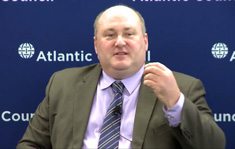
    “Population-related data from census, surveys, and other administrative data can and must be used for adaptation to climate change,” says José Miguel Guzmán in this week’s podcast from the launch of The Demography of Adaptation to Climate Change. As the devastation from Typhoon Haiyan shows, population density, poverty levels, and even building construction quality can have a huge impact on how vulnerable a particular area is to extreme weather, flooding, and other effects of climate change.

    MORE
  • In Urban Planning for Climate Change, Pay Attention to Population Dynamics & Smaller Cities, Says Daniel Schensul

    ›
    Friday Podcasts  //  November 8, 2013  //  By Jacob Glass
    daniel-schensul-podcast

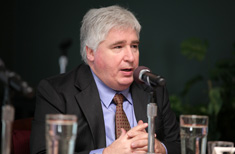
    When it comes to coping with the effects of climate change, cities will be a crucial proving ground for adaptation efforts. Over the next few decades, the percentage of the world’s population living in urban areas is projected to increase to 67 percent – 6.3 billion people by 2050, according to the UN. But because three-quarters of the world’s major cities are located on coastlines, the growing percentage of urban residents means more people will be vulnerable to environmental stressors such as sea level rise and storm surges.

    MORE
  • How Effective Are International Efforts to Empower Women? Alaka Basu on Challenging the Patriarchy

    ›
    Dot-Mom  //  Friday Podcasts  //  November 1, 2013  //  By Donald Borenstein
    alaku-basu-podcast

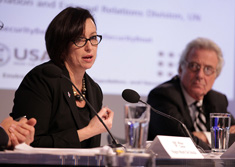
    “Everyone uses the word ‘empowerment.’ It’s now such an overused word,” says UN Foundation Senior Fellow Alaka Basu in this week’s podcast. “You are empowered if you have a choice of 10 different shampoos in the grocery store; you are empowered if you have 100 kinds of cereals to buy; you are empowered by virtually anyone wanting to sell you something.”

    MORE
  • “See What Story the Data Tells”: PAI’s Gina Sarfaty on Mapmaking With a Purpose

    ›
    Friday Podcasts  //  October 25, 2013  //  By Laura Henson
    Sarfaty-podcast

    “Maps are inherently compelling because they contain a high resolution of information and most people have really been trained since grade school on how to read a map,” says Population Action International mapping specialist Gina Sarfaty in this week’s podcast.

    MORE
  • From Malthus to Ehrlich and Beyond: William Pan on the Roots of PHE

    ›
    Friday Podcasts  //  October 18, 2013  //  By Jacob Glass
    william-pan-blog

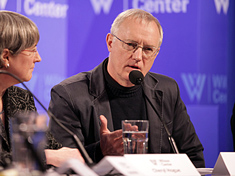
    More than four decades ago, Paul Ehrlich and John Holdren said complacency concerning the impact of human population growth is “unjustified and counterproductive.” More than 200 years ago, Thomas Malthus made the case that “the way we have to reduce the birth rate is family planning and delaying marriage, [thus] expanding the number of years between births,” says Duke University’s William Pan in this week’s podcast.

    MORE
  • Gladys Kalema-Zikusoka on Gorilla Conservation and Community Health in Uganda and DRC

    ›
    Friday Podcasts  //  October 11, 2013  //  By Donald Borenstein
    gladys-podcast

    Dr. Gladys Kalema-Zikusoka never expected to be so deeply involved in family planning when she started Conservation Through Public Health (CTPH) 10 years ago. CTPH began with a simple mission: to help preserve endangered mountain gorillas in Virunga National Park in the Democratic Republic of the Congo, and Bwindi Impenetrable National Park in Uganda. But, as Kalema-Zikusoka explains in this week’s podcast, they quickly found that to help the gorillas, they had to help the people living around them.

    MORE
  • Emmy Simmons: To Improve Food Security and Prevent Conflict, Think and Commit Long Term

    ›
    Friday Podcasts  //  October 4, 2013  //  By Laura Henson
    emmy-simmons

    “Food is really fundamental to people’s daily existence, and the price or the access to that food is clearly important to them, and people will turn out in the streets when that price spike is unanticipated,” says Emmy Simmons, author of Harvesting Peace: Food Security, Conflict, and Cooperation, in this week’s podcast.

    Simmons gives an overview of the latest edition of ECSP Report, which examines how conflict affects food security, and how food security affects conflict.

    MORE
  • From Octopus Conservation to Disaster Relief: Vik Mohan on PHE in Madagascar

    ›
    Friday Podcasts  //  September 27, 2013  //  By Laura Henson
    vik-mohan

    When Tropical Cyclone Haruna struck in February 2013, leaving thousands without shelter and tens of thousands without water, it was a test for Blue Ventures’ integrated approach to development in southwest Madagascar. According to Dr. Vik Mohan, they passed.

    “By the time the first aid organization arrived just to collect information, we had distributed to 17 villages already,” Mohan says in this week’s podcast. “We were the mouthpiece of the community, and because of our infrastructure on the ground, because of our good relationships with the community, we were able to procure and disseminate supplies that the community needed.”

    MORE
Newer Posts   Older Posts
View full site

Join the Conversation

  • RSS
  • subscribe
  • facebook
  • G+
  • twitter
  • iTunes
  • podomatic
  • youtube
Tweets by NewSecurityBeat

Trending Stories

  • unfccclogo1
  • Pop at COP: Population and Family Planning at the UN Climate Negotiations

Featured Media

Backdraft Podcast

play Backdraft
Podcasts

More »

What You're Saying

  • Volunteers,At,The,Lagos,Food,Bank,Initiative,Outreach,To,Ikotun, Pan-African Response to COVID-19: New Forms of Environmental Peacebuilding Emerge
    Rashida Salifu: Great piece 👍🏾 Africa as a continent has suffered this unfortunate pandemic.But it has also...
  • A desert road near Kuqa An Unholy Trinity: Xinjiang’s Unhealthy Relationship With Coal, Water, and the Quest for Development
    Ismail: It is more historically accurate to refer to Xinjiang as East Turkistan.
  • shutterstock_1779654803 Leverage COVID-19 Data Collection Networks for Environmental Peacebuilding
    Carsten Pran: Thanks for reading! It will be interesting to see how society adapts to droves of new information in...

What We’re Reading

  • Rising rates of food instability in Latin America threaten women and Venezuelan migrants
  • Treetop sensors help Indonesia eavesdrop on forests to cut logging
  • 'Seat at the table': Women's land rights seen as key to climate fight
  • A Surprise in Africa: Air Pollution Falls as Economies Rise
  • Himalayan glacier disaster highlights climate change risks
More »
  • woodrow
  • ecsp
  • RSS Feed
  • YouTube
  • Twitter
  • Facebook
  • Home
  • Who We Are
  • Publications
  • Events
  • Wilson Center
  • Contact Us
  • Print Friendly Page

© Copyright 2007-2021. Environmental Change and Security Program.

Woodrow Wilson International Center for Scholars. All rights reserved.

Developed by Vico Rock Media

Environmental Change and Security Program

Woodrow Wilson International Center for Scholars

Ronald Reagan Building and International Trade Center

  • One Woodrow Wilson Plaza
  • 1300 Pennsylvania Ave., NW
  • Washington, DC 20004-3027

T 202-691-4000