• woodrow wilson center
  • ecsp

New Security Beat

Subscribe:
  • rss
  • mail-to
  • Who We Are
  • Topics
    • Population
    • Environment
    • Security
    • Health
    • Development
  • Columns
    • China Environment Forum
    • Choke Point
    • Dot-Mom
    • Friday Podcasts
    • Navigating the Poles
    • Reading Radar
  • Multimedia
    • Water Stories (Podcast Series)
    • Backdraft (Podcast Series)
    • Tracking the Energy Titans (Interactive)
  • Films
    • Water, Conflict, and Peacebuilding (Animated Short)
    • Paving the Way (Ethiopia)
    • Broken Landscape (India)
    • Scaling the Mountain (Nepal)
    • Healthy People, Healthy Environment (Tanzania)
  • Publications
  • Events
  • Contact Us

NewSecurityBeat

The blog of the Wilson Center's Environmental Change and Security Program
Showing posts from category Friday Podcasts.
  • Complicated Causality: Edward Carr on Food Security and Conflict

    ›
    Friday Podcasts  //  September 20, 2013  //  By Jacob Glass
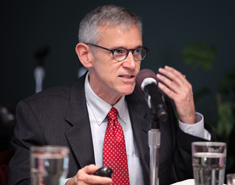
    Edward-Carr-Podcast2

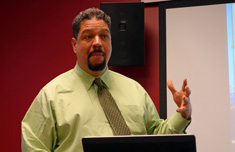
    “It seems to me the food security linkage suffers from the same problem that an awful lot of the environment and conflict literature suffers from: There are more negative cases than positive cases,” says Edward Carr in this week’s podcast. “In other words, you have a lot of cases where there is a [food] price spike and no violence or no conflict.”

    MORE
  • Geoff Dabelko on Avoiding Conflict From Climate Adaptation

    ›
    Friday Podcasts  //  September 6, 2013  //  By Jacob Glass
    dabelko_small

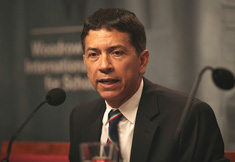
    Although major global action remains stymied in many respects, policymakers around the world are increasingly at least recognizing the need to increase resilience to the effects of climate change. But are the consequences from hastily implemented initiatives being adequately considered? Perhaps not.

    MORE
  • DOD’s Daniel Chiu: Climate, Energy Concerns Emblematic of Future Security Challenges

    ›
    Friday Podcasts  //  August 30, 2013  //  By Jacob Glass
    daniel-chiu-podcast

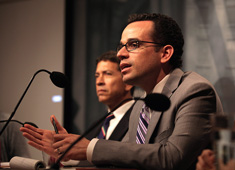
    Factoring in the costs of fuel in operations, both in terms of the monetary and battlefield effect, is a relatively new development for the U.S. military. “Our view was, when we were at war, we would bear those costs,” says U.S. Deputy Assistant Secretary of Defense for Strategy Daniel Chiu in this week’s podcast. “However, as we have started to appreciate the nature of the kinds of military challenges we face, we’ve realized this is not a sustainable approach.”

    MORE
  • Taliban Return Threatens Gains in Girls’ Education, Says Razia Jan

    ›
    Friday Podcasts  //  August 23, 2013  //  By Jacob Glass
    Razia Jan

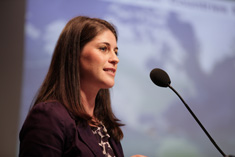
    “There has never been a school for girls in this area; no one really offered them this option,” says Razia Jan in this week’s podcast. “Whenever I see these girls and I talk to my students, I can’t tell you how honored I am that my girls are getting educations.”

    Since 2008, Jan has managed the Zabuli Education Center, an all-girls school located in Afghanistan’s Deh’Subz district. With the support of her organization, Razia’s Ray of Hope Foundation, the school provides free kindergarten-through-ninth-grade education to 400 Afghan girls.

    MORE
  • Rear Admiral Neil Morisetti on Opportunities for Transatlantic Cooperation on Climate Change, Energy

    ›
    Friday Podcasts  //  August 16, 2013  //  By Jacob Glass
    Morisetti-Podcast

    “We’ve got real pressure on key natural resources: food, water, energy, and land,” says Rear Admiral Neil Morisetti, the U.K. Foreign and Commonwealth Office’s special representative on climate change, in this week’s podcast. “But what we haven’t got, if I can use the words of Winston Churchill, we haven’t got ‘action this day.’”

    “Morisetti spoke at the Wilson Center on June 6 for the launch of The Climate and Energy Nexus: Challenges and Opportunities for Transatlantic Security, by CNA and the Royal United Services Institute. As climate change threatens stability in some places, energy security has emerged as a key vulnerability to Western militaries’ abilities to respond to conflict and assist in disaster relief operations, says Morisetti.

    MORE
  • Young People Are Transforming Afghanistan, Says Maiwand Rahyab

    ›
    Friday Podcasts  //  August 9, 2013  //  By Jacob Glass
    Maiwand Rahyab Podcast

    “I would like to challenge the conventional and popular perceptions about Afghanistan and expose a deeper story of commitment and determination, of struggle and success, of hope and change,” says Counterpart International’s Maiwand Rahyab in this week’s podcast.

    Today – almost 12 years after the United States and its allies invaded Afghanistan – is the next generation of Afghans better off? With 26 percent of girls giving birth before age 18, 1 in 10 Afghan children dying before the age of five, and young people leaving the country in large numbers, this seems like a fair question.

    MORE
  • Mark Montgomery: More Data on Urban-to-Urban Migration Needed

    ›
    Friday Podcasts  //  August 2, 2013  //  By Jacob Glass
    Mark Montgomery podcast

    “If I ask you to consider the image in your mind of a migrant girl, probably you – like me – have a vision of a girl embarking from a rural village on a trek to the city,” says Mark Montgomery of the Population Council in this week’s podcast. But, “Is that what the empirical realities show?”

    Perhaps not: “It is far more common for urban and migrant girls to come from other cities and towns than it is for them to come from rural villages,” he explains.

    MORE
  • Miriam Temin: Migrant Girls, Forced or Not, Need Safety Nets

    ›
    Friday Podcasts  //  July 26, 2013  //  By Swara Salih
    Miriam Temin podcast

    “There’s a common myth that migrant girls are forced to move against their will, but in fact what we’ve found through our research is that most migrant girls are involved in the decision to move,” said the Population Council’s Miriam Temin in this week’s podcast.

    Temin spoke at the launch of her and her colleagues’ new report, Girls on the Move: Adolescent Girls and Migration in the Developing World, about the economic incentives for girls to migrate and the risks involved for them.

    MORE
Newer Posts   Older Posts
View full site

Join the Conversation

  • RSS
  • subscribe
  • facebook
  • G+
  • twitter
  • iTunes
  • podomatic
  • youtube
Tweets by NewSecurityBeat

Trending Stories

  • unfccclogo1
  • Pop at COP: Population and Family Planning at the UN Climate Negotiations

Featured Media

Backdraft Podcast

play Backdraft
Podcasts

More »

What You're Saying

  • Volunteers,At,The,Lagos,Food,Bank,Initiative,Outreach,To,Ikotun, Pan-African Response to COVID-19: New Forms of Environmental Peacebuilding Emerge
    Rashida Salifu: Great piece 👍🏾 Africa as a continent has suffered this unfortunate pandemic.But it has also...
  • A desert road near Kuqa An Unholy Trinity: Xinjiang’s Unhealthy Relationship With Coal, Water, and the Quest for Development
    Ismail: It is more historically accurate to refer to Xinjiang as East Turkistan.
  • shutterstock_1779654803 Leverage COVID-19 Data Collection Networks for Environmental Peacebuilding
    Carsten Pran: Thanks for reading! It will be interesting to see how society adapts to droves of new information in...

What We’re Reading

  • Rising rates of food instability in Latin America threaten women and Venezuelan migrants
  • Treetop sensors help Indonesia eavesdrop on forests to cut logging
  • 'Seat at the table': Women's land rights seen as key to climate fight
  • A Surprise in Africa: Air Pollution Falls as Economies Rise
  • Himalayan glacier disaster highlights climate change risks
More »
  • woodrow
  • ecsp
  • RSS Feed
  • YouTube
  • Twitter
  • Facebook
  • Home
  • Who We Are
  • Publications
  • Events
  • Wilson Center
  • Contact Us
  • Print Friendly Page

© Copyright 2007-2021. Environmental Change and Security Program.

Woodrow Wilson International Center for Scholars. All rights reserved.

Developed by Vico Rock Media

Environmental Change and Security Program

Woodrow Wilson International Center for Scholars

Ronald Reagan Building and International Trade Center

  • One Woodrow Wilson Plaza
  • 1300 Pennsylvania Ave., NW
  • Washington, DC 20004-3027

T 202-691-4000