-
Working With the Private Sector to Improve Maternal, Newborn, and Child Health
Innovations From Development to Delivery
›“Challenging and dynamic partnerships [with the private sector] are difficult to pull together, but when you look at sustainability, impact, and effectiveness, they can also be great levers of change,” said Kari Stoever, senior advisor for global advocacy at the Global Alliance for Improved Nutrition (GAIN) at the Wilson Center on March 22. [Video Below]
Stoever was joined by panelists Laura McLaughlin, environmental engineer at Cascade Designs, Inc., Hugh Chang, director of special initiatives at the NGO PATH, and Laura Birx, senior food security and nutrition specialist at the U.S. Agency for International Development (USAID) for a discussion of the private sector’s role in developing innovative health technologies to increase access to safe water, prevent infectious diseases, and improve maternal health nutrition.
Collaborating to Provide Safe Water
“NGOs have different strengths and different perspectives from the private sector, and we’ve found an area where we can really complement each other,” said McLaughlin. Cascade Designs, Inc., collaborated with PATH to create a smart electrochlorinator, which produces a chlorine solution to purify water using just salt water and a simple battery, because “we wanted to make a bigger difference than we could do with philanthropy alone,” said McLaughlin.
“Products need to be designed specifically for the end user, particularly for women and children, who are often times left out of the design process,” said McLaughlin. Cascade’s smart electrochlorinator was designed with this in mind. One charged battery can treat up to 40,000 liters of water, 200 liters at a time. The device is easy to use, requires simple resources, is significantly more affordable than existing solutions, and lends itself to an entrepreneurial business model that can deliver safe water to small community households. The current prototype is being field-tested in 10 countries globally, with the aim of providing safe water in resource-poor communities while generating income for local entrepreneurs.
The PATH-Cascade partnership was successful in part because it combined “private-sector expertise in efficiency, cost-effectiveness, and meeting market demands” with knowledge about the health needs in developing countries, said McLaughlin. By “pushing each other to a common end goal, this partnership really multiplied our strengths.”
Engaging the Private Sector
“One of the reasons we work closely with the private sector…is because we recognize an efficiency of resource usage that comes with building bridges between the public sector and the private sector,” said Chang of PATH’s work with Cascade and others. Engaging the private sector to advance health technologies can complement PATH’s goals, like encouraging healthy behaviors and strengthening health systems, he said. “But, we are not averse to profits,” he added, stressing that partnerships with NGOs can be mutually beneficial. “We understand for this to be sustainable, these companies need to make a profit.”
PATH is working with the private sector to develop injection and vaccine technologies that “produce a product that not only benefits the recipient of the vaccine but also produces a revenue stream,” said Chang. The SoloShot, for example, is a low-cost, disposable syringe that locks after a single injection, preventing needle reuse and contamination that can increase the risk of HIV, hepatitis B, and other infections. To address the challenge of maintaining the proper refrigeration of vaccines in low-resource settings, private sector collaboration has helped to develop the vaccine vial monitor (a sticker that changes color when a vaccine has been exposed to too much heat) and to create more stable vaccine formulas that are less vulnerable to extreme temperatures. “By combining innovation with on-the-ground presence,” concluded Chang, “private sector engagement can be a powerful tool for global health.”
A “Win-Win Partnership”
“There is a tremendous role for the private sector to play in the intersection of agriculture and health as they relate to nutrition,” said Birx. Engaging the private sector can be a “win-win partnership,” she said. The Obama Administration’s hunger initiative, Feed the Future, for example, uses the resources, expertise, and innovation of the private sector to encourage sustainable, market-driven approaches to reducing poverty and food insecurity, said Birx.
USAID sees innovation as a “research-to-use continuum,” said Birx. “When we look at innovation, it’s not just about the development of a specific product, but about the entire system that goes around that product,” she added. New technologies must not only respond to a major development challenge in poor and rural communities but need to be affordable, culturally appropriate, gender sensitive, easy to use, and durable.
But solutions don’t have to be complicated. “Often times it’s about a really simple technology that can improve accessibility,” said Birx. The nevirapine pouch, for example, a simple foil packet that allows health care workers to give women single doses of nevirapine syrup, can reduce the risk of mother-to-child transmission of HIV by more than half.
“There’s a lot of excitement, but we need to do some serious work to capitalize on [it],” said Birx. Moving forward, health, development, and private-sector organizations must work together to create innovative financing mechanisms, build institutions in developing countries, and encourage enabling policy environments.
Sources: PATH.
Photo Credit: “Mission to Ouanda Djallé,” courtesy of flickr user hdptcar. -
USAID: Maternal Deaths in Bangladesh Decline by 40 Percent in Less Than 10 Years
›The original version of this article, by the USAID Global Health Bureau, appeared on the USAID Impact blog.
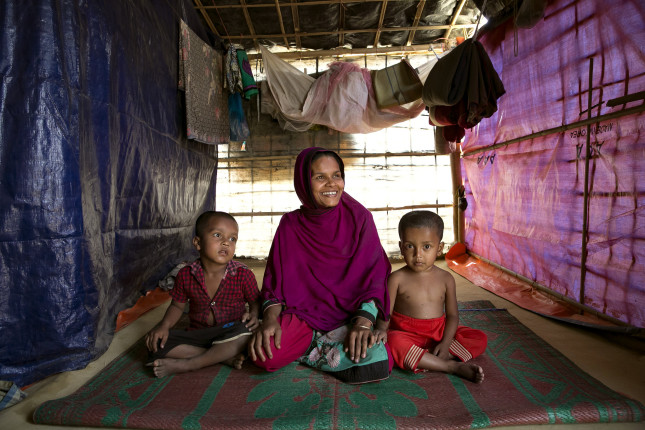
Bangladesh is on track to meet the 2015 deadline for UN Millennium Development Goal 5 (50 percent reduction in maternal deaths). The Bangladesh Maternal Mortality and Health Service Survey, jointly funded by the Government of Bangladesh, USAID, Australian Aid (AusAID) and the United Nations Population Fund (UNFPA), found that maternal deaths in Bangladesh fell from 322 per 100,000 in 2001 to 194 in 2010, a 40 percent decline in 9 years.
The decline in direct obstetric deaths is most likely the consequence of better care seeking practices and improved access to and use of higher-level referral care. The decline in total fertility rate due to the successful family planning program has reduced exposure to high risk pregnancies and has thus prevented a large number of maternal deaths.
Continue reading on USAID’s Impact blog.
Sources: Directorate General of Health Services – Bangladesh, UN.
Photo Credit: Adapted from “Mother & Son,” courtesy of flickr user Anduze traveller. -
Celebrating Ordinary Women Doing Extraordinary Things to Improve Gender Equality and Maternal Health Worldwide
›As coordinator of one of the few forums dedicated solely to maternal and reproductive health in Washington, D.C., I am particularly excited about this year’s 100th anniversary of International Women’s Day. This day commemorates ordinary women doing extraordinary things and acknowledges both the progress made and barriers still faced by women worldwide.
“When it comes to the boardroom meetings, government sessions, peace negotiations, and other assemblies where crucial decisions are made in the world, women are too often absent,” said Secretary of State Hillary Clinton during her remarks for International Women’s Day. “It is clear that more work needs to be done to consolidate our gains and to keep momentum moving forward.” [Video Below]
For mothers worldwide, some momentum has indeed been gained: Maternal mortality rates dropped from 526,000 a year in 1980 to 342,900 in 2008, according to a report by the Institute of Health Metrics and Evaluation at the University of Washington. In September of last year, a group of international leaders – including the UN and other multilateral institutions, donors, the business community, and NGOs – launched the “Global Strategy for Women and Children’s Health” and committed $40 billion to save the lives of 16 million women and children in developing countries.
At the sixth meeting of the Wilson Center’s Advancing Policy Dialogue on Maternal Health Series, Mayra Buvinic, sector director of the World Bank’s gender and development group, said: “Investing in women and girls is the right thing to do. It is not only fair for gender equality, but it is smart economics.” She said the World Bank has found that empowering women allows families to better endure economic crises and leads to better futures for their children as well.“When women have better education and health, mothers have greater household decision-making power and prioritize the well-being of their children,” said Buvinic. “In return, children have better educational attainment and are productive adults, building long-term economic growth.”
However, increased investment will only pay off when money is translated into action and stakeholders are held accountable for empowering women.
Since the inauguration of International Women’s Day 100 years ago, the low status of women in many parts of the world has remained relatively unchanged. Many women are still subject to male-dominated values that preclude them from making basic decisions about “who to marry, when to marry, when to have children, and how many children to have,” said Nafis Sadik, special envoy of the UN Secretary-General for HIV/AIDS, in an interview with the Population Reference Bureau. To change this, international development strategies need to prioritize improving gender equality, women’s status, and women’s voice in the political process.
I am grateful to be working in collaboration with extraordinary institutions such as the Maternal Health Task Force (MHTF) and United Nations Population Fund (UNFPA) who take real steps every day to help improve the lives of women and girls. In collaboration with these institutions, the Wilson Center’s Global Health Initiative is please to announce that it will partner with the African Population Health Research Center in Kenya to co-host a three-part dialogue series with local, regional, and national decision-makers on effective maternal health policies and programs. These in-country dialogue meetings will create a platform for field workers, policymakers, program managers, media, and donors to share research, disseminate lessons learned, and address concerns related to policy, institutional, and organizational capacity building for improved maternal health outcomes.
It is our goal that programs like these will continue to highlight neglected maternal health and issues and galvanize the community everyday – and not just on International Women’s Day.
Sources: Population Reference Bureau, UN, UN Population Fund, U.S. State Department.
Photo Credit: Afghan girl, courtesy of flickr user U.S Embassy Kabul Afghanistan, and Secretary Clinton’s video address courtesy of the U.S. State Department. -
Reality Check: Challenges and Innovations in Addressing Postpartum Hemorrhage
›Heavy bleeding after childbirth, also known as postpartum hemorrhage (PPH), is one of the leading causes of maternal deaths worldwide. Globally, approximately 25 percent of all maternal deaths are caused by postpartum hemorrhage, and many mothers bleed to death due to delays in seeking health care services. On January 25th, 100 representatives from the maternal health community – a majority working directly in developing countries – convened for an all-day meeting at the Wilson Center to discuss experiences in the field and perform “reality checks” on the challenges and successes of PPH programs.
-
Watch: Amy Webb Girard on Integrated Development Strategies for Improved Women’s Nutrition
›“When women become pregnant…their nutrient needs shoot through the roof,” said Amy Webb Girard of Emory University’s School of Public Health in this interview with ECSP and the Global Health Initiative. Girard explains that under-nutrition is a major problem for women – especially pregnant women – in resource-poor settings.
“For example, iron requirements almost double during the course of pregnancy, but iron is one of those nutrients that are really difficult to get,” Girard explained. Meat is not readily available in many developing countries and the iron in non-meat foods is not absorbed as completely. As a result, “women by and large are unable to meet those nutrient needs,” she said.
Fortunately, there is “an arsenal of nutritional interventions available,” noted Girard, including micro-nutrient supplements, behavior change strategies, and integrated facility- and community-based delivery methods.
“Additionally I think it’s very important that we also look at food production. This is a key, key thing,” said Girard. “Women who are able to produce their own foods [and] households that can produce their own foods have greater food security.”
“A lot of these agricultural strategies serve double purposes,” Girard said. “They not only increase the available food and the quality of that food, they improve women’s livelihoods, they give them a source of income, they give them – as some studies have shown – greater ability to negotiate within their own households for how money should be spent [and] whether they should access care or not. So they actually empower women in ways beyond nutrition.” -
Evidence, Links, and Solutions
Maternal Undernutrition
›“Maternal undernutrition is often overlooked as a strategy for reducing poverty and as a key intervention to reduce maternal mortality and morbidity,” said Mary Ellen Stanton, senior maternal health advisor at the U.S. Agency for International Development. Stanton was joined by Dr. Doyin Oluwole, director of the Africa’s Health in 2010 program, and Amy Webb Girard, assistant professor at the Emory University School of Public Health, in the final meeting of the Advancing Policy Dialogue on Maternal Health series on December 15 where they addressed the linkages between poverty, undernutrition, and poor maternal health outcomes.
The Cycle of Malnutrition and Poverty
Many factors contribute to a woman’s nutritional status, including lack of capital, access to land, and poverty; thus, said Oluwole, “we must adopt a multi-pronged and multi-sectoral response.”
“General malnutrition is usually associated with iron-deficiency anemia, which leads to poor cognitive function and educational achievement, poor health, and fatigue.” Oluwole said. “These three factors lead to low worker productivity, and low worker productivity leads to income poverty.”
“All of these aggravate malnutrition and so the vicious cycle of malnutrition and poverty continues,” said Oluwole. To break this cycle, she pointed out that countries like Malawi and Mexico have implemented various multi-sectoral interventions that have “stimulated economic growth; implemented targeted social, health, and nutrition programs; and put in place safety nets.”
“In the window of opportunity during pregnancy and the first two years of life, we can make a big difference,” Oluwole said. She advocated for an “integrated anemia package” that provides anti-malarials, de-worming medicine, iron folic acid tablets, and extra food during pregnancy. She also noted the importance of family planning and targeted high-coverage interventions, such as salt iodization, vitamin A supplementation, and breastfeeding promotion.
In conclusion, Oluwole provided several recommendations for the development community to improve maternal mortality rates and undernutrition of women:
Maternal Undernutrition: Our Global Disgrace- Promote universal primary and secondary education, especially for girls
- Stimulate economic growth with a focus on gender and equity
- Invest in infrastructure to reduce transportation time to hospitals
- Postpone age of marriage and of first pregnancy
- Provide targeted and effective nutrition and health interventions
- Encourage private sector participation and government leadership
- Integrate the maternal health and nutrition communities and services
“We don’t tend to look at maternal nutrition and its impacts on the woman herself,” said Girard. The lack of data on the relationship between nutrition and maternal health outcomes “hampers our ability to move maternal nutrition onto the health and development agenda,” she added.
“Anemia is widespread; worldwide, it is a significant public health burden, both in women of reproductive age as well as in pregnant women,” said Girard. Studies have shown that moderate anemia increases risk of hemorrhage and may also increase the risk of sepsis, while severe anemia has been shown to directly contribute to maternal mortality. Targeted interventions can help reduce these risks greatly. “For every one gram per deciliter increase in hemoglobin level, you can reduce maternal mortality by approximately 25 percent, but the mechanisms by which this occurs are not well elucidated,” noted Girard.
“We need to include women not as just targets of nutritional interventions, but as beneficiaries in their own health,” said Girard. Key nutritional interventions such as micronutrient supplementation, fortification, and behavior change communication can help to improve not only fetal, infant, and child health, but can also reduce maternal morbidity and mortality. In addition, Girard recommended the following strategies to achieve greater impact:
Together, these strategies can help improve access to nutrition and health services, as well as adequate food for women throughout their lives. “We need to integrate health and nutrition – they are actually the same pillar, complementing each other,” Girard concluded.- Improve nutrition throughout the life cycle, not just during pregnancy
- Look for alternate strategies for micronutrient delivery
- Integrate maternal nutrition into food security and agricultural strategies
- Collect indicators specific to women’s health impacts
- Recognize and address gender bias
Photo Credit: “Bangladesh mothers, kids,” courtesy of flickr user Bread for the World. -
Expanding Access to Maternal Health Commodities
›“This is not just about getting quantities of drugs out, this is about saving women’s lives with really simple products that work,” said Julia Bunting, team leader of AIDS and reproductive health at the UK Department for International Development and coalition chair of the Reproductive Health Supplies Coalition, at the ninth meeting of the Global Health Initiative’s 2009-2010 Advancing Policy Dialogue on Maternal Health series. Joined by panelists Melodie Holden, president of Venture Strategies Innovations (VSI), and Elizabeth Leahy Madsen, senior research associate at Population Action International (PAI), the panel discussed the challenges and strategies for expanding access to maternal health commodities.
Integrating Maternal Health and Family Planning Supply Chains
“It is often said that the family planning and the maternal health communities have very different views of supplies… but actually [both communities] recognize that we need to explore the continuum,” said Bunting, addressing the need to integrate maternal health commodities into existing reproductive health supply chains. “I really think the stars are aligned right now for advancing this agenda,” added Bunting.
“Many of the commodities that we talk about in terms of reproductive and maternal health cost tiny amounts to deliver, but actually save lives and are some of the most cost-effective interventions we have both in public health and in broader development,” said Bunting.
No Product, No Program
“Supplies are a key element in programs to improve maternal health and they are also a tangible and visible hook to increase awareness and commitment,” said Madsen. “Policymakers whose eyes glaze over when they hear the term ‘health systems strengthening’ can grasp… much better when they learn that supply shelves in clinics are bare and that women are making great efforts to reach facilities, only to leave empty- handed,” said Madsen.
Presenting research conducted by PAI, Madsen discussed the availability of four key maternal health medicines and products in Bangladesh and Uganda including:
By focusing on supplies that target the three leading causes of maternal mortality, Madsen and her colleagues identified factors that inhibit access to these commodities and developed recommendations for strengthening maternal health supply chains.- Oxytocin: used to prevent post-partum hemorrhage
- Misoprostol: used to prevent post-partum hemorrhage
- Magnesium Sulfate: used to treat pre-eclampsia
- Vacuum Aspirators: used for treatment of early and incomplete abortion
Madsen identified several strategies to strengthen supply chains for maternal health commodities including forecasting and preparing for growing demand, advocating for government and donor support, encouraging scaling-up of community-based approaches, promoting family planning, and focusing on human resource training.
“In maternal health, if a supply to prevent or treat a life-threatening complication is in stock, there must also be a way for a woman to reach it in time… and in most cases a provider who knows how to administer it,” said Madsen.
“This research is intended to lay the groundwork for future advocacy and policy initiatives by providing an evidence base that is informed by local expertise,” said Madsen. “We hope that this information will inform program implementation, funding decisions, and awareness raising.”
Getting the Product to People: The Case of Misoprostol
“The story of Misoprostol is still being written. The goal is to invest in creating access to interventions that are low-cost and relatively simple to use,” said Holden. By sharing lessons learned, Holden described VSI’s experience registering and procuring Misoprostol and demonstrated how community mobilization is imperative to overcoming major challenges for large-scale implementation.
“Making products available is not without challenges,” said Holden. To increase access to Misoprostol in rural communities, maternal health experts must work to “engage communities, educate and mobilize women, train providers at all levels of the health care system, and provide support to distributors to jump start sales,” said Holden. “By looking holistically across entire health systems, bringing in great interventions, addressing the components of supply and demand, and working with local partners, we can have lasting impact.”
While the price of Misoprostol has decreased significantly, Holden stressed the need to identify creative ways along the supply chain that reduce costs to the end user. Additionally, “establishing policies around this new intervention not only establishes its reach, but also makes its use institutionalized, which means it will be part of the system even if governments or individuals change,” said Holden.
“If there is a gap between what could be achieved with Misoprostol and what is being achieved, we need to go back to the model and figure out what pieces aren’t working,” concluded Holden. “The work is complex and takes time, but it’s worth it.”
Photo Credit: “Rapid HIV testing,” courtesy of flickr user DFID – UK Department for International Development. -
Mobile Phones for Maternal Health in the Developing World
›With rising use in the developing world, cell phones and mobile technologies can create “connected and coordinated health systems that save more lives,” said Josh Nesbit at the GHI event “New Applications for Existing Technologies to Improve Maternal Health,” on October 27. Capitalizing on these new technologies could increase efficiency, cost-effectiveness, and efficacy of public health programs. Nesbit, executive director of FrontlineSMS: Medic, was joined by Alain Labrique, assistant professor at the Johns Hopkins School of Public Health, and David Aylward, executive director of the mHealth Alliance at the United Nations Foundation, to discuss the role of Information and Communication Technologies (ICTs) in the prevention of maternal mortality.
Collaborations for mHealth
While “cell phones can’t save lives, the lack of information does kill,” said Aylward. Using technology that many people already own and use, mobile technology is an appropriate tool for disseminating health data and information. Existing technologies such as mobile phones and SMS text messaging can revolutionize healthcare by improving data collection and disease tracking, expanding patient diagnostics, and advancing education and awareness among health workers and patients.
With 64 percent of all mobile phone users located in the developing world, the use of mobile devices to improve health services in low-income countries is especially promising.
Aylward hopes that mobile health technology (mHealth) will help combat maternal mortality in the developing world. With approximately 350,000 women dying in childbirth each year, and only marginal progresses towards achieving Millennium Development Goal 5, finding such innovative solutions to improve maternal health is crucial.
Public-private partnerships are particularly important when considering the long-term sustainability of mHealth programs. “This didn’t happen because of the World Bank, it happened because people who are very poor voted with their very limited funds to have access to information,” said Aylward.
Aylward is hopeful that government and donor support will continue to become more supportive of mobile technology and coordinated in their implementation of mHealth programs globally.
Mobile Health Solutions in the Developing World
“Through mobile tools, we can act as quickly as possible to improve access to skilled birth attendants, emergency obstetric care, and access to reproductive health commodities,” said Nesbit.
Nesbit’s organization, FrontlineSMS: Medic, is working to eliminate barriers created by the lack of resources and infrastructure in the developing world using mobile health technology. Now working in 20 countries, the organization uses free software “that enables large-scale, two-way text messaging using only a laptop, a GSM modem, and inexpensive cell phones,” explained Nesbit.
“One of the best measures is whether people continue to use your tools, and they will if it impacts their lives positively and they won’t if it doesn’t—sometimes it’s as simple as that,” said Nesbit on why communities in the developing world are eagerly embracing mobile technology.
Moving forward, Nesbit hopes to “scale and replicate, both vertically and horizontally, models that we’ve shown can work, but also to build new tools” and work with the health community “to help identify the needs and the gaps in these systems.”
However, Nesbit stresses that “these are very much tools and not solutions; they become solutions when they are paired with people on the ground who use them.”
Compressing the Time Between Crisis and Care
“The opportunities for mobile phones to act synergistically with existing health systems in low- to middle-income countries are many,” said Labrique. The current challenge is to harness this technology to improve health outcomes in the developing world, where disease burden is disproportionately high.
In the developing world, “decisions influenced by the lack of resources, such as poverty, or lack of information have led to highly convoluted patterns of care-seeking,” said Labrique.
“Delayed decision-making compounded by delayed transport can have tragic consequences for maternal mortality,” said Labrique, and the most immediate use of mobile technology is “getting the necessary care, on time, to where these deaths are taking place.” Cell phones can help women, their families, and local health workers to seek timely, appropriate medical help for an obstetric emergency.
“Addressing equity and access to phones when evaluating the impact or success of mHealth interventions is critical,” Labrique said. Although cell phone use is high and steadily increasing, social and cultural norms in some countries might prevent women from using them. Further, Labrique notes, in Bangladesh, cell phone use among the poorest families is noticeably less than those with higher socioeconomic status.
“ICT and mHealth solutions have tremendous promise to improve maternal health in resource limited settings; however, it’s important not to let the technology guide the public health agenda,” said Labrique. More data is needed to determine how these tools might strengthen and enhance health systems and a clearer research agenda can help ensure evidence-based solutions guide programming.
For more from David Aylward and mHealth, be sure to see “Watch: David Aylward on How Wireless Technology is Changing Global Health and Empowering Women.”
Sources: Lancet, United Nations Foundation.
Photo Credit: “‘SMS till you drop’ — mobile phone ad on van in Kampala, Uganda,” courtesy of flickr user futureatlas.com.
Showing posts from category Dot-Mom.