• woodrow wilson center
  • ecsp

New Security Beat

Subscribe:
  • rss
  • mail-to
  • Who We Are
  • Topics
    • Population
    • Environment
    • Security
    • Health
    • Development
  • Columns
    • China Environment Forum
    • Choke Point
    • Dot-Mom
    • Friday Podcasts
    • Navigating the Poles
    • Reading Radar
  • Multimedia
    • Water Stories (Podcast Series)
    • Backdraft (Podcast Series)
    • Tracking the Energy Titans (Interactive)
  • Films
    • Water, Conflict, and Peacebuilding (Animated Short)
    • Paving the Way (Ethiopia)
    • Broken Landscape (India)
    • Scaling the Mountain (Nepal)
    • Healthy People, Healthy Environment (Tanzania)
  • Publications
  • Events
  • Contact Us

NewSecurityBeat

The blog of the Wilson Center's Environmental Change and Security Program
Showing posts from category Dot-Mom.
  • Emily Puckart, MHTF Blog

    Maternal Health in Kenya From a Human Rights Perspective

    ›
    Dot-Mom  //  July 28, 2011  //  By Wilson Center Staff
    The original version of this article, by Emily Puckart, appeared on the Maternal Health Task Force blog. This is the second post about MHTF and the Woodrow Wilson Center’s trip to Nairobi, Kenya to host a cross-Atlantic web-cast meeting on “Maternal Health Challenges in Kenya: What New Research Shows.” The first is available here along with video of the conference.

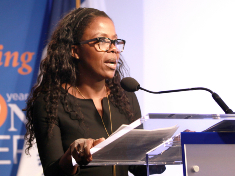
    “Do you want to be a pregnant woman or a prisoner in Kenya?” asked Dr. Margret Meme, one of speakers in Nairobi at the recent policy dialogue “Maternal Health Challenges in Kenya: What New Research Shows.” She explained that the last prisoner killed in Kenya through capital punishment was over 20 years ago, yet pregnant women continue to die of treatable causes not just in Kenya, but globally.

    As Dr. Meme addressed maternal health through the lens of a human rights perspective she highlighted a number of recommendations in order to more adequately address maternal health challenges in Kenya. She was concerned that pregnancy was treated more like a medical disease with purely medical solutions. Dr. Meme urged maternal health advocates to also focus on the cultural, social, gender, and economic factors that influence maternal health and asked that these factors be addressed along with medical solutions in order to truly address maternal health challenges.

    Naturally, addressing maternal health challenges can come with a monetary price. However, instead of viewing that cost as a cost that must come after more immediate government priorities such as infrastructure and defense, Dr. Meme argued that cost should be borne as the government would bear any other cost for public goods. As pregnancy builds a nation, Dr. Meme argued that maternal health is a public good, in the same vein as defense. Therefore maternal health should have a budget allocation that is just as important as the budget line for defense.

    Of course, pushing for more public funding of maternal health can lead to other complications. If advocates successfully encourage politicians to increase funding for maternal health programs, the work of maternal health advocates cannot simply end there. Advocates should hold governments accountable; not just in putting aside funding for maternal health, but also for actually making sure that the money reaches the intended beneficiaries. Therefore budget accountability tracking mechanisms should go hand and hand with pushing for increased public funding to maternal health programs.

    Finally, Dr. Meme addressed the need for men to be more involved in maternal health. As she clearly stated; the role of men in maternal health shouldn’t stop at conception. Men focused programs which clarify reproductive and sexual health rights, as well as educate men on issues of maternal mortality and morbidity should encourage men to respect the rights of women to space their pregnancies and deliver their babies safely.

    Emily Puckart is a senior program assistant for the Maternal Health Task Force (MHTF).

    Photo Credit: Jonathan Odhong, African Population and Health Research Center.
    MORE
  • Emily Puckart, MHTF Blog

    Maternal Health Challenges in Kenya: An Overview of the Meetings

    ›
    Dot-Mom  //  July 27, 2011  //  By Wilson Center Staff
    The original version of this article, by Emily Puckart, appeared on the Maternal Health Task Force blog.

    I attended the two day Nairobi meeting on “Maternal Health Challenges in Kenya: What New Research Evidence Shows” organized by the Woodrow Wilson International Center and the African Population and Health Research Center (APHRC). [Video Below]

    First, here in Nairobi, participants heard three presentations highlighting challenges in maternal health in Kenya. The first presentation by Lawrence Ikamari focused on the unique challenges faced by women in rural Kenya. Presently Kenya is still primarily a rural country where childbearing starts early and women have high fertility rates. A majority of rural births take place outside of health institutions, and overall rural women have less access to skilled birth attendants, medications, and medical facilities that can help save their lives and the lives of their babies in case of emergency.

    Catherine Kyobutungi highlighted the challenges of urban Kenyan women, many of whom deliver at home. When APHRC conducted research in this area, nearly 68 percent of surveyed women said it was not necessary to go to health facility. Poor road infrastructure and insecurity often prevented women from delivering in a facility. Women who went into labor at night often felt it is unsafe to leave their homes for a facility and risked their lives giving birth at home away from the support of skilled medical personnel and health facilities. As the urban population increases in the coming years, governments will need to expend more attention on the unique challenges women face in urban settings.

    Finally, Margaret Meme explored a human rights based approach to maternal health and called on policymakers, advocates, and donors to respect women’s right to live through pregnancies. Further, she urged increased attention on the role of men in maternal health by increasing the education and awareness of men in the area of sexual and reproductive health as well as maternal health.

    After these initial presentations, participants broke out into lively breakout groups to discuss these maternal health challenges in Kenya in detail. They reconvened in the afternoon in Nairobi to conduct a live video conference with a morning Washington, DC audience at the Woodrow Wilson Center. It was exciting to be involved in this format, watching as participants in Washington were able to ask questions live of the men and women involved in maternal health advocacy, research and programming directly on the ground in Kenya. It was clear the excitement existed on both sides of the Atlantic as participants in Nairobi were able to directly project their concerns and hopes for the future of maternal health in Kenya across the ocean through the use of video conferencing technology.

    There was a lot of excitement and energy in the room in Nairobi, and I think I sensed the same excitement through the television screen in DC. I hope that this type of simultaneous dialogue, across many time zones, directly linking maternal health advocates around the globe, is an example of what will become commonplace in the future of the maternal health field.

    Emily Puckart is a senior program assistant at the Maternal Health Task Force (MHTF).

    Photo Credit: MHTF.
    MORE
  • Quality and Quanitity: The State of the World’s Midwifery in 2011

    ›
    Dot-Mom  //  June 30, 2011  //  By Ramona Godbole
    Each year, 350,000 women die while pregnant or giving birth, as many as two million newborns die within the first 24 hours of life, and there are 2.6 million stillbirths. Sadly, the majority of these deaths could be prevented if poor and marginalized women in developing countries had access to adequate health facilities and qualified health professionals. In fact, according to the new UNFPA report, State of the World’s Midwifery 2011: Delivering Health, Saving Lives, just doubling the current number of midwives in the 58 countries highlighted in the report could avert 21 percent of maternal, fetal, and newborn deaths.
    Launched last week, the report is the first of its kind, using new data from 58 low-income countries with high burdens of maternal and neonatal mortality to highlight the challenges and opportunities for developing an effective midwifery workforce.

    “Developing quality midwifery services should be an essential component of all strategies aimed at improving maternal and newborn health,” write the authors of the report. Qualified midwives ensure a continuum of essential care throughout pregnancy and birth, and midwives can help facilitate referrals of mothers and newborns to hospitals or specialists when needed:
    Unless an additional 112,000 midwives are trained, deployed, and retained in supportive environments, 38 of 58 countries surveyed might not met their target to achieve 95 per cent coverage of births by skilled attendants by 2015, as required by Millennium Development Goal 5.
    There is a total shortage of 350,000 skilled midwives globally, with some countries, like Chad and Haiti, needing a tenfold increase to match demand, according to the report. But quantity isn’t the only issue; there has also been an insufficient focus on quality of care. Additionally, most countries do not have the capacity to accurately measure the number of practicing midwives, and national policies focusing on maternal and newborn health services often do not view midwifery services as a priority.

    To help overcome these challenges, the report outlines a number of “bold steps” to be taken by governments, regulatory bodies, schools, professional associations, NGOs, and donor agencies in order to maximize the impact of investments, improve mutual accountability, and strengthen the midwifery workforce and services. Of course, the needs of each country are unique, and the report ends with individual country profiles that highlight country-specific maternal and neonatal health indicators.

    While this report does much to highlight the critical importance of midwives in promoting the health and survival of mothers and newborns, real impact will only come when governments, communities, civil society, and development partners work together to implement these recommendations.

    Sources: UNFPA.

    Video Credit: UNFPA.
    MORE
  • Watch: Catherine Kyobutungi on Monitoring the Health Needs of Urban Slums

    ›
    Dot-Mom  //  June 10, 2011  //  By Calyn Ostrowski
    Addressing the maternal health needs of the nearly 60 percent of urban residents who live in slums or slum-like conditions will be a critical step to improving maternal health indicators of a rapidly urbanizing Kenya, said Catherine Kyobutungi, director of health systems and challenges at the African Population Health Research Center in Nairobi.

    “In some respects, [the urban poor] are doing better than rural communities, but in other ways they are behind,” said Kyobtungi. But, she said, there are many unique opportunities to improve maternal health in slums: “With these very high densities, you do have advantages; with very small investments, you can reach many more people.”

    Output-based voucher schemes – in which women pay a small fee for a voucher that entitles them to free, high-quality antenatal care, delivery services, and family planning – have been implemented to help poor, urban women access otherwise expensive services. But poor attitudes towards health care workers, transportation barriers, and high rates of crime still prevent some women from taking advantage of these vouchers, said Kyobtungi.
    MORE
  • USAID Egypt’s Health and Population Legacy Review

    ›
    Dot-Mom  //  From the Wilson Center  //  May 26, 2011  //  By Laura Rostad
    On May 23 the Middle East Program, ECSP, and the Global Health Initiative of the Woodrow Wilson Center, along with the Global Health Technical Assistance Project, hosted a panel of speakers discussing the past 30 years of the U.S. Agency for International Development’s health and population initiatives in Egypt, as outlined in the new Egypt Health and Population Legacy Review. Geoffrey Dabelko, director of ECSP and coordinator of the Global Health Initiative at the Wilson Center, moderated the event. [Video Below]

    Peter McPherson, former administrator of USAID during the Reagan administration, and George Laudato, the administrator’s special assistant for the Middle East, presented on the historical context behind USAID in Egypt and the results of their efforts. McPherson pointed to three lessons that can be drawn from the recent report:
    1. “Big payoffs” require long-term efforts; and
    2. Economic support for a country can have a dramatic impact; but
    3. The host country’s commitments and investments are still important.
    McPherson also stressed that programs targeted to address specific issues are more effective than undirected cash grants. Laudato said USAID’s achievements were aided by the Egyptian government making health development a priority and increasing domestic monetary investment in the sector.


    Motaz Zahran, political counselor for the Embassy of Egypt, noted that USAID efforts were “just one sector of a fruitful partnership” between the United States and Egypt that he hoped would continue. He said the success story outlined by the report was reflective of improvements in coordination and addressing specific goals.

    Other panelists outlined the successes of USAID in Egypt as related to their own areas of expertise. Leslie B. Curtin, co-author of the review and an expert in demographics and health outcomes, noted the dramatic improvements in a range of health sectors, in particular the rise in contraceptive prevalence and immunization rates and decrease in both maternal and infant mortality rates.

    Nahed Matta, MD, senior maternal and newborn health officer at USAID, focused on improvements to the quality of maternal health, which she said were made possibly through better technology and increased fact-gathering to identify the key factors regarding maternal health trends. Sameh El-Saharty, MD, senior health policy specialist at the World Bank and Health Legacy Review Committee member, credited the increased number of health professionals in Egypt, better information gathering on health systems, and restructured models of health insurance, as successful strategies.

    Concluding the session, Amie Batson, deputy assistant administrator for Global Health at USAID, discussed the lessons that other development initiatives can draw from the legacy of USAID efforts in Egypt. She highlighted the importance of country ownership, in which the developing country engages with other institutions and religious and political leaders at both national and local levels, and of policies that fund routine monitoring and evaluation. She also outlined the possibilities of innovation and south-to-south sharing on the local and international scale, referencing inroads made by two recent initiatives: the “MAMA” mobile device program, launched by Secretary Clinton in May 2011 to assist with disseminating maternal health information, and the Saving Lives at Birth initiative, launched by USAID in partnership with several other organizations in March 2011.

    Laura Rostad is an intern for the Middle East Program at the Woodrow Wilson Center.

    Image Credit: Adapted from cover of the
    Egypt Health and Population Legacy Review, courtesy of USAID; cover photo courtesy of Leslie Curtin.
    MORE
  • Designing Health and Population Programs to Improve Equity: Moving Beyond the Rhetoric

    ›
    Dot-Mom  //  May 5, 2011  //  By Ramona Godbole
    “There needs to be ongoing flexibility and creativity in our ways of approaching health equity,” said John Borrazzo of the U.S. Agency for International Development (USAID) at a recent Global Health Initiative event at the Wilson Center. Borrazzo is the chief of the Maternal and Child Health Division in the Bureau for Global Health. He moderated a discussion on practical strategies to improving access to health services for the world’s poor and other marginalized groups, with panelists Mickey Chopra, chief of health and associate director of programmes at UNICEF; Davidson Gwatkin, senior fellow at the Results for Development Institute and senior associate at Johns Hopkins Bloomberg School of Public Health; Cesar Victoria, professor of epidemiology at the Federal University of Pelotas in Brazil; and Jennifer Luna, senior monitoring and evaluation adviser for the Maternal and Child Health Integrated Program (MCHIP). [Video Below]

    MDG 4: An Equity Approach

    “Massive benefits can be gained by reaching the poorest and most marginalized,” said Chopra. “It’s actually more cost effective to have an equity-based approach; it’s not just right in principle, it’s right in practice.”

    While there has been some progress in reducing the rates of mortality for children under five (the UN’s Millennium Development Goal 4), Chopra said “there has to be a change” if they are going to be achieved completely. Most of the 30 percent decline in child mortality so far has been in Asian countries, while Africa as a whole remains stagnant. Further, two-thirds of the 35 countries that have made significant progress to meet MDG 4 show worsening inequalities between the highest and lowest income brackets of the population.

    In the majority of countries, the “rich are still capturing most of the benefits of new investments and interventions,” said Chopra. “The challenge at the program and policy levels is to understand why there is this gap between the richest and the poorest in terms of uptake of critical interventions.”

    Delivery channels are faced with “bottlenecks” that prevent services from reaching marginalized communities, said Chopra. Clinic-based services often lack adequate human resources, consistency in the quality of service, and can be very expensive. Population-oriented services, which include government and NGO-led outreach and scheduled services at health facilities, are often challenged with low demand and lack of continuity, while availability and cost of health commodities are barriers for community-based interventions delivered through local organizations or social marketing campaigns.

    Shifting delivery of services within channels, appropriately shifting delivery to different channels, or improving the performance of an established delivery channel could help increase uptake of treatment and prevention among poor and marginalized communities, concluded Chopra. He stressed that progress need not come at the expense of the poor. According to a UNICEF report, Ghana, Eritrea, Nepal and Malawi have all reduced under-five mortality and inequality by prioritizing providing essential services to the most marginalized communities first.

    Designing Equity-Based Health Programs

    “Performance variability in terms of equity across countries is very large,” said Gwatkin. “In some places a given technique can work well and in others it can be a complete flop.”

    To pick the right technique for the right place, Gwatkin advocated for an iterative approach to program design and implementation, beginning with setting targets in terms of the poor population group of concern. After fully assessing country-specific conditions, a set of potential pro-poor interventions can be selected, based on an analysis of current interventions and suggested alternatives as well successful interventions in other countries. Each of these interventions should be delivered to a large, representative area, he said.

    “The next step is to find out how well you have done,” said Gwatkin, stressing the importance of assessing and monitoring interventions with a specific focus on the marginalized target group. Successful approaches should be expanded, while those that are not having the intended benefits of helping the poorest communities should be modified or abandoned.

    In sum, said Gwatkin, “It’s more promising to focus on designing a process to fit techniques to individual country settings than to focus on the techniques themselves.” Doing this helps effectively integrate equity concerns into the design and implementation of programs, and as a result, he said, can have a major impact on improving the lives of the poorest people in developing countries.

    Analyzing Equity to Maximize Impact

    “It’s always possible and useful to include equity in monitoring and evaluation, however, it has to be planned ahead of time,” said Victoria.

    The Countdown to 2015 Initiative is an effort to monitor progress made towards the health-related Millennium Development Goals globally. The Countdown’s efforts not only aim to promote access to health services at the aggregate level but also specifically to ensure the equitable distribution and uptake of health services among disadvantage populations, said Victoria.

    Generally, in countries with high coverage of preventative and treatment services, like Brazil, there is “bottom inequity,” said Victoria, in which the poor are much worse off than everyone else. Targeting the poor specifically in such countries is therefore essential to improving equity.

    Alternately, Victoria continued, countries with low coverage at all levels, like Cambodia or Haiti, suffer from “top inequity,” in which the rich are typically much better off the rest of the population. These countries should work towards increasing coverage for all people and focus on the poor after there are some universal gains, he said.

    “Analyzing the shapes of inequity curves can help drive decisions about delivery channels and targeting…and can lead to practical strategies for maximizing the impact of interventions,” concluded Victoria.

    Health Equity: From Evidence to Practice

    “Projects often state that they are really interested in equity, but when you read the project descriptions, you don’t see exactly what they mean by equity or how they plan on addressing it,” said Luna, speaking of her work at MCHIP.

    Luna presented the Health Equity Guidance Document that outlines a systematic, six-step process for professionals who design and implement community-oriented projects to ensure equity is effectively integrated into their programs:
    1) Understand the equity issues in the project area
    2) Identify the disadvantaged group on which to focus
    3) Decide what is in the project’s manageable interest to change
    4) Define equity goals, objectives, and a project-specific definition of equity
    5) Determine equity strategies and activities
    6) Develop equity-focused monitoring and evaluation
    Luna stressed that there is no “one size fits all” strategy: “This approach is not a prescriptive one; it presents a series of concepts and approaches to take into consideration and then make decisions.” But for program implementers on the ground, she said, these guidelines and tools “should help lead to a coherent health equity strategy and can serve as a basis for dialogue among stakeholders.”

    Sources: UNICEF, United Nations Development Programme, World Health Organization.

    Image Credit: “Malaria prevention, Kenya,” courtesy of flickr user DFID.
    MORE
  • Accessing Maternal Health Care Services in Urban Slums: What Do We Know?

    ›
    Dot-Mom  //  From the Wilson Center  //  May 3, 2011  //  By Ramona Godbole
    “Addressing the needs of urban areas is critical for achievement of maternal health goals,” said John Townsend, vice president of the Reproductive Health Program at the Population Council. “Just because there is a greater density of health services does not mean that there is greater access.”

    Townsend moderated a discussion on the challenges to improving access to quality maternal health care in urban slums as part of the 2011 Maternal Health Dialogue Series with speakers Anthony Kolb, urban health advisor at USAID; Catherine Kyobutungi, director of health systems and challenges at the African Population Health Research Center; and Luc de Bernis, senior advisor on maternal health at the United Nations Population Fund (UNFPA). [Video Below]

    Mapping Urban Poverty

    “Poverty is becoming more of an urban phenomenon every day,” said Kolb. With over 75 percent of the poor in Central Asia and almost half of the poor in Africa and Asia residing in cities and towns by 2020, “urban populations are very important to improving maternal health,” he added.

    Collecting accurate data in informal settings such as slums can be very challenging, and there is often a “systematic undercounting of the urban poor,” said Kolb. Data often fails to capture wealth inequality in urban settings, and there is often a lack of attention to the significant variability of conditions between slums.

    Kolb also warned about the risk of generalization: “Slums and poverty are not the same.” In practice, there is not a standardized definition of what constitutes a slum across countries, he said. “It is important to look at different countries and cities individually and understand how inequality is different between them.” Slum mapping can help to scope out challenges, allocate resources appropriately, and identify vulnerability patterns that can inform intervention design and approach, he said.


    Maternal Health in Nairobi Slums

    Addressing the maternal health needs of the nearly 60 percent of urban residents who live in slums or slum-like conditions will be a critical step to improving maternal health indicators of a rapidly urbanizing Kenya, said Kyobtungi.

    Only 7.5 percent of women in Kenyan slums had their first antenatal care visit during their first trimester of pregnancy and only 54 percent had more than three antenatal care visits in all – rates significantly lower than those among urban women in non-slum settings.

    “In some respects, [the urban poor] are doing better than rural communities, but in other ways they are behind,” said Kyobtungi. But, she said, there are many unique opportunities to improve maternal health in slums: “With these very high densities, you do have advantages; with very small investments, you can reach many more people”

    Output-based voucher schemes – in which women pay a small fee for a voucher that entitles them to free, high-quality antenatal care, delivery services, and family planning – have been implemented to help poor, urban women access otherwise expensive services. But poor attitudes towards health care workers, transportation barriers, and high rates of crime still prevent some women from taking advantage of these vouchers, said Kyobtungi.

    The majority of maternal health services in slums are provided by the private facilities, though size and quality vary widely. “There is a very high use of skilled attendants at delivery, but the definition of skilled is questionable,” said Kyobtungi

    “Without supporting the private sector,” Kyobutungi said, “we cannot address the maternal health challenges within these informal settlements.” Combined with an improved supervision and regulation system, providing private maternal health facilities with training, equipment, and infrastructure could help to improve the quality of services in urban slums, she concluded.

    Reducing Health Inequalities

    “While we have evidence that health services, on average, may be better in urban areas than in rural areas, this often masks wide disparity within the population,” said de Bernis. “Reducing health inequities between and within countries is a matter of social justice.”

    When it comes to family planning, total fertility rates are lower in cities, but “the unmet need…is still extremely important in urban areas,” explained de Bernis. Many poor women in cities, especially those who live in marginalized slum populations, do not have access to quality reproductive health services – a critical element to reducing maternal morbidity and mortality rates.

    Economic growth alone, while important to help improve the health status of the poor in urban settings, will not solve these problems, said de Bernis. To reduce health disparities within countries, de Bernis advocated for “appropriate social policies to ensure reasonable fairness in the way benefits are distributed,” including incorporating health in urban planning and development, strengthening the role of primary health care in cities, and putting health equity higher on the agenda of local and national governments.

    Event Resources:
    • Anthony Kolb’s Presentation
    • Catherine Kyobutungi’s Presentation
    Source: African Population Research Center, United Nations Population Fund.

    Photo Credit: “Work Bound,” courtesy of flickr user Meanest Indian (Meena Kadri).
    MORE
  • Is Universal Access to Family Planning a Realistic Goal for Sub-Saharan Africa?

    ›
    Dot-Mom  //  From the Wilson Center  //  April 22, 2011  //  By Ramona Godbole
    “What do we require to ensure universal access to family planning services that are appropriate, affordable, accessible, and of good quality?” asked Michael Mbizvo, director of the Department of Reproductive Health and Research at the World Health Organization at the Wilson Center last month. [Video Below]

    To talk about this difficult question and present research and programmatic evidence for sub-Saharan Africa, Mbizvo was joined by panelists Fred Makumbi, senior lecturer and head of the Department of Epidemiology and Biostatistics at Makerere University, Uganda; Oladosu Ojengbede, director of the Center for Population and Reproductive Health, University of Ibadan, Nigeria; and Frank Taulo, director of the Center for Reproductive Health and senior lecturer of obstetrics and gynecology at the University of Malawi.

    Integrating Family Planning and HIV Services

    Makumbi shared a number of findings on fertility preferences, behaviors, and contraceptive uptake in the context of HIV infection and care in Uganda. “Integrating family planning services into HIV services could help address the family planning needs of both HIV infected and uninfected,” he said.

    According to new research conducted as part of the Rakai Community Cohort Study, despite significant gains in family planning use over time, there is still a high unmet need for contraception, irrespective of HIV status, in the Rakai district of central Uganda, said Makumbi. Male partner’s fertility desires were found to play an important role in pregnancy rates, and compared with previous studies conducted in the Rakai district, researchers saw an increase in pregnancy incidence and prevalence among HIV positive women, especially those on anti-retroviral therapy. HIV care that included voluntary counseling and testing was associated with significant increases in the use of family planning, and in particular, the use of condoms.

    To effectively promote universal family planning in sub-Saharan Africa, “there is a need to strengthen family planning services in HIV care programs, with promotion of modern contraceptive methods, and with particular attention to women on anti-retroviral therapy,” said Makumbi. “Strategies to address desire for high fertility need to be developed, especially with regard to male involvement,” he added.


    Multi-Pronged Approach to Universal Family Planning

    “Family planning success in sub-Saharan Africa is a must for the region’s sustainable development,” said Ojengbede. “Poor commitment to women’s health in sub-Saharan Africa” has not only resulted in high fertility rates and poor maternal health indices but has also negatively impacted economic and human development in the region, said Ojenbede.

    To increase access to and use of family planning, Ojengbede stressed the need to generate and sustain government commitment, promote legislation to support women’s autonomy, and implement policies to improve access to quality reproductive health services.

    At the community level, Ojengbede said, the public health community must work to integrate family planning services into all reproductive health programs, including prevention of mother to child transmission; accelerate female empowerment programs; actively engage males in family planning access and uptake; and address social and cultural barriers that prevent widespread adoption of family planning.

    “Traditional rulers can occupy a critical position to enact positive change in their communities and at the national level,” said Ojengbede. In Nigeria, for example, providing education about the health and economic benefits of family planning has helped traditional leaders embrace family planning and develop their own strategies to promote birth spacing in their communities.

    “Universal family planning access must be achieved through a multi-pronged approach that should be colored with socio-cultural sensitivity, solid evidence, and sustainability,” concluded Ojengbede.

    Eliminating Unmet Need: “Yes, We Can”

    “It is time to prioritize issues that are affecting women and family planning is a very critical area,” said Taulo.

    There are still many challenges to overcome before Malawi can achieve universal family planning access, including poverty, misconceptions and myths about family planning, lack of availability of reproductive health supplies, poor infrastructure, shortage of trained professionals, and religious and cultural barriers.

    “Commodities are also very much dependent on the donor,” said Taulo, pointing to the challenges of insufficient funding and political will. “Failure to connect family planning to economic development and political stability is one of the main areas that we are struggling with,” he added.

    “We have lots of challenges, but also many achievements,” said Taulo. Malawi has made important strides in expanding access to family planning by implementing community-based strategies and youth-friendly programs, developing public-private partnerships, engaging policymakers and traditional leaders, and encouraging media coverage of family planning issues.

    “Education is another family planning product,” said Taulo. Moving forward, a “deliberate focus on girl child education” and promotion of women’s welfare can have a major impact on fertility reduction, he said.

    “We can eliminate unmet need for family planning in Malawi, if we put our heads together, our thoughts together, and our energy together,” concluded Taulo.

    Source: World Health Organization.

    Image Credit: “Women’s Health Clinic” courtesy of flickr user advencap
    .
    MORE
Newer Posts   Older Posts
View full site

Join the Conversation

  • RSS
  • subscribe
  • facebook
  • G+
  • twitter
  • iTunes
  • podomatic
  • youtube
Tweets by NewSecurityBeat

Trending Stories

  • unfccclogo1
  • Pop at COP: Population and Family Planning at the UN Climate Negotiations

Featured Media

Backdraft Podcast

play Backdraft
Podcasts

More »

What You're Saying

  • Volunteers,At,The,Lagos,Food,Bank,Initiative,Outreach,To,Ikotun, Pan-African Response to COVID-19: New Forms of Environmental Peacebuilding Emerge
    Rashida Salifu: Great piece 👍🏾 Africa as a continent has suffered this unfortunate pandemic.But it has also...
  • A desert road near Kuqa An Unholy Trinity: Xinjiang’s Unhealthy Relationship With Coal, Water, and the Quest for Development
    Ismail: It is more historically accurate to refer to Xinjiang as East Turkistan.
  • shutterstock_1779654803 Leverage COVID-19 Data Collection Networks for Environmental Peacebuilding
    Carsten Pran: Thanks for reading! It will be interesting to see how society adapts to droves of new information in...

What We’re Reading

  • Rising rates of food instability in Latin America threaten women and Venezuelan migrants
  • Treetop sensors help Indonesia eavesdrop on forests to cut logging
  • 'Seat at the table': Women's land rights seen as key to climate fight
  • A Surprise in Africa: Air Pollution Falls as Economies Rise
  • Himalayan glacier disaster highlights climate change risks
More »
  • woodrow
  • ecsp
  • RSS Feed
  • YouTube
  • Twitter
  • Facebook
  • Home
  • Who We Are
  • Publications
  • Events
  • Wilson Center
  • Contact Us
  • Print Friendly Page

© Copyright 2007-2021. Environmental Change and Security Program.

Woodrow Wilson International Center for Scholars. All rights reserved.

Developed by Vico Rock Media

Environmental Change and Security Program

Woodrow Wilson International Center for Scholars

Ronald Reagan Building and International Trade Center

  • One Woodrow Wilson Plaza
  • 1300 Pennsylvania Ave., NW
  • Washington, DC 20004-3027

T 202-691-4000