• woodrow wilson center
  • ecsp

New Security Beat

Subscribe:
  • rss
  • mail-to
  • Who We Are
  • Topics
    • Population
    • Environment
    • Security
    • Health
    • Development
  • Columns
    • China Environment Forum
    • Choke Point
    • Dot-Mom
    • Friday Podcasts
    • Navigating the Poles
    • Reading Radar
  • Multimedia
    • Water Stories (Podcast Series)
    • Backdraft (Podcast Series)
    • Tracking the Energy Titans (Interactive)
  • Films
    • Water, Conflict, and Peacebuilding (Animated Short)
    • Paving the Way (Ethiopia)
    • Broken Landscape (India)
    • Scaling the Mountain (Nepal)
    • Healthy People, Healthy Environment (Tanzania)
  • Publications
  • Events
  • Contact Us

NewSecurityBeat

The blog of the Wilson Center's Environmental Change and Security Program
Showing posts from category China Environment Forum.
  • Out of Sorts: Rural Waste Problems in China and the United States

    ›
    China Environment Forum  //  October 15, 2020  //  By Yining Zou
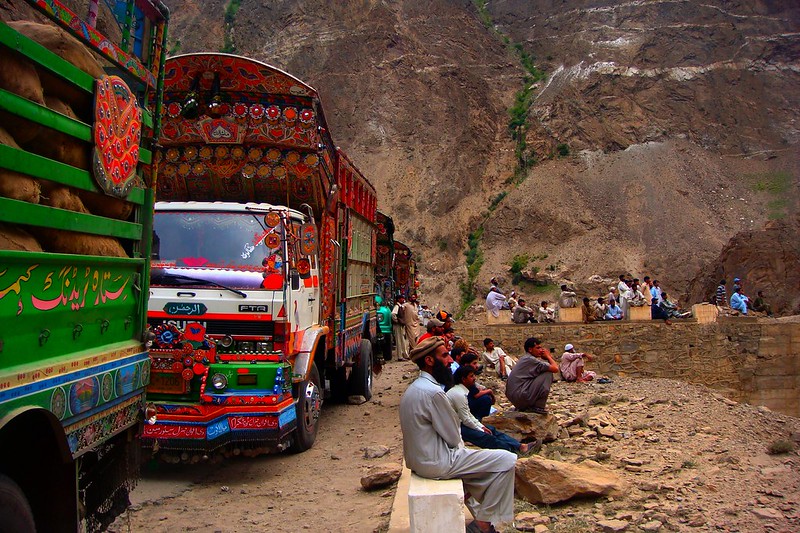
    a mountain of trash

    In Bangdong Village, Yunnan, Matthew Chitwood wanted to do his part to keep the stunning mountainous area clean during his two-year residency as a China fellow at the Institute of Current World Affairs. One day he took his empty beer bottles to a local convenience shop for recycling, but the owners would not accept them. He was told to dump them over the embankment. Looking down the slope at the accumulated piles of broken furniture, soggy socks, food waste, and crushed soda cans entangled with plastic bags, Matt refused. Later, Matt’s friends flung his bottles into the gully. He related his frustrating recycling attempt to Mao Da, the founder of China Zero Waste Alliance, who told Matt that “rural trash management itself is a misnomer… It’s really just trash relocation.”

    MORE
  • A Tale of Two Coastlines: Desalination in China and California

    ›
    China Environment Forum  //  September 17, 2020  //  By William M. Reicher
    Water desalination pipes

    This article was first posted on China-US Focus.

    The port city of Tianjin is in desperate need of water. The surface and groundwater supplies of this sprawling northeast Chinese metropolis have shrunk to dangerously low levels due to decades of reduced rainfall and overexploitation of the Hai River that flows through the city. According to the Tianjin Environmental Protection Bureau, the city’s per capita water resources are one-twentieth of China’s national average, far below the UN benchmark for a water-stressed region. Despite promoting water conservation and metering among residential and industrial users, Tianjin still faces shortages that drive its reliance on large-scale water-supply infrastructure like the South-North Water Transfer Project and seawater desalination. 

    MORE
  • Turning off the Tap: Plastic Sachets and Producer Responsibility in Southeast Asia

    ›
    China Environment Forum  //  September 3, 2020  //  By Eli Patton
    A sari sari storefront in the Philippines

    In the crowded capital city of Manila, the Philippines, one quarter of the population of 15 million people has less than one dollar to spend per day. Residents depend upon the tiny and ubiquitous convenience stores, known as sari-sari stores, for daily essentials like food and hygiene products, much of which are sold in convenient single-use sachets (small plastic pouches) for just a few cents each. These sari-sari stores are the major source of the 150 million sachets used daily in the Philippines. 

    MORE
  • Is a Green Recovery Possible for Post-COVID Cash-Strapped and Flooded Wuhan?

    ›
    China Environment Forum  //  Covid-19  //  August 27, 2020  //  By Clare Auld-Brokish
    IMG_8955

    A longer version of this article was published in China-U.S. Focus.

    Some older Wuhan residents still talk about paddling across the city in their boats, traversing the 100-plus lakes that were once connected by a network of canals. This once-leisurely activity takes on different meaning today as citizens navigate some of the worst floods in decades. Hubei Province, where Wuhan is the capital, is among the 27 central and southern Chinese provinces affected by floods that have caused CNY 86 billion (USD $12.3 billion) in nationwide economic losses in June and July of this year. 

    MORE
  • Nine Dragons Rule the Waters: Closing the Loop on China’s Water Pollution (Report Launch)

    ›
    China Environment Forum  //  August 13, 2020  //  By Karen Mancl & Richard Liu
    shutterstock_1145113880

    Overview of new InsightOut Issue by Daneille Neighbour.

    The Chinese government is fighting a war on pollution on multiple fronts to protect its air, water, and soil. Despite passage of the stringent Water Ten Plan in 2015, water quality still has not met anticipated targets in one-third of the country. But one Chinese pollution control success story was Beijing’s investments in municipal wastewater treatment plants in the run up to the 2008 Olympics. 

    MORE
  • How Plastic Pollution is Being Woven into Fast Fashion Culture

    ›
    China Environment Forum  //  July 30, 2020  //  By Catie Tobin
    shutterstock_1678989160

    The words “plastic pollution” evoke images of discarded plastic bottles and bags, derelict fishing gear, and crushed cigarette butts set on a beautiful beach or floating underwater. In this imagery, the ebb and flow of plastic pollution is visible to the naked eye. But the plastic we can see is only part of the problem. What we do not see so easily are the microscopic, hair-like plastic fibers that are coursing through the water and air, accumulating on beaches, in intertidal zones, and even in Arctic sea ice. These are synthetic microfibers: thin pieces of plastic, a sub-category of microplastics, that resemble a strand of hair.

    MORE
  • Seeking Global Action on Plastic

    ›
    China Environment Forum  //  July 23, 2020  //  By Meg Hassey
    The earth covered in plastic wrap

    It’s your turn, you place a paper with a word on your forehead and people start yelling clues for you to guess: “Ketchup bottle! Your glasses! Glitter! Legos! Tea bags! But then the clues take a turn: “Gets stuck in trees! Floats in the ocean! Lies in gutters!” Realization hits and you yell “Plastic!” Plastic, a global riddle that inundates our daily lives yet also is the source of a growing waste and pollution crisis. Single-use plastic packaging and containers generate 300 million tons of plastic waste each year and between 4.8 to 12.7 million tons of it leaks into the ocean annually, from a variety of land-based sources like stormwater runoff, construction sites, and poor waste management systems. Moreover, nearly invisible pollution from plastic-derived chemicals and microplastics are also on the rise in the oceans. These plastics end up in the guts of birds, oysters, and fish, and entangle sealife, posing a threat to the health of ocean ecosystems, food security, and the planet.

    MORE
  • The World Is Your Oyster and Your Plastic Pollution Is Getting Into It

    ›
    China Environment Forum  //  July 16, 2020  //  By Catie Tobin
    shutterstock_1082022188

    Picture this: It’s a warm, spring day in May 2021. You are at a local seafood restaurant overlooking the Chesapeake Bay and your order of raw oysters arrives delicately placed on a layer of ice. Your waiter reviews the type of oysters you ordered. He says, “Running clockwise, you have Pemaquid, Blue Point, and PEI.” Before the waiter steps away, he asks, “Would you like extra microplastics added to your oysters?” Dumbfounded, you reply, “Extra?”

    This Twilight Zone-like scenario is not totally fictional. Oysters are a keystone species in the environment, meaning they are the backbone of ecosystems. They are heroes in a small shell. In addition to where they sit on the food chain, oysters can filter up to 50 gallons of water per day, cleaning the surrounding water of chemicals and pollutants. However, this means they inevitably suck up more than they bargained for. Scientists have discovered that oysters contain microplastics, plastic pieces that measure less than 5 mm in size in one dimension (similar to the size of a sesame seed). Oysters suck in microplastics and, sometimes, they never pass them out.

    MORE
Newer Posts   Older Posts
View full site

Join the Conversation

  • RSS
  • subscribe
  • facebook
  • G+
  • twitter
  • iTunes
  • podomatic
  • youtube
Tweets by NewSecurityBeat

Trending Stories

  • unfccclogo1
  • Pop at COP: Population and Family Planning at the UN Climate Negotiations

Featured Media

Backdraft Podcast

play Backdraft
Podcasts

More »

What You're Saying

  • Volunteers,At,The,Lagos,Food,Bank,Initiative,Outreach,To,Ikotun, Pan-African Response to COVID-19: New Forms of Environmental Peacebuilding Emerge
    Rashida Salifu: Great piece 👍🏾 Africa as a continent has suffered this unfortunate pandemic.But it has also...
  • A desert road near Kuqa An Unholy Trinity: Xinjiang’s Unhealthy Relationship With Coal, Water, and the Quest for Development
    Ismail: It is more historically accurate to refer to Xinjiang as East Turkistan.
  • shutterstock_1779654803 Leverage COVID-19 Data Collection Networks for Environmental Peacebuilding
    Carsten Pran: Thanks for reading! It will be interesting to see how society adapts to droves of new information in...

What We’re Reading

  • Rising rates of food instability in Latin America threaten women and Venezuelan migrants
  • Treetop sensors help Indonesia eavesdrop on forests to cut logging
  • 'Seat at the table': Women's land rights seen as key to climate fight
  • A Surprise in Africa: Air Pollution Falls as Economies Rise
  • Himalayan glacier disaster highlights climate change risks
More »
  • woodrow
  • ecsp
  • RSS Feed
  • YouTube
  • Twitter
  • Facebook
  • Home
  • Who We Are
  • Publications
  • Events
  • Wilson Center
  • Contact Us
  • Print Friendly Page

© Copyright 2007-2021. Environmental Change and Security Program.

Woodrow Wilson International Center for Scholars. All rights reserved.

Developed by Vico Rock Media

Environmental Change and Security Program

Woodrow Wilson International Center for Scholars

Ronald Reagan Building and International Trade Center

  • One Woodrow Wilson Plaza
  • 1300 Pennsylvania Ave., NW
  • Washington, DC 20004-3027

T 202-691-4000