-
Sharon Guynup, Mongabay
Landed by the thousands: Overfished Congo waters put endangered sharks at risk
›October 27, 2020 // By Wilson Center Staff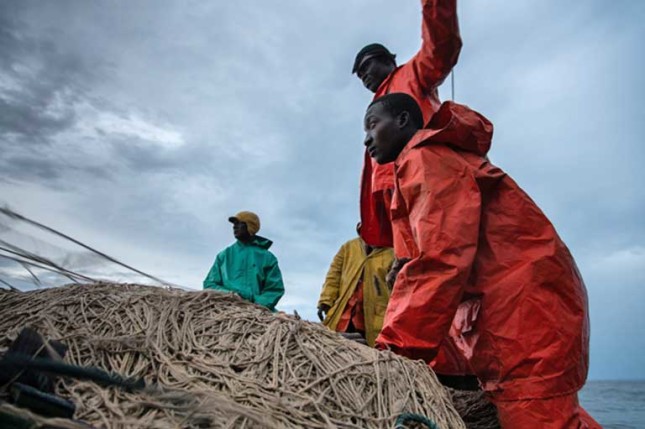
In a video clip, seven fishermen climb into a wooden “Popo” boat that’s beached on the Republic of the Congo’s sandy shoreline. They start up the motor of the 40-foot, limo-length motorized canoe and head out into the Atlantic. The men aboard the weathered craft — its blue paint chipped and faded by years of salt and sun — could be out for a week.
-
The Environmental Collateral Damage of the South China Sea Conflict
›
Tensions in the South China Sea increased last April when a Chinese coast guard ship sank a Vietnamese fishing boat near the Paracel Islands—a fiercely disputed territory in the South China Sea. Disputes over island territories in the region have endured for decades, with China, Vietnam, the Philippines, Taiwan, Indonesia, Malaysia, and Brunei all making overlapping territorial claims. The region is rich in natural resources and biodiversity, holding vast fish stocks and an estimated 11 billion barrels of oil and 190 cubic feet of natural gas.
-
Protecting Brazil’s Forests Could Boost Economic Development
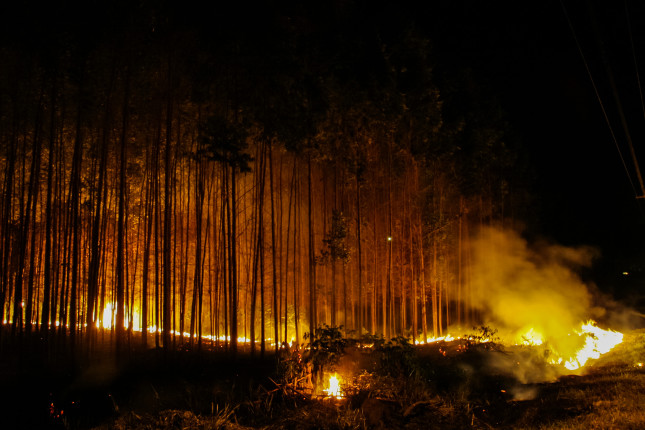
›The dry season returned to Brazil’s Amazon region in late July—and with it, forest fires, largely human-made. After making substantial progress in reducing deforestation in the 2000s and early 2010s, Brazil has reversed course and deforestation is rising. In the Amazon, this season has been the worst in more than a decade in number of fires, and second worst in terms of total deforestation, according to satellite data from Brazil’s National Institute of Space Research (INPE), which monitors the situation.
-
President Bolsonaro Fiddles While the Brazilian Amazon Goes Up in Smoke
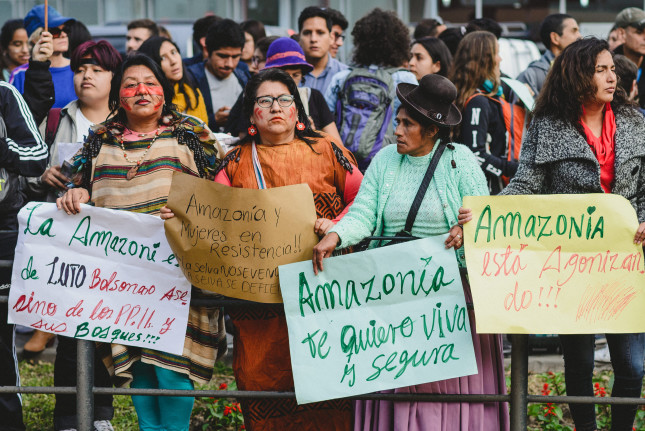
›On August 11, 2020, Brazilian President Jair Bolsonaro dismissed the raging fires in the Amazon, calling their existence a “lie.” However, his own government has reported more than 10,000 fires currently burning in the Amazon, a 17 percent increase from the same time last year, when the number of wildfires reached a nine-year high. The international community has condemned the Brazilian government’s response to the raging Amazon fires. Bolsonaro’s denial about these fires blocks effective domestic, international, government, and non-governmental responses. And it risks exacerbating the conditions contributing to global climate change.
-
How Biodiversity Conservation Promotes Economic Growth in Latin America
›What happens to economic output if we expand protected areas to 30 percent of land and sea worldwide? Anthony Waldron, the lead author of a new study about the economic benefits of land conservation, posed this question at a recent Wilson Center virtual event on the role of Latin America in global biodiversity conservation.
-
Preventing the Next Pandemic: Zoonotic Diseases and Future Outbreaks
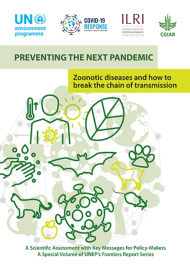
›To recover from the devastating impacts of COVID-19, we will need to understand the risks and environmental factors that caused the novel coronavirus and other zoonotic diseases to emerge in the first place, according to a new report by the United Nations Environment Programme and the International Livestock Research Institute. The report, Preventing the Next Pandemic – Zoonotic Diseases and How to Break the Chain of Transmission, examines the root causes of the COVID-19 pandemic and other zoonotic diseases. It also explores the complex linkages between biological and non-living factors that impact our global ecosystem and spread diseases. -
Cobalt is Critical to the Renewable Energy Transition. How Can We Minimize its Social And Environmental Cost?
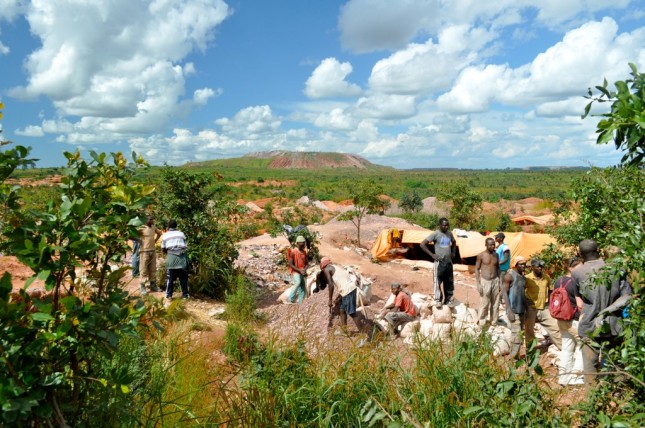
›Its name conjures an image of vivid deep blues. But when cobalt is dug out of the ground in ore form, there’s barely a hint of the rich hue it lends its name to. In the Democratic Republic of the Congo, which produces more than half of the world’s supply, it takes the form of heterogenite, a dull brownish mineral that could easily be mistaken for small clods of dirt.
But people die for this mineral. Children suffer for it. Livelihoods, educations, neighborhoods, environments and personal safety are sacrificed for it.
-
How to Create a Successful Cross-Sectoral Collaboration
›It helps to think of collaboration as a skill to develop, rather than a value to impart, said Francesca Gino, Professor and Unit Head of Negotiation, Organization and Markets at Harvard Business School, at a recent Wilson Center virtual event on the importance of cross-sectoral collaboration. Many organizations make collaboration one of their values, she said. However, this has no substantial effect. “It could be a first step, but on its own it doesn’t create a culture where all of a sudden people are collaborating effectively,” Gino said.
Showing posts from category biodiversity.
 To recover from the devastating impacts of COVID-19, we will need to understand the risks and environmental factors that caused the novel coronavirus and other zoonotic diseases to emerge in the first place, according to a new report by the United Nations Environment Programme and the International Livestock Research Institute. The report,