

-
How to Think and Work Politically to Reach Biodiversity Conservation Goals
›
“You might know what to do,” said Rachel Kleinfeld, a Senior Fellow for Democracy, Conflict, and Governance Program at the Carnegie Endowment for International Peace. “But if you don’t think about how to do it, your reform isn’t going to move forward.” She spoke at a recent Wilson Center virtual event on how to think and work politically while supporting biodiversity conservation goals. It may sound counterintuitive, she said, but undertaking what’s considered the best intervention may not be the best approach.
-
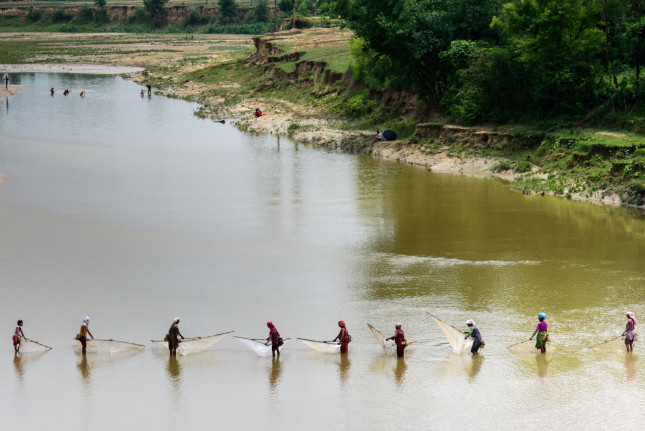
Improve Biodiversity Conservation, Enhance Public Health and Food Security
›
Our collective development objectives will not be achieved if they come at the expense of biodiversity and natural resource management, said Jeff Haeni, Acting Deputy Assistant Administrator in the Bureau for Economic Growth, Education, and Environment at USAID. He spoke at a recent Wilson Center virtual event, co-hosted with USAID, that explored the links between conservation and public health with examples from USAID’s BRIDGE project, which aims to build the evidence base for integrating biodiversity conservation considerations into policy discussions and decision-making across sectors. “The ability of societies around the world to develop and thrive is dependent on the health of the forests, fisheries, and natural systems around them,” he said.
-
Flying High: Q&A with Birding Beijing’s Terry Townshend
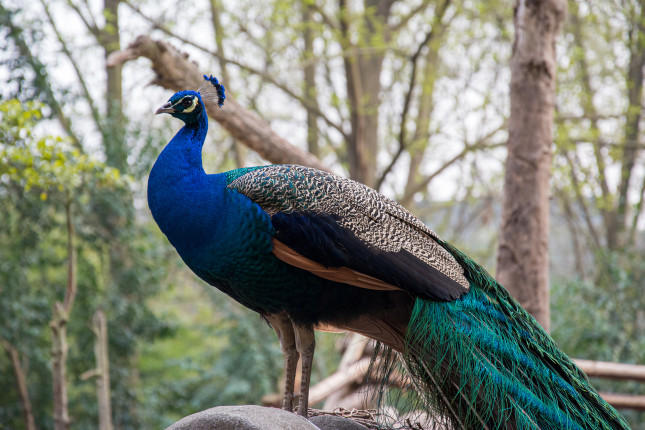
›On March 20, the lawsuit filed by the three organizations successfully blocked the construction of the Jiasajiang I Hydropower Station in Yunnan Province, meaning that at least for now, these long-legged endangered birds are safe. This environmental victory for China’s birds builds on the designation of some of China’s Migratory Bird Sanctuaries along the coast of the Yellow Sea-Bohai Gulf as UNESCO World Heritage sites in July 2019, with more planned in the next two to three years. However, these highpoints in avian protection do not negate the fact that nearly 40 percent of China’s endemic birds are listed as threatened and require greater protection. -
Unpacking Covid-19 and the Connections Between Ecosystems, Human Health, and Security
›“What are the underlying drivers of risk that created the conditions for Covid-19 to emerge, and how do we better address them?” said Lauren Herzer Risi, Project Director for the Environmental Change and Security Program, in this week’s Friday Podcast, recorded during a recent Wilson Center Ground Truth Briefing on the Covid-19 pandemic. This question framed the discussion, which explored the intersection of the environment, public health, and national security. Although the global pandemic came as a shock to many, the novel coronavirus was not a surprise to epidemiologists and experts who had been sounding the alarm for decades. There have been clear signals of the risks we face from animal-to-human virus transmission, including Ebola, SARS, and other regional epidemics, said Risi. These zoonotic diseases, especially now, are creating concerns about food safety, wildlife conservation, and public health. But the risks don’t just come from wet markets and our increasingly connected world. -
Destruction of Habitat and Loss of Biodiversity are Creating the Perfect Conditions for Diseases like COVID-19 to Emerge
›Mayibout 2 is not a healthy place. The 150 or so people who live in the village, which sits on the south bank of the Ivindo River, deep in the great Minkebe forest in northern Gabon, are used to occasional bouts of diseases such as malaria, dengue, yellow fever and sleeping sickness. Mostly they shrug them off.
-
To Fight for a Living Planet, Restore its Biology
› We face the greatest environmental challenges ever relating to climate change, biodiversity, land use, and more. Humans are driving 1 million species to extinction, according to a report by the UN-backed Intergovernmental Science-Policy Platform on Biodiversity and Ecosystem Services. Some $44 trillion of annual global economic product that depend on nature are in jeopardy. Fires have ravaged large swathes of the Amazon—Brazil and Bolivia in particular—and Australia. -
Advancing One Health: Protecting People, Gorillas, and the Land on Which They Live
›In 2003, a scabies skin disease outbreak affecting mountain gorillas in Bwindi Impenetrable National Park was traced to people living around the national park—people with limited access to basic health and social services. To protect the people and wildlife of this special park, we launched Conservation Through Public Health (CTPH), an NGO that promotes biodiversity conservation by enabling people, gorillas, and other wildlife to coexist harmoniously through improved health and wellbeing. -
To Envision a More Sustainable Future Tell the Story of Conservation Technology
›Last summer, I stood on a cliff 100 feet above the Madre De Dios River, in Southern Peru near the Bolivian border, to watch the rosy gift of an Amazon sunset. It was quiet, in a tropical rainforest way, with the light clamor of parrots, macaws, and cicadas. Then, a peke-peke motorized canoe broke through the soft din. It arrived from the east, carrying a new supply of diesel fuel for the gold miners who were prepping the generator that would operate a suction-pump and dredge for gold across the river and around the bend. Before nightfall, the fuel ignited the baritone of a diesel generator. It moaned all night and all day, barely stopping. In subsequent days, instead of a light clamor of birds and primates, the thrum of a gold mining operation seemed like all I could hear.
Showing posts from category biodiversity.
 On
On  “What are the underlying drivers of risk that created the conditions for Covid-19 to emerge, and how do we better address them?” said Lauren Herzer Risi, Project Director for the Environmental Change and Security Program, in this week’s Friday Podcast, recorded during a recent Wilson Center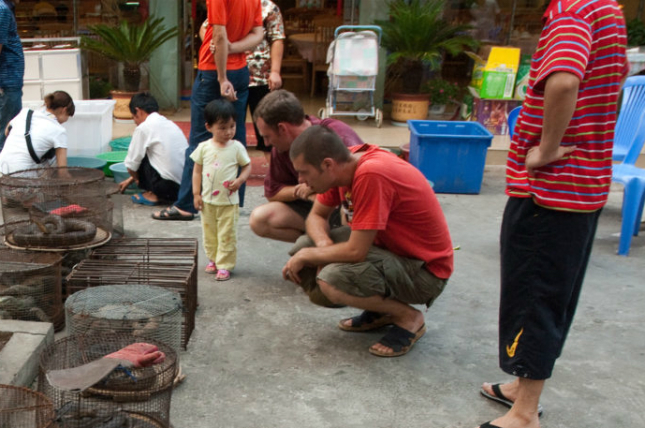
 We face the greatest environmental challenges ever relating to climate change, biodiversity, land use, and more. Humans are driving 1 million species to extinction, according to a
 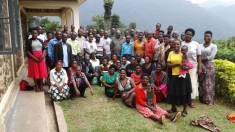 In 2003, a scabies skin disease outbreak affecting mountain gorillas in Bwindi Impenetrable National Park was traced to people living around the national park—people with limited access to basic health and social services. To protect the people and wildlife of this special park, we launched
 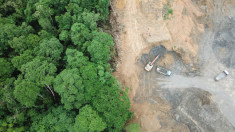 Last summer, I stood on a cliff 100 feet above the Madre De Dios River, in Southern Peru near the Bolivian border, to watch the rosy gift of an Amazon sunset. It was quiet, in a tropical rainforest way, with the light clamor of parrots, macaws, and cicadas. Then, a peke-peke motorized canoe broke through the soft din. It arrived from the east, carrying a new supply of diesel fuel for the gold miners who were prepping the generator that would operate a suction-pump and dredge for gold across the river and around the bend. Before nightfall, the fuel ignited the baritone of a diesel generator. It moaned all night and all day, barely stopping. In subsequent days, instead of a light clamor of birds and primates, the thrum of a gold mining operation seemed like all I could hear.

