• woodrow wilson center
  • ecsp

New Security Beat

Subscribe:
  • rss
  • mail-to
  • Who We Are
  • Topics
    • Population
    • Environment
    • Security
    • Health
    • Development
  • Columns
    • China Environment Forum
    • Choke Point
    • Dot-Mom
    • Friday Podcasts
    • Navigating the Poles
    • Reading Radar
  • Multimedia
    • Water Stories (Podcast Series)
    • Backdraft (Podcast Series)
    • Tracking the Energy Titans (Interactive)
  • Films
    • Water, Conflict, and Peacebuilding (Animated Short)
    • Paving the Way (Ethiopia)
    • Broken Landscape (India)
    • Scaling the Mountain (Nepal)
    • Healthy People, Healthy Environment (Tanzania)
  • Publications
  • Events
  • Contact Us

NewSecurityBeat

The blog of the Wilson Center's Environmental Change and Security Program
Showing posts from category biodiversity.
  • Measuring Impact: Building on Lessons Learned to Improve Biodiversity Conservation

    ›
    From the Wilson Center  //  August 22, 2018  //  By Rebecca Lorenzen
    USAID-Guatemala

    “Functioning natural systems are critical to human survival itself,” said Carrie Thompson, Deputy Assistant Administrator of the Bureau for Economic Growth, Education and Environment at USAID, at a recent Wilson Center event on USAID’s efforts to increase the effectiveness of its biodiversity conservation programs. Measuring Impact was designed to help support USAID’s 2014 Biodiversity Policy, which is “grounded in a recognition that human well-being and progress are dependent on the health of biodiverse systems and [that] durable development gains are not possible unless these systems are valued and safeguarded,” said Cynthia Gill, Director of USAID’s Office of Forestry and Biodiversity.

    MORE
  • Pangolins on the Brink as Africa-China Trafficking Persists Unabated

    ›
    China Environment Forum  //  May 24, 2018  //  By Sharon Guynup
    Pangolin

    While the pangolin’s thick overlapping scales protect it from predators such as lions, this animal is an easy mark for illegal wildlife traffickers. Image courtesy of the Tikki Hywood Foundation, Zimbabwe.

    This article by Sharon Guynup originally appeared on Mongabay.

    Acting on a tip, Nigerian customs operatives raided an apartment in the southwest city of Ikeja in February. Inside, they found some 4,400 pounds of pangolin scales, and 218 ivory tusks—and arrested a Chinese suspect, Ko Sin Ying, who lived there.

    A few months earlier, at the other end of a well-worn trade route, Chinese customs officials made the largest-ever seizure of pangolin scales in the port of Shenzhen. They discovered an “empty” shipping container that had come in from Africa—stuffed with 13 tons of scales. They were packaged in bags that camouflaged their true contents beneath a veneer of charcoal. That haul had killed an estimated 20,000 to 30,000 animals, each about as big as a medium-sized dog.

    MORE
  • Vanda Felbab-Brown, Mongabay

    To Counter Wildlife Trafficking, Local Enforcement, Not En-Route Interdiction, Is Key

    ›
    February 16, 2018  //  By Wilson Center Staff
    White-Rhino

    The original version of this article, by Vanda Felbab-Brown, appeared on Mongabay.

    The global poaching crisis has induced large segments of the conservation community to call for far tougher law enforcement. Many look to policing lessons from decades of counter-narcotics efforts for solutions.

    MORE
  • Safe Passage: China Takes Steps to Protect Shorebirds Migrating From Australia to the Arctic

    ›
    China Environment Forum  //  February 15, 2018  //  By Terry Townshend

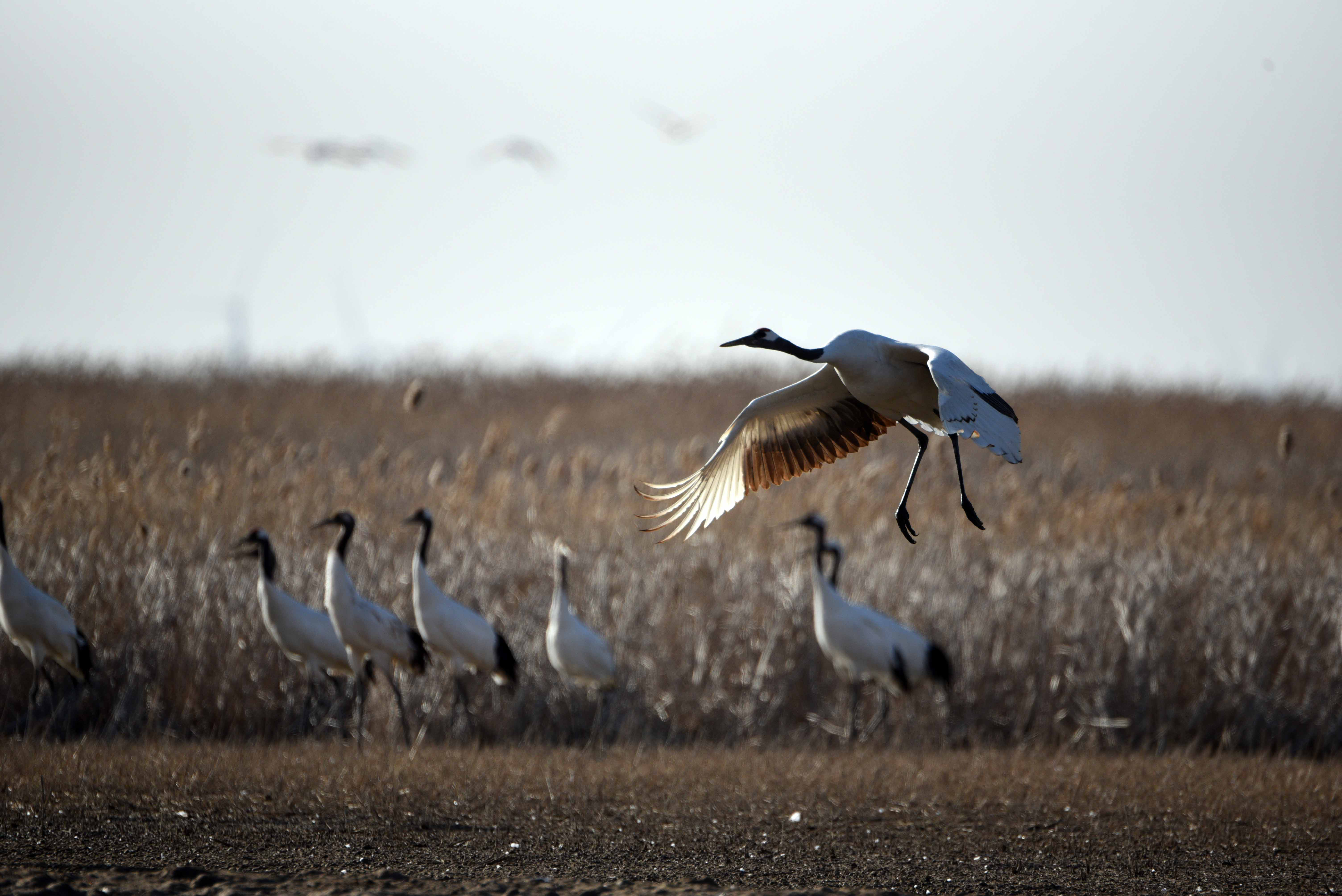
    Every year, millions of shorebirds migrate to the Arctic to breed—some coming from as far away as Australia and New Zealand—and then head back again. Nearly all of the birds making this journey spend time in the food-rich intertidal mudflats of the Yellow Sea ecoregion, on the east coast of China and the west coasts of the Korean peninsula. But as China’s economy has grown, around 70 percent of the intertidal mudflats in the Yellow Sea area have disappeared—the land drained and “reclaimed” for development. All of the more than 30 species of shorebirds that rely on the mudflats are declining, and those that stop there twice a year are declining at a faster rate than those that stop only once. If the current trajectory continues, the Yellow Sea—once known as the cradle of China—will become the epicenter of extinction.

    MORE
  • Criminal Elements: Illegal Wildlife Trafficking, Organized Crime, and National Security

    ›
    From the Wilson Center  //  January 19, 2018  //  By Saiyara Khan

    “The same criminals that are trafficking in drugs, guns, and people, traffic in wildlife,” said Christine Dawson, the director of the Office of Conservation and Water at the U.S. Department of State, at a recent event in the Wilson Center’s “Managing Our Planet” series. Experts from Vulcan Productions and Brookings Institution joined Dawson to discuss the links between national security and wildlife trafficking, which is now the fourth largest transnational crime in the world, and to mark recent legislative successes and innovative tools.

    MORE
  • An Unlikely Ambassador: Ghana Gurung on Snow Leopards and Community Resilience

    ›
    Friday Podcasts  //  November 24, 2017  //  By Gretchen Johnson

    Ghana 235As a child growing up in Nepal’s mountainous Upper Mustang region, Ghana Gurung understood that his survival depended on the mountains and his community. Today, as senior conservation program director at World Wildlife Fund-Nepal, he works to protect the endangered and elusive snow leopard by improving local communities’ livelihoods and the mountains’ ecosystem.

    MORE
  • Sustainable Water, Resilient Communities: The Challenge of Too Little Water

    ›
    From the Wilson Center  //  Water Security for a Resilient World  //  October 27, 2017  //  By Gretchen Johnson
    Water-Line
    This article is part of ECSP’s Water Security for a Resilient World series, a partnership with USAID’s Sustainable Water Partnership and Winrock International to share stories about global water security.
     

    Water is a “strategic instrument in the creation of a safer, healthier, more nutritious, less aggressive world,” said Winrock International President and CEO Rodney Ferguson at the first event in a four-part series on water security organized by the Wilson Center and the Sustainable Water Partnership. Panelists at the event identified innovative and integrated efforts necessary to increase global water security in the face of growing water scarcity.

    MORE
  • REDD+ Progress: Forests and Solving the Climate Change Challenge

    ›
    On the Beat  //  October 11, 2017  //  By Namita Rao
    REDD+

    From 1870 to 2015, the CO2 concentration in the atmosphere  increased significantly, said Professor Maria Sanz, scientific director at the Basque Center for Climate Change in a recent webinar organized by WWF Forest and Climate. Forests have been responsible for global greenhouse gas emissions through forestry and other land use activities. However, she noted that forests also absorb nearly one-third of the emissions generated from fossil fuels.

    MORE
Newer Posts   Older Posts
View full site

Join the Conversation

  • RSS
  • subscribe
  • facebook
  • G+
  • twitter
  • iTunes
  • podomatic
  • youtube
Tweets by NewSecurityBeat

Trending Stories

  • unfccclogo1
  • Pop at COP: Population and Family Planning at the UN Climate Negotiations

Featured Media

Backdraft Podcast

play Backdraft
Podcasts

More »

What You're Saying

  • Volunteers,At,The,Lagos,Food,Bank,Initiative,Outreach,To,Ikotun, Pan-African Response to COVID-19: New Forms of Environmental Peacebuilding Emerge
    Rashida Salifu: Great piece 👍🏾 Africa as a continent has suffered this unfortunate pandemic.But it has also...
  • A desert road near Kuqa An Unholy Trinity: Xinjiang’s Unhealthy Relationship With Coal, Water, and the Quest for Development
    Ismail: It is more historically accurate to refer to Xinjiang as East Turkistan.
  • shutterstock_1779654803 Leverage COVID-19 Data Collection Networks for Environmental Peacebuilding
    Carsten Pran: Thanks for reading! It will be interesting to see how society adapts to droves of new information in...

What We’re Reading

  • Rising rates of food instability in Latin America threaten women and Venezuelan migrants
  • Treetop sensors help Indonesia eavesdrop on forests to cut logging
  • 'Seat at the table': Women's land rights seen as key to climate fight
  • A Surprise in Africa: Air Pollution Falls as Economies Rise
  • Himalayan glacier disaster highlights climate change risks
More »
  • woodrow
  • ecsp
  • RSS Feed
  • YouTube
  • Twitter
  • Facebook
  • Home
  • Who We Are
  • Publications
  • Events
  • Wilson Center
  • Contact Us
  • Print Friendly Page

© Copyright 2007-2021. Environmental Change and Security Program.

Woodrow Wilson International Center for Scholars. All rights reserved.

Developed by Vico Rock Media

Environmental Change and Security Program

Woodrow Wilson International Center for Scholars

Ronald Reagan Building and International Trade Center

  • One Woodrow Wilson Plaza
  • 1300 Pennsylvania Ave., NW
  • Washington, DC 20004-3027

T 202-691-4000