• woodrow wilson center
  • ecsp

New Security Beat

Subscribe:
  • rss
  • mail-to
  • Who We Are
  • Topics
    • Population
    • Environment
    • Security
    • Health
    • Development
  • Columns
    • China Environment Forum
    • Choke Point
    • Dot-Mom
    • Friday Podcasts
    • Navigating the Poles
    • Reading Radar
  • Multimedia
    • Water Stories (Podcast Series)
    • Backdraft (Podcast Series)
    • Tracking the Energy Titans (Interactive)
  • Films
    • Water, Conflict, and Peacebuilding (Animated Short)
    • Paving the Way (Ethiopia)
    • Broken Landscape (India)
    • Scaling the Mountain (Nepal)
    • Healthy People, Healthy Environment (Tanzania)
  • Publications
  • Events
  • Contact Us

NewSecurityBeat

The blog of the Wilson Center's Environmental Change and Security Program
Showing posts from category biodiversity.
  • Lisa Dabek: Thinking Long Term to Save Papua New Guinea’s Tree Kangaroos

    ›
    Beat on the Ground  //  December 30, 2013  //  By Schuyler Null

    “I always say what brought me to Papua New Guinea is the tree kangaroo, and what keeps me there are the people,” said Lisa Dabek.

    MORE
  • Gorillas and Family Planning: At the Crossroads of Community Development and Conservation in Uganda

    ›
    From the Wilson Center  //  November 13, 2013  //  By Donald Borenstein
    gorillaweb

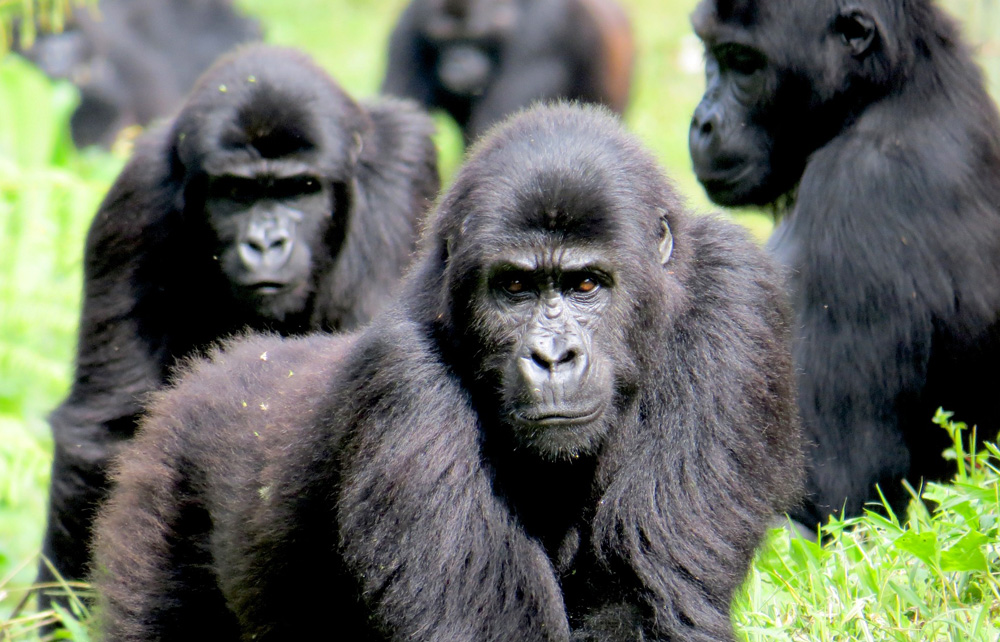
    “Gorillas are very good at family planning; if we were like them, we’d be much better off,” said wildlife veterinarian Dr. Gladys Kalema-Zikusoka at the Wilson Center on September 26. The Conservation Through Public Health (CTPH) CEO and founder is celebrating 10 years of population, health, and environment (PHE) work in Uganda and the Democratic Republic of Congo, bringing health and livelihood interventions to people while protecting mountain gorillas around Virunga and Bwindi Impenetrable National Parks. [Video Below]

    MORE
  • Crowded Out: New Evidence Points to Population Growth as Key Driver of Biodiversity Loss

    ›
    November 12, 2013  //  By Kathleen Mogelgaard
    black-rhino

    In 2009, economist Jeffrey Sachs, alongside more than 20 eminent scholars from different fields, highlighted the importance of biodiversity for human well-being in a policy commentary published in Science. They noted the Millennium Development Goals (MDGs) included a target to achieve, by 2010, a significant reduction in the rate of species loss, and they also noted that it was one of the MDG targets that was most off-track. “Our lack of progress toward the 2010 target,” they said, “could undermine achievement of the MDGs and poverty reduction in the long term.” The 2010 target was missed, and today species are moving toward extinction at an ever faster pace. Last week’s announcement confirming the extinction of Africa’s western black rhino is the latest sad example of this trend.

    MORE
  • Aligning Human and Ocean Health, Preventing Sudden Freshwater and Plant Habitat Decline

    ›
    Reading Radar  //  October 30, 2013  //  By Laura Henson

    Indispensable-Ocean“The size and growth of the human population is putting unprecedented pressure on natural resources,” reports the first major publication by the Global Partnership for Oceans. The World Bank launched the consortium of more than 140 government, NGO, and private sector groups at the Rio+20 UN Conference on Sustainable Development as a means to bring targeted investment to reverse ocean health decline and encourage sustainable development. On October 16, the Partnership’s Blue Ribbon Panel released Indispensable Ocean: Aligning Ocean Health and Human Well-Being, which encourages members to prioritize five principles: sustainable livelihoods, social equity, and food security; a healthy ocean; effective governance systems; long-term viability; and capacity building and innovation. Selection criteria for investments accompany each principle, including requirements like addressing problems of food affordability and access, demonstrating potential for improvements in human health, and building resilience to future conditions. “The good news is that we stand at a point in history where it is neither too late nor impossible to turn the tide of change that is currently sweeping across the ocean,” panel chair Ove Hoegh-Guldberg concludes.

    MORE
  • Amid Perfect Storm of Climate Challenges, Can Aquaculture Net Food Security Gains in Bangladesh?

    ›
    October 15, 2013  //  By Jacob Glass
    Bangladesh Aquaculture

    It is difficult to find a country feeling the negative impacts of climate change more severely than Bangladesh. Name any alarming, seemingly far off effect of a warming world being discussed in the halls of Washington or the summits of Copenhagen, and there is a good chance Bangladesh is experiencing it today. Flooding, drought, sea level rise, mass migration, and crushing poverty are exacerbated by a growing population and rapid urbanization. This perfect storm of climactic and demographic trends presents a looming crisis for Bangladesh, no more so than when it comes to food security.

    MORE
  • 10 Steps for Expanding the Population, Health, and Environment Approach

    ›
    Beat on the Ground  //  From the Wilson Center  //  October 7, 2013  //  By Laura Henson
    PHE-10-steps

    As their five-year funding cycle for supporting integrated population, health, and environment (PHE) programs around the world came to a close this fall, leaders from BALANCED Project – Building Actors and Leaders for Advancing Community Excellence in Development – came together at the Wilson Center to discuss lessons learned, best practices, and new ideas for the future.

    MORE
  • Africa’s Demography, Environment, Security Challenges Entwined, Says Roger-Mark De Souza at Africa Center for Strategic Studies

    ›
    Eye On  //  October 3, 2013  //  By Donald Borenstein

    Sub-Saharan Africa is not only the fastest growing region of the world demographically but is also one of the most vulnerable to climate changes, according to many measures, and already facing natural resource scarcity in many areas. These factors combine with existing development challenges to create security threats that African governments and the United States should be concerned with, says ECSP Director Roger-Mark De Souza in a presentation for the Africa Center for Strategic Studies’ introductory course on demography and the environment at the National Defense University.

    MORE
  • Coastal Resource Management, Family Planning Integration Build Resilience in Madagascar and The Gambia

    ›
    From the Wilson Center  //  August 26, 2013  //  By Jacob Glass
    Oyster Harvesters in The Gambia

    Growing awareness of the connected challenges of natural resource management, economic growth, and human health has encouraged more integrated models of international development. The experience of two organizations – TRY Oyster Women’s Association, based in The Gambia, and Blue Ventures, based in Madagascar – demonstrates the success of a community-based approach to building resilience, enabling communities to bounce back from adversity and establish a long-term basis for development. [Video Below]

    MORE
Newer Posts   Older Posts
View full site

Join the Conversation

  • RSS
  • subscribe
  • facebook
  • G+
  • twitter
  • iTunes
  • podomatic
  • youtube
Tweets by NewSecurityBeat

Trending Stories

  • unfccclogo1
  • Pop at COP: Population and Family Planning at the UN Climate Negotiations

Featured Media

Backdraft Podcast

play Backdraft
Podcasts

More »

What You're Saying

  • Volunteers,At,The,Lagos,Food,Bank,Initiative,Outreach,To,Ikotun, Pan-African Response to COVID-19: New Forms of Environmental Peacebuilding Emerge
    Rashida Salifu: Great piece 👍🏾 Africa as a continent has suffered this unfortunate pandemic.But it has also...
  • A desert road near Kuqa An Unholy Trinity: Xinjiang’s Unhealthy Relationship With Coal, Water, and the Quest for Development
    Ismail: It is more historically accurate to refer to Xinjiang as East Turkistan.
  • shutterstock_1779654803 Leverage COVID-19 Data Collection Networks for Environmental Peacebuilding
    Carsten Pran: Thanks for reading! It will be interesting to see how society adapts to droves of new information in...

What We’re Reading

  • Rising rates of food instability in Latin America threaten women and Venezuelan migrants
  • Treetop sensors help Indonesia eavesdrop on forests to cut logging
  • 'Seat at the table': Women's land rights seen as key to climate fight
  • A Surprise in Africa: Air Pollution Falls as Economies Rise
  • Himalayan glacier disaster highlights climate change risks
More »
  • woodrow
  • ecsp
  • RSS Feed
  • YouTube
  • Twitter
  • Facebook
  • Home
  • Who We Are
  • Publications
  • Events
  • Wilson Center
  • Contact Us
  • Print Friendly Page

© Copyright 2007-2021. Environmental Change and Security Program.

Woodrow Wilson International Center for Scholars. All rights reserved.

Developed by Vico Rock Media

Environmental Change and Security Program

Woodrow Wilson International Center for Scholars

Ronald Reagan Building and International Trade Center

  • One Woodrow Wilson Plaza
  • 1300 Pennsylvania Ave., NW
  • Washington, DC 20004-3027

T 202-691-4000