-
Relief, Recovery, and Peace: A Follow-up Interview with DAS Iris Ferguson
› In today’s episode of New Security Broadcast, ECSP Program Director Lauren Risi follows up with Iris Ferguson, the US Department of Defense’s (DoD) Deputy Assistant Secretary of Defense for Arctic and Global Resilience, on their previous conversation previewing the DoD delegation to COP28.
Deputy Assistant Secretary Ferguson discusses her takeaways from COP28 and the importance of listening to stakeholders outside the Pentagon. She also outlines some of DoD’s key energy and climate security priorities in 2024.
-
ECSP Weekly Watch | February 5 – 9
›
A window into what we are reading at the Wilson Center’s Environmental Change and Security Program
El Niño and Global Warming’s Shared Impact on Chile and California (New York Times)
Devastating wildfires have killed over 120 people in Chile, where a decade-long drought has created extreme fire weather conditions. While the country has experienced wildfires for years, a recent study found that unusually warm ocean temperatures created by El Niño have combined with climate-fueled droughts and heat waves to contribute to the wildfires now raging.
-
Weakened Infrastructure and Climate Change: The Threat to Water Security in Nineveh
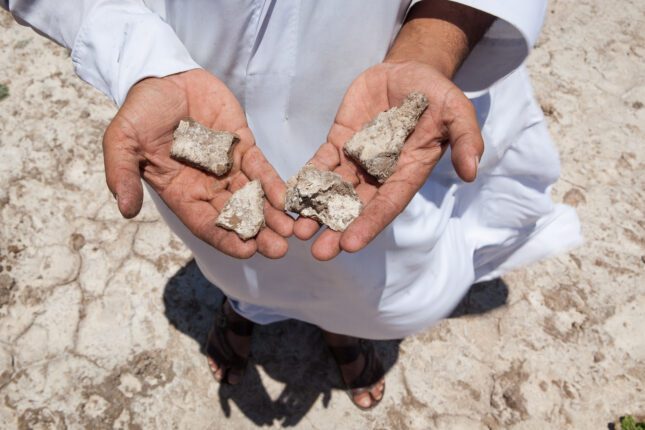
›Iraq is incredibly vulnerable to the impacts of climate change. Temperatures are increasing, rainfall is decreasing, and the country experiences prolonged periods of drought. These conditions, as well as the destruction of wells and irrigation systems in the Islamic State’s (IS) targeted 2014-2017 campaign to destroy agricultural livelihoods, have created a growing water problem in Iraq’s Nineveh Plains. Indeed, water levels there have dropped low enough to subject crops to drought stress, endangering drinking water systems and affecting the ability to grow crops and raise livestock.
-
ECSP Weekly Watch | January 22 – 26
›A window into what we are reading at the Wilson Center’s Environmental Change and Security Program
World Groundwater Levels Face Accelerated Decline
Courtesy of Reuters, Reported by David Stanway and Edited by Tomasz Janowsk
Nature recently released a report revealing that global groundwater levels have undergone a widespread and accelerated decline over the past 40 years. Researchers concluded that this has likely occurred as a result of the impact of two factors: unsustainable irrigation practices in dry climates and drought driven by climate change.
-
Environment and Security | Q&A with Editor in Chief, Ashok Swain
›From Afghanistan, Nepal, and Libya to the Arctic, the new issue of Environment and Security takes a fresh look at emerging issues at the intersection of environment and security. Ashok Swain, Editor in Chief of Environment and Security, spotlights some of the new research and insights in this Q&A with ECSP staff.
Q: The new issue of Environment and Security features an article on Arctic governance, including a close examination of the International Code for Ships Operating in Polar Waters (Polar Code). How do the authors assess this regulatory instrument as it enters its 10th year since adoption?
-
ECSP Weekly Watch | January 15 — 19
›A window into what we are reading at the Wilson Center’s Environmental Change and Security Program
The Worsening Environmental Impact of the War in Gaza
The Gaza Strip has long been uniquely vulnerable to the climate crisis, with rapid temperature increase and decreasing rainfall plaguing this whole region. Even prior to the current conflict, NGOs in the region and the UN have warned that climate change would be devastating, particularly for food and water security in the Gaza Strip and West Bank.
-
Make Room for Development Diplomats!
›Tracking signs and signals is one of the hallmarks of foresight professionals. They are always on the prowl for novel products and technologies that promise to change the world. Sustainable aviation fuel made from biomass or non-biological sources like CO2 is one innovation on their radar. The increasingly popular generative AI technology is another, especially since its proponents claim it will revolutionize early disease detection, unleash new forms of creative arts, transform engineering, and reshape architecture.
-
ECSP Weekly Watch | January 8 – 12
›A window into what we are reading at the Wilson Center’s Environmental Change and Security Program
Loopholes in the UN Climate Plan?
Climate negotiators’ pledges to address climate change at the U.N. conference in Dubai by committing to limit global warming to 1.5 degrees Celsius and achieving net-zero greenhouse gas emissions by 2050 may be less solid than they appear. Scientists argue that these promises lack clear definitions and are filled with loopholes.
Showing posts from category adaptation.
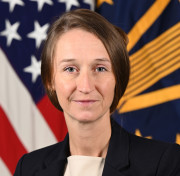 In today’s episode of New Security Broadcast, ECSP Program Director Lauren Risi follows up with Iris Ferguson, the US Department of Defense’s (DoD) Deputy Assistant Secretary of Defense for Arctic and Global Resilience, on their previous conversation previewing the DoD delegation to COP28.