

-
South African Water Expert Suspended: Turton Tells Hard Truths – And Pays a Price
›December 5, 2008 // By Meaghan ParkerAnthony Turton, a South African water expert and fellow at the Council for Scientific and Industrial Research (CSIR), was suspended November 21 from CSIR for “insubordination” and bringing disrepute to the scientific research and development organization. CSIR is supported by grants from the South African Parliament, other government departments, and the private sector.
The suspension followed a ban on Turton’s scheduled keynote address, “A Clean South Africa” at the November CSIR conference “Science Real and Relevant.” CSIR said the presentation “could not be sufficiently substantiated,” and that images of violence from the recent spate of xenophobic attacks were offensive.
Now fighting for his academic survival, Turton spoke to the media to defend himself, including a video interview in which he calls the water crisis more severe than the power problems currently challenging the country. “Water scarcity is a fundamental developmental constraint, not only to South Africa, but also to the entire SADC [Southern African Development Community] region,” he says. An ECSP Navigating Peace brief coauthored by Turton and colleagues from CSIR points out that not only does the region have low rainfall, but also “the lowest conversion of rainfall-to-runoff in the world,” which “affects both surface water river flows and groundwater recharge.”
Due to South Africa’s mining industry, heavy metals, radionuclides, and other toxins in the water supply endanger human health. In addition, eutrophication in South Africa’s large dams support high levels of the potential toxin microcystin; according to Turton, while microcystin has the potential for long-term damage, “we’ve not done the science” to know for sure. He called on decision-makers to revive South African leadership in eutrophication research—a position it lost due to “lower priority status by government, which led to the termination of funding for research in this field,” reports Water Wheel.
But more graphically, Turton suggested that violence could erupt in Johannesburg’s townships in response to the water crisis; next to disturbing images of violence against Zimbabwean immigrants, his presentation asked, “Could this type of anger be unleashed in response to perceptions of deteriorating public health as a result of declining water quality?” His question could be timely; a cholera epidemic gripping Zimbabwe threatens South Africa as sick migrants cross the border to escape the collapsing nation.
As renowned water expert Aaron Wolf and others (including Turton) have pointed out, water has never led to wars between nations, but examples abound of local and civil conflicts—some of them deadly: violent protests in Cochabamba, Bolivia; pipeline bombings in California; and farmers and police clashing in China. The shocking photos of the anti-immigrant violence in Johannesburg’s townships may have touched a nerve in Turton’s intended audience, but they nevertheless drew a possible picture of the consequences of the state’s failure to meet the expectations of its most vulnerable citizens.
But which of Turton’s purported violations was more offensive to the powers that be: the violent images linking water and conflict, or his exposure of the government’s unwillingness to address the potential toxins dumped in the water supply by private interests? Both are bad for business—especially as South Africa’s economic growth slows. This situation eerily echoes the Bush administration’s suppression of climate scientists such as James Hansen for taking a similarly precautionary approach to future crises.
Wolf, who co-founded the Universities Partnership for Transboundary Waters with Turton, said in an open letter:Dr. Turton is one of the most careful and conscientious scientists I know. Moreover, he has great passion for the human dimension of his work, and holds his obligation for the betterment of society inviolable. Prof. Turton has a reputation for speaking hard truths about the world around him, and academic institutions generally have an obligation to protect academic freedom for precisely these sorts of cases.
Other public letters of support for Turton’s character and scholarship can be emailed to Mariette Lieferink, who is also leading an online petition effort.
“Must we be silenced and cowed into a corner?” Turton asks in his video interview. “This is for me a moral obligation, it’s a moral decision.”
Photo: Anthony Turton. Courtesy of Dave Hawxhurst and the Woodrow Wilson Center. -
Natural-Resource, Demographic Pressures Collide With Political Repression as Guinea Reaches Potential Breaking Point
›December 3, 2008 // By Will Rogers“We have had enough of false promises” from the government, said one resident of the northwestern Guinean mining town of Boké, a sentiment shared by many of his countrymen. Long ruled by self-serving autocrats, members of this predominantly youthful society, angered by their lack of access to basic services like electricity, water, and education, have ramped up demonstrations against the central government in Conakry.
Despite its extensive reserves of bauxite—the ore from which aluminum is produced—Guinea, ranked 160 out of 177 countries in the United Nation’s Human Development Index, has long been plagued by underdevelopment and poverty. Pockets of protests have erupted throughout the country over the past two years, with the frequency increasing in recent weeks in response to high fuel prices and continuing lack of access to basic services such as water and electricity. President Lansana Conté has regularly dispatched state security forces to crack down on protesters, and these forces have murdered, raped, beaten, tortured, and unlawfully imprisoned unarmed demonstrators and bystanders. “There is a tremendous amount of frustration and anger in Guinea,” Corrine Dufka, a researcher with Human Rights Watch, told the New York Times. “People protest to express that anger, and security forces respond with excessive force.”
Given Guinea’s very young age structure—46 percent of its population is younger than 15—violent suppression by the central government heightens the already-high risk that the country will devolve into civil war. According to Elizabeth Leahy in The Shape of Things to Come: Why Age Structure Matters to a Safer, More Equitable World, presented at a 2007 Wilson Center event, Guinea, like other countries with very young age structures—including the Democratic Republic of the Congo, Haiti, and Uganda—is three to four times more likely to experience civil conflict than countries with more balanced, mature age structures, like the United States. And with the global economic downturn expected to take a devastating toll on the developing world, Guinea may soon find itself embroiled in conflict if the government maintains its violent tactics and fails to provide the services Guineans need.
Photo: In the capital of Conakry, demonstrations fueled by lack of opportunity and civil services have continued unabated despite violent repression by the central government. Courtesy of flickr user martapiqs. -
Coltan, Cell Phones, and Conflict: The War Economy of the DRC
›December 2, 2008 // By Will RogersEclipsed by the world economic downturn, the great heist of the Democratic Republic of the Congo’s (DRC) resources continues unabated. In recent weeks, former Congolese General Laurent Nkunda’s Tutsi rebels have launched offensives in North Kivu, and the Congolese army and UN peacekeepers have been hard-pressed to stop them.
With some of the world’s greatest reserves of minerals, metals, natural gas, and oil—including 10 percent of global copper reserves and 33 percent of global cobalt reserves, in addition to vast deposits of diamonds, gold, silver, timber, uranium, and zinc—eastern DRC has frequently been exploited by rebel groups, foreign militaries, and international firms looking to fill their coffers. Other African conflicts have been sustained by diamonds and gold, but in the eastern DRC, columbo-tantalite (coltan), is one of the most coveted commodities. And with 80 percent of global reserves of coltan lying in the DRC, coltan has become the new “black gold”.
Coltan is refined into tantalum powder to make heat-resistant capacitors in cell phones, laptops, and other high-end electronics. With global technological innovation on the rise, the demand for the mineral continues to surge, creating the incentive for miners and traders to step up their efforts to extract it. At its peak in September 2001, coltan traded at close to $400 per kilo; today, the market price has steadied at around $100 per kilo.
Struggle for control over coltan mines remains central to the conflict in eastern DRC, which has claimed more than four million lives over the past decade. Whether it is a Hutu militia like the Democratic Forces for the Liberation of Rwanda (FDLR), which fled Rwanda< following the 1994 genocide; a Congolese rebel faction, like Nkunda’s Tutsi rebels; or the Congolese army itself, each has a stake in the lucrative coltan trade.
These groups, including the Congolese army, have been active in extorting coltan miners, as demonstrated by footage from “Blood Coltan.” With coltan miners earning $10 to $50 a week, five times more than most other Congolese earn in a month, government and rebel troops have taxed the miners for access to the mines—making control of the mines and surrounding land violently competitive. Despite the dangerous conditions of the mines, which have led to countless deaths, workers remain plentiful. And as demand for coltan has increased in recent years, the number of child laborers in the mines has grown, with approximately 30 percent of schoolchildren in the region deferring their education for mining work.
In addition to the human toll, coltan exploitation has also proven severely destructive to the region’s environment and biodiversity. North and South Kivu provinces contain the DRC’s greatest concentrations of coltan, and Kahuzi Biega National Park (KBNP), one of the last sanctuaries for the critically endangered eastern lowland gorilla, spans both provinces. Coltan mining has destroyed much of the gorillas’ natural habitat, leaving them vulnerable to poachers who kill them and sell them to coltan miners and rebel groups for food. According to park surveys, the population of eastern lowland gorillas in KBNP plummeted from 8,000 in 1991 to approximately 40 in 2005.
DRC Ambassador to the United States Faida Mitifu, speaking recently at a U.S. Institute of Peace event, urged the U.S. Congress to adopt what she describes as a Kimberly Process for coltan in an effort to end the illegal export of coltan from eastern DRC. A “Goma Process” could certify the origin of coltan and place punitive levies on those involved in the trade of conflict coltan from eastern DRC—much as the Kimberly Process does for diamonds. Meanwhile, building infrastructure and creating a regulated sustainable resource extraction industry could also help the country generate much needed revenue and profitable trade regimes. But given that coltan is smuggled into Rwanda and other bordering countries and traded to non-U.S. markets, the support of the international community and the UN Security Council would be critical to the success of this initiative and creating a lasting peace in the region. The UN Security Council has already condemned coltan’s role in financing conflict, so the creation of a Goma Process could be a logical—and achievable—next step.
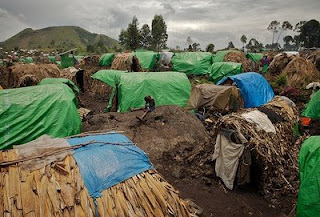
Photo: In this makeshift refugee camp in Mugunga, 10 kilometers from Goma in North Kivu, tens of thousands remain displaced by ongoing conflict in eastern DRC. Courtesy of flickr user Julien Harneis. -
Fertile Fringes: Population Growth Near Protected Areas
›November 7, 2008 // By Rachel Weisshaar“Protected areas are the backbone of biodiversity conservation strategies,” so it is critical to examine how population growth is affecting them, said Justin Brashares of the University of California, Berkeley, at “Fertile Fringes: Population Growth at Protected-Area Edges,” an October 22, 2008, meeting sponsored by the Environmental Change and Security Program (ECSP). “Biodiversity conservation objectives are being impacted by higher deforestation rates, [natural resource] offtake rates, [and] increasing pressure on the protected area” due to high local population growth, explained George Wittemyer of Colorado State University. Brashares and Wittemyer, who recently co-authored an article on population and protected areas in Science, were joined by Jason Bremner of the Population Reference Bureau.
To Stay or To Go?
“Many of the protected areas that we have today in sub-Saharan Africa and in Latin America are carryovers of areas set aside by colonial governments,” said Brashares, “and for many researchers and for many communities, the creation of parks is seen to come at the cost of local communities.” Yet certain features can encourage people to move near protected areas, including:- Services made available by foreign assistance, such as health care, education, and livelihoods programs;
- Employment opportunities as park staff or in the tourism industry;
- Better ecosystem services, including food, water, wood, and traditional medicine;
- Easier access to markets, due to roads built to attract tourism; and
- Improved security provided by park guards and government staff.
Other features of protected areas deter migrants, including:
- Land-use restrictions;
- Conflict with wildlife (e.g., attacks on livestock and crops);
- Disadvantages associated with tourism, including higher cost of living and potential loss of cultural heritage;
- Isolation from urban centers; and
- Conflict with park staff, government representatives, or rural militias.
Higher Population Growth Near Protected Areas
Brashares and Wittemyer examined IUCN Category I and II protected areas in Africa and Latin America—which limit human activity within their boundaries—and excluded potentially confounding urban, marine, and new parks. Using UN Environment Programme population data from 1960-2000, they compared population growth in a 10-kilometer “buffer zone” surrounding each protected area with average rural population growth for that country. In 245 of the 306 parks they examined—and 38 of the 45 countries—population growth at protected-area edges was significantly higher than average national rural population growth.
Brashares and Wittemyer found three factors correlated with higher levels of population growth: more money for parks (as measured by protected-area funds from the Global Environment Facility); more park employees; and more deforestation on the edges of protected areas. Brashares emphasized, however, that there could be equally relevant correlations between population growth and employment in extractive industries, but that “the timber industry won’t give us their data and the mining industry and the oil industries aren’t so happy to share.” Thus, the study might inadvertently penalize NGOs and international organizations for their transparency.
Some researchers hypothesized that because protected areas are usually located in ecologically dynamic areas, this ecological wealth might be attracting new residents, rather than the protected areas themselves. But Brashares and Wittemyer found that proximity to a protected area, not general ecological abundance, was driving the trend. Others suspected that population grows at protected-area edges because the people who have been displaced by the creation of a park move to the park’s border. But population growth rates within the parks have been mostly stable or positive, so Brashares and Wittemyer doubt this is driving the trend.
Implications for Conservation
Brashares and Wittemyer outlined several policy implications of their research:- Emerging infectious diseases are a serious risk in areas with high human density close to wildlife populations, so governments and international organizations should try to limit potential outbreaks near protected areas.
- If the effectiveness of a protected area is measured by its ability to preserve biodiversity for generations, then community development programs must be executed carefully. For instance, roads and schools should not be built in an ecologically fragile corridor between two parks.
- Multi-use buffer zones that make core areas less accessible can allow individuals to continue to benefit from their proximity to nature while protecting biodiversity. “Some of the best protection of biodiversity is through isolation,” said Brashares.
Bremner took issue with some of Brashares’ and Wittemyer’s methods and conclusions; his full critique is available on the New Security Beat. Although Bremner agreed that migration—not natural increase—is likely driving higher population growth around protected areas, he believed the authors did not provide adequate evidence to demonstrate that this migration is driven by investments in conservation. “I hope that publishing this conclusion here in Science doesn’t provide our detractors, those who don’t want us to be spending on conservation, with the means to limit future spending for international conservation,” said Bremner.
Photo: Justin Brashares. Courtesy of Dave Hawxhurst and the Woodrow Wilson Center.
For more information, including a webcast of this event, visit ECSP’s website. To receive invitations to future events, e-mail ecsp@wilsoncenter.org. -
Field Trips: Success Stories from PHE Programs in Kenya, DRC, and Madagascar
›November 7, 2008 // By Will RogersPeople in the Democratic Republic of the Congo (
Improving Health, Conservation, Livelihoods in an Insecure Region
According to Merlo, charcoal production, illegal mining, poaching, and ongoing conflict have converged to create a punishing environment for conservationists in Landscape 10, a 50,000-square kilometer region in eastern
For instance, a micro-hydroelectric power plant in Kasugho village—backed by the
The
Healthy Communities Lead to Healthy Environments
“People on the forefront [of conservation] need to be healthy…in order to be able to accomplish conservation,” argued
A Dose of a Vaccine, a Dose of Conservation
“Although we protect marine turtles on our side of the border, they are butchered across the border” in
In
WWF implemented a fishing-gear exchange program to reduce the incidence of illegal gear; improve fishermen’s income by using legal, larger mesh nets that catch bigger fish; and bolster the health of the environment. WWF has also supported beach cleanup by creating programs where local residents turn flotsam like flip-flops into art—in some instances increasing household income by US $130 per month.
“By and large, the conservation world is practiced by biologists, and therefore we may not know how to deal with changing peoples’ behaviors and attitudes,” Weru said. To be truly effective in implementing a PHE program, “you need skills beyond the biological, the ecological skills—you need social skills.”
Photo: Sam Weru. Courtesy of Dave Hawxhurst and the Woodrow Wilson Center.
For more information, including a webcast of this event, visit ECSP’s website. To receive invitations to future events, e-mail ecsp@wilsoncenter.org. -
Probing Population Growth Near Protected Areas
›Justin Brashares and George Wittemyer’s recent article in Science, “Accelerated Human Population Growth at Protected Area Edges,” presents data showing that average population growth at the edges of protected areas in Africa and Latin America is nearly double average rural population growth in the same countries. The authors argue that this phenomenon is due to migration, as people from surrounding areas are drawn to the health-care and livelihoods programs made available to people expelled from the parks.
It’s not news that high population growth rates have implications for conservation, both in terms of land-cover change and biodiversity loss. Yet at last month’s World Conservation Congress, I heard scarcely a mention of population growth or other demographic factors. So I appreciate that the authors are urging us to look at this aspect of conservation. In addition, by studying a large number of countries and protected areas, their work helps move our thinking beyond the inherent limitations of case studies focused on a single protected area.
I feel obligated to take issue with a few of the authors’ assumptions, methods, and conclusions, however. For instance, the authors compare growth rates for individual protected areas with national rural rates, and find the former are significantly higher in the vast majority of cases. I wonder why they don’t make the comparisons with the rural population growth rates for the region in which the protected area is located, since that seems as if it would make for an even more compelling argument.
My second issue is a note of caution regarding gridded population data. The creation of a gridded population layer depends both on the size of the population data units and the way in which the population is distributed. Given the inherent inaccuracies in this process at detailed levels of analysis, how can we be sure that the populations for the 10 km “buffer areas” surrounding the protected areas are accurate? Is there any way to validate these data, and how would errors impact the authors’ analysis? This issue is particularly important because rural areas tend to have large administrative units and sparse populations.
My third issue is with the authors’ examination of infant mortality rates as a proxy for poverty. The authors analyzed poverty in an attempt to determine whether poverty-driven population growth was informing their result; they concluded it was not. Measures of infant mortality are notoriously poor at the local level, and the authors need to go further in assessing what portion of growth is due to migration and what portion due to natural increase. While such an analysis would take time, it is necessary, given higher fertility in remote rural areas.
Despite my reservations about how the authors came to their conclusion, I tend to agree that migration is driving higher population growth in areas of high biodiversity and around protected areas. The reasons for migration, however, are diverse, and my fourth issue is that I don’t think the authors provide adequate evidence to demonstrate that conservation investments are driving migration to these areas. My three main reasons for taking issue with this finding:- The number of protected areas in the world has grown rapidly over the last 40 years, and they are generally located in sparsely populated areas. During this same period, the populations of most African and Latin American countries have doubled at least once. Thus, people have migrated to new frontiers—often near protected areas—seeking available agricultural land.
- Extractive industries—including timber, mining, oil and gas, and industrial agriculture—often provide lucrative jobs near protected areas. These jobs offer migrants far greater economic benefits than the meager amounts spent on conservation. Tourism is likely the only industry than can compete with these industries in attracting migrants, and only in areas with high numbers of visitors.
- The correlations the authors found between population growth and Global Environment Facility spending and population growth and protected area staff could, as the authors note, simply mean that conservationists are wisely spending their limited dollars on the protected areas facing the greatest threats.
Jason Bremner is program director of the Population Reference Bureau’s Population, Health, and Environment Program. -
Cutting Liberian Conflict Timber’s Destructive Impact on Stability, Sustainability
›October 31, 2008 // By Will RogersSilas Kpanan’Ayoung Siakor, a Liberian environmental activist and 2006 Goldman Environmental Prize recipient, was recently named one of Time magazine’s 2008 Heroes of the Environment for his work uncovering the illegal export of Liberian conflict timber. In 2003, Siakor exposed the illegal timber trade orchestrated by Liberian President Charles Taylor and successfully lobbied the UN Security Council to ban its export in an effort to halt the destruction of one of the “last significant virgin forests in West Africa” and bring an end to the devastation that violence and poverty were wreaking upon his country.
In 2005, presidential hopeful Ellen Johnson-Sirleaf adopted forest conservation and poverty alleviation as central policies, and when she was elected, she signed Executive Order #1, which canceled all timber concessions. “The importance of that one act to
Siakor continues to promote conservation and poverty alleviation in Liberia through his organization, the Sustainable Development Institute of Liberia. “In terms of biodiversity conservation,
-
Rebels Overrun Government Troops in Eastern DRC; Thousands Displaced, Including Virunga’s Gorilla Rangers
›October 29, 2008 // By Rachel WeisshaarRenegade General Laurent Nkunda’s fighters seized Virunga National Park headquarters at Rumangabo on Sunday, overtook the town of Rutshuru yesterday, and continue to advance on the regional capital of Goma, facing little resistance from either Congolese government troops or MONUC, the UN peacekeeping force. Thousands of local residents have fled the fighting, including 53 gorilla rangers who were in the park when it was taken by Nkunda’s rebels. Twelve of the rangers made it back to the relative safety of Goma today, after more than two days dodging bullets in the forest with no food or water, but the rest remain missing. Almost nothing is known about the condition of the park’s mountain gorillas, which represent half of the world population of 700.
Showing posts from category Africa.


 Eclipsed by the world economic downturn, the great heist of the Democratic Republic of the Congo’s (DRC) resources continues unabated. In recent weeks, former Congolese General Laurent Nkunda’s Tutsi rebels have
  “Protected areas are the backbone of biodiversity conservation strategies,” so it is critical to examine how population growth is affecting them, said Justin Brashares of the University of California, Berkeley, at “Fertile Fringes: Population Growth at Protected-Area Edges,” an October 22, 2008, meeting sponsored by the Environmental Change and Security Program (ECSP). “Biodiversity conservation objectives are being impacted by higher deforestation rates, [natural resource] offtake rates, [and] increasing pressure on the protected area” due to high local population growth, explained George Wittemyer of Colorado State University.

 Renegade General Laurent Nkunda’s fighters seized

