-
Before the Waters Rise: Nigeria’s Predictable Flood Crises
April 28, 2026 By Nnaemeka Phil Eke-okocha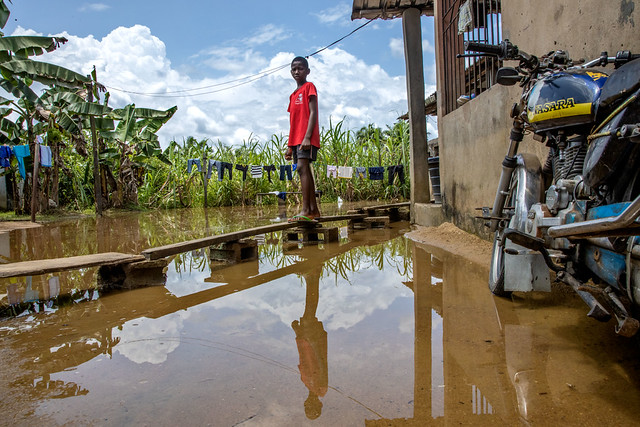
Devastating floods in Mokwa, a rural town in Niger State, claimed lives and destroyed homes and livelihoods in May 2025, and displaced many other residents as well. Yet, in Nigeria today, such flooding has become a predictable seasonal emergency. The real questions each year are not whether such floods will occur, but where they will happen—and if public institutions will act in time to prevent the next deluge from becoming yet another tragedy.
As the rainy season begins again, this familiar challenge is renewed. The Federal Government’s 2025 Annual Flood Outlook identified 1249 communities in 176 local government areas across 33 states, as well as Abuja in high-flood zones. The 2026 Nigerian Meteorological Agency (NiMet) also has predicted uneven rainfall patterns and an early onset of potential problems.
While flooding in Nigeria remains a climate story, it has become something more now: a test of governmental preparedness, governance, and human security.
Warnings Are Not Protection
Nigeria has no shortage of forecasts for flood events. Agencies across the country (as well as international organizations) provide early warnings and assess their potential impact.
Yet warnings alone do not save lives. The 2022 Flood Impact, Recovery, and Mitigation Assessment Report by the country’s National Bureau of Statistics, the National Emergency Management Agency, and the United Nations Development Program, found that the floods affected 64% of households surveyed. But only 19.7% of respondents said they knew about government flood warnings, and only 8.3% said they were able to evacuate when the flood came. More alarming was that the study also revealed that 61.7% said they do not have a safe place to go in future floods.
Such data show a clear vacuum. Existing alerts and early warning systems are not reaching those who need them most. Nigeria must strengthen community evacuation planning, material capacity (the means and resources), and preparedness to translate storm warnings and forecasts into effective action that can prevent disasters.
An Ongoing Human Security Crisis
The impact of Nigeria’s floods extends beyond the loss of life and private property. They also destroy essential resources upon which the public depends: schools, health facilities, vaccine storage infrastructure, crops, access to arable land, and other essential services. These deluges also deepen food insecurity, displace significant numbers of people, and cause health crises.
The 2026 Humanitarian Needs and Response Plan reports that flooding in 2024 displaced 1 million people and destroyed 1.3 million hectares of crops. The destruction of farmland—or even loss of access to it—leads to higher food prices and income loss which make recovery even more challenging.
More evidence? The 2022 Flood Impact Assessment found that 94.9% of respondents experienced reduced crop yields, while 69.2% faced food shortages, and 60% reported hunger. One in four respondents to this survey also reported experiencing a disease outbreak after the flood, and 89.3% of those reported were waterborne.
The fact that seasonal floods undermine food access, public health, and families’ ability to recover before the next shock arrives is why these catastrophes in Nigeria have become a human security crisis. Climate change certainly plays a major role in creating the conditions in which flooding occurs, but the actual impacts created by it also are shaped by factors such as poor waste management, infrastructure failures, and ineffective land-use planning.
Existing Insecurities Multiplied
Fragile regions in Nigeria experience even more severe impacts. The country already ranks high in vulnerability to—and low in readiness for—climate change, and it also ranks 6th in the Institute for Economics and Peace Global Terrorism Index.
Viewed in this context, Nigeria’s damaging floods do not happen in isolation—especially in places like Borno, which has been the epicenter of Boko Haram activities, The displacement, livelihood destruction, and the collapse of services created by seasonal deluges create the precise conditions exploited by armed groups in order to survive and thrive.
The connection between flooding and insurgent recruitment is not direct. Flooding interacts with the vulnerabilities that assist violent groups to grow. The broad impacts of forced displacement, economic desperation, disruptions to local authority, and reduced access to services and protection create various pathways for Boko Haram recruitment. Abductions, gender-based violence, impressment, extortion, and widespread exposure to improvised explosive devices (IEDs) inevitably follow.
The displacement of families into camps also places already-vulnerable groups at higher risk. Children are more likely to be abducted. Women face an increased risk of sexual violence. Young men with no income or means of livelihood become easy targets for recruitment. Even humanitarian access is more difficult, as populations are cut off from essential services that would otherwise minimize these risks.
Again, Nigeria’s seasonal floods create challenges far beyond disaster management. Metting them requires a broader human security strategy.
From Forecasts to Preventive Action
Several Nigerian institutions now are attempting to transition from response mode to anticipatory action. Waiting for floods proves to be significantly more expensive, with a direct economic impact estimated at between $3.79 and 9.12 billion that includes losses in wages and income. The damage also includes broader impacts: overwhelmed clinics, destroyed roads, food shortages, school closures, students’ lost days of learning, a lack of health care facilities and treatments, and an erosion of social safety nets.
As a new flood season approaches, Nigeria must adopt a more local and operational preparedness model that ensures flood warnings reach communities and guarantees evacuations to safe destinations. Investments in drainage system improvements, building regulations enforcement to prevent obstructions in waterways and flood paths, and the protection essential public goods are also necessary. These risks are well-known now through various national reports and post-disaster assessments, but the steps to protect life, property and public services often arrives too late.
Areas identified as high-risk require something more: coordination among relevant government agencies and other organizations to determine essential protections before flooding occurs. Additionally, it would be advantageous to clarify specific agency roles early in the process, identify organizational gaps, and address issues that hinder proper coordination. Nigerian public institutions and expert assessments should also adopt designs and deploy investments from cheaper alternative sources as well as higher-cost measures, such as nature-based solutions for flood protection.
Nigeria does not lack the data or the seasonal forecasts to create and implement better solutions to seasonal flooding. What the nation lacks is the ability to translate that knowledge into prompt, effective action to protect the public. It is no longer acceptable to treat catastrophic annual flooding as a surprise when it robs millions of Nigerians of their livelihoods every year.
Nnaemeka Phil Eke-okacha is a PhD candidate in Global Governance and Human Security at the University of Massachusetts, Boston. His research focuses on the climate-conflict nexus, environmental governance, and human security. He is also the Lead of the Local Pathways Fellowship at the UN Sustainable Development Solutions Network (SDSN).
Sources: BBC; Climate Policy Initiative; Daily Trust; Federal Ministry of Information and National Orientation, Nigeria; IDMC; Institute for Economics and Peace; Mercy Corps; National Emergency Management Agency, Nigeria; Nigerian Meteorological Agency; Notre Dame Global Adaptation Initiative; Relief Web; UNDP; UNOCHA; World Bank
Photo Credits: Photo courtesy of UNICEF HQ, flickr.com.
 A Publication of the Stimson Center.