• woodrow wilson center
  • ecsp

New Security Beat

Subscribe:
  • rss
  • mail-to
  • Who We Are
  • Topics
    • Population
    • Environment
    • Security
    • Health
    • Development
  • Columns
    • China Environment Forum
    • Choke Point
    • Dot-Mom
    • Friday Podcasts
    • Navigating the Poles
    • Reading Radar
  • Multimedia
    • Water Stories (Podcast Series)
    • Backdraft (Podcast Series)
    • Tracking the Energy Titans (Interactive)
  • Films
    • Water, Conflict, and Peacebuilding (Animated Short)
    • Paving the Way (Ethiopia)
    • Broken Landscape (India)
    • Scaling the Mountain (Nepal)
    • Healthy People, Healthy Environment (Tanzania)
  • Publications
  • Events
  • Contact Us

NewSecurityBeat

The blog of the Wilson Center's Environmental Change and Security Program
  • Lisa Palmer, Future Food 2050

    The Politics of Food Technology Innovation for Africa

    July 22, 2014 By Wilson Center Staff
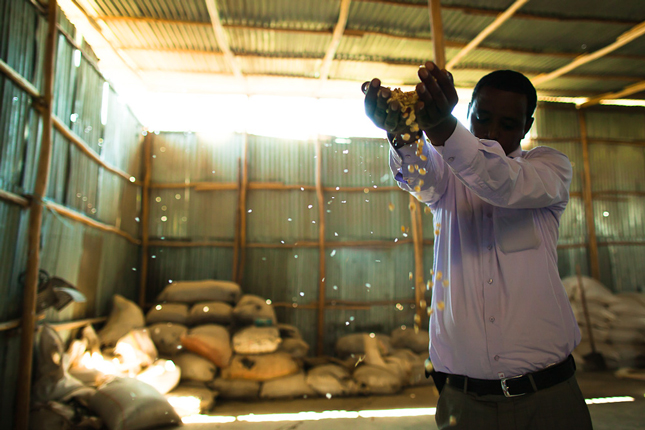
    food-innovation-in-Africa

    The original version of this article, by Lisa Palmer, appeared on Future Food 2050.

    As a boy growing up on the shores of Lake Victoria in Kenya, Harvard international development professor Calestous Juma noticed a thing or two about innovations designed to bring more food into his community. He noticed, for instance, that the fishermen were always tinkering with new ways to trap fish while his father, a carpenter, would build the traps. He also noticed that his grandmother, a peanut grower, and other farmers who grew traditional crops such as sweet potatoes, struggled with ways to increase production beyond simply planting the best quality seeds and tubers.

    That childhood curiosity helped lead Juma down a path to prominence as an international authority on applying science and technology to sustainable development, including work with the United Nations and the African Union. Now he is looking ahead to intensifying food production sustainably. “The rising concern over the impact of climate change on agriculture will significantly shape the way Africa approaches agriculture,” Juma says. “It is no longer possible to rely on folk knowledge as the key guide for farming.”

    Lessons for Africa’s Leadership

    As part of his work, Juma advises high-level leaders, especially African presidents, on the role of technology in agriculture. “I am guided by the view that the application of science and technology to agriculture requires extensive coordination across many actors and sectors,” he says. “It is essentially a political process, and political leadership is essential. For this reason, I have been working closely with the African Union and have chaired a number of high-level panels to guide presidents on biotechnology in particular and science and technology in general.”

    Continue reading on Future Food 2050.

    Lisa Palmer is a freelance journalist and a public policy scholar at the Wilson Center.

    Photo Credit: Accessing credit for food security, courtesy of Morgana Wingard/USAID.

    Topics: Africa, agriculture, consumption, development, economics, education, environment, food security, gender, Kenya, land, nutrition, Uganda, UN

Join the Conversation

  • RSS
  • subscribe
  • facebook
  • G+
  • twitter
  • iTunes
  • podomatic
  • youtube
Tweets by NewSecurityBeat

Trending Stories

  • unfccclogo1
  • Pop at COP: Population and Family Planning at the UN Climate Negotiations

Featured Media

Backdraft Podcast

play Backdraft
Podcasts

More »

What You're Saying

  • Volunteers,At,The,Lagos,Food,Bank,Initiative,Outreach,To,Ikotun, Pan-African Response to COVID-19: New Forms of Environmental Peacebuilding Emerge
    Rashida Salifu: Great piece 👍🏾 Africa as a continent has suffered this unfortunate pandemic.But it has also...
  • A desert road near Kuqa An Unholy Trinity: Xinjiang’s Unhealthy Relationship With Coal, Water, and the Quest for Development
    Ismail: It is more historically accurate to refer to Xinjiang as East Turkistan.
  • shutterstock_1779654803 Leverage COVID-19 Data Collection Networks for Environmental Peacebuilding
    Carsten Pran: Thanks for reading! It will be interesting to see how society adapts to droves of new information in...

Related Stories

No related stories.

  • woodrow
  • ecsp
  • RSS Feed
  • YouTube
  • Twitter
  • Facebook
  • Home
  • Who We Are
  • Publications
  • Events
  • Wilson Center
  • Contact Us
  • Print Friendly Page

© Copyright 2007-2021. Environmental Change and Security Program.

Woodrow Wilson International Center for Scholars. All rights reserved.

Developed by Vico Rock Media

Environmental Change and Security Program

Woodrow Wilson International Center for Scholars

Ronald Reagan Building and International Trade Center

  • One Woodrow Wilson Plaza
  • 1300 Pennsylvania Ave., NW
  • Washington, DC 20004-3027

T 202-691-4000
