• woodrow wilson center
  • ecsp

New Security Beat

Subscribe:
  • rss
  • mail-to
  • Who We Are
  • Topics
    • Population
    • Environment
    • Security
    • Health
    • Development
  • Columns
    • China Environment Forum
    • Choke Point
    • Dot-Mom
    • Friday Podcasts
    • Navigating the Poles
    • Reading Radar
  • Multimedia
    • Water Stories (Podcast Series)
    • Backdraft (Podcast Series)
    • Tracking the Energy Titans (Interactive)
  • Films
    • Water, Conflict, and Peacebuilding (Animated Short)
    • Paving the Way (Ethiopia)
    • Broken Landscape (India)
    • Scaling the Mountain (Nepal)
    • Healthy People, Healthy Environment (Tanzania)
  • Publications
  • Events
  • Contact Us

NewSecurityBeat

The blog of the Wilson Center's Environmental Change and Security Program
  • Russell Sticklor, CGIAR

    Can Underground Water Storage Mitigate Cross-Basin Tensions?

    May 16, 2014 By Wilson Center Staff
    groundwater_storage

    The original version of this article, by Russell Sticklor, appeared on CGIAR’s Agriculture and Ecosystems Blog.

    As the earth’s surface grows hotter and precipitation becomes more variable due to the impacts of climate change, the world is in need of solutions to more effectively store water supplies. One potential solution is deceptively simple: store water in aquifers below the ground.

    Unlike surface reservoirs, groundwater is shielded from the punishing rays of the sun. This means farmers, cities, and other water users can rely upon stored groundwater when water is in shortest supply at the surface. And since there are fewer and fewer ideal places to create new surface reservoirs around the world, “underground storage has a good future,” says Vladimir Smakhtin, theme leader on water availability and access at the International Water Management Institute (IWMI).

    Dry Season Savoir

    In addition to storing water more effectively than surface reservoirs, underground storage presents some intriguing possibilities to defuse seasonal water-related tensions between communities or even countries. Typically, monsoon rains and other heavy wet season weather events overwhelm river systems, causing disastrous flooding sometimes exacerbated by engineering projects along waterways and flood plains. Most of these excess waters are later lost as run-off to the ocean.

    Continue reading on the Agriculture and Ecosystems Blog.

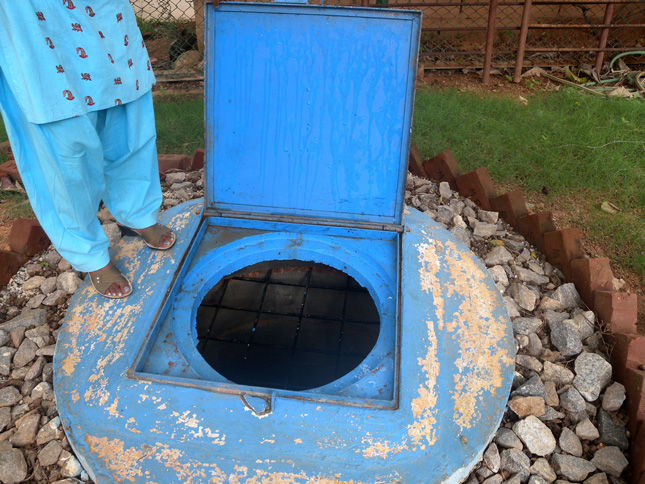
    Photo Credit: Groundwater recharge well, courtesy of flickr user IndiaWaterPortal.org.

    Topics: Asia, climate change, conflict, disaster relief, environment, environmental peacemaking, environmental security, India, Laos, natural resources, security, South Asia, Thailand, water

Join the Conversation

  • RSS
  • subscribe
  • facebook
  • G+
  • twitter
  • iTunes
  • podomatic
  • youtube
Tweets by NewSecurityBeat

Trending Stories

  • unfccclogo1
  • Pop at COP: Population and Family Planning at the UN Climate Negotiations

Featured Media

Backdraft Podcast

play Backdraft
Podcasts

More »

What You're Saying

  • Volunteers,At,The,Lagos,Food,Bank,Initiative,Outreach,To,Ikotun, Pan-African Response to COVID-19: New Forms of Environmental Peacebuilding Emerge
    Rashida Salifu: Great piece 👍🏾 Africa as a continent has suffered this unfortunate pandemic.But it has also...
  • A desert road near Kuqa An Unholy Trinity: Xinjiang’s Unhealthy Relationship With Coal, Water, and the Quest for Development
    Ismail: It is more historically accurate to refer to Xinjiang as East Turkistan.
  • shutterstock_1779654803 Leverage COVID-19 Data Collection Networks for Environmental Peacebuilding
    Carsten Pran: Thanks for reading! It will be interesting to see how society adapts to droves of new information in...
  • woodrow
  • ecsp
  • RSS Feed
  • YouTube
  • Twitter
  • Facebook
  • Home
  • Who We Are
  • Publications
  • Events
  • Wilson Center
  • Contact Us
  • Print Friendly Page

© Copyright 2007-2021. Environmental Change and Security Program.

Woodrow Wilson International Center for Scholars. All rights reserved.

Developed by Vico Rock Media

Environmental Change and Security Program

Woodrow Wilson International Center for Scholars

Ronald Reagan Building and International Trade Center

  • One Woodrow Wilson Plaza
  • 1300 Pennsylvania Ave., NW
  • Washington, DC 20004-3027

T 202-691-4000
