-
Redefining National Security
›
As Russia’s unprovoked assault on Ukraine continues, the world’s focus is rightfully on ending this conflict as soon as possible. But the global impact of a senseless war launched by a petro-dictator also calls for deeper reflection.
-
The Top 5 Posts of February 2022
›
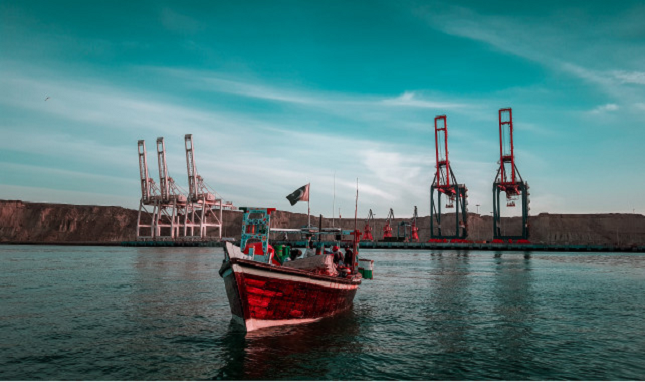
Since signing on to China’s Belt and Road Initiative, Pakistan has furthered its government’s partnership with China through the China-Pakistan Economic Corridor. While both initiatives concern development investments in infrastructure, the agreements have raised concern in Pakistan. In February’s top post, Sheraz Aziz assesses the environmental impacts, like deforestation and pollution from coal plants, and economic impacts, such as those on Gwadar’s fishing industry, that are sparking opposition from Pakistanis.
-
‘An ounce of prevention is worth a pound of cure’: U.S. conflict prevention policy in a world of climate change
›The crisis in Ukraine is rightly at the center of U.S. foreign policy attention but, even in the midst of that justified focus, the latest IPCC report unflinchingly reminds us of another emergency: we are running out of time to avoid the most devastating effects of climate change, including the social, economic, environmental and security risks that can actually drive war.
-
China’s Growing Environmental Footprint in the Caribbean
›China continues blazing a trail across the Wider Caribbean through large capital flows, loans, and investment. In the last two years alone, more than a dozen Caribbean nations have signed on to China’s Belt and Road Initiative—even as some still recognize Taiwan, perhaps the only remaining sticking point preventing further signatories. The deepening of relations did not happen overnight, but it is only recently that the Belt and Road Initiative has drawn attention to China’s strategic investments and growing political bonds with Caribbean island nations.
-
Making Room at the Table for Businesswomen in Jordan: A Conversation with Reem Badran
› “People told me it was only for men,” says Reem Badran, Founder & CEO of Al Hurra for Management and Business Development and former member of the Jordanian House of Representatives, when speaking about her decision to run for the Amman Chamber of Commerce in the latest episode of the Riyada podcast from the Wilson Center’s Middle East Program. Badran is a Jordanian trailblazer and was recently named One of the World’s Most Successful Women in Business by the International Women’s Entrepreneurial Challenge Foundation in New York. In 2009, she became the first woman elected to the board of Amman’s Chamber of Commerce since its establishment in 1923. To this day, she remains the only woman to be elected to this post. “In our community [and] region, it is not easy for women to be able to penetrate the business community. It takes a while for people to believe in a woman and that she can have a successful business.” -
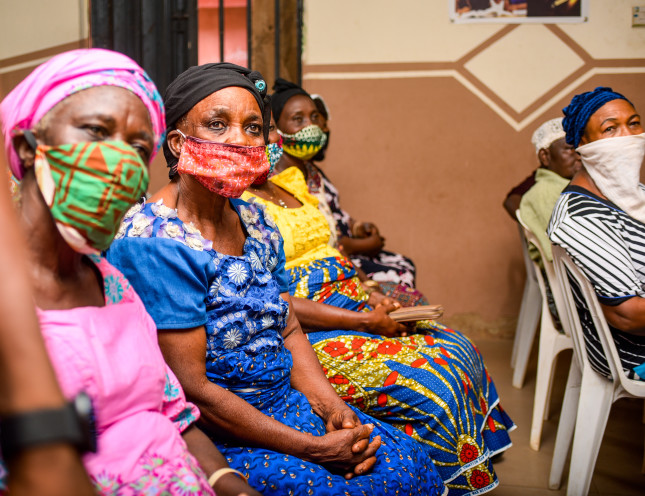
It’s Not Ok: How Data from Nigeria Reveals the Role of Addressing Community Attitudes to End Violence Against Women
›Globally, one third of women (736 million) have experienced physical and/or sexual violence, oftentimes when they were still children. Domestic violence and violence against women (VAW) have increased during the COVID-19 pandemic.
-
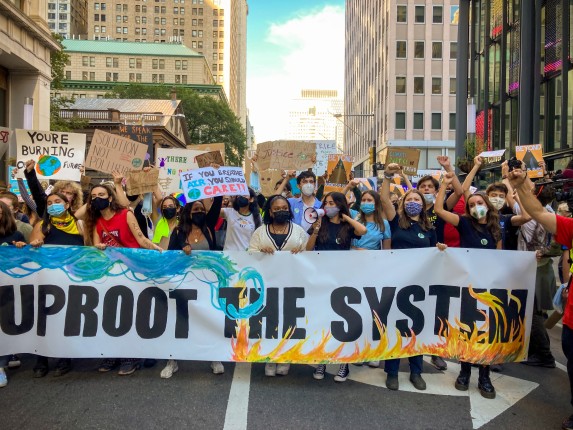
Climate Resilience for Whom? The Importance of Locally-Led Development in the Northern Triangle
›“One of the challenges of responding to climate risks is that climate’s impacts and how those impacts interact with existing systems on the ground are so varied and specific to a given place,” said Lauren Risi, Director of the Wilson Center’s Environmental Change & Security Program, at a recent PeaceCon conference panel on climate change, violence, and migration in Central America. “But there is also an opportunity in how we respond to develop more agile, just, and sustaining programs and policies that go beyond a singular focus on responding to climate change and instead build the overall resilience of communities.”
-
The Gasses That Will Make or Break Climate Change Mitigation
›New worldwide attention on methane has increased the potential for countries to implement methane policy in the energy sector. In November 2021, the countries gathered at COP 26 in Glasgow launched the Global Methane Pledge, an agreement that aims to reduce methane emissions at least 30 percent from 2020 levels by 2030. If the 111 participating countries are successful, this endeavor could curb over 8 gigatons of carbon equivalent emissions and prevent more than 0.2 degrees Celsius in warming by 2050.
 A Publication of the Stimson Center.
 “People told me it was only for men,” says Reem Badran, Founder & CEO of Al Hurra for Management and Business Development and former member of the Jordanian House of Representatives, when speaking about her decision to run for the Amman Chamber of Commerce in the