-
The Climate Solutions That Play Double-Duty
›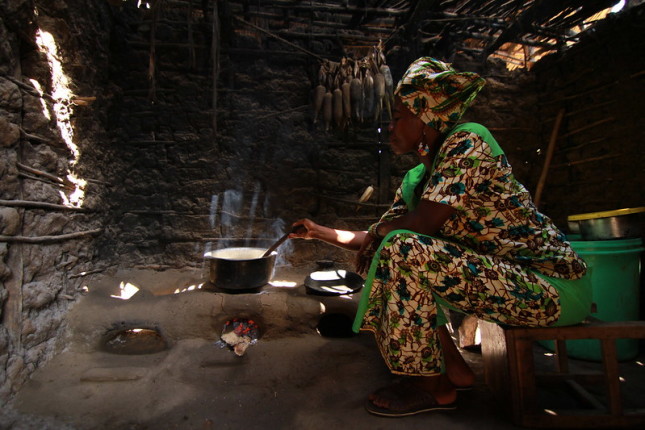
Finance for climate action is growing—however, much of this money is being invested in wealthier nations, while the regions where funds are needed most are often overlooked and underfunded by both public and private institutions. The good news for funders is that there are climate solutions that not only significantly reduce greenhouse gas emissions, but also create cascading social and public health benefits for communities on the frontlines of the climate crisis. For those looking to get the biggest return on their investment—for both people and planet—we offer two particularly promising solutions: ramp up funding for clean cooking and electricity where they matter most.
-
Ukrainian Resilience: Ukrainian MP Kira Rudik Discusses Surviving in Kyiv [New Video]
›
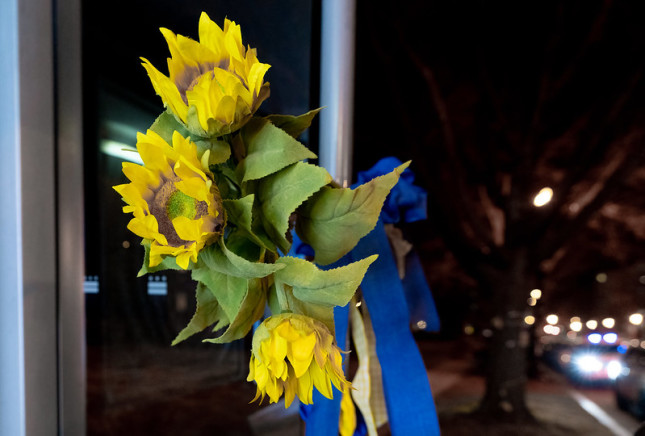
When Kira Rudik, Ukrainian Member of Parliament and Leader of the Holos/Voice Party spoke with the Wilson Center’s Maternal Health Initiative and Middle East Program on the one month anniversary of Russia’s invasion of Ukraine, she emphasized the transformative nature of the conflict for every citizen.
“Putin thought he would be fighting our army,” says Rudik. “Instead, he’s fighting every single man and woman in Ukraine, and there’s a huge difference.”
-
United Nations Advances Strategic Foresight: Breakdown or Breakthrough Scenarios?
›Last September, Secretary-General António Guterres outlined the United Nation’s Our Common Agenda in a speech to the General Assembly. His remarks focused on the future of global cooperation for the next 25 years. It was imperative, he messaged, to recognize that our accelerated interconnectedness, and the formidable challenges we all face, can only be addressed through a reinvigorated multilateralism, with the United Nations at the core of collective member efforts. We must think big, act swiftly, and work effectively, he said, to reshape how we move forward today to achieve the goals of the UN declaration commemorating the 75th anniversary of the United Nations.
-
New Security Brief | Converging Risks: Demographic Trends, Gender Inequity, and Security Challenges in the Sahel
›Security conditions in the Sahel are rapidly deteriorating. Since 2016, the region has witnessed a 16-fold increase in terrorist attacks. In Burkina Faso, Chad, Mali, Mauritania, and Niger, 10.5 million people are facing starvation, and with climate-related disasters increasing and intensifying in the region, food insecurity is projected to rise. Against this backdrop, rapid population growth is outpacing governments’ ability to provide access to basic services. These pressures have transformed the central Sahel into the epicenter of a forced displacement crisis, with dire long-term and global humanitarian consequences that reverberate well beyond the region’s borders.
-
New Security Broadcast | Jeff Colgan on Oil Politics and International Order
›Debates around whether and to what extent international order is changing can be misguided “so long as we are thinking about international order as a single, monolithic thing,” says Jeff Colgan, Associate Professor of Political Science and director of the Climate Solutions Lab at Brown University in this week’s episode of New Security Broadcast. Colgan spoke at a recent Wilson Center event featuring his new book, Partial Hegemony: Oil Politics and International Order. In the book, Colgan challenges the idea of a monolithic ‘global order’ and shows that international order instead comprises a set of interlinked “subsystems.” In a world where there is no single, all-encompassing hegemon to trigger universal global change, this framework of subsystems allows us to explore how particular geopolitical realms can alter without fundamentally changing the geopolitical landscape, he says. -
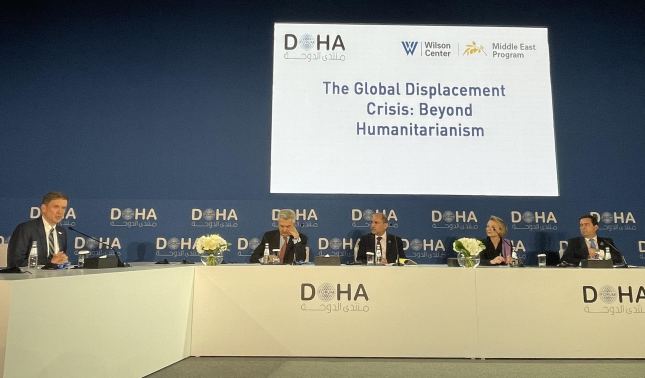
“We are so worried we are going to be forgotten”—A Doha Forum Discussion on the Global Displacement Crisis
›The humanitarian needs for those who are displaced are unprecedented, said Amb. Mark Green, President of the Wilson Center and former USAID Administrator, at a Doha Forum panel hosted by the Wilson Center’s Middle East Program.
-
Crouching Tiger, Hidden Decarbonization: China’s National Emissions Trading System
›In this Year of the Tiger, China, the world’s largest carbon emitter, is signaling more aggressive climate action on several fronts, including expanding its national carbon emission trading system (ETS). Since the launch of the program on July 16, 2021, results have been encouraging; carbon intensity fell three and a half percent in the second half of 2021 and total carbon emissions only grew by four percent, compared to nine percent in the first half of the year. However, China’s implementation of ETS has triggered criticism for having low penalties, loose restrictions, and too low a carbon price. Like a tiger in tall grass, it is vital that Chinese policymakers pounce on the obstacles to expanding ETS coverage and transition from an intensity-based cap to an absolute cap. Signs show this can happen sooner as opposed to later.
-
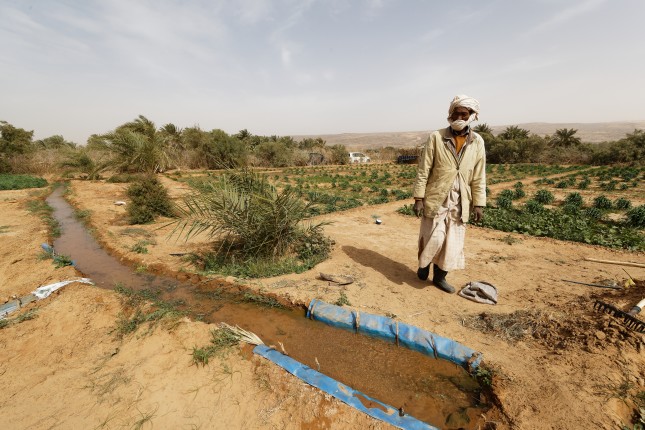
Water: A matter of national security – and the best hope for our climate
›Whiskey is for drinking, water is for fighting. Mark Twain may or may not have said it, but it gets repeated because it rings true. Water is central to human wellbeing, from drinking water and hygiene to growing food, producing electricity, and supporting identity-defining landscapes.
 A Publication of the Stimson Center.
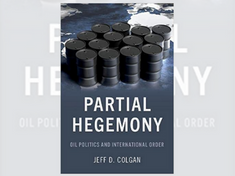 Debates around whether and to what extent international order is changing can be misguided “so long as we are thinking about international order as a single, monolithic thing,” says Jeff Colgan, Associate Professor of Political Science and director of the Climate Solutions Lab at Brown University in this week’s episode of New Security Broadcast. Colgan spoke at a recent Wilson Center