-
Chaos Continues: The Impact of the Revocation of the Global Gag Rule
›
Many researchers have documented the impact of the Global Gag Rule (GGR) around the world—and what happens when the policy is in place. “But we don’t know enough about what happens when the policy is revoked,” said Bergen Cooper, Director of Policy Research at Fòs Feminista at the launch of the organization’s new report, Chaos Continues: The 2021 Revocation of the Global Gag Rule and The Need for Permanent Repeal.
-
Disillusioned Youth: A Danger to Democracy
›
Global risks abound these days, from climate change to the next pandemic, as well as acute supply chain disruptions, energy shortfalls, and cybersecurity threats. These challenges play out in a landscape of immense political instability fomented by the Russian Federation, the People’s Republic of China, Iran and others, as well as dangers looming in the potential state collapse of countries like Afghanistan, Yemen, and Sudan. Taken together, the risk tally of our moment is mounting quickly.
-
Sustaining Shared Waters: An African Case Study
›As we face the twin crises of biodiversity loss and climate change, natural resource management is now more critical than ever—especially in the protection of one of our most precious resources: water.
The stakes of getting it wrong couldn’t be higher: increasing economic inequities and substandard public health for a growing population. And the evidence that such issues have won the attention of political leaders is increasing, with the June 2022 introduction of a White House Action Plan on Global Water Security that links this crucial issue directly to U.S. national security and offers pathways and proposed resources to advance progress broadly on multiple fronts.
-
In a Time of Competing Crises, Environmental Action Matters More than Ever
›Guest Contributor // June 3, 2022 // By Richard Black, Cedric de Coning, Geoffrey D. Dabelko, Hafsa Maalim, Melvis Ndiloseh, Dan Smith & Caspar TrimmerLast week saw the launch of SIPRI’s major policy report Environment of Peace: Security in a New Era of Risk, looking at how to manage the growing risks emerging at the nexus of environmental degradation, peace and security.
-
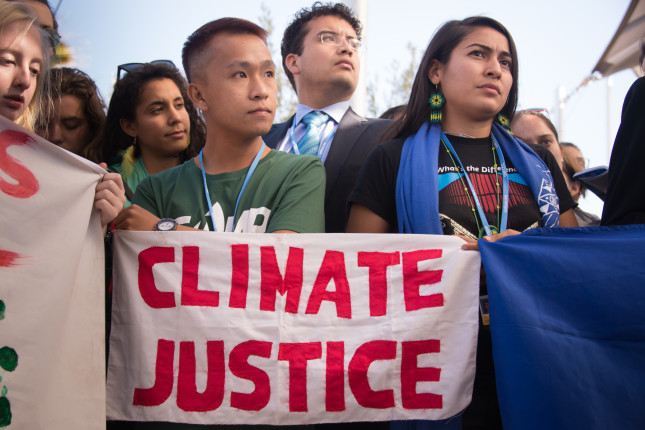
U.S. Backing for the UN Resolution for Healthy Environment Would be a Game Changer
›In 1972, environmental activists, government leaders, and industry experts met in Stockholm, Sweden, for the United Nations Conference on the Human Environment (Stockholm Conference) to plot out a new direction for international environmental governance. Over the ensuing 50 years, countries negotiated successful agreements to shrink the ozone hole and expanded protections for wildlife and ecosystems. -
Two-Spirit People Reclaim Their Place as Water Protectors
›It was time to take a stand. That’s the conclusion Sharon Day, an Ojibwe and Two-Spirit elder, came to after hearing that the Minnesota Department of Transportation intended to transform Hiawatha Avenue into Highway 55, linking the Minneapolis-St. Paul International Airport with downtown Minneapolis. The proposed expansion, Day worried, could pollute Coldwater Spring, a natural spring that both Dakota and Ojibwe people consider sacred and of immense cultural significance.
-
Deep Seabed Mining and the Green Energy Transition
›On March 8, 2022, the price of nickel doubled overnight. Fueled by the war in Ukraine, fears of supply disruptions briefly drove the cost of nickel contracts over $100,000-a-ton. The London Metal Exchange, the main global market for industrial metals, suspended trading for a week, canceling billions of dollars worth of trades.
-
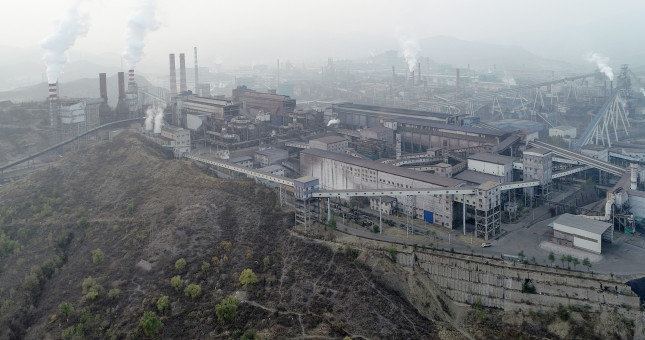
The Ukraine War’s Shadow on China’s Road to Decarbonization
›Russia’s invasion of Ukraine has shaken the world economy. The U.S.-led push for sanctions on Russia has surprised analysts with its depth. Germany, for example, is now turning away from four decades of reliance on Russian oil and gas. Given Russia’s status as a global energy colossus, the war has raised particular uncertainty in global energy markets, leading many countries to take steps to ensure adequate supplies.
China’s energy connection to the crisis and, specifically, the war’s effect on China’s decarbonization commitments, have drawn little attention. Unfortunately, the war’s impact on energy markets has accelerated Chinese plans to return to the use of coal for power generation. And the market volatility it has inflamed is partly behind China’s return to investment-and emissions-heavy stimulus. Make no mistake, however, China’s investments in renewables are still enormous and dwarf those of the United States.
 A Publication of the Stimson Center.

 In 1972, environmental activists, government leaders, and industry experts met in Stockholm, Sweden, for the United Nations Conference on the Human Environment (Stockholm Conference) to plot out a new direction for international environmental governance. Over the ensuing 50 years, countries negotiated successful agreements to shrink the ozone hole and expanded protections for wildlife and ecosystems.