-
Investing in Women and Girls is Central to Addressing Root Causes of Migration from Guatemala
›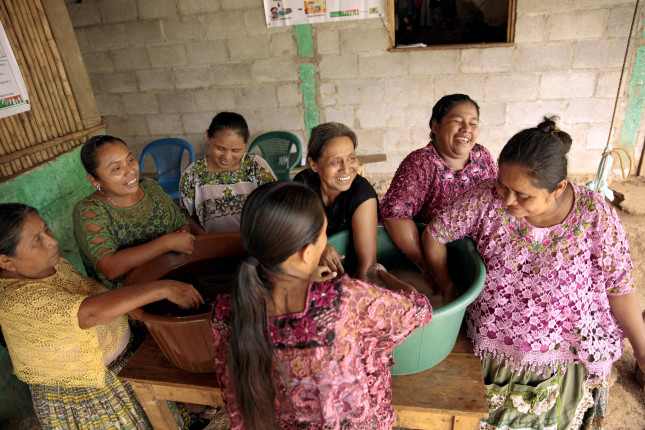
In recent years, a growing proportion of migrants at the US southern border have come from Guatemala, El Salvador, and Honduras. This surge of migrants from Central America has prompted the U.S. government to seek to better understand and address the root causes of migration from the region. One substantive response came in July 2021, under Executive Order 14010, when the Biden-Harris Administration released what has become known as the Root Causes Strategy. The White House pledged to commit $4 billion over four years on efforts to address drivers of irregular migration from these three countries.
-
How AGWA is Tracking and Shaping Water’s Crucial Role in Climate Adaptation
›
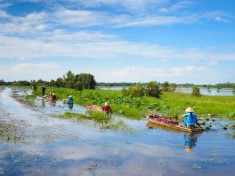
As the last decade has brought about a dramatic shift in approaches to addressing climate change, water is increasingly at the forefront of the conversations around adaptation and resilience. In part, this is because more countries now experience the damaging effects of climate change through water-related events including rising sea levels, intensification of natural disasters, droughts, and flooding.
In this week’s New Security Broadcast, John Matthews, Executive Director of the Alliance for Global Water Adaptation (AGWA), observes that the heightened attention to water has placed his group at the center of discussions at the 2022 United Nations Climate Change Conference (COP27) in Sharm El-Sheikh, Egypt.
-
New Analysis by Peter Schwartzstein: How Water Strategizing is Remaking the Middle East
›In the run up to COP 27 in Sharm El-Sheikh, Egypt, the first summit of its kind to be hosted in the region, water is rising on the agenda, and for good reason. In a new essay for the Wilson Center, Global Fellow Peter Schwartzstein explores how governments across the Middle East are approaching a world with less water – and to what effect. Drawing on a decade of environmental reportage from the Middle East, Schwartzstein sketches out how, why, and with what consequences states have adopted often dramatically divergent strategies.
-
The Crisis of Perinatal Mental Health Requires Collaborative Solutions
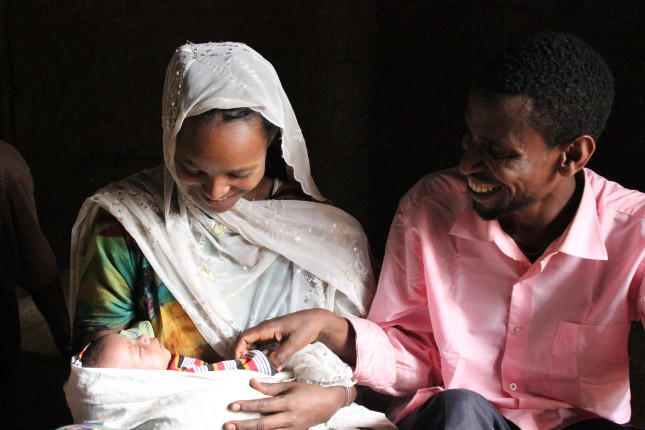
›While a great deal of focus on risks to women’s health just before and after giving birth centers on physical wellbeing, Rebecca Levine, Senior Maternal Health Advisor with the U.S. Agency for International Development (USAID), observed that we may be missing a key part of the picture.
-
What Better Looks Like: Breaking the Critical Minerals Resource Curse
›In recent years, the urgency of climate action has brought fresh attention to the critical minerals sector. Growing renewable energy investments are driving up demand for resources like lithium, cobalt, and copper, which form the mineral backbone of green technologies. But there are substantial concerns to navigate when it comes to sourcing green energy minerals.
-
Alok Sharma: Sustain Progress and Surmount Challenges for Success in Climate Action
›As the world turns its attention to the 27th UN Climate Change Conference (CoP27) in Sharm El Sheikh, CoP26 President Alok Sharma reflects upon the achievements won thus far in the fight against climate change in our latest podcast. Sharma’s address at the Wilson Center also outlines the steps that need to be taken at CoP27 and in the future to ensure a sustainable and prosperous future for all.
Sharma observes that the CoP26 in Scotland last year represented a “fragile win” and that the Glasgow Climate Pact went further than many had imagined it would to keep accepted climate goals in place. “The pulse of 1.5 degrees remained alive,” he says.
-
Flood of Inequity: Confronting Climate Vulnerability Risk in China and Beyond
›2022 was a summer of climate extremes across the globe. Multiple heat events simmered across China and Europe, also in regions that are not “supposed to be this hot,” such as the United Kingdom. The western United States also baked in unusual heat, but perhaps the most damaging episode of the season occurred when extreme precipitation caused major flooding in Jackson, Mississippi. This untimely deluge exacerbated a pre-existing water infrastructure crisis in that city, leaving its 150,000, predominately black, residents without access to safe water for days.
-
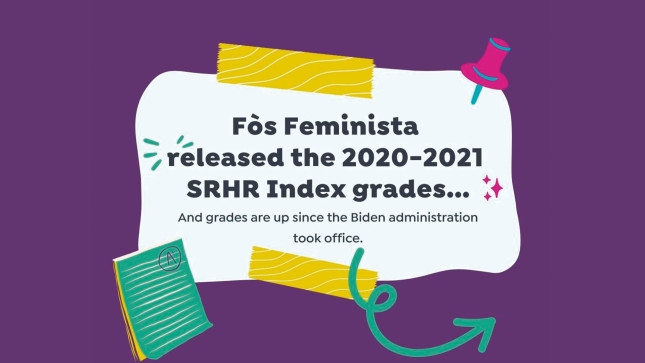
The Grades Are In: The Biden Administration Makes Progress on SRHR
›For six years, the Sexual and Reproductive Health and Rights (SRHR) Index has been a tool to hold the United States accountable to the commitments made nearly three decades ago at the International Conference on Population and Development (ICPD) in Cairo in 1994, where 180 countries developed a human rights framework for global development that explicitly promoted SRHR for women and girls globally.
 A Publication of the Stimson Center.