• woodrow wilson center
  • ecsp

New Security Beat

Subscribe:
  • rss
  • mail-to
  • Who We Are
  • Topics
    • Population
    • Environment
    • Security
    • Health
    • Development
  • Columns
    • China Environment Forum
    • Choke Point
    • Dot-Mom
    • Friday Podcasts
    • Navigating the Poles
    • Reading Radar
  • Multimedia
    • Water Stories (Podcast Series)
    • Backdraft (Podcast Series)
    • Tracking the Energy Titans (Interactive)
  • Films
    • Water, Conflict, and Peacebuilding (Animated Short)
    • Paving the Way (Ethiopia)
    • Broken Landscape (India)
    • Scaling the Mountain (Nepal)
    • Healthy People, Healthy Environment (Tanzania)
  • Publications
  • Events
  • Contact Us

NewSecurityBeat

The blog of the Wilson Center's Environmental Change and Security Program
  • Women and Cancer in India

    ›
    Dot-Mom  //  From the Wilson Center  //  Reading Radar  //  July 18, 2018  //  By Yuval Cohen
    Picture1

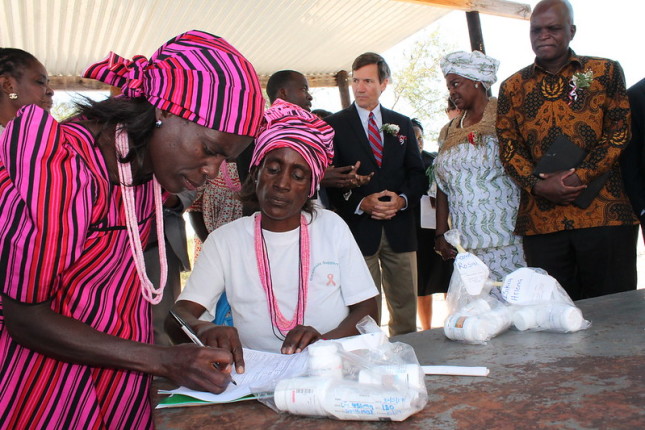
    As India faces an emerging cancer crisis, how do South Indian women conceptualize what causes reproductive cancers—and how to cure them? New qualitative research from Cecilia Van Hollen, a medical anthropologist and Wilson Center Public Policy Fellow, illuminates the complex perceptions and personal experiences of women in Tamil Nadu, the first state to integrate cancer screening into its primary health care system.

    MORE
  • Nicaragua and the Fading of Latin America’s Youthful Clusters

    ›
    Guest Contributor  //  July 17, 2018  //  By Richard Cincotta
    Nicaragua Protest

    After four months of political unrest and more than 250 deaths, the calls for Nicaragua’s embattled president Daniel Ortega to step down are escalating. One of political demography’s most robust statistical findings tells us that countries where an authoritarian government rules a youthful population, any change in regime typically yields an autocracy or at best, a partial democracy. Only very rarely has a liberal democracy emerged immediately after a rebellion in a youthful country (one with a population with a median age under 26 years). Given this, if Ortega is ousted from office, what type of leader should foreign affairs analysts expect to replace him?

    MORE
  • Family Planning Can Mean Big Progress for the Sustainable Development Goals—And Here’s How

    ›
    Guest Contributor  //  July 16, 2018  //  By Kaja Jurczynska, Suzy Sacher & Scott Moreland
    Malawi Children Pump

    As the UN High-Level Forum on Sustainable Development continues this week, member states and civil society are taking a hard look at countries’ progress toward securing safe drinking water, sanitation, and adequate housing. Achieving these and the other Sustainable Development Goals (SDGs) requires recognizing the synergies among them—including the role that reproductive health and family planning can play. You may ask, “Why does family planning matter for the SDGs not related to health?” The answer is that it is one of the most cost-effective investments for achieving the SDGs. Increasing access to family planning provides sweeping social, economic, and environmental benefits for every dollar spent.

    MORE
  • Everybody Counts: New Podcast Series on How Global Population Trends Shape Our World

    ›
    Friday Podcasts  //  July 13, 2018  //  By Wilson Center Staff

    74cb75bab2243992e98fab5156007185827084cf97936f24c0c66a651388df90From mass urbanization to massive refugee flows, high fertility to record low birth rates, global population is changing in unprecedented ways.  “Everybody Counts,” a new podcast series hosted by Rhodes College Professor and Wilson Center Global Fellow Jennifer D. Sciubba, launches a lively and thoughtful conversation about the ways human population shapes our world and how we live today.

    MORE
  • As Afghanistan’s Water Crisis Escalates, More Effective Water Governance Could Bolster Regional Stability

    ›
    Guest Contributor  //  July 11, 2018  //  By Elizabeth B. Hessami

     “Kabul be zar basha be barf ne!” This ancient proverb—“May Kabul be without gold rather than snow”—refers to snowmelt from the Hindu Kush Mountains, a primary source of Afghanistan’s water supply. To recover from years of armed conflict, Afghanistan needs a stable water supply, but its sources are increasingly stressed by severe droughts. The Norwegian Refugee Council estimates that today, 2 out of 3 provinces are impacted by drought, putting two million people at risk of hunger. Improving the country’s water governance—the social, legal, and administrative systems that guide how water is distributed and used—may help it avoid both internal and regional conflicts by stabilizing its economy and its citizens’ livelihoods.

    MORE
  • A Firm Foundation: Contraception, Agency, and Women’s Economic Empowerment

    ›
    Dot-Mom  //  Guest Contributor  //  July 10, 2018  //  By Kathleen Mogelgaard

    According to a raft of experts, empowering women to be economic actors would change quite a bit. The UN Secretary General set up a High-Level Panel on it; Melinda Gates keeps talking about it; and the World Bank and Ivanka Trump recently launched an initiative to unlock billions in financing for it. Targets related to women’s economic empowerment cut across multiple Sustainable Development Goals, including advancing equal rights to economic resources, doubling the agricultural productivity and incomes of women who are small-scale farmers, and achieving full and productive employment and decent work for all women.

    MORE
  • This Indian Women’s Union Invented a Flexible Childcare Model

    ›
    Dot-Mom  //  Guest Contributor  //  July 9, 2018  //  By Wilson Center Staff

    41497236441_5fc80c46df_zIn 1971, the wives of textile workers in Ahmedabad, western India, became the main earners in their families overnight, after several large textile mills closed down. They were part of the 94 percent of India’s female labor force working in the informal sector—recycling waste, embroidering fabric, and selling vegetables—and thus they remained largely invisible to the government and to formal labor unions. In response, Ela Bhatt, a young lawyer, met with 100 of the women in a public park to establish the Self-Employed Women’s Association (SEWA), which would later register as a trade union and swell to the two million members it boasts today.

    MORE
  • Geoengineering, Water, and Population: Top Posts of June 2018

    ›
    What You Are Reading  //  July 9, 2018  //  By Benjamin Dills
    Space_lens

    With climate adaption and mitigation efforts failing to keep pace with climate-related risks, the need for a global regime on geoengineering will be increasingly pressing, write Elizabeth L. Chalecki and Lisa Ferrari in June’s top post. The norms of just war theory could provide a starting point for developing a code of conduct for geoengineering.

    MORE
Newer Posts   Older Posts
View full site

Join the Conversation

  • RSS
  • subscribe
  • facebook
  • G+
  • twitter
  • iTunes
  • podomatic
  • youtube
Tweets by NewSecurityBeat

Trending Stories

  • unfccclogo1
  • Pop at COP: Population and Family Planning at the UN Climate Negotiations

Featured Media

Backdraft Podcast

play Backdraft
Podcasts

More »

What You're Saying

  • Volunteers,At,The,Lagos,Food,Bank,Initiative,Outreach,To,Ikotun, Pan-African Response to COVID-19: New Forms of Environmental Peacebuilding Emerge
    Rashida Salifu: Great piece 👍🏾 Africa as a continent has suffered this unfortunate pandemic.But it has also...
  • A desert road near Kuqa An Unholy Trinity: Xinjiang’s Unhealthy Relationship With Coal, Water, and the Quest for Development
    Ismail: It is more historically accurate to refer to Xinjiang as East Turkistan.
  • shutterstock_1779654803 Leverage COVID-19 Data Collection Networks for Environmental Peacebuilding
    Carsten Pran: Thanks for reading! It will be interesting to see how society adapts to droves of new information in...

What We’re Reading

  • Rising rates of food instability in Latin America threaten women and Venezuelan migrants
  • Treetop sensors help Indonesia eavesdrop on forests to cut logging
  • 'Seat at the table': Women's land rights seen as key to climate fight
  • A Surprise in Africa: Air Pollution Falls as Economies Rise
  • Himalayan glacier disaster highlights climate change risks
More »
  • woodrow
  • ecsp
  • RSS Feed
  • YouTube
  • Twitter
  • Facebook
  • Home
  • Who We Are
  • Publications
  • Events
  • Wilson Center
  • Contact Us
  • Print Friendly Page

© Copyright 2007-2021. Environmental Change and Security Program.

Woodrow Wilson International Center for Scholars. All rights reserved.

Developed by Vico Rock Media

Environmental Change and Security Program

Woodrow Wilson International Center for Scholars

Ronald Reagan Building and International Trade Center

  • One Woodrow Wilson Plaza
  • 1300 Pennsylvania Ave., NW
  • Washington, DC 20004-3027

T 202-691-4000