• woodrow wilson center
  • ecsp

New Security Beat

Subscribe:
  • rss
  • mail-to
  • Who We Are
  • Topics
    • Population
    • Environment
    • Security
    • Health
    • Development
  • Columns
    • China Environment Forum
    • Choke Point
    • Dot-Mom
    • Friday Podcasts
    • Navigating the Poles
    • Reading Radar
  • Multimedia
    • Water Stories (Podcast Series)
    • Backdraft (Podcast Series)
    • Tracking the Energy Titans (Interactive)
  • Films
    • Water, Conflict, and Peacebuilding (Animated Short)
    • Paving the Way (Ethiopia)
    • Broken Landscape (India)
    • Scaling the Mountain (Nepal)
    • Healthy People, Healthy Environment (Tanzania)
  • Publications
  • Events
  • Contact Us

NewSecurityBeat

The blog of the Wilson Center's Environmental Change and Security Program
  • Ageing Populations Could Create a Care Crisis—Or Millions of Jobs

    ›
    Dot-Mom  //  September 27, 2018  //  By Tom Graham
    Aging Care

    This piece by Tom Graham is part of Apolitical’s spotlight series on the care economy, in partnership with the Wilson Center.

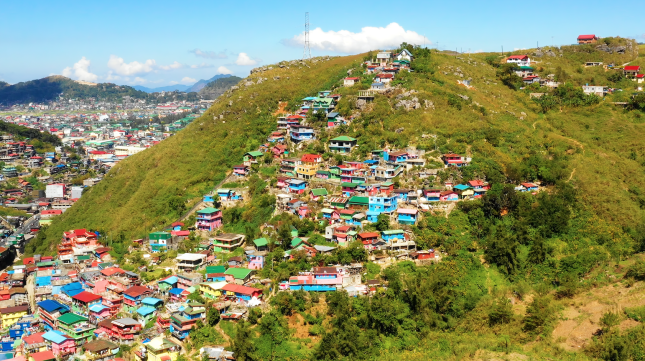
    The silver tsunami is approaching: Many countries, not all of them rich, are facing the challenges of an ageing population thanks to growing life expectancies and shrinking birth rates.

    MORE
  • “The River Belongs to the People”: Building Cooperation in the Mara River Basin

    ›
    Beat on the Ground  //  Eye On  //  September 25, 2018  //  By Wilson Center Staff
    20180713_TanziniaSWPLWA_Neptune_11

    This profile and photo essay by Bobby Neptune are adapted from an article published by the Sustainable Water Partnership.

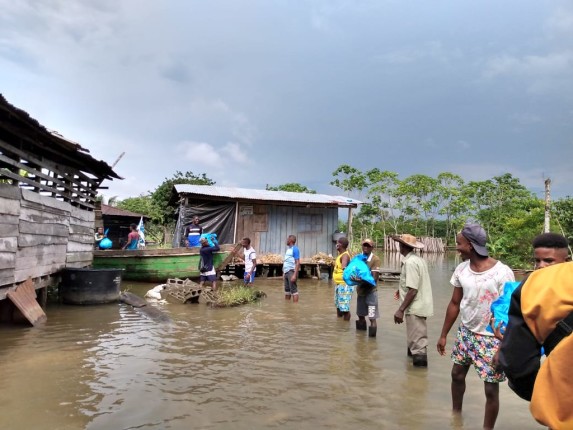
    Water engineer Gordon Mumbo of USAID’s Sustainable Water Partnership grew up in the small Kenyan village of Kamuga. Year after year, he watched as frequent floods from one of Kenya’s major rivers, the Nyando, disrupted village life. After 30 years of a wide-ranging career in water, for the first time since his childhood, he has returned to his birthplace, where he leads a team building community engagement in the Mara River basin.

    MORE
  • An Investment in Peace: EU Unveils a New Plan to Support Education During Emergencies

    ›
    Guest Contributor  //  September 24, 2018  //  By Anuj Krishnamurthy
    15278030225_f4284570f8_k

    Last May, the European Union announced an ambitious plan to dedicate 10 percent of its 2019 humanitarian aid budget to education during emergencies. At the same time the European Commission released its first policy on education in emergencies, observing that “access to quality education is being denied to millions of children by increasingly protracted conflicts, forced displacement, violence, climate change and disasters.” As a result, the Commission notes, “uneducated, lost generations” have been forced “to embark on perilous journeys to Europe and other regions of the world, affecting their stability and development.” The European Union’s announcement is a welcome development for global education, which has received scant attention from international aid agencies and languished at the margins of the international humanitarian agenda.

    MORE
  • Rohingya Refugees and Bangladesh’s Infamous Monsoon: A Story of Survival

    ›
    Beat on the Ground  //  September 19, 2018  //  By Saleh Ahmed
    IMG_9395

    When I arrived at Bangladesh’s Cox’s Bazar in July, the infamous monsoon was well underway. The rain was intense, roads were muddy, and it was very difficult to move around. Cox’s Bazar—the closest big town to the Rohingya refugee camps—is now the base city for most of the humanitarian agencies working with the refugees. The distance between Cox’s Bazar and Kutupalong Camp—the world’s largest refugee camp—is barely 30 kilometers. However, due to the rain and the area’s hilly terrain, it seemed like it took ages to get there.

    MORE
  • Separatist Conflicts Persist, While Revolutions Just “Age Away”

    ›
    Guest Contributor  //  September 18, 2018  //  By Richard Cincotta
    Tahrir Square Protest

    The Kurdish people’s century-long quest for self-determination reveals a key aspect of ethnic separatist conflicts. Ideas of nationhood can endure for generations, unifying people across borders and often making separatist conflicts hard to resolve. But how much harder is it to resolve separatist conflicts than other violent, non-territorial intra-state wars (such as political revolutions)? In practical terms, how much longer, on average, can policymakers expect separatist conflicts to persist and reoccur than the typical political revolution? These are tough questions. Surprisingly, demography helps us find the answers.

    MORE
  • Green Conflict Minerals: Investigating Renewable Energy Supply Chains in Fragile States

    ›
    Guest Contributor  //  September 17, 2018  //  By Clare Church
    bullets on ground with silouhettes

    The shift to a low-carbon economy is not only underway, it is accelerating. Last year, Costa Rica generated more than 99 percent of its electricity using renewable sources;  Germany expanded its onshore wind power capacity by 5,300 MW, and in the United States, more than 62 percent of new power plants under construction will produce renewable energy. What does this rapid increase mean for the countries that supply the inputs required to build these new facilities—particularly those countries that are struggling with fragility or corruption?

    MORE
  • Cape Town’s Harrowing Journey to the Brink of Water Catastrophe

    ›
    Guest Contributor  //  September 14, 2018  //  By Brett Walton
    2018-04-South-Africa-Cape-Town-BWalton-IMG_4939-Edit-2500

    The original version of this post by Brett Walton appeared on Circle of Blue. Travel funding for this story came from the Pulitzer Center on Crisis Reporting.
     

     This is what a water panic looks like in a major global city.

    People hoard water. They queue for hours, well into the night, to fill jugs at natural springs. Like mad Christmas shoppers, they clear supermarkets of bottled water. They descend on stockers before they can fill the shelves.

    MORE
  • The Crushing Environmental Impact of China’s Cement Industry

    ›
    China Environment Forum  //  September 13, 2018  //  By Kimberly Yang
    poyang_oli_2013358

    China—the world’s fastest-growing economy with the largest population—leads the world in cement production, the critical ingredient that has built China’s mammoth cities, sprawling roads, and other infrastructure. China pours 60 percent of the world’s cement; the country’s production in 2011-2013 surpassed U.S. production for the entire 20th century. While it paved the way for Chinese growth, it came at a dangerous cost: 1.6 million Chinese citizens die each year from respiratory illnesses linked to small particulate matter emissions, of which 27 percent come from cement production.

    MORE
Newer Posts   Older Posts
View full site

Join the Conversation

  • RSS
  • subscribe
  • facebook
  • G+
  • twitter
  • iTunes
  • podomatic
  • youtube
Tweets by NewSecurityBeat

Trending Stories

  • unfccclogo1
  • Pop at COP: Population and Family Planning at the UN Climate Negotiations

Featured Media

Backdraft Podcast

play Backdraft
Podcasts

More »

What You're Saying

  • Volunteers,At,The,Lagos,Food,Bank,Initiative,Outreach,To,Ikotun, Pan-African Response to COVID-19: New Forms of Environmental Peacebuilding Emerge
    Rashida Salifu: Great piece 👍🏾 Africa as a continent has suffered this unfortunate pandemic.But it has also...
  • A desert road near Kuqa An Unholy Trinity: Xinjiang’s Unhealthy Relationship With Coal, Water, and the Quest for Development
    Ismail: It is more historically accurate to refer to Xinjiang as East Turkistan.
  • shutterstock_1779654803 Leverage COVID-19 Data Collection Networks for Environmental Peacebuilding
    Carsten Pran: Thanks for reading! It will be interesting to see how society adapts to droves of new information in...

What We’re Reading

  • Rising rates of food instability in Latin America threaten women and Venezuelan migrants
  • Treetop sensors help Indonesia eavesdrop on forests to cut logging
  • 'Seat at the table': Women's land rights seen as key to climate fight
  • A Surprise in Africa: Air Pollution Falls as Economies Rise
  • Himalayan glacier disaster highlights climate change risks
More »
  • woodrow
  • ecsp
  • RSS Feed
  • YouTube
  • Twitter
  • Facebook
  • Home
  • Who We Are
  • Publications
  • Events
  • Wilson Center
  • Contact Us
  • Print Friendly Page

© Copyright 2007-2021. Environmental Change and Security Program.

Woodrow Wilson International Center for Scholars. All rights reserved.

Developed by Vico Rock Media

Environmental Change and Security Program

Woodrow Wilson International Center for Scholars

Ronald Reagan Building and International Trade Center

  • One Woodrow Wilson Plaza
  • 1300 Pennsylvania Ave., NW
  • Washington, DC 20004-3027

T 202-691-4000