-
Green Corruption: Dissecting a Recent Wilson Center Event
› In today’s episode of New Security Broadcast, ECSP’s Angus Soderberg breaks down a recent Wilson Center event against the backdrop of the 10th annual Conference of State Parties (COSP) to the UN Convention on Corruption, which is under way in Atlanta this week. On September 19, ECSP and the Wilson Center’s Global Europe Program, in partnership with the U.S. Department of State, the Embassy of the Principality of Liechtenstein, and the Basel Institute on Governance, hosted Combating Green Corruption: Fighting Financial Crime as a Driver of Environmental Degradation. The speakers discuss how corruption fuels wildlife trafficking and other environmental crimes, which finance illicit activities, hamper development, and erode efforts to combat biodiversity loss and climate change across the globe.
-
Age Structure: The Root of sub-Saharan Africa’s Governance Problems?
›
The research presented in this article was subsequently published in a peer-reviewed article: https://www.degruyter.com/document/doi/10.1515/spp-2023-0029/html
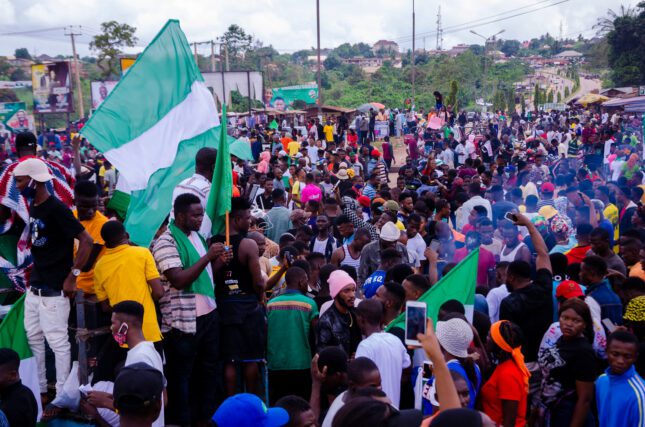
Sub-Saharan Africa’s sluggish economic growth and brittle political structures are clear challenges for the region. And two major development theories—one strictly political, the other demographic—seem to steer parallel courses in explaining them.
-
ECSP Weekly Watch | December 4 — 8
›A window into what we are reading at the Wilson Center’s Environmental Change and Security Program
Possibilities for Peace and Conflict at COP28
October 2023 was the world’s warmest month in history, a fact which underscores the escalation of the climate crisis. It also supports official reports on adaptation and emission gaps which provide pessimistic outlooks for the future of peace in conflict-affected areas.
-
ECSP Weekly Watch | November 27 – December 1
›A window into what we are reading at the Wilson Center’s Environmental Change and Security Program
Why is COP Important?
Governments, policymakers, advocates, and observers have entered another annual UN climate conference cycle. Known as a “COP” (or “conference of parties”), these annual government-level gatherings focus on climate action, including assessments of progress toward the Paris Agreement and the creation of even more ambitious plans.
-
Gaza, Yemen, Syria, Human Rights, and Oil: The Elephants in the COP28 Room
›The annual multilateral Conference of the Parties (COP) has become one of the most important meetings on the global agenda. So the fact that the United Arab Emirates (UAE) will host COP28 starting this week in Dubai—on the coattails of another Arab country, Egypt, hosting COP27 in 2022—is a big deal. Bringing such important international meetings to the Global South is a step forward in decentering and reorienting global climate action.
-
2023 DOT- MOM Guest Contributor Highlights
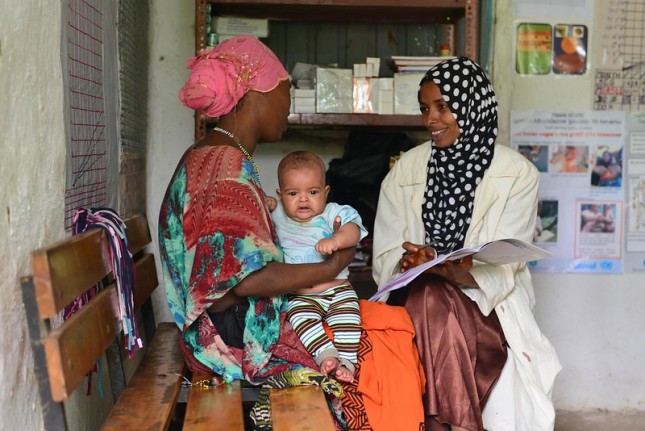
›The Dot-Mom column of the Environmental Change and Security Program’s New Security Beat blog serves as a platform to shed light on diverse perspectives and insights from experts in maternal and reproductive health, gender equity, and peace and security. In 2023, the Dot-Mom column was marked by an incredible number of guest contributor articles.
-
The Arc | Dr. Yvonne Su on Climate Migration, Equity, and Policy
› In today’s episode of The Arc, ECSP’s Claire Doyle and Angus Soderberg interview Dr. Yvonne Su, an Assistant Professor in the Department of Equity Studies at York University in Toronto. Dr. Su challenges oversimplified portrayals of displacement by drawing out how socioeconomic status, identity, and timeframes shape experiences of migration. She also stresses the importance of involving marginalized communities in policy consultations and draws attention to local grassroots organizations as pivotal players in addressing the challenges of climate migration.
-
The Arc | Dr. Robert McLeman on Climate Migration, Equity, and Policy
› In today’s episode of The Arc, ECSP Director Lauren Risi interviews Dr. Robert McLeman, a professor of Geography and Environmental Studies at Wilfrid Laurier University in Toronto. Dr. McLeman unpacks how climate change interacts with social, economic, and political conditions in ways that lead some communities more vulnerable to climate-related displacement than others. He also shares insights into how we can better promote safe, dignified, and just migration in the context of climate change and how justice and equity considerations are being incorporated into climate migration policy.
 A Publication of the Stimson Center.