• woodrow wilson center
  • ecsp

New Security Beat

Subscribe:
  • rss
  • mail-to
  • Who We Are
  • Topics
    • Population
    • Environment
    • Security
    • Health
    • Development
  • Columns
    • China Environment Forum
    • Choke Point
    • Dot-Mom
    • Friday Podcasts
    • Navigating the Poles
    • Reading Radar
  • Multimedia
    • Water Stories (Podcast Series)
    • Backdraft (Podcast Series)
    • Tracking the Energy Titans (Interactive)
  • Films
    • Water, Conflict, and Peacebuilding (Animated Short)
    • Paving the Way (Ethiopia)
    • Broken Landscape (India)
    • Scaling the Mountain (Nepal)
    • Healthy People, Healthy Environment (Tanzania)
  • Publications
  • Events
  • Contact Us

NewSecurityBeat

The blog of the Wilson Center's Environmental Change and Security Program
  • From Joseph Kony to Nile Perch: Complex Links Hook Armed Conflict to Fisheries

    ›
    Guest Contributor  //  April 1, 2019  //  By Sarah Glaser & Cullen Hendrix
    30994288436_4823a017de_k

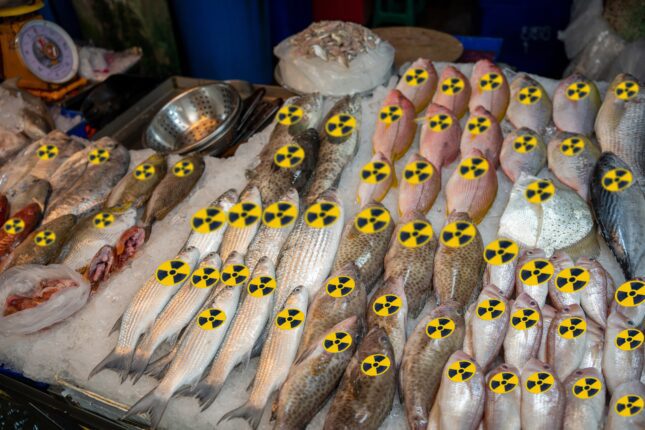
    In “Africa’s smallest war,” both Kenya and Uganda lay claim to Migingo Island, a tiny island in the waters of Lake Victoria. While the claims are over the island, the conflict is about something else entirely: Lates niloticus, also known as Nile perch, a tasty white fish that swims in the waters surrounding the island. The fish forms the backbone of the Lake Victoria economy but is increasingly hard to come by along the lakeshore. Catches are in decline, incomes are dropping, and the Ugandan government is taking increasingly harsh, militarized steps to help revive the fishery.

    MORE
  • A Look Downstream: Thoughtful Water Infrastructure Planning May Yield Economies of Flexibility

    ›
    Friday Podcasts  //  Water Stories (Podcast Series)  //  March 29, 2019  //  By Benjamin Bosland

    Three big trends are coming, said Ken Conca, Professor at American University’s School for International Service at a recent Wilson Center event that explored the future of water. “We’ll be storing a lot more water,” he said. “We’ll be recycling a lot more water. And we’ll be thinking much more systematically and foundationally about flood risk.”

    MORE
  • Tapping the Power in China’s Municipal Sludge

    ›
    China Environment Forum  //  March 28, 2019  //  By Gillian Zwicker & Jennifer Turner
    Picture1

    In September 2018, the Jinghu District People’s Court in Wuhu, Anhui Province sentenced 12 people from the Pol Shin Fastener Company between four months and six years in prison for committing serious interprovincial environmental crimes in Jiangsu and Anhui in 2016 and 2017. The court also fined the automobile hardware manufacturer 10 million yuan ($1.48 million). The crime? Dispatching ships and trucks to illegally dump 2500+ metric tons of highly acidic pickling sludge from steel production. Sludge—semi-solid waste emissions from industries and municipal water treatment plants—is yet another tough water and solid waste pollution challenge China faces.

    MORE
  • The MEDEA Legacy: Darkened Data Shed Light on a Changing Planet and Environmental Security

    ›
    March 27, 2019  //  By Evan Barnard
    Aral Sea Shrink

    In 2018, California experienced its most destructive wildfires in history. Satellite imagery shared by NASA scientists helped firefighters track fires and map damage by comparing satellite images documenting changes to the Earth’s surface. These types of images existed for decades but were classified for military purposes until the government program MEDEA identified their potential benefit and advocated for public access in the 1990s. According to former National Oceanic and Atmospheric Association (NOAA) Chief Scientist and MEDEA member Richard Spinrad, “the systems that might be used for early detection of a missile launch may work equally well for detection of wildfires.”

    MORE
  • The Juggling Act of Caregiving: Balancing Career, Health, and Gender Roles (New Report)

    ›
    Dot-Mom  //  March 26, 2019  //  By Nazra Amin
    MHI Report Lead Image

    “Caregiving for the young, elderly, sick, and disabled is a necessary part of human existence, but is often undervalued and excluded from policy agendas.” –The Juggling Act of Caregiving: Balancing Career, Health, and Gender Roles

    In The Juggling Act of Caregiving: Balancing Career, Health, and Gender Roles, Sarah B. Barnes, Project Director of the Maternal Health Initiative, describes the role of, the trends surrounding, and the challenges associated with caregiving in the United States.

    MORE
  • Stopping Wildlife Trafficking Could Help Strengthen U.S. National Security

    ›
    On the Beat  //  March 25, 2019  //  By Isabella Caltabiano
    37402001280_c8100e339b_k

    “The current administration needs to continue to work with nations, nonprofits, and the private sector to halt wildlife poaching, transit, and consumption,” said Chairman of the House Foreign Affairs Committee, Rep. Eliot Engel (D-NY) during his opening remarks at the recent Natural Security Capitol Hill Briefing. He and national security and conservation experts gathered for a panel discussion on how to combat wildlife trafficking and the effects of climate change on national security.

    MORE
  • Water, Conflict, and Peacebuilding: A New Animated Short from the Wilson Center and USAID

    ›
    From the Wilson Center  //  March 22, 2019  //  By Wilson Center Staff
    Water-MainScene-Large

    Water brings us together. It is essential to the health of individuals, the vitality of communities, and the stability of nations. A new animated short from the Wilson Center and USAID’s Office of Conflict Management and Mitigation celebrates how working together to ensure safe and sufficient water supplies not only increases the resilience of communities, but also helps build peace in war-torn nations.

    MORE
  • Lower Mekong Governments and Development Partners Seek to Improve Water Data Sharing

    ›
    Guest Contributor  //  March 21, 2019  //  By David Bonnardeaux
    IMG_3874

    In the Mekong region, there is a general push to strengthen water data management and ultimately make evidence-based infrastructure development and water resources management decisions. The efforts of the region’s governments and development partners will ideally help mitigate the cumulative impacts of infrastructure development on water resources; save lives, livelihoods, and property from potentially devastating floods and droughts; and help natural resources be used sustainably. The challenge will involve navigating potential pitfalls related to technical know-how and harmonization of standards as they develop effective water data sharing platforms.

    MORE
Newer Posts   Older Posts
View full site

Join the Conversation

  • RSS
  • subscribe
  • facebook
  • G+
  • twitter
  • iTunes
  • podomatic
  • youtube
Tweets by NewSecurityBeat

Trending Stories

  • unfccclogo1
  • Pop at COP: Population and Family Planning at the UN Climate Negotiations

Featured Media

Backdraft Podcast

play Backdraft
Podcasts

More »

What You're Saying

  • Volunteers,At,The,Lagos,Food,Bank,Initiative,Outreach,To,Ikotun, Pan-African Response to COVID-19: New Forms of Environmental Peacebuilding Emerge
    Rashida Salifu: Great piece 👍🏾 Africa as a continent has suffered this unfortunate pandemic.But it has also...
  • A desert road near Kuqa An Unholy Trinity: Xinjiang’s Unhealthy Relationship With Coal, Water, and the Quest for Development
    Ismail: It is more historically accurate to refer to Xinjiang as East Turkistan.
  • shutterstock_1779654803 Leverage COVID-19 Data Collection Networks for Environmental Peacebuilding
    Carsten Pran: Thanks for reading! It will be interesting to see how society adapts to droves of new information in...

What We’re Reading

  • Rising rates of food instability in Latin America threaten women and Venezuelan migrants
  • Treetop sensors help Indonesia eavesdrop on forests to cut logging
  • 'Seat at the table': Women's land rights seen as key to climate fight
  • A Surprise in Africa: Air Pollution Falls as Economies Rise
  • Himalayan glacier disaster highlights climate change risks
More »
  • woodrow
  • ecsp
  • RSS Feed
  • YouTube
  • Twitter
  • Facebook
  • Home
  • Who We Are
  • Publications
  • Events
  • Wilson Center
  • Contact Us
  • Print Friendly Page

© Copyright 2007-2021. Environmental Change and Security Program.

Woodrow Wilson International Center for Scholars. All rights reserved.

Developed by Vico Rock Media

Environmental Change and Security Program

Woodrow Wilson International Center for Scholars

Ronald Reagan Building and International Trade Center

  • One Woodrow Wilson Plaza
  • 1300 Pennsylvania Ave., NW
  • Washington, DC 20004-3027

T 202-691-4000