-
Yemen Beyond the Headlines: Losing the Battle to Balance Water Supply and Population Growth
›Part three of the “Yemen Beyond the Headlines: Population, Health, Natural Resources, and Institutions” event, held at the Wilson Center on May 18.
Overlooked in most news coverage of Yemen’s crisis is the country’s struggle to manage its limited natural resources – particularly its rapidly depleting groundwater – in the face of soaring population growth. At the recent Wilson Center event, “Yemen: Beyond the Headlines,” Yemen’s ambassador to Germany, Mohammed Al-Eryani, and Daniel Egel of the RAND Corporation outlined Yemen’s shaky prospects for economic development without more sustainable agricultural practices and more efficient water management. [Video Below]
With a population of more than 24 million and a total fertility rate (TFR) of 5.5 – nearly double the average TFR for the region – Yemen’s population is projected to grow to 36.7 million by 2025 and jump further to 61.6 million by mid-century, according to the latest UN projections. While those figures may not seem large by global standards, given Yemen’s already limited stocks of arable land and groundwater, the country’s rapid rate of growth may quickly outpace its resources.
“Already in a Crisis”: The Groundwater Deficit
Yemen’s per capita water supply is falling fast in the face of booming population growth and agricultural consumption, said Al-Eryani, a water engineer who founded Yemen’s Ministry of Water and the Environment. While the commonly accepted threshold for water scarcity is 1700 cubic meters or less per capita, Yemen’s per capita renewable water availability is now in the neighborhood of 120 cubic meters, he said.
Meanwhile, water scarcity has been exacerbated by erratic precipitation that has hit rainfall-dependent farmers especially hard. In a country with no real rivers or perennial streams, rainfall harvesting has long enabled agricultural production, as evidenced by the country’s many intricately terraced hillsides – “the food baskets of Yemen,” said Al-Eryani.
Yemenis have coped with shifting precipitation patterns by drawing more groundwater for irrigation and other domestic uses. While drilling wells has provided some short-term relief, the practice is unsustainable in the long term, creating a “water deficit,” Al-Eryani said, that continues to grow each year.
In the populous Sanaa basin, home to the Yemeni capital, consumption outweighs the aquifer’s natural rate of recharge by a factor of five to one and groundwater levels have been plummeting at six meters per year, he said. With only minimal government regulation of drilling, the country’s groundwater situation is poised to worsen, one of the reasons Al-Eryani declared his country is “already in a crisis.”
Stalled Economic Development
Yemen’s stalled economic development is particularly pronounced outside of urban areas, “where the resources are,” said Daniel Egel, citing the country’s failure to build modern transportation infrastructure and develop other economic activities besides farming. He called for the international development community to focus on creating jobs in rural areas, particularly by increasing the financing available for non-agricultural businesses and by improving secondary roads. In addition, he warned development actors to be aware of how gender inequality and local social structures, such as tribes, affect development efforts.
Given the country’s dependence on agriculture, water scarcity poses a threat to Yemen’s food security and its economic development. Three out of every four Yemeni villages depend on rainfall for irrigation, Egel said, making them highly vulnerable to unexpected climate change-induced shifts in precipitation patterns. Water scarcity also weakens the financial stability of Yemeni households, with the cost of water “accounting for about 10 percent of income during the dry season,” he said.
Averting a “Domino Effect”
Al-Eryani asserted that water management policies will “have to be designed in piecemeal fashion,” as no one single action will avert a catastrophe. He suggested a number of steps to alleviate the country’s growing water crunch, including:- Focus on the rural population, which makes up 70 percent of the population, has the highest fertility rates, and are the most reliant on agriculture;
- Move development efforts outside of Sanaa to other regions of the country;
- Increase investment in desalination technology for coastal areas;
- Increase water conservation in the agricultural sector; and,
- Exploit fossil groundwater aquifers in Yemen’s sparsely populated eastern reaches.
“The battle to strike a sustainable balance between population growth and sustainable water supplies was lost many years ago,” Al-Eryani said. “But maybe we can still win the war if we can undertake some of these measures.”
See parts one and two of “Yemen Beyond the Headlines: Population, Health, Natural Resources, and Institutions” for more from this Wilson Center event.
Sources: UN Population Division, World Bank.
Photo Credit: “At the fountain,” courtesy of flickr user Alexbip. -
Watch: Janani Vivekananda on Climate Change and Stability in Fragile States
›At International Alert, the starting point for thinking about how climate change affects stability is recognizing that climate change will interact with and amplify existing social, economic, and political stressors in fragile communities, said Janani Vivekananda in this interview with the ECSP.
“Rather than climate change being this single, direct causal factor which will spark conflict at the national level,” Vivekananda said, these stressors “will shift the tipping point at which conflict might ignite.” In places that are already weakened by instability and conflict, climate change will simply be an additional challenge.
To address this additional challenge, Vivekananda said two things must be understood about the effects of climate change on fragile states: 1) Environmental, social, economic, and political stressors will be most evident at the household and community level; and 2) Those stressors are interrelated.
“You can’t address one of these things in isolation from the others. You have to understand how they all interact together to be able to respond appropriately,” she said. “We can’t think about food security, for example, without thinking about land degradation.” In addition, responses need to be relevant to their context, and that context “can only be understood through very sub-national, context-specific evidence.” Vivekanada explained that this kind of evidence can only come from a “bottom-up” approach, which should be coordinated as part of a broader effort.
For more on the connections between climate change and stability, see The New Security Beat’s summary of “Connections Between Climate and Stability: Lessons From Asia and Africa,” with Janani Vivekanada, Jeffrey Stark of the Foundation for Environmental Security and Sustainability, and Cynthia Brady of USAID speaking at the Woodrow Wilson Center on May 10. -
Yemen Beyond the Headlines: Governance, State Capacity, and the U.S.
›Part two of the “Yemen Beyond the Headlines: Population, Health, Natural Resources, and Institutions” event, held at the Wilson Center on May 18.
“Moving beyond Ali Abdullah Saleh has proved to be very challenging, not only for the Yemeni people, but for the neighboring countries and for the international community as a whole,” said former U.S. Ambassador to Yemen Edmund Hull, one of a number of speakers on governance and future challenges during the all-day conference, “Yemen Behind the Headlines: Population, Health, Natural Resources, and Institutions,” at the Woodrow Wilson Center. [Video Below]
Don’t Throw Out the Good With the Bad
Yemen’s protest movement is different than those of Egypt or Tunisia because neighboring countries, such as those in the Gulf Cooperation Council, are actively involved. “[They] don’t have the luxury of saying this is a purely Yemeni affair,” said Hull. “They have to identify where their national interests are and then they have to come up with a legitimate and effective way of protecting those interests.” Included in those national interests is dealing with the presence of Al-Qaeda in the Arabian Peninsula.
But, Hull said, “It would be a shame if, as part of this revolution, what was good in Yemen gets tossed out with what was bad.” Among the institutions that should be protected are the Social Fund for Development, a government development initiative designed to reduce poverty , and the Central Security Forces, “still a very necessary institution and one that has to be protected if other challenges in Yemen are to be met,” he said.
“It’s a mistake to over-focus on the end of a regime – yes, it’s important to get a transfer of power, but I would argue [that it is] equally important to institutionalize the forces that have led to this, as a safeguard against the counter revolution and as an impetus to meeting those many, many political challenges that Yemen faces.”
Going forward, Hull said that elections will be key: Yemen had good electoral experiences in 2003 and 2006 but the system has since suffered some “backsliding,” he said. He also emphasized the importance of letting the youth participate, protecting social networking systems and NGOs, instituting legal requirements to promote transparency, and freeing up and protecting the media. “Unless you have a media spotlight, abuses are going to accumulate,” he said.
Not a “Basket-Case”
“Yemen is not a basket case,” said Charles Schmitz, an associate professor at Towson University. “There have been substantial achievements that I think we need to take into account.” Among these achievements, he highlighted Yemen’s growth in life expectancy, literacy rates, and gross domestic product. The country’s population growth rate has also slowed over the past two decades, though its total fertility rate remains one of the highest in the region.
These gains were fuelled by two resource booms, Schmitz explained: mainly, remittances from the construction boom in the 1970s and oil production. However, oil production dropped off dramatically after peaking around 2001, and remittances have not been able to keep up with the growth of the economy.
“Yemen is in a very severe crisis,” Schmitz said. “The oil has stopped… the balance of payments has been going negative for the last couple of years… and the government appears to be dipping into the central bank.” As a result, he said there is a “very real” possibility of the currency – the riyal – collapsing. The currency represents trust in the government, of which there is none right now, he said.
An Opportunity for New Thinking
“The key variable to the future of the Yemeni economy is state capacity, and this is something Yemen has not done well thus far, largely because of the political crisis,” Schmitz said.
“I think we must be attuned to the reality around us,” said Jeremy Sharp, a specialist in Middle Eastern affairs with the Congressional Research Service. “Quite frankly, Yemen needs a lobby in this country. Yes we have a tight budget environment, but it’s also an opportunity for new thinking.”
“The degree and extent of U.S. engagement with Yemen…is based primarily on the perceived terrorist threat there,” said Sharp. “Our policy toward Yemen always seems to be one horrific terrorist attack away from public outcries for deeper U.S. involvement – i.e., military involvement.”
A Cycle of Transitions?
“We may be looking at cycles of transition in Yemen over the coming decades,” said Ginny Hill, an associate fellow with the Middle East and North Africa Programme at Chatham House. “Stable political settlements take time.” The street protestors are not going to get what they want in the short term, “but just two or three of them sitting in government or being involved in the negotiation process… is going to change the dialogue in Yemen,” she said.
The United States has difficult questions to answer, said Sharp: Who will control Yemen’s security forces down the line? How will the next leader deal with the U.S.-Yemen partnership? Will power be fragmented between civilian and military leaders? Will the next leader play the nationalist card and reduce cooperation with the United States to bolster their own public standing?
“In the absence of the degree of engagement that we need, the [U.S. government] aims high rhetorically,” said Sharp. “We speak about these things while pursuing our own national security goals on the ground. Perhaps this path is unsustainable and events will force the U.S. to pay even more attention to Yemen. Or perhaps we will continue to muddle along this path and never quite reach the brink, precipice, or impending crisis that is so routinely predicted in the media.”
See parts one and three of “Yemen Beyond the Headlines: Population, Health, Natural Resources, and Institutions” for more from this Wilson Center event.
Sources: UNICEF, World Bank.
Photo Credit: “Even small children…,” courtesy of flickr user AJTalkEng. -
Top 10 Posts for May 2011
›Climate vulnerability, water access, the role of family planning in U.S. foreign policy, and the UN’s latest population projections joined the top ten list last month, while Captain Wayne Porter and Colonel Mark Mykleby’s new national strategic narrative, Tunisia’s demography, and India’s Maoists remained popular.
1. In Search of a New Security Narrative: The National Conversation at the Wilson Center
2. India’s Maoists: South Asia’s “Other” Insurgency
3. Tunisia’s Shot at Democracy: What Demographics and Recent History Tell Us
4. Eye on Environmental Security: Where Does It Hurt? Climate Vulnerability Index, Momentum Magazine
5. Population and Environment Connections: The Role of Family Planning in U.S. Foreign Policy
6. Guest Contributor Paul Rushton: Environmental Action Plans in Darfur: Improving Resilience, Reducing Vulnerability
7. Ten Billion: UN Updates Population Projections, Assumptions on Peak Growth Shattered
8. Family Planning as a Strategic Focus of U.S. Foreign Policy
9. Population Growth and Climate Change Threaten Urban Freshwater Provision
10. The Walk to Water in Conflict-Affected Areas -
Health Development: Providing Free Care and Overcoming Gender-Based Violence
›In The Lancet’s “How Did Sierra Leone Provide Free Health Care?,” author John Donnelly of the Ministerial Leadership Initiative attributes the unanticipated success of a free health care program for women and children in Sierra Leone to good organization, transparency, and a high degree of cooperation between the government, donors, and development partners. One distinctive factor that has contributed to the health system’s turnaround is the unusually high level of political will on the part of President Ernest Bai Koroma, writes Donnelly. Similar to Egypt’s health and population initiatives, Sierra Leone’s marked commitment, accountability, and investment as a host country has contributed highly to the success of its program and triggered further investment from donors.In “Systematic Violence: A Barrier to Achieving the Millennium Development Goals for Women,” from the Journal of Women’s Health, authors Joia S. Mukherjee, Donna J. Barry, Hind Satti, Maxi Raymonville, Sarah Marsh, and Mary Kay Smith-Fawzi assert that the elevation of women is integral to the achievement of the Millennium Development Goals, to which structural violence serves as a significant barrier. Murkherjee et al. recommend community-based programs to combat structural violence and prevent disease, such as the Partners in Health (PIH) program in Haiti. PIH trains community health workers, expands health care as a public good, and bolsters social determinants, which include increasing access to family planning and education, providing compensation for medical workers, and improving health infrastructure. -
Annie Murphy, International Reporting Project
Mozambique Coal Mine Brings Jobs, Concerns
›May 31, 2011 // By Wilson Center StaffThe original version of this article, by Annie Murphy appeared on the International Reporting Project and NPR (follow the links for the accompanying audio track as well). Murphy appeared with three other IRP fellows at the Wilson Center on April 28 to talk about their experiences reporting abroad.
As developing countries grow, their need for raw materials grows, too.
This is the case for Brazil, a country that has much in common with the nation of Mozambique: Both have a mix of African and Portuguese influences; both are rich in natural resources; and both fought long and hard to throw off European colonialism.
Today, however, a Brazilian coal mine in Mozambique has some wondering what the energy demands of growing economies like Brazil really mean for African countries like Mozambique.
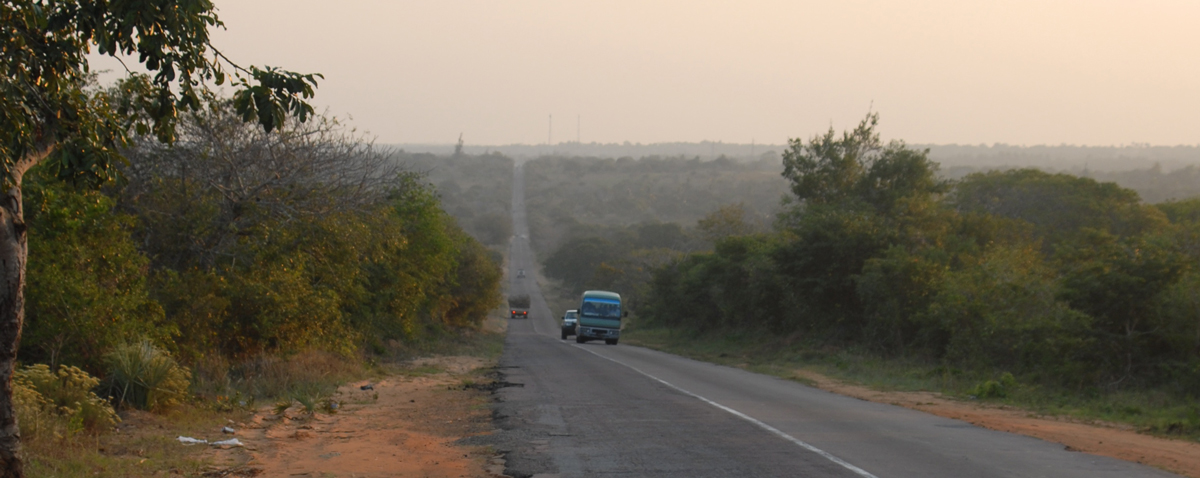
This coal mine in northwestern Mozambique is owned by the Brazilian company Vale — it’s a gaping, dark gray pit in the middle of a green, windswept savannah. Still under construction, it currently employees about 7,500 people.
Jose Manuel Guilengue, 23, a machine operator, says that he and a friend traveled 1,000 miles from the capital to get there, where they were both hired. That was a year ago. He now makes around $400 a month — which is more than four times the average salary in Mozambique.
According to the general manager overseeing construction, Osvaldo Adachi, this mine will produce about 11 million tons of coal each year, for at least three decades.
Continue reading and listen to the audio at the International Reporting Project.
Annie Murphy reported this story during a fellowship with the International Reporting Project (IRP). To hear more about Murphy and the IRP program, see the event summary for “Reporting on Global Health: A Conversation With the International Reporting Project Fellows.”
Photo Credit: Adapted from Mozambique, courtesy of flickr user F H Mira. -
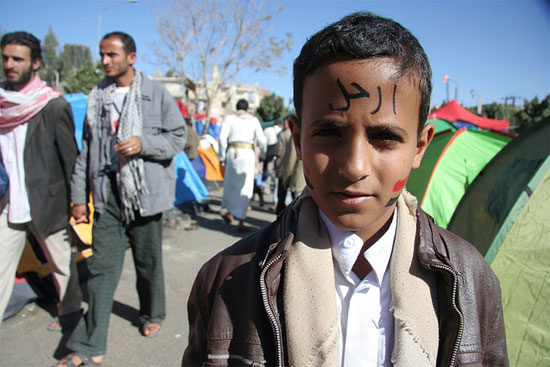
Yemen Beyond the Headlines: Women’s Health and Well-Being, Foundations of a Fragile State
›Part one of the “Yemen Beyond the Headlines: Population, Health, Natural Resources, and Institutions” event, held at the Wilson Center on May 18.
“Ultimately, whether Yemen is able to achieve its goals for social and economic development, will to a large extent depend on its future population growth and size,” said Gary Cook, senior health advisor at the U.S. Agency for International Development, in his opening address on Yemen’s population and development challenges at the Woodrow Wilson Center. [Video Below]
Cook was joined on the opening panel of the all-day conference, “Yemen Behind the Headlines: Population, Health, Natural Resources, and Institutions,” by Dalia Al-Eryani, former project officer for Pathfinder International’s Safe Age of Marriage Project, and T.S. Sunil, professor of sociology at the University of Texas San Antonio, to discuss issues related to population, reproductive health, and child marriage. Drawing speakers and participants form the Middle East, Europe, and the United States, the conference was part of the Wilson Center’s HELPS Project, a multi-year effort to deepen understanding of links among health, environment, livelihoods, population and security.
Yemen’s Population and Development Challenges
Since 1950, the population of Yemen has increased from 4.3 million to 24 million, with an annual population growth rate above three percent, Cook said. High fertility drives Yemen’s rapid population growth, with an average total fertility rate (TFR) of 5.5 births per woman. Rates are even higher in rural areas and among women with limited or no education, he said.
Future population growth will have tremendous impacts on the country’s economy, education, health, and natural resources, said Cook, and “there is a very large gap between the high fertility assumption and the low fertility assumption.”
An additional 1.5 million new people will be added to the labor force and 29 percent less income per person will drop by 29 percent by 2035 if current fertility rates persist, said Cook. Though Yemen has a national population policy that outlines TFR targets of 3.3 in 2025 and 2.1 by 2035, the latest UN Population Division projections suggest these expectations are optimistic. Education and health demands and expenditures will increase greatly, while per capita arable land and water will decrease, exacerbating ongoing land and water scarcity in Yemen.
“We do not have enough local and external resources to address the needs of a rapidly expanding population,” said Cook. “Helping couples who want to limit and space their births will also help the nation,” he added.
Law, Culture, and Child Marriage
“Enforced by law and culture alike,” early marriage in Yemen is common, said Al-Eryani, with over 50 percent of Yemeni women married before they are 17 years old, and 14 percent before they turn 14. Opponents of child marriage argue that children are neither emotionally nor physically ready for marriage and that the practice increases health risks and lowers educational opportunities for girls.
Currently, Yemen has no minimum age for marriage law, and recent attempts to pass such a law have failed, said Al-Eryani. “The practice never really has been questioned.”
“There is a belief that child marriage is a good thing – both for the girl and for the family,” she said. Early marriages are a way to build family honor and tribal ties, and many poor families see opportunity for financial gain in the form of a dowry. “These families see no socially acceptable alternatives for the girl…and all of this is supported by the belief that Islam condones child marriage,” she said.
Through awareness sessions, health fairs, and school plays, the community-based Safe Age of Marriage Project has helped to change social norms around child marriage in two districts in Yemen.
After participating in the program, community members were significantly more likely to believe that delaying marriage gives girls more educational opportunities, empowers them to make decisions, and promotes healthy pregnancy and children, Al-Eryani said. Child marriage was banned in one of the communities, and the marriages of 53 girls and 26 boys were canceled as the result of the project. In the future, she hopes involving more religious and local leaders could further increase the program’s impact.
Youth and “The Reproductive Health Transition”
“When we talk about fertility transition, we only talk about the number of children born,” said Sunil. “A reproductive health transition takes into account not just total fertility rate, but a number of different dimensions.”
Women should have the freedom to decide if, when, and how often to reproduce, said Sunil, through access to safe, effective, affordable, and acceptable family planning methods. They also should have access to quality maternal health care throughout pregnancy and birth, he said.
“It’s a popular belief that Islamic societies with poor and limited resources are not compatible with a reproductive health transition,” said Sunil. “But the onset of a reproductive health transition is underway in Yemen.”
While the transition in Yemen is progressing more slowly than in other countries in the region, many positive trends can be seen among the country’s youth, said Sunil. Trends indicate a drop in fertility rates, especially among younger women; marriage of girls under 15 years old has declined; and contraceptive use among young women age 15 to 24 has increased significantly.
Government and international donor agencies “must capture the growing momentum among the younger cohort” and meet demands for better education, postponement of marriage, and healthcare services, said Sunil. Continued focus on adolescent reproductive health will be the key to achieving the reproductive health transition, he concluded. “From an economic and human perspective, the growing young population in Yemen is potentially a tremendous asset.”
See parts two and three of “Yemen Beyond the Headlines: Population, Health, Natural Resources, and Institutions” for more from this Wilson Center event.
Sources: Population Reference Bureau, UNICEF, U.S. Agency for International Development.
Image Credit: “Young girl with her mom – Sanaa,” courtesy of flickr user fveronsei1. -
Inaugural Lee Hamilton Lecture at the Wilson Center
Admiral Mullen: “Security Means More Than Defense”
›Chairman of the Joint Chiefs of Staff Admiral Mike Mullen delivered the inaugural talk in the Lee Hamilton Lecture Series on Civil Discourse and Democracy at the Wilson Center yesterday where he spoke on the importance of “taking the long-view” on U.S. engagement with the world and the changing field of 21st century geopolitics.
Mullen, whose aides, Captain Wayne Porter and Colonel “Puck” Mykleby, wrote the recently launched Mr. Y paper on a new national strategic narrative, echoed many of the same sentiments.
“[The Mr. paper] has some interesting things to say about how we are seeing a shift away from 20th century concepts of power and control to that of promoting strength and influence,” Mullen said. “Frankly, in this small, flatter, and faster world, I think any nation that believes it can, in a very clinical way, control events does so at their own peril.”
“The narrative also happens to share my long-held belief that we must remain engaged internationally if we wish to pursue the world that our children [and] our grandchildren deserve,” he continued:As challenging as engaging others with different views may be, the alternative of abandoning these partners in these regions is far worse. We’ve gone down that road before, and it is one that leads to isolation and resentment, ultimately making our nation less secure as we deceive ourselves into believing that ignoring these challenges will somehow make them go away.
Mullen also agreed with the Mr. Y authors’ view on adopting a more holistic view of national security:
…
Until we restore a sense of hope in these challenged regions, we will see again and again that security without prosperity is ultimately unsustainable.Wayne and Puck put it well when they said we must recognize that security means more than defense. And sustaining security requires adaptation and evolution, the leverage of converging interests, and interdependencies. We must accept that competitors are not necessarily adversaries and that a winner does not demand a loser.
The military’s energy initiatives are an important focus as well, Mullen said. “We’re the biggest consumer of energy in the U.S. government…and I don’t think we’ll ever get to a position where that’s not the case, but we certainly ought to recognize that and figure out a way to do it more effectively, efficiently, and at a much reduced cost.”
What we learned in Iraq is “there were too many people getting killed in long convoys,” Mullen said. The Marines were able to adapt to that threat by developing self-contained green cooling kits, and “that’s where we’re headed,” he said. “Our focus on and investments in the green world has taken off.”
“Now it is really mainstream: The service chiefs, combatant commanders, [they] talk about it,” Mullen continued. “There are investments being made, both from an S&T; standpoint – science and technology – as well as research and development.”
Read the transcript in its entirety here for the Chairman’s remarks on the continued importance of the UN, G-20, and NATO; the short-term intractability of challenges in Iran and North Korea; the rise of China; continued American military dominance; the defense budget; and the Arab Spring, which he called the “most significant change afoot in the world today.”
Photo Credit: Chairman of the Joint Chiefs of Staff Admiral Mike Mullen, courtesy of David Hawxhurst/Wilson Center.
 A Publication of the Stimson Center.