-
Helping Hands: An Integrated Approach to Development
›Originally featured in the Wilson Center’s Centerpoint, June 2011.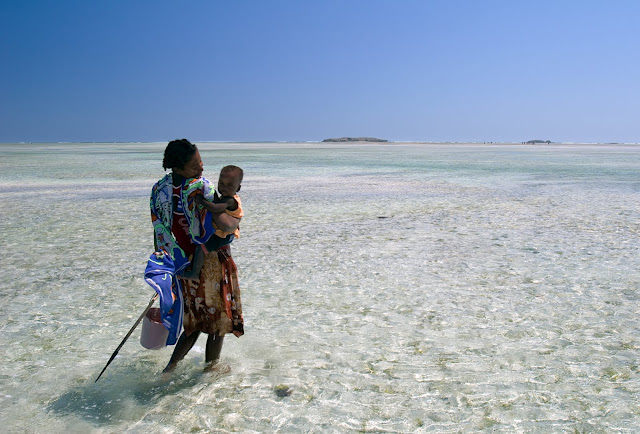
“At the moment, the agendas of the growing population of people and the environment are too separate. People are thinking about one or the other,” said Sir John Sulston, Nobel laureate and chair of the Institute for Science, Ethics, and Innovation at the University of Manchester, in an interview with the Environmental Change and Security Program (ECSP).
“People argue about, ‘Should we consume less or should we have fewer people?’ The point is it’s both. We need to draw it together. It’s people and their activities.”
Many who research and work on population, health, and environment (PHE) issues are increasingly advocating integrated solutions. Such issues as population growth, natural resource management, and food security, are interrelated challenges that, if addressed concurrently, likely will yield better results and community trust.
With this notion in mind, ECSP launched the five-year HELPS (health, environment, livelihoods, population, and security) project in October 2010. The project focuses on integrated PHE programs and demographic security linkages. HELPS also looks at population’s links to global environmental priorities, media coverage of population, and related issues like gender, youth, and equity.
Funded by USAID’s Office of Population and Reproductive Health through its IDEA (Informing Decision-makers to Act) grant, the HELPS project builds on ECSP’s 14-year history of exploring nontraditional security issues.
Population-Environment Connection
A February event in the HELPS series featured Sir John Sulston, who said dialogue between population and environmental communities has received renewed attention and is reappearing on national agendas.
The Royal Society’s People and the Planet study, which will be completed by early 2012, will “provide policy guidance to decision-makers as far as possible” and aims to facilitate dialogue, he said. The HELPS Project is helping the working group gather evidence of population-environment connections and to identify solutions.
“What we should be aiming to do is to ensure that every individual on the planet can come to enjoy the same high quality of life whilst living within the Earth’s natural limits,” said Sulston. People are happier, healthier, and wealthier than ever before, according to human development indexes. But, Sulston said, 200 million women worldwide have an unmet need for family planning, ecosystems are degraded, biodiversity has decreased, and there are widespread shortages of food and water.
“Many times we tackle different development challenges through single sector programs: health programs, agriculture programs, water programs. Those single sector approaches can make sense,” said ECSP Director Geoff Dabelko on the Wilson Center’s Dialogue television program. “But, of course, poor people are facing all those life and death challenges at once. We have to find ways to help them meet those challenges together in an integrated fashion.”
On the same program, Roger-Mark De Souza, vice president for research and director of the Climate Program for Population Action International, said the drive for integrated development stems from the communities being served, not necessarily from outside aid groups. “We’ve seen that there’s a greater impact because there’s longer sustainability for those efforts that have an integrated approach,” he said. “There’s a greater understanding and a greater appreciation of the value that [PHE] projects bring.”
At an April 7 ECSP event, De Souza said rural communities in developing countries understand that high population growth rates, poor health, and environmental degradation are connected. An integrated approach to development, he said, is a “cost-effective intervention that we can do very easily, that responds to community needs that will have a huge impact that’s felt within a short period of time.”
Proponents of integrated development face significant barriers, but the tide may be turning. To fully harness this momentum, former ECSP Senior Program Associate Gib Clarke argues in his FOCUS brief, “Helping Hands: A Livelihood Approach to Population, Health, and Environment Programs,” that the PHE community must solidify its research base, reach out to new partners, and push for flexible funding and programming. He suggested changing the name PHE to HELP – health, environment, livelihoods, and population. By adding livelihoods, the glue that binds population, health, and the environment, he said, the HELP moniker might broaden its appeal to new donors and practitioners.
Case Study: Madagascar
In Madagascar, a key country for integrated PHE programs, “today’s challenges are even greater than those faced 25 years ago,” said Lisa Gaylord, director of program development at the Wildlife Conservation Society, at a March 28 Wilson Center event. As the country’s political situation has deteriorated since 2009, the United States and other donors pulled most funding, and some PHE programs were forced to discontinue environmental efforts.
But other PHE programs are expanding: Based in southwestern Madagascar, the Blue Ventures program began as an ecotourism outfit, said Program Coordinator Matt Erdman, but has since grown to incorporate marine conservation, family planning, and alternative livelihoods. A major challenge is its rapidly growing population, which threatens the residents’ health and food security, as well as the natural resources on which they depend. More than half the island’s population is younger than 15, and the infant and maternal mortality rates are high, Erdman said.
In response, Blue Ventures set up a family planning program. The program uses a combination of clinics, peer educators, theater presentations, and sporting events, such as soccer tournaments, to spread information about health and family planning. The HELPS project will soon publish a Focus brief on Blue Ventures’ family planning efforts, titled: “To Live with the Sea.”
Erdman said, “If you have good health, and family size is based on quality, families can be smaller and [there will be] less demand for natural resources, leading to a healthier environment.”
Demographic Security
A country’s age structure can pose a challenge, said Jennifer Dabbs Sciubba, the Mellon Environmental Fellow with the Department of International Studies at Rhodes College, at a March 14 Wilson Center event. Countries with a large percentage of people younger than 30 “are [much] more likely to experience civil conflict than states with more mature age structures.”
Tunisia’s recent revolution, Sciubba said, could be understood as a “story about demography.” Countries with transitional age structures, such as India, Brazil, and South Africa, face different security challenges. With a majority of their populations between 15 and 60 years old, more people are contributing to the economy than are taking away, which could bolster these countries economically and politically. Global institutions will have to reform and include these countries, she advised, “or else become irrelevant.”
“Understanding population is critical to our success in being able to prevent conflict, and also managing conflict and crises once we’re involved,” said Kathleen Hicks, Deputy Undersecretary at the Department of Defense (DOD). However, the DOD does not “treat demographics as destiny,” she said, but instead as “one of several key trends, the complex interplay of which may spark or exacerbate future conflicts.”
Demography can also help predict political trends. In 2008, demographer Richard Cincotta predicted that between 2010 and 2020 the states along the northern rim of Africa – Morocco, Algeria, Tunisia, Libya, and Egypt – would each reach a demographically measurable point where the presence of at least one liberal democracy among the five would be probable. Recent months have brought possible first steps to validate that prediction.
Mathew Burrows, counselor at the National Intelligence Council, said Cincotta’s work demonstrates that “the demographic tool is essential” to analysts and policymakers. “There is a real appetite among policymakers” for understanding demography, he said, because it gives them more structure than political science narratives.
Yemen is another example of this trend. In March, tens of thousands of youth-led demonstrators demanded that their president resign. While numerous factors have sparked the “Arab Spring,” one driving force is Yemen’s dire demographic and environmental situation. Some experts say Yemen may be the first country to run out of groundwater. The average Yemeni woman has more than five children, and 45 percent of its population is below age 15. On May 18, Yemeni and international experts discussed these issues at the Wilson Center. Upcoming HELPS events include daylong conferences on Afghanistan and Nigeria.
There are solutions that can break the links between “youth bulges” and insecurity. In a recent video interview discussing the connection between demography and civil conflict, Elizabeth Leahy Madsen, a senior research associate at Population Action International, said, “Policies that have a major impact over time are ensuring education, especially for girls, and providing employment opportunities to the large and growing numbers of young people today.”
Dana Steinberg is the editor of the Wilson Center’s Centerpoint.
Photo Credit: Blue Ventures in Madagascar, courtesy of Garth Cripps. -
Global Climate Change Vulnerability and the Risk of Conflict
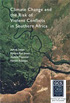
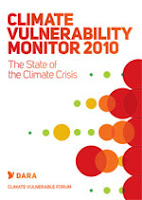
›In a study from the Center for Sustainable Development at Uppsala University in Sweden titled “Climate Change and the Risk of Violent Conflicts in Southern Africa,” authors Ashok Swain, Ranjula Bali Swain, Anders Themnér, and Florian Krampe examine the potential for climate change and variability to act as a “threat multiplier” in the Zambezi River Basin. The report argues that “socio-economic and political problems are disproportionately multiplied by climate change/variability.” A reliance on agriculture, poor governance, weak institutions, polarized social identities, and economic challenges in the region are issues that may combine with climate change to increase the potential for conflict. Specifically, the report concludes that the Matableleland-North Province in Zimbabwe and Zambezia Province in Mozambique are the areas in the region most likely to experience climate-induced conflicts in the near future. The “Climate Vulnerability Monitor 2010: The State of the Climate Crisis,” published by Madrid-based DARA and the Climate Vulnerable Forum, is a comprehensive atlas of climate change vulnerability around the world. The report examines country vulnerability in four impact areas – health, weather disasters, habitat loss, and economic stress – and compares current levels of vulnerability with those expected in 2030. Of the 184 assessed countries, nearly all registered high vulnerability to at least one impact area. The report estimates that there are 350,000 “climate-related deaths” each year, almost 80 percent of which are children living in South Asia and sub-Saharan Africa. Finally, the report features an overview of climate change basics, country profiles, and reviews on the effectiveness of several climate adaptation methods.
 -
Book Launch: ‘Human Population: Its Influence on Biological Diversity’
›Measurements of “human population density and growth can be used to identify changes in the viability of native species, and more directly, in changes in ecological systems or habitat quality,” said Richard Cincotta, consultant at the Environmental Change and Security Program and demographer-in-residence at the Stimson Center, speaking at the book launch of Human Population: Its Influence on Biological Diversity.
Cincotta was joined by coeditor L.J. Gorenflo, associate professor of landscape architecture at Penn State University, and contributing author Christopher Small, research professor at the Lamont-Doherty Earth Observatory and adjunct professor at Columbia University, to discuss the book’s objectives, its diverse and multidisciplinary contributors, and its policy implications. [Video Below]
Establishing a Handbook for the Field
“Human Population: Its Influence on Biological Diversity establishes a handbook for the field,” said Cincotta. While the scientific volume is specifically geared towards researchers and conservation managers rather than policymakers, “there are a few Washington-type policy messages that are useful,” he added.
Human population affects biological diversity in multiple ways. While population density alone can be strongly indicative of the viability of different populations of native species, human activities and their chemical and energetic byproducts can also have a strong impact, even when human population density is low, said Cincotta.
Conserving Biodiversity in Different Settings
“Planned solutions, based on strategic actions, increasingly are essential,” said Gorenflo, a professor at Penn State University. “The days of letting nature take care itself are probably gone.” Gorenflo presented results from the two chapters he worked on: “Human Demography and Conservation in the Apache Highlands Ecoregion, U.S.-Mexico Borderlands” and “Exploring the Association Between People and Deforestation in Madagascar.”
“Population density seems to be a reasonably good indicator of biodiversity loss,” said Gorenflo. Data from the Apache Highland Ecoregion (a 12 million-hectare area located along the U.S.-Mexico border) indicate that biodiversity tends to drop off at population densities of more than 10 people per square kilometer. Conservation efforts in areas within the ecoregion that are at, or close to, this density threshold will likely encounter challenges to maintaining biodiversity, he said.
Human mobility is a major consideration, said Gorenflo: “Whereas high fertility can create population growth over generations, high mobility can create population growth in a matter of months or years.” In the Apache Highlands, for example, the 40 percent increase in population between 1990 and 2000 was largely caused by migration into U.S. cities in the region.
In Madagascar, Gorenflo and colleagues examined whether population growth and poverty were systematically driving deforestation and loss of biodiversity. Using data from the 1990s, they found that higher population density only slightly raises rates of deforestation and large increases in income only modestly decrease deforestation.
Not surprisingly, they found that the likelihood of deforestation decreased dramatically in protected areas. In addition, proximity to roads or footpaths was associated with significantly higher rates of deforestation. “Roads, footpaths, and protected areas are all policy decisions,” Gorenflo pointed out. “So when bilateral or multilateral organizations decide to invest in development in a place like Madagascar, they can look at these sorts of investments as being important.”
While there are some similarities to be drawn between regions’ experience with population and biodiversity, said Gorenflo, “every locality likely has a slightly different story; you need to do context-specific studies to get a real handle on what is going on.”
The Human Habitat
In his chapter, “The Human Habitat,” Christopher Small of the Lamont-Doherty Earth Observatory said his goal was “to set the stage for some of the more detailed studies by taking a look at the global distribution of human population.”
Using census data and satellite-derived maps of night lights to serve as a “proxy for development,” Small found that “people are everywhere, but they are not evenly distributed.”
At least half the world’s population lives on less than three percent of the inhabitable land, and most people live at densities between 100 and 1000 people per square kilometer. At both local and global scales, population density and city size are dominated by extremes: There are large numbers of small groups of people, and small numbers of large groups of people, he said.
“The environments where people live are more strongly correlated with features of the landscape than they are with climatic parameters,” said Small. While humans have effectively adapted to a range of climates, the majority of people tend to cluster close to rivers, at low elevations, and close to coastlines. Although it was once thought that three-quarters of the world’s population lived in coastal regions, Small’s results show that the actual number is close to half of these previous assumptions.
Understanding the spatial and environmental distribution of population and managing population growth may therefore help minimize negative impacts on specific habitats and biomes, said Small.
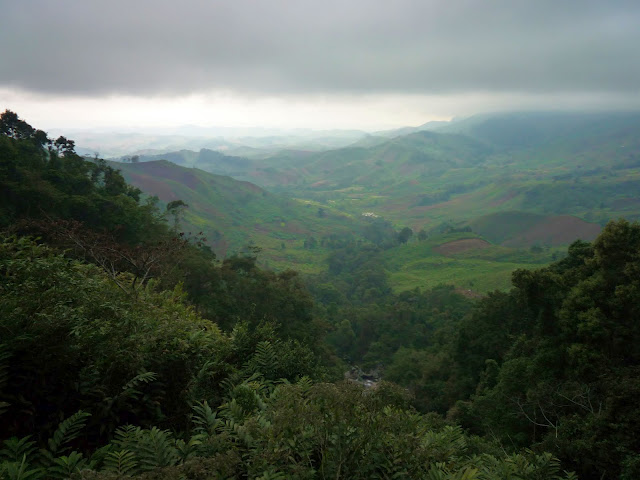
Image Credit: “View from a Madagascar Train,” courtesy of flickr user cr01. -
Save the Date: “Maternal Health Challenges in Kenya: What Research Evidence Shows”
›June 8, 2011 // By Ramona GodboleThe Woodrow Wilson Center’s Global Health Initiative, Africa Program, and Environmental Change and Security Program, in coordination with the Maternal Health Task Force and UNFPA, invite you to a livestreamed discussion of:
Maternal Health Challenges in Kenya: What Research Evidence Shows
Tuesday, July 12, 2011, 10:00 a.m. – 12:00 a.m
Woodrow Wilson Center, Washington DC
6th Floor Flom Auditorium
Please RSVP to globalhealth@wilsoncenter.org with your name and affiliation.
The Wilson Center’s Global Health Initiative is traveling to Nairobi to co-host a two-day workshop on July 12-13 with Kenyan policymakers, community health workers, program managers, media, and donors who will discuss Kenya’s maternal health challenges and identify solutions for moving the maternal health agenda forward.Concurrent with the event in Kenya, the Wilson Center will also be holding a meeting with participants livestreaming in from the Nairobi workshop to present new research and highlight lessons learned from the in-country event. Washington-based participants will also have the unique opportunity to interact with the Nairobi workshop and provide feedback to policymakers via live video conference. A full agenda will follow shortly.
About the 2011 Maternal Health Policy Series
As one of the few forums dedicated to maternal health, the Woodrow Wilson Center’s 2011 Advancing Policy Dialogue on Maternal Health series brings together senior-level policymakers, academic researchers, media, and civil servants from the U.S. government and foreign consuls to identify challenges and discuss strategies for advancing the maternal health agenda.
In order to promote greater voices from the field, the 2011 dialogue is partnering with the African Population Health Research Center in Kenya to co-host a two-part dialogue series with local, regional, and national decision-makers on effective maternal health policies and programs. These in-country dialogue meetings will create a platform for field workers, policymakers, program managers, media, and donors to share research, disseminate lessons learned, and address concerns related to policy, institutional, and organizational capacity building.
The Wilson Center’s Global Health Initiative is pleased to present this series with its co-conveners, the Maternal Health Task Force and the United Nations Population Fund (UNFPA), and is grateful to USAID’s Bureau for Global Health for further technical assistance.
Photo Credit: Mother and Child, courtesy of flickr user The.Rohit. -
One in Three People Will Live in Sub-Saharan Africa in 2100, Says UN
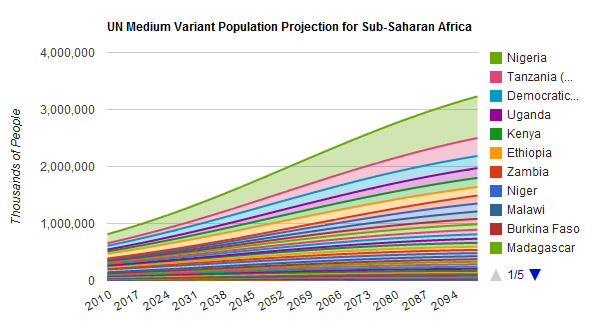
›June 8, 2011 // By Schuyler NullBetween now and 2100, three out of every four people added to world population will live in sub-Saharan Africa. That’s what the medium variant of the UN’s world population projections estimates.* As we noted in our previous post on the latest UN numbers, Nigeria leads sub-Saharan growth, but other countries will also grow by major multiples: Tanzania and Somalia will be 7 times larger; Malawi more than 8 times; and Niger, to grow to more than 10 times its current population.
-
Michael Kugelman, Dawn
Aquaculture’s Promise for Food-Insecure Pakistan
›June 7, 2011 // By Wilson Center StaffThe original version of this article, by Michael Kugelman, appeared on Dawn.
“Give a man a fish and you feed him for a day,” the ancient Chinese philosopher Lao Tzu famously said. “Teach a man to fish and you feed him for a lifetime.”
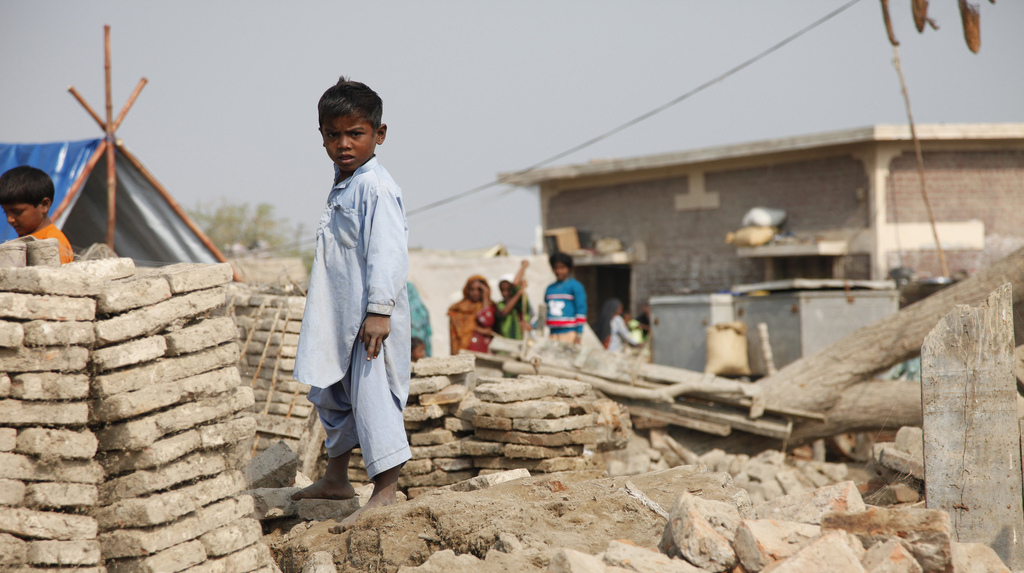
For years, this adage has helped frame debates across a variety of disciplines. However, while globally influential, it is by no means universally applicable – as the sad realities of Sindh make painfully clear. In this parched, food-insecure region flush with fishermen and farmers, people have long known how to fish. The problem is that with water bodies shriveling up, there are increasingly fewer fish to catch. Many impoverished residents would be grateful for a single fish, given their struggles to secure a day’s worth of food.
Pakistan’s natural resource constraints know no provincial borders, yet they are notably severe in Sindh. Water tables are plummeting, with great volumes of Indus River flows diverted upstream to satiate agricultural and urban demand in Punjab.
Sindh’s water security is further threatened by population growth and global warming, and by the water-intensive, large-scale farming envisioned by foreign investors jockeying for agricultural land.
With surface water supplies threatened, users are increasingly tapping groundwater resources – yet according to the Pakistan Council of Research in Water Resources, a staggering 95 percent of the province’s shallow groundwater supplies are bacteriologically contaminated. This is unsurprising, given the technical deficiencies and inefficiency that characterize Sindh’s water treatment facilities.
In a province where so many livelihoods are tied to water availability and food production, water stress aggravates food insecurity and threatens economic well-being. A recent World Bank report concludes that Pakistan’s poorest spend at least 70 percent of their meager incomes on food – and undoubtedly many of them hail from Sindh. According to data from the Pakistan Agricultural Research Council, some of the province’s small farmers spend a whopping 87 percent of their incomes on food.
Continue reading on Dawn.
Michael Kugelman is a program associate for the Asia Program at the Woodrow Wilson Center.
Photo Credit: A child stands amongst buildings destroyed by the floods in Sindh province, courtesy of flickr user DFID – UK Department for International Development. -
Watch: Younger Generation Will Prioritize Health, Education, Human Rights, Says Frederick Burkle
›June 7, 2011 // By Schuyler Null“Unfortunately, in the last two decades, when globalization became the mantra, it was primarily an economic mantra,” said Frederick Burkle, a senior fellow with the Harvard Humanitarian Initiative, visiting scientist at the Harvard School of Public Health, and senior public policy scholar at the Wilson Center. “The mantra was, ‘if you can improve the economy,” he said, “health, education, everything will follow.’”
“With the financial crisis, that proved not to be true,” Burkle said, and as a result, net expenditures in health and education have declined and the private sector, unfortunately, has not filled the gap.
“We really need to redefine globalization,” Burkle said. “And certainly economics will be there…but health, education, and human rights need to be just as dominant as the economics.”
Burke said he expects a gradual realignment of global priorities to come as younger generations come into decision-making roles. “They don’t have political clout right now,” he said, “but when they do…I think we’re going to see all these aspects that I mentioned – even the humanitarian profession becoming a career – accelerated.” -
The Future of Women in the MENA Region: A Tunisian and Egyptian Perspective
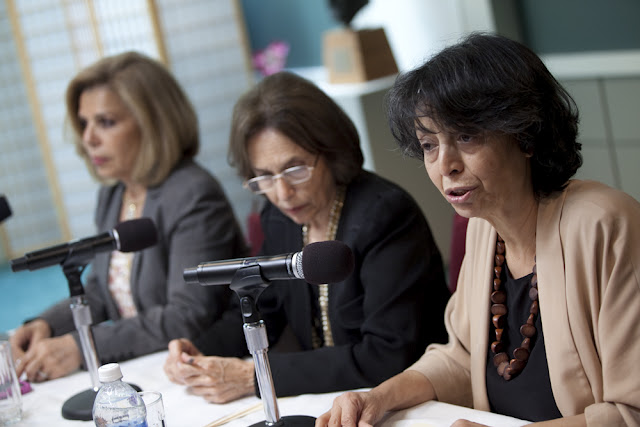
›Lilia Labidi, minister of women’s affairs for the Republic of Tunisia and former Wilson Center fellow, joined Moushira Khattab, former minister of family and population for Egypt, on June 2 at the Wilson Center to discuss the role and expectations of women in the Egyptian and Tunisian revolutions, as well as issues to consider as these two countries move forward. Haleh Esfandiari, director of the Middle East Program at the Wilson Center, moderated the event.
Labidi focused on the participation of women in the protests in Tunisia and their aftermath. She emphasized that these developments give hope, as they attest to the mixed nature of the demonstrations in which women were not sidelined but marched amongst men. (Editor’s note: The gender balance of the protests was a feature demographer Richard Cincotta also observed in his post about Tunisia’s age structure.) She pointed to the way that Tunisian women have entered the public space and played vital roles in spreading images and information about the protests around the world. Labidi said that although the future of women in Tunisia remains uncertain, it is unlikely that they will cease to be active and retreat to the private sphere. She commented on the new parity resolution calling for an equal number of male and female candidates for each party in Tunisia’s July elections and the opportunities afforded by an increase in political pluralism and media outlets.
Labidi also elaborated on her efforts as Tunisia’s minister of women’s affairs, discussing the ministry’s results and future goals. She stressed the importance of aiding women living in poverty, changing the cultural role of women, and boosting confidence in the government’s ability to address women’s needs. In particular, Labidi spoke of the work to expand the ministry’s regional offices to become more accessible to rural and non-elite sectors of Tunisian society. She hoped that recent events will encourage recognition of women as regional political actors and that the United States will expand intellectual and political ties with Tunisia.
Khattab pointed out the numerous similarities between the role of women in Tunisia and in Egypt, saying that women’s participation in public demonstrations and disseminating information to the media “has set the stage for a paradigm shift in the rights of citizens.” She noted that there are many advances yet to be made for women, youth, and other groups but that the protests have begun a change towards “a democratic, rights-based Egypt.”
Although she sees women’s involvement as a part of continuing progress in women’s rights, Khattab made note of the various obstacles to freedom that women in Egypt still face. She expressed concern that the politics of revenge against the previous regime might sideline women in politics, who already have less representation in the government than they did under Mubarak and have been excluded from the committee drawing up a new Egyptian constitution. She noted the need to change social perceptions that “women already enjoy all their rights.” She also discussed how the new media freedom gives fundamentalist groups a platform to propagate narrow interpretations of faith that call for the repeal of some of the existing women’s rights laws. She posed the question of what interpretations of the faith would allow for a greater harmonization with domestic laws based on the ideals of human rights.
Laura Rostad is an intern with the Middle East Program at the Woodrow Wilson Center.
Photo Credit: David Hawxhurst/Wilson Center.
 A Publication of the Stimson Center.