-
ECSP Weekly Watch: April 1 – 5
›
A window into what we are reading at the Wilson Center’s Environmental Change and Security Program
Indonesia’s Deforestation Intensifies Extreme Weather Impacts (Associated Press)
Indonesia’s vast biodiverse forests have long sustained livelihoods, food supplies, medicine, and cultural practices. Yet the past seven decades have put them under threat. Since 1950, over 74 million hectares, or nearly 286,000 square miles, of rainforest has been logged, burned, or degraded. The country’s key industries—palm oil, paper, rubber, and mining for oil and critical minerals—are largely to blame. This is occurring in a specific context: Indonesia is not only one of the largest global CO2 emitters globally, but it is also highly vulnerable to climate change—particularly climate change-induced extreme weather events.
-
NEW Global Health and Gender Policy Brief: Malaria and Most Vulnerable Populations
›
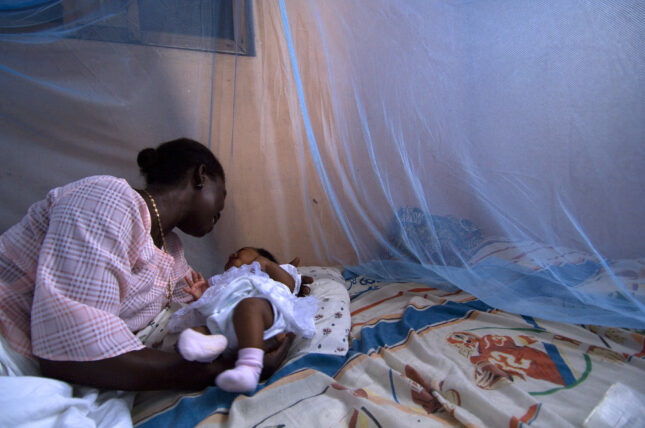
Malaria is an immense global health challenge. In 2022, there were 249 million malaria cases, an increase of 5 million as compared to 2021, leading to 608,000 malaria deaths in 85 countries. Yet while these numbers increase, investment and attention to malaria in the past decade has stagnated—and even decreased in areas. Notably, the total spending to eradicate malaria in 2022 was $4.1 billion USD – just over half of the $7.8 billion USD needed to stay on track to reduce new malaria infections and mortality rates by 90% by 2030.
-
Plowing Under the EU Green Deal? Climate Policy and the European Parliament Elections
›This article originally appeared on the blog of Wilson Center’s Global Europe Program.
The recent farmers’ protests that erupted across several EU countries have put the EU climate debate in the limelight of the European Parliament election campaigns. From Spain to Poland, farmers have been expressing grievances over falling margins; rising costs for energy, fertilizers, and transport; increasing competition from Ukrainian imports; and complex bureaucratic procedures.
-
ECSP Weekly Watch: March 25 – 29
›A window into what we are reading at the Wilson Center’s Environmental Change and Security Program
UN Report Highlights Relationship Between Water and Peace (UN Water)
Freshwater consumption is growing at a steady rate, driven largely by agriculture, yet roughly 50% of the world’s population experiences severe water scarcity for at least part of the year. Poor water quality in low-income countries is attributable to low wastewater treatment, whereas in high-income countries, agricultural runoff does the damage. Extreme droughts or heavy rainfall, exacerbated by climate change, also have worsened in frequency and intensity, creating a deepening impact on global water security.
-
Water @ Wilson | MODSNOW: A New Tool for Water Security in Central and South Asia
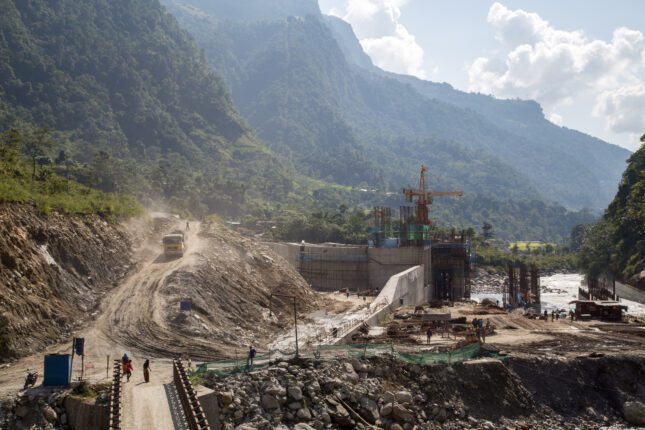
›Central and South Asia’s water resources are critical for the region’s water, energy, food and environmental security. Major rivers in the region originate from the Hindu-Kush-Himalaya, Pamir, and Tien Shan Mountain Ranges and flow across multiple countries. Unique geographical characteristics make water management a complex and challenging task that is further complicated by a changing climate and increasing demand affecting diminishing water resources.
-
Women and Children in Ukraine: Q&A with Kira Rudik
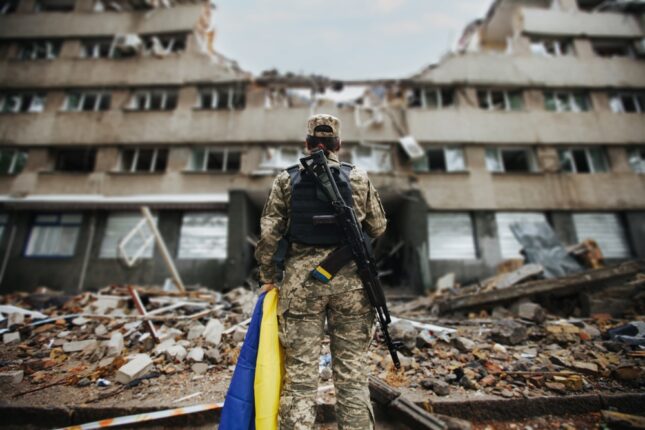
›This month marked the two-year anniversary of the Russian invasion of Ukraine. March, in the United States, is Women’s History Month and internationally, the world celebrates International Women’s Day, each year on March 8. In recognition of both the ongoing war and its effects on Ukrainian women and children, the Maternal Health Initiative reached out to Member of Parliament and Leader of the Holos Party, Kira Rudik as a follow up to conversations we had at the start of the war and at its one year anniversary.
-
Assessing Local Aspects of Climate Security and Environmental Peace
›Climate change’s potential to aggravate insecurity, particularly through violent conflict, has created a fear that is both widespread and justified. Civil and defense ministries around the world now include climate impacts in their strategic planning, and climate security assessments have become a common policy tool.
-
ECSP Weekly Watch | March 18 – 22
›A window into what we are reading at the Wilson Center’s Environmental Change and Security Program
WMO Says 2023 Saw Record Heats (World Meteorological Organization)
In a new report, the World Meteorological Organization (WMO) revealed that records for greenhouse gas levels, surface temperature, ocean heat & acidification, sea level rise, Antarctic Sea ice cover, and glacial retreat were smashed over the past year. The State of the Climate study also confirmed that 2023 was the warmest year on record, with temperatures 1.45 degrees Celsius above pre-industrial levels. The WMO also noted that the past decade marked the warmest 10-year period on record.
 A Publication of the Stimson Center.