• woodrow wilson center
  • ecsp

New Security Beat

Subscribe:
  • rss
  • mail-to
  • Who We Are
  • Topics
    • Population
    • Environment
    • Security
    • Health
    • Development
  • Columns
    • China Environment Forum
    • Choke Point
    • Dot-Mom
    • Friday Podcasts
    • Navigating the Poles
    • Reading Radar
  • Multimedia
    • Water Stories (Podcast Series)
    • Backdraft (Podcast Series)
    • Tracking the Energy Titans (Interactive)
  • Films
    • Water, Conflict, and Peacebuilding (Animated Short)
    • Paving the Way (Ethiopia)
    • Broken Landscape (India)
    • Scaling the Mountain (Nepal)
    • Healthy People, Healthy Environment (Tanzania)
  • Publications
  • Events
  • Contact Us

NewSecurityBeat

The blog of the Wilson Center's Environmental Change and Security Program
  • Three Critical Maternal Health Medicines That Could Save Women’s Lives

    ›
    Dot-Mom  //  From the Wilson Center  //  November 15, 2012  //  By Carolyn Lamere

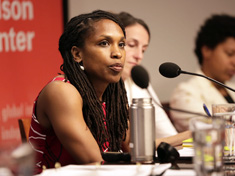
    “We know maternal health medicines are safe, we know they’re effective, we know they’re essential to keeping women healthy throughout pregnancy and childbirth,” said Kristy Kade at the Wilson Center on October 23. But lack of supply, poor quality, and misuse means they do not always help the women who need them. [Video Below]

    MORE
  • Lydia Polgreen, The New York Times

    As Coal Boosts Mozambique, the Rural Poor Are Left Behind

    ›
    November 14, 2012  //  By Wilson Center Staff

    The original version of this article, by Lydia Polgreen, appeared on The New York Times.

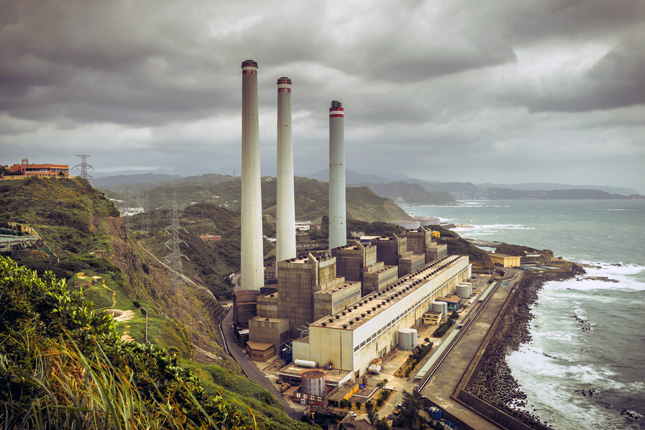
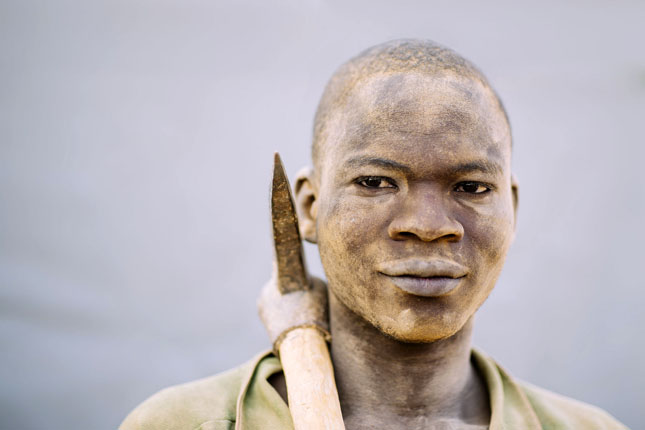
    When Augusto Conselho Chachoka and his neighbors heard that the world’s biggest coal mine was to be built on their land, a tantalizing new future floated before them. Instead of scraping by as subsistence farmers, they would earn wages as miners, they thought. The mining company would build them sturdy new houses, it seemed. Finally, a slice of the wealth that has propelled Mozambique from its war-addled past to its newfound status as one of the world’s fastest-growing economies would be theirs.

    MORE
  • Top U.S. Leaders: Global Health Is a Bridge to Security

    ›
    November 14, 2012  //  By Carolyn Lamere

    “During my career, my viewpoint changed significantly in the understanding and definition of what security really is,” said retired Admiral William J. Fallon at the Center for Strategic and International Studies (CSIS) on November 2. “My current appreciation of it is that it’s much more fundamental, much more personal, much more at the individual human level than I had thought in earlier years.”

    MORE
  • What Next? Finding Ways to Integrate Population and Reproductive Health Into Climate Change Adaptation

    ›
    November 12, 2012  //  By Kathleen Mogelgaard

    The size, composition, and spatial distribution of human populations are constantly changing, and in some areas of the world, they’re changing very rapidly. Related trends in fertility and reproductive health are also in flux. These changes will affect how people experience climate change, both individually and societally.

    MORE
  • Joel Cohen on Why Students Should Consider Demography

    ›
    Eye On  //  November 9, 2012  //  By Payal Chandiramani

    “Why should you consider taking a demography course in college?” That’s the question Joel Cohen, noted demographer and professor at Rockefeller and Columbia University, looks to answer in a 45-minute introduction to demography produced by the Floating University and released for free on YouTube.

    MORE
  • Liang Jialin and Jiang Han, ChinaDialogue

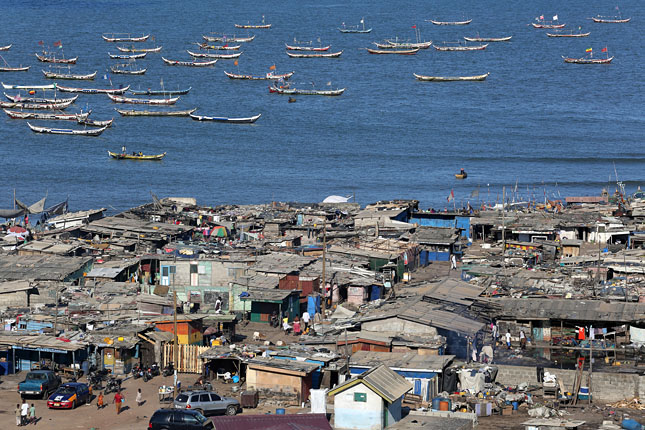
    Overfishing Pushes 80 Percent of Chinese Fishermen Towards Bankruptcy

    ›
    November 9, 2012  //  By Wilson Center Staff

    The original version of this article, by Liang Jialin and Jiang Han, appeared in English on ChinaDialogue and in Chinese on Economic Information Daily.

    In mid-September, the fishing season got under way as usual in Ningbo, on China’s east coast, after the three-month season when fishing is forbidden. Over 2,000 steel-hulled boats headed out to sea. But, on board, there was little cause for optimism.

    MORE
  • Making ‘Beyond Seven Billion’: Reporting on Population, Environment, and Security

    ›
    From the Wilson Center  //  November 8, 2012  //  By Carolyn Lamere

    “When I embarked on this series, I approached it as an environmental reporter: What does a growing number of us and growing consumption mean for our planet?” said Los Angeles Times reporter Ken Weiss at the Wilson Center on October 9. Weiss, along with photographer Rick Loomis, recently completed a five-part series and multimedia presentation on global population that was the culmination of a year of research and travel through more than six countries. [Video Below]

    MORE
  • Social Interaction Key to Urban Resilience, Says Harvard’s Diane Davis

    ›
    November 7, 2012  //  By Payal Chandiramani

    “Resilience is the capacity of individuals and institutions to cope and adapt in the stress of chronic violence in ways that allow them room for maneuver and hope for the future,” said Diane Davis, Harvard professor of urbanism and development, in an interview at the Wilson Center.

    MORE
Newer Posts   Older Posts
View full site

Join the Conversation

  • RSS
  • subscribe
  • facebook
  • G+
  • twitter
  • iTunes
  • podomatic
  • youtube
Tweets by NewSecurityBeat

Trending Stories

  • unfccclogo1
  • Pop at COP: Population and Family Planning at the UN Climate Negotiations

Featured Media

Backdraft Podcast

play Backdraft
Podcasts

More »

What You're Saying

  • Volunteers,At,The,Lagos,Food,Bank,Initiative,Outreach,To,Ikotun, Pan-African Response to COVID-19: New Forms of Environmental Peacebuilding Emerge
    Rashida Salifu: Great piece 👍🏾 Africa as a continent has suffered this unfortunate pandemic.But it has also...
  • A desert road near Kuqa An Unholy Trinity: Xinjiang’s Unhealthy Relationship With Coal, Water, and the Quest for Development
    Ismail: It is more historically accurate to refer to Xinjiang as East Turkistan.
  • shutterstock_1779654803 Leverage COVID-19 Data Collection Networks for Environmental Peacebuilding
    Carsten Pran: Thanks for reading! It will be interesting to see how society adapts to droves of new information in...

What We’re Reading

  • Rising rates of food instability in Latin America threaten women and Venezuelan migrants
  • Treetop sensors help Indonesia eavesdrop on forests to cut logging
  • 'Seat at the table': Women's land rights seen as key to climate fight
  • A Surprise in Africa: Air Pollution Falls as Economies Rise
  • Himalayan glacier disaster highlights climate change risks
More »
  • woodrow
  • ecsp
  • RSS Feed
  • YouTube
  • Twitter
  • Facebook
  • Home
  • Who We Are
  • Publications
  • Events
  • Wilson Center
  • Contact Us
  • Print Friendly Page

© Copyright 2007-2021. Environmental Change and Security Program.

Woodrow Wilson International Center for Scholars. All rights reserved.

Developed by Vico Rock Media

Environmental Change and Security Program

Woodrow Wilson International Center for Scholars

Ronald Reagan Building and International Trade Center

  • One Woodrow Wilson Plaza
  • 1300 Pennsylvania Ave., NW
  • Washington, DC 20004-3027

T 202-691-4000