-
Drying Out: Climate Change and Economic Growth Drive Water Scarcity in the Third Pole
›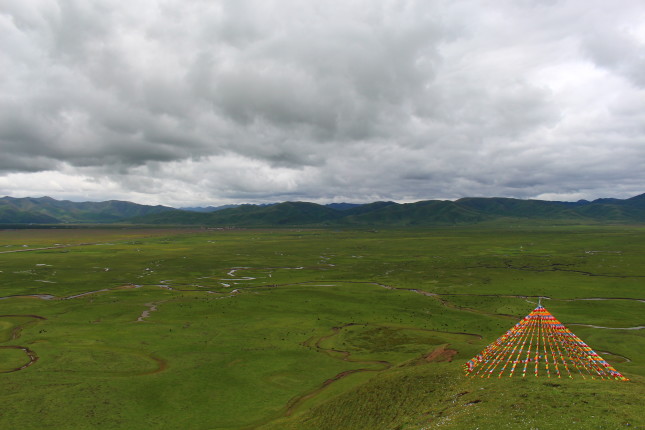
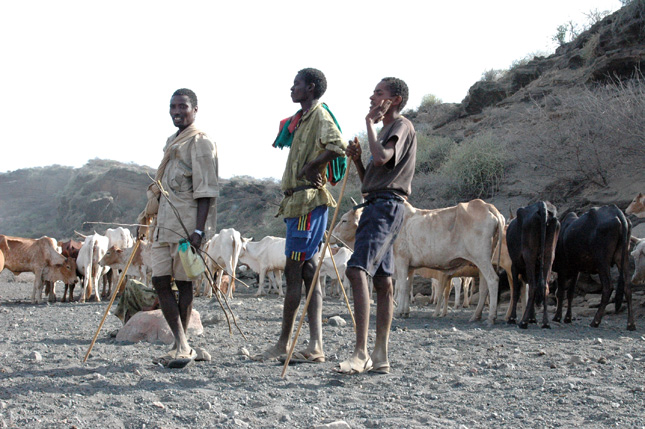
I pulled my horse to a stop along the banks of a little stream, which was wedged between two grassy hills speckled with wildflowers and pika holes, to admire the view of the Tibetan-Qinghai Plateau’s rolling hills evolving into snowcapped mountains.
-
Women and War: Securing a More Peaceful Future
›
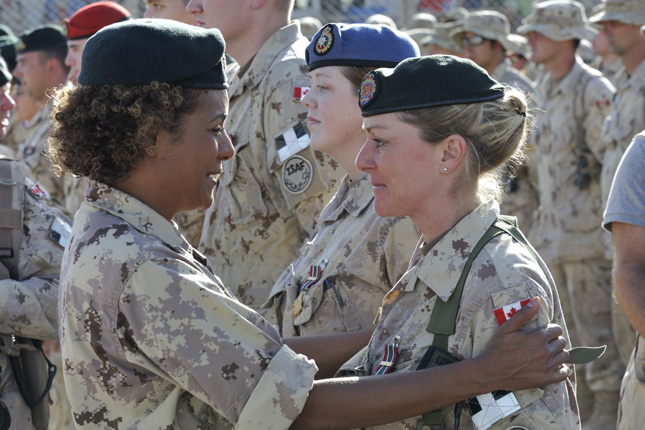
“Conflicts are 35 percent more likely to be resolved and remain peaceful for 15 years if women are involved,” said Carla Koppell, vice president of the Center for Applied Conflict Transformation at the United States Institute of Peace, at a recent Wilson Center event on the role of women in war, security, and peace.
-
U.S. Global AIDS Coordinator: DREAMS Program Reduced HIV/AIDS Among Adolescent Girls in Sub-Saharan Africa
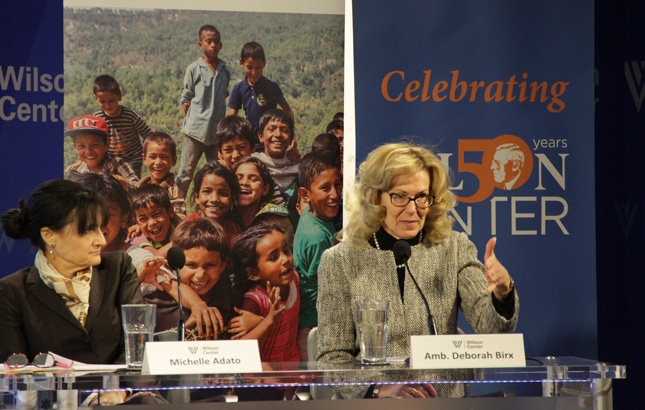
›“There is no healthcare delivery system for non-pregnant 15- to 24-year olds,” said the U.S. Global AIDS Coordinator, Ambassador Deborah Birx, at a recent Wilson Center event on efforts to reduce the prevalence of HIV/AIDS among adolescent girls in sub-Saharan Africa. In 2014, the U.S. President’s Emergency Plan for AIDS Relief (PEPFAR) established the DREAMS program, which aims to create “a health care system where young people interact in a proactive and positive way,” said Birx.
-
The Role of Water Stress in Instability and Conflict
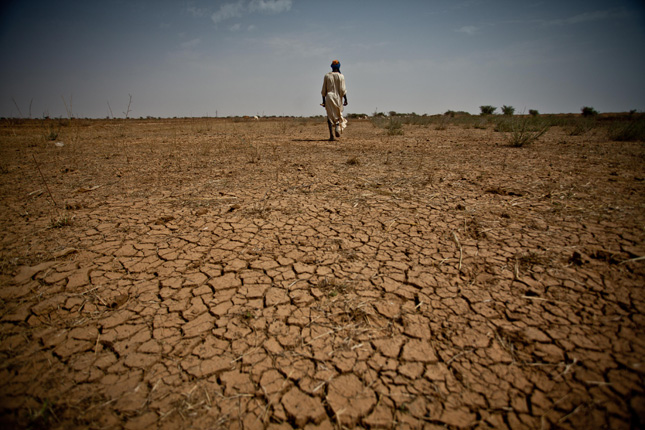
›As senior military officers, we see water stress—the lack of adequate fresh water—as a growing factor in the world’s hotspots and conflict areas, many of vital interest to the United States. Our earlier reports have identified a nexus among climate, water, energy, and U.S. national security. We have previously shown how emerging resource scarcity across this nexus can be a threat multiplier and an accelerant of instability. With escalating global population and the impact of a changing climate, we see the challenges of water stress rising with time. It is in this context that we now seek to provide a better understanding of the mechanisms through which water factors into violence and conflict.
-
Can Climate Change Feed Extremism?
›Global warming is not just an environmental problem.
Goodman: “It is one of the most serious national security challenges we face. This is a risk issue.”
-
A Matter of Survival: Learning to Cooperate Over Water
›“Water security and management represent the cornerstone of global conflict prevention,” said President Danilo Türk, chair of the Global High-Level Panel on Water and Peace and former president of Slovenia, at a recent Wilson Center event on water and peace. “The only alternative to water is water, and therefore, the matter of water is a matter of survival,” said Sundeep Waslekar, president of Strategic Foresight Group.
-
Indian Military Recognizes Environment as “Critical” Security Issue, But Response Is Still Fragmented
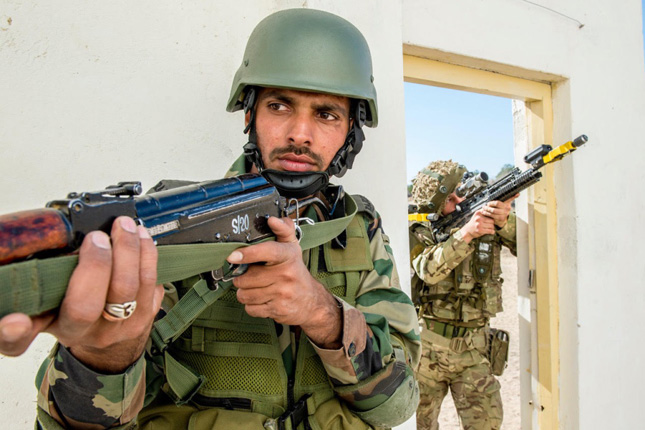
›For the first time, the Joint Doctrine of the Indian Armed Forces acknowledges that the “environment has emerged as a critical area of the security paradigm,” and warns that if environmental degradation and related issues increase security risks, the military will need to respond. Released in 2017, the doctrine lists a series of non-traditional security challenges linked to the environment that could influence conflict and war, including “climate change, ecosystem disruption, energy issues, population issues, food-related problems, economic issues of unsustainable modes of production, and civil strife related to environment.” While the military has taken steps to address its impacts on the environment, it can do much more to support the nation’s environmental goals and mitigate environment-related security risks.
-
Secretary of Defense Announces National Defense Strategy
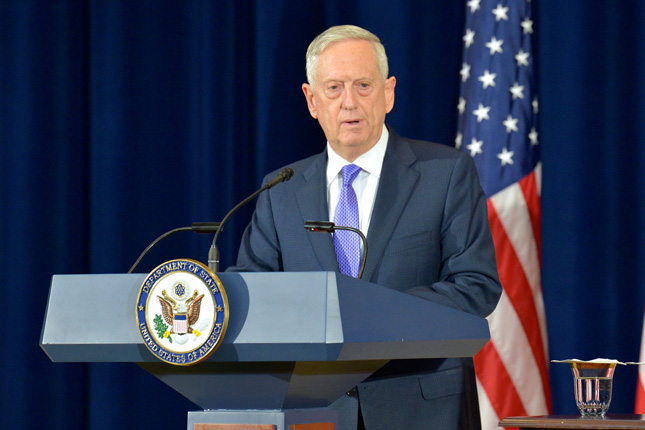
›The Trump administration’s first National Defense Strategy, which was released last Friday, outlines the U.S. Department of Defense’s national security goals in a world it describes as rife with great power competition between the United States, Russia, and China. Climate change – which some military leaders warn poses a looming threat to the effectiveness of American military power – was not mentioned, in stark contrast to the previous administration’s strategic priorities. National security and defense strategies issued by the Obama Administration highlighted the dangers climate change poses to national security, including “increased national disasters, refugee flows, and conflicts over basic resources like food and water.”
 A Publication of the Stimson Center.