-
The Climate and Ocean Risk Vulnerability Index: Measuring Coastal City Resilience to Inform Action
›Guest Contributor // January 26, 2021 // By Jack Stuart, Sally Yozell, Miko Maekawa & Nagisa Yoshioka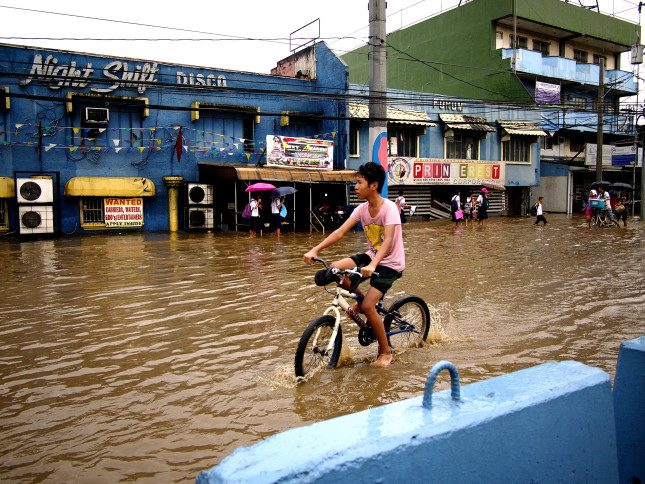
As the climate crisis continues to worsen, climate finance remains a fraction of what is needed. The Climate Policy Initiative estimates that $579 billion was spent on average on climate finance in 2017/18. This includes domestic and international investment from both the public and private sectors towards climate mitigation and adaptation actions. Of this amount, only $30 billion—five percent—was allocated for climate adaptation. This amount stands in stark contrast to $180 billion, which the Global Commission on Adaptation estimates is needed every year to build resilience to current and future climate impacts. This catastrophic funding gap is intensifying climate security threats and elevating the vulnerability of people across the world, particularly in coastal urban centers.
-
The Third Wave of Environmental Peacebuilding
›
For most of 2020, news, politics, policy, and research in the United States and abroad were dominated by the challenges posed by COVID-19, a rapidly unfolding global pandemic unprecedented in scale and cost. For much of the world, however, COVID-19 in fact competed with many other highly destructive events including a cascade of environmental disasters. Swarms of locusts pushed much of the Horn of Africa into or close to famine; 30 severe storms including Hurricanes Iota and Eta battered the Atlantic coasts; some 4 million acres of forest burned to the ground in California, doubling the previous high reached in 2018; typhoons ravaged the Philippines; floods overwhelmed parts of Indonesia; and many regions around the world experienced devastating heat waves. In addition to disaster patterns, the trends in violent state conflict were equally alarming, reaching their highest level since the end of World War II, according to a 2020 report on conflict trends from PRIO. In the most violent conflicts, in Syria and Yemen, the impacts of war have been amplified and complicated by the impacts of drought and years of environmental mismanagement.
-
Valerie M. Hudson on How Sex Shapes Governance and National Security Worldwide
›“The very first political order in any society is the sexual political order established between men and women,” says Valerie M. Hudson, a University Distinguished Professor at Texas A&M, in today’s Friday Podcast, recorded at a recent Wilson Center launch of the book, The First Political Order: How Sex Shapes Governance and National Security Worldwide. Co-authored by Hudson, Donna Lee Bowen, Professor Emerita at Brigham Young University, and P. Lynne Nielson, a statistics professor at Brigham Young University, the book investigates how the relationship between men and women shapes the wider political order. “We argue, along with many other scholars, that the character of that first order molds the society, its governance, and its behavior,” says Hudson. -
Aiming for A World Where Everything Is Circular: Q&A with Indonesia Plastic Bag Diet Cofounder Tiza Mafira
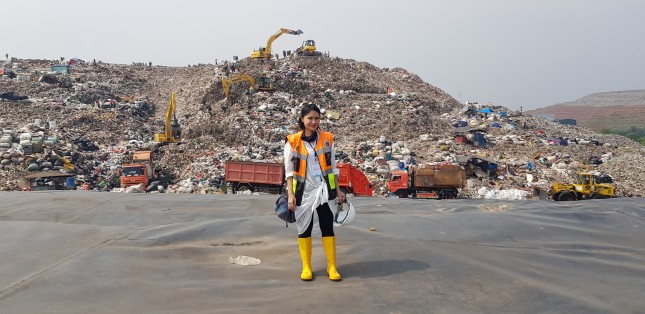
›“What bothers me is that people tend to look at these rivers and these polluted beaches and think ‘somebody needs to clean it up’—that’s just completely wrong. Because not only is it almost impossible and inefficient, but it’s really not the solution. The solution is prevention,” says Tiza Mafira in the film, Story of Plastic, as she takes a boat trip down the polluted Ci Liwung River that flows through Indonesia’s capital city, Jakarta.
-
Climate Change Front and Center in U.S. and Brazil Relations in Biden-Bolsonaro Era
›As the warm relationship between U.S. President Donald Trump and Brazil President Jair Bolsonaro comes to an end with the former’s electoral defeat in November 2020, the next two years (Bolsonaro is up for reelection in 2022) could prove to be strenuous for the bilateral relations of the two largest economies in the Western Hemisphere. President-elect Biden has signaled that combatting climate change will be a priority in his administration. Now, without the cover of a U.S. administration that denies climate change, Brazil could become further isolated in international environmental politics. All of this complicates the political realities for President Bolsonaro, whose political survival depends on maintaining his coalition of fanatical supporters, the agricultural sector, and former and current members of the military. Still, given U.S. concerns about Chinese influence in the region, the Biden-Bolsonaro relationship could prove to be low-key and practical.
-
What Does a Biden-Harris White House Mean for Women and Girls? Everything.
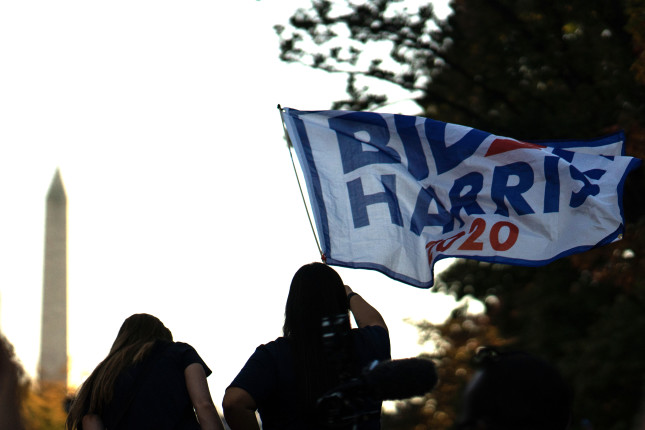
›The significance of the Biden-Harris administration for the world’s women and girls cannot be overstated. The current status of women and girls is grim. The COVID-19 pandemic and four years of dangerous policies designed to strip women and girls of their reproductive and economic autonomy and punish them—first for their biology, and second for their gender—have slowed and even reversed decades of progress toward gender equity. Systemic racism and policies meant to further exclude and disenfranchise minority communities have targeted women of color with tragic results.
-
New U.S. Global Fragility Strategy Recognizes Environmental Issues as Key to Stability
›A new Global Fragility Strategy, released late last year by the U.S. Department of State, signals a growing awareness of the role that environmental issues play in fragility, conflict, and peace. According to the State Department’s Office of Foreign Assistance, in the last five years alone, “the U.S. government has spent $30 billion in 15 of the most fragile countries in the world.” These “large-scale U.S. stabilization efforts after 9/11 have cost billions of dollars but failed to produce intended results,” writes Devex’s Teresa Welsh. As a result, Congress passed into law in 2019 the Global Fragility Act, legislation that directed the Department of State to lead the development of a new 10-year Global Fragility Strategy that sets out a new U.S approach to conflict prevention and stabilization in fragile contexts.
-
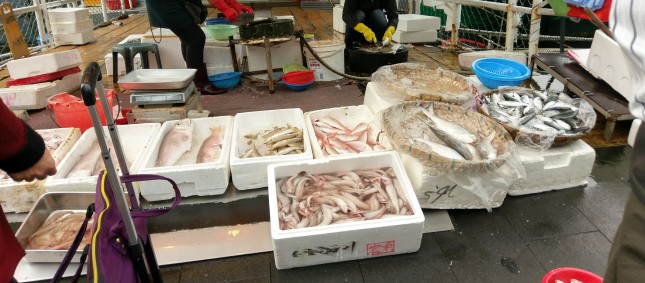
Putting a Lid on Fish Boxes and Other Foamed Polystyrene Marine Debris
›Where the murky brown waters of the Pearl River meet the opaque green South China Sea, a trail of floating plastic debris is gathered by the currents as they flow past Macao, Shenzhen, and Hong Kong. I first noticed this floating litter while standing on the deck of a research vessel in 2017, scanning the waves off the western coast of Lantau island for signs of Indo-Pacific humpback dolphins as part of a monitoring program run by the Hong Kong Dolphin Conservation Society. A glimpse of these rare animals was often overshadowed by the foamed polystyrene pollution (also known as expanded polystyrene (EPS) or by the proprietary name Styrofoam) from fish boxes and fishing buoys. And this was not just a problem in the water; as we conducted surveys between Hong Kong’s islands, we passed beaches covered in white plastic, strewn along the shoreline like snow.
 A Publication of the Stimson Center.
 “The very first political order in any society is the sexual political order established between men and women,” says Valerie M. Hudson, a University Distinguished Professor at Texas A&M, in today’s Friday Podcast, recorded at a recent Wilson Center launch of the book,